Article
Search results:
-
Hanfu Jewelry | The Legendary Life of the Sui and Tang Royal Ladies
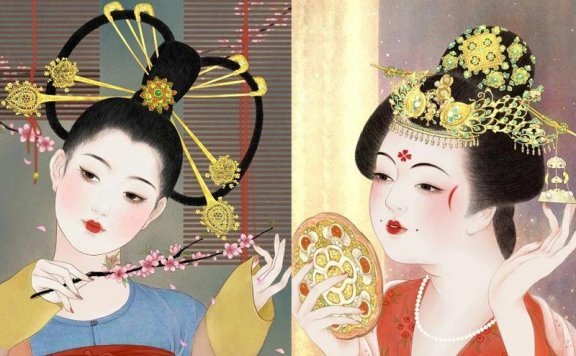
It is every woman's nature to love beauty, and modern women have a common hobby - buying jewelry, and when they see jewelry with good design, they are always delighted and want to buy it as soon as possible. Hanfu girls are no exception, and they often use different styles of Hanfu jewelry to match their Hanfu when they go out in Hanfu clothing. For women, Hanfu jewelry is the best weapon used to adorn themselves and shine in the crowd with elegance and beauty. But you may not realize it, the Sui and Tang dynasties' women were much more particular about Hanfu jewelry than we are today, especially the high officials and noblemen of the time. The aristocratic ladies in their gorgeous clothes, who dressed up every day like "a lotus flower", looked like a pair of beautiful paintings from afar. Archaeologists have studied many Hanfu jewelries that were unearthed during the Sui and Tang dynasties, and from behind those artifacts, they have discovered that the women who wore those gorgeous Hanfu clothing actually had a legendary life story that was hidden from the public. In the following pages, we will talk about the trend of the unearthed Sui… -
How to Wear Hanfu (3) – Tang Dynasty Qiyao Ruqun
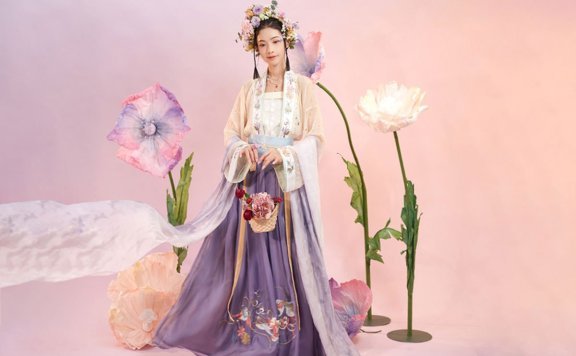
Ruqun (襦裙), is one of the earliest and most basic forms of Hanfu. Ru means top garment, and Qun means skirt. There are two types of Ruqun if categorized by where the skirt is tied, one with the skirt tied above the chest (the chest-high Ruqun - Qixiong Ruqun), and the other one is tied on the waist, and for today, we are going to talk about the waist-high Ruqun - Qiyao Ruqun. Let's take a look at history and how to wear the Qiyao Ruqun. 1: History of Qiyao Ruqun Ruqun is one of the styles under the Yi Chang (衣裳) category of hanfu, Yi Chang basically means top and skirt, although traditional Chinese clothing varied greatly from each dynasty to the next, the few basic styles remained unchanged for the most part. During the Tang Dynasty, other than the iconic Qixiong Ruqun, a variety of Qiyao Ruqun styles were also in favor. In this famous Chinese painting “Night Revels of Han Xizai (韩熙载夜宴图)”, all the musician ladies were wearing Qiyao Ruqun, with bold and vibrant colors. 2: Wear the Top Garment of Qiyao Ruqun Unlike Qixiong Ruqun, you have to wear a camisole with the Qiyao… -
How to Wear Hanfu (2) - Tang Dynasty Qixiong Ruqun
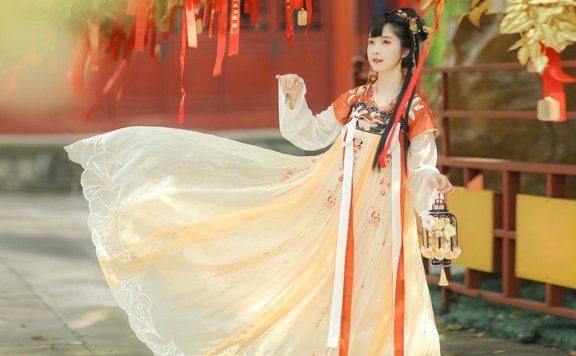
Qixiong Ruqun(齐胸襦裙) is a typical style during the Tang Dynasty, the golden age of China. You can find similar styles of clothing in the famous Tang Dynasty paintings. This is a type of Ruqun with the skirt tied above the breasts and worn with short blouses. Now let’s look at the individual pieces and how to wear Hanfu - Qixiong Ruqun. 1: Wear the Blouse of Qixiong Ruqun The word Ruqun translates into top garment and skirt in Chinese, it is one of the earliest and most basic forms of Hanfu. This blouse has parallel collars and is relatively short to match the long skirt, it is very common to find flower and plant shaped patterns on fabrics during the Tang Dynasty. Put the blouse on first, and tie the knot. 2: Wear the Skirt of Qixiong Ruqun Moving onto the skirt, it is long and pleated, unlike traditional skirts which are usually one piece of fabric wrapped around the body, this modern twist separates the back and front panel and has two sets of ties, it is designed to ensure a better fit and help it stay put on the body. The first step into the center… -
How did the Tang Dynasty Hanfu Clothing Develop and Prosper?
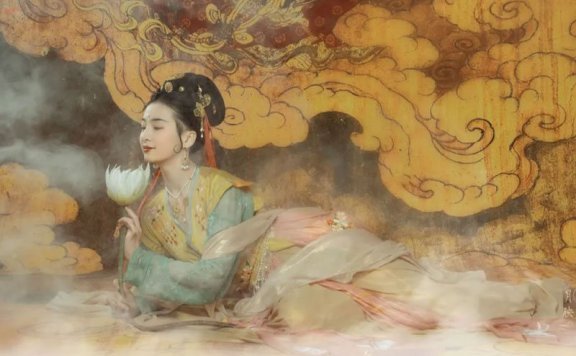
The Tang Dynasty was the heyday of China's feudal society, especially during the years of Zhenguan (贞观) and Kaiyuan (开元) when the political climate was relaxed and people lived and worked in peace. The typical styles of the Tang Dynasty Hanfu are Gongfu (公服, official uniform), round-necked robe, Banbi (半臂), Pei (帔, large-sleeved formal dress), and so on. From the Sui to the Tang (618-907), the development of ancient Chinese Hanfu clothing reached its heyday, political stability, economic development, advances in production and textile technology, frequent foreign exchanges, etc. contributed to the unprecedented prosperity of clothing, clothing styles, colors, patterns, etc. were the unprecedented new situation. The women's costumes of this period are one of the most exciting chapters of Hans costume, with their rich beauty and splendor, and their exotic decorations are breathtaking. Chang'an in the Tang Dynasty was the political, economic, and cultural center of the time and, at the same time, the center of East-West cultural exchange. There were more than three hundred countries that had friendly relations with the government of the Tang Dynasty. The splendid Chinese culture, spreads to the world. To this day, some countries in East Asia still use the Tang Dynasty dress… -
A Brief History of Tang Dynasty Clothing
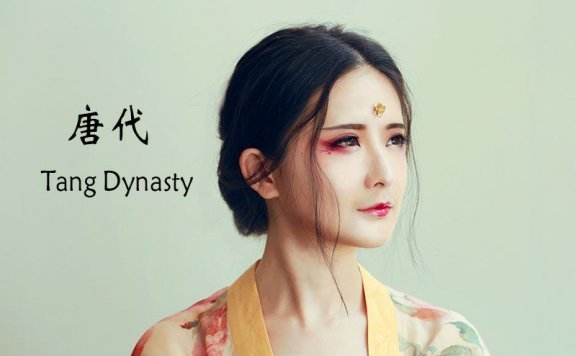
Tang Dynasty clothing mainly refers to the Tang Dynasty Hanfu clothes. Tang Dynasty is a period of great prosperity of China's feudal society. Both people's thoughts and material production have reached the ancient historical peak. Since the Tang Dynasty, a large number of flower patterns have been widely used in craft decoration. Its composition is lively and free, dense and symmetrical, plump, and mellow. Especially after the combination of wavy continuous patterns and floral plants, it was the popular pattern in that period. The style of the Tang Dynasty clothing has taken real flowers, grass, fish, and insects for sketching, instead of the previous creative idea of the "Mandate of Heaven." Still, the traditional mythical animals, like dragon and phoenix pattern, has not been excluded. At this time, the design of costume patterns tends to express the free, open mind and casual artistic style. The Feature of Tang Dynasty Clothing In the Tang Dynasty, foreign trade was developed, and the country was peaceful for a long time. Especially when the Tang Dynasty became the center of economic and cultural exchanges among Asian nations, it was the most glorious page in the history of Asian history. This period absorbed Indian and… -

Hanfu Photo Sharing of Ruqun-Return to the Tang Dynasty
Today, we share a group of photos of Ruqun, the posture and style is worth learning Ruqun has always been a popular style, put on your ruqun and take beautiful pictures~ -
Hanfu Festival | The 7th Xitang Hanfu Culture Week Grand Opening!
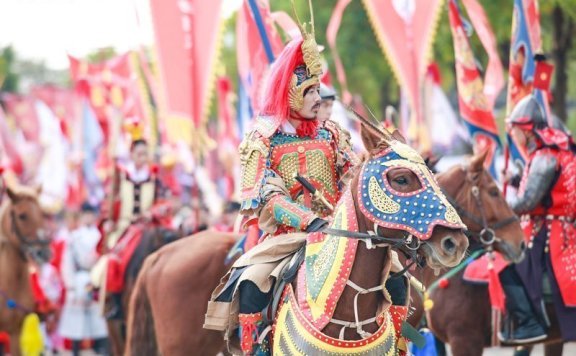
On October 26, 2019, the Chinese national costume exhibition and the 7th China Xitang Hanfu culture week opened in Xitang ancient town, Zhejiang Province. "Spring and autumn water, Tang and song towns, Ming and Qing architecture, modern people." Here, everyone is dressed in Hanfu and treated with courtesy. As time goes by, the Hanfu culture week has been held seven times in Xitang. Compared with the previous years, the 7th Xitang Hanfu culture week received more support and praise from traditional culture lovers, and the number of activities reached a new record. With the sound of drums, the horses are marching together. It opened the curtain of the 7th Xitang Hanfu culture week and led the most anticipated Dynasty Carnival to us. The handsome and powerful pacesetters are the vanguard elites of this carnival. They are mighty and majestic. Next to it, there is a uniform horse team, full of energy and momentum, which brings people's thoughts back to the historical era in an instant. The carnival is divided into seven parts: "Han, Jin, Tang, Song, Yuan, Ming and Qing", which highly extracts the cultural and spiritual images of each dynasty. You will see the square array with magnificent momentum… -
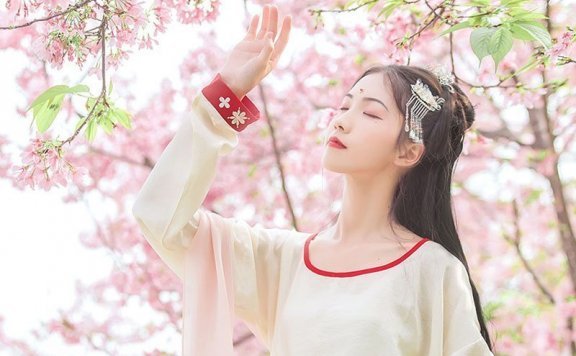
Amazed! Hanfu T-shirts were Available in the Tang Dynasty?
We have introduced Banbi (半臂) before, which is a kind of hanfu very suitable for wearing in summer. The tan collar introduced today is a small classification of Banbi. You will find that the shape of the tan collar is very similar to the collar of the T-shirt we usually wear. Tan collar (坦领), also known as U-collar, is a kind of short coat with a wide collar. Some of them cover it outside the skirt, some like today's short windbreaker. The lower body is matched with a long dress, which fully reflects the graceful posture and natural beauty of women in the Tang Dynasty. In the Tang Dynasty, the tan collar was more popular, not only for men and women but also for court uniforms. I spelled out a long picture to introduce it. It's easier to understand: Because of the wide popularity of Hu culture among different classes in the Tang Dynasty, it became a fashion hanfu for women to wear small sleeves in the Tang Dynasty. Popular in the Sui and Tang courts, and later spread to the folk, enduring. There are many conjectures about the origin of the tan collar. One conjecture is that the tan… -

What did the Tang Dynasty wear? | Chang'an Twenty-four Hours
Some time ago, I watched the hot Chinese drama Chang' a Twenty-four Hours (长安十二时辰). I was attracted by the hanfu of the Tang Dynasty in the play. So I did some research on the clothes and fittings of the Tang Dynasty. Let's see who is the most fashionable in Chang'an. Ruqun Talking about the trend of wearing and matching in the Tang Dynasty, it's natural that we can't do without ruqun. Ruqun is one of the most common and distinctive dresses in the Tang Dynasty. The main features of this dress are short clothes on the upper body and long skirts on the lower body. Some of them wear silk shoulders around their arms. Others wear half-arm outside the gown and then wear silk. "Ru (襦)" is for internal wear, sleeve length, upper and lower shorter, just to the waist. Long skirts were the clothes of women in the Tang Dynasty, most of which were made of silk. Skirt waist is high, can hide the chest, outside shoulder put on a yarn shirt, can make upper body skin half-covered, there is a kind of vague aesthetic feeling. Banbi (半臂) is a short-sleeved shirt, sleeve length to the elbow, knotted in… -
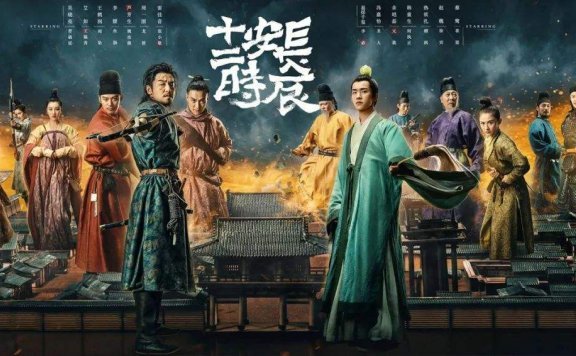
The Longest Day in Chang’an: Perfect Reproduction of Tang Dynasty Hanfu
Recently, a TV play, "The Longest Day in Chang'an(长安十二时辰)" is very attractive! It tells the story of the hero defending Chang'an City from the enemy's destruction during the Tang Dynasty. In addition to the glamorous actors, the play also pays tribute to the culture and history of the Tang Dynasty, including traditional costumes, weapons, makeup, architecture and Lantern Festival costumes, which are carefully reproduced on the basis of historical data. Today, let's take a look at the Tang Dynasty hanfu in the TV series. Let's start with the Taoist costumes worn when Jackson Yi appeared. Because of the prevalence of Taoism in the Tang Dynasty, Taoist costumes can be divided into five parts: Tao scarf, Tao crown, Tao gown, shoes and socks, and decoration. Taoist priests have different ranks and wear different clothes. The crane is a commonly used pattern in Taoism, known as "the emergence of immortals into the sky". Men basically wear round collars robe. "Round collar" refers to a collar type that does not wrap around the neck. A button often falls on the right side of the wearer's collar. On informal occasions, the buttons can also be unbuttoned to make the neckline hang down naturally. In… -
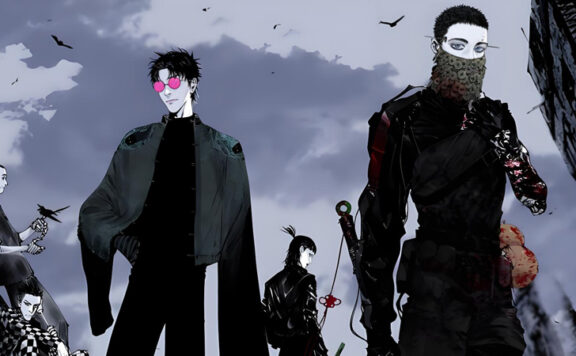
The Crow: Weaving Chinese Folklore into Modern Horror
What happens when a routine food delivery becomes a one-way ticket to a world of Chinese horror? For 18-year-old courier Zhang Zha (张炸), a simple mistake—mixing up floor numbers—leads to a brutal murder and a terrifying rebirth in The Crow (楚乌). This new animated series, adapted from Mo Fei's (墨飞) award-winning Manhua (漫画), arrives on Youku to redefine the genre. It blends the mundane with the macabre, pulling viewers into a modern Jianghu (江湖) where restless spirits threaten the living and a secret organization fights in the shadows. Forget cultivation clichés; this story grounds its supernatural terror in the grit of everyday life, asking what happens when death isn't the end, but the beginning of a much darker obligation. The Lore of "Shang" The genius of The Crow lies in its core concept: "Ren Si Hua Shang" (人死化殇). When individuals pass away with intense, unresolved obsessions, they do not simply fade away. Instead, they transform into Shang (殇)—malevolent entities fueled by lingering regret. These spirits can re-enter the human world through a mysterious, forbidden gateway, bringing chaos and danger to the realm of the living. This isn't a random haunting; it's a cosmic rule with dire consequences. Those who become… -
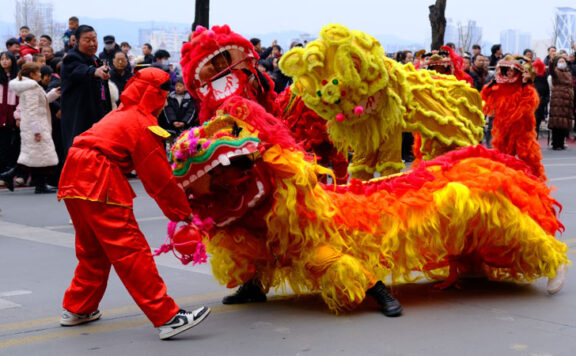
Why the Lion Reigns in She Huo Festival
When the thunder of drums rolls across the frozen soil of northern China and the sharp clang of gongs pierces the winter air, you know the She Huo (社火) has begun. This ancient festival, a boisterous carnival of gods and men, transforms villages into living stages. Masks leer, stilt-walkers tower above the crowd, and painted processions snake through the streets. But amidst all this color and chaos, there is always one performer that draws the crowd into a tight, breathless circle: the lion. It is not merely an act; it is the heartbeat of the celebration. Its presence transforms a simple parade into a sacred ritual, a tangible link between the people, their land, and the heavens. Why, in this pageant of folk art, does the lion always take center stage? The answer lies in a story that spans centuries, blending faith, art, and the very soul of a community. Exotic Beast to Holy Guardian The lion is not a native creature of the Chinese plains, yet it has roared in the country's imagination for over two thousand years. Its journey into the heart of She Huo begins with the Han Dynasty, when these magnificent animals were first presented as… -
Why Many Period Dramas Mistake Japanese for Chinese Style
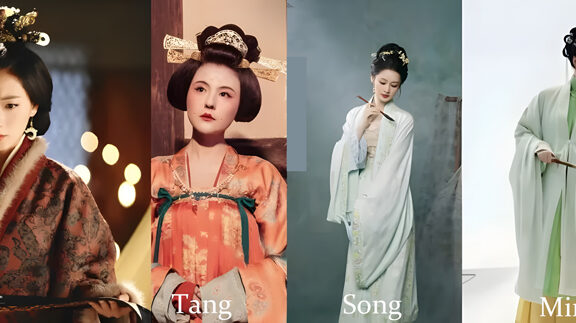
Why do so many period dramas look Japanese instead of Chinese? This question has sparked heated debate among viewers who sense something off about the aesthetics in recent productions. The distinction between authentic Chinese style and borrowed Japanese elements isn't merely academic—it's visually immediate once you know what to look for. While Japanese culture historically drew inspiration from China, centuries of separate evolution created fundamentally different aesthetic systems. Today's controversy stems not from overly critical audiences but from production teams who, whether through laziness or ignorance, substitute Japanese elements for Chinese ones. This isn't cultural appreciation; it's cultural erasure dressed in period costumes. The Clothing Code: One Fold Changes Everything The most commonly confused elements appear in costume design, particularly between Hanfu and Japanese kimono. Yet their fundamental structures diverge completely. Traditional Chinese clothing spreads horizontally across the body, with overlapping right-side closures, wide sleeves, and hidden ties instead of exposed buttons. Whether from Han, Tang, or Ming dynasties, these garments create flowing lines that move with the wearer—dignified, expansive, and structurally elegant. Even commoner's clothing maintains this generous proportion, never constricting the body unnaturally. Japanese kimono structure operates on opposite principles. Straight lines dominate—narrow sleeves that barely reach the… -
What Did an Ancient Chinese ID Look Like?
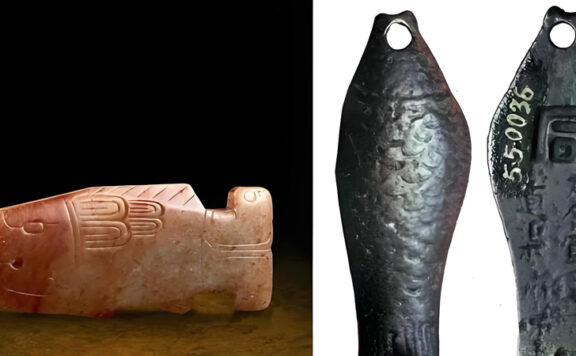
Imagine an object that everyone possesses, made from the same material, and engraved with the details that make you, you. In our modern world, the answer springs to mind instantly: it's an ID card. This little piece of plastic holds our birth date, our birthplace, and essentially summarizes all our social connections. In a way, it declares that we are who our society requires us to be. Within our familiar circles, we rarely need to prove our identity. But the moment we step into a completely new environment, our first task is to convince strangers that we are indeed ourselves, and not someone else. The ID card is the physical key to that proof. Today, it's a thin, simple card, yet it acts as a passport, safeguarding our journey wherever we go. But in the distant past, long before plastic and photographs, what object did a person use to answer the fundamental question: "Who are you?" 1. Sui and Tang Dynasties - Fish Tally China’s earliest known official ID emerged during the Sui and Tang Dynasties. It was Emperor Taizong (太宗) of the Tang who, during his Zhenguan (贞观) era, distributed a unique item to his officials called a "fish… -
The 2,000-Year Story of Niu Ma
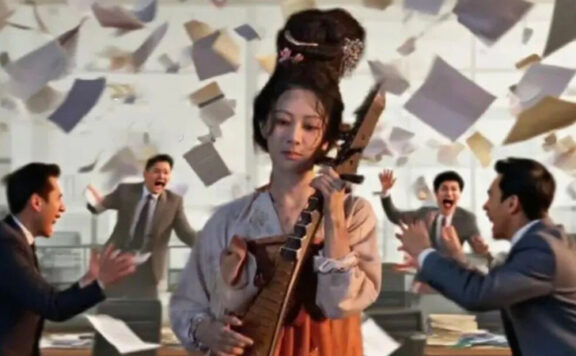
Have you ever called yourself a "Niu Ma" after a long day of work? This modern internet slang perfectly captures the exhaustion of the daily grind. But here's the kicker: government officials were using the exact same term to describe themselves over 2,000 years ago. That's right—feeling like a beast of burden at work is a tradition as old as Chinese civilization itself. When a Historian Called Himself a Beast The most famous example comes from the grand historian Sima Qian (司马迁). In his legendary letter Reply to Ren An (报任安书), he opens with the line, "The Grand Historian, a Niu Ma Zou (牛马走), Sima Qian, bows twice." By using "Niu Ma Zou"—which literally means "a running ox and horse"—he was calling himself a lowly servant, someone driven like livestock. It was a formal term of self-deprecation, but for Sima Qian, it carried profound weight. He endured castration to complete his historical masterpiece, making his use of "Niu Ma" less a polite gesture and more a bitter reality. He was a man of immense talent, yet in the eyes of the emperor, he was merely a tool, a creature to be used and discarded. The ox symbolized loyalty and hard… -
Jiang Qinqin Shines in Song - Style Hanfu
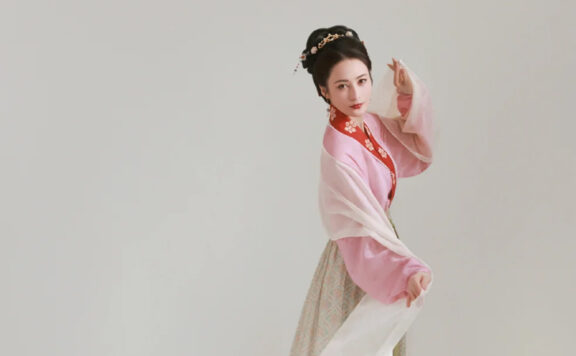
At a recent gala celebrating intangible cultural heritage, Jiang Qinqin (蒋勤勤) stepped back into the public eye. She didn't just appear; she arrived wrapped in the quiet elegance of Song-style Hanfu. The photos quickly rippled across social media, sparking a familiar question among viewers: Why has she stepped away from the screen so completely? The collective hope is for her to bring this very aesthetic—the muted tones and classic lines of the Song Dynasty—to life in a period drama. It feels like the perfect fit. Style Notes The outfit she wore is deceptively simple, yet it represents one of the most classic silhouettes in Hanfu. It’s a style centered on the Jiaoling (交领) or cross-collar, often paired with a long silk scarf known as a Pibo (披帛). Depending on the season and layering, a single layer is typically called a Shan (衫), while a lined garment is a Ru (襦). Historically, the combination of top and skirt was termed Ruqun during the Han and Jin dynasties. By the warmer Tang and Song periods, people often called it Shanqun. It's a subtle linguistic shift, but it reflects a real evolution in comfort and wearability. The genius of Song-style clothing lies in… -
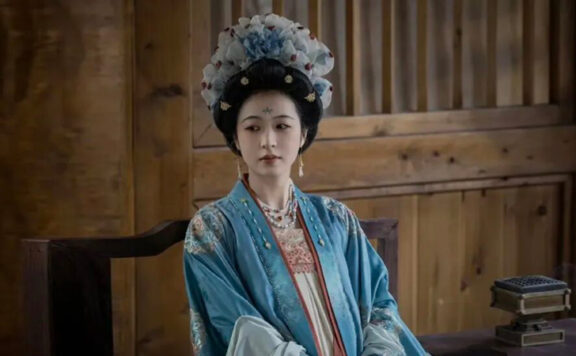
Baoji: China’s Ancient Wrapped Hairstyle
What if a seemingly simple hairdo from a period drama could unlock centuries of fashion secrets? The recent buzz around the costume design in the historical series Swords into Plowshares (太平年) has done just that. Actress Zhou Yutong's (周雨彤) portrayal of Sun Taizhen (孙太真) features a headpiece that sparked a quirky online debate: is that a bath puff on her head? This initial confusion has opened a fascinating window into a traditional Chinese hairstyling technique known as Baoji (包髻), a practice rich with history and surprisingly relevant to modern aesthetics. More Than a Hairdo The eye-catching style worn by Sun Taizhen is not a product of modern fantasy. It is a sophisticated interpretation of Baoji, a method of wrapping the hair with cloth that was particularly prevalent during the Song Dynasty. In its simplest form, a woman would style her hair into a bun and then cover it with a piece of silk, cotton, or gauze. This was not merely about restraint; it was an art form. The wrapping could be shaped to resemble various flowers, a practice that dovetailed with the era's love for fresh blooms, creating a "flower crown" effect on the head. This specific look in Swords… -
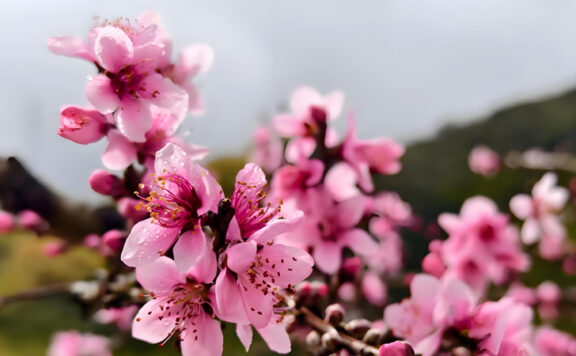
5 Ancient Chinese Flowers Beyond Roses
Forget roses. This Qixi (七夕) Festival, the air in ancient China was filled with the scent of peach blossoms, the elegance of peony buds, and the quiet symbolism of a hundred flowers, each petal a whispered word of love. 1. Peach Blossom: Love in Full Bloom If love had a season, it would be spring, and its most iconic flower is the peach blossom. Its symbolism is woven into the very fabric of Chinese literature, beginning with the ancient Book of Songs (诗经): "The peach tree is young and elegant; brilliant are its flowers." This verse wasn't just about a tree; it was a wedding hymn, wishing a bride happiness and prosperity. The vibrant, pink blossoms became synonymous with a woman's beauty at the height of her youth, as seen in Cui Hu's (崔护) famous Tang dynasty poem: "On this day last year, within this very gate, Her face and the peach blossoms reflected each other's pink." But the peach blossom's meaning is deeper than mere beauty. In the classic novel The Dream of Red Mansions, a scene of wind-blown peach petals drifting to the ground stirs a profound melancholy in the heroine, Lin Daiyu (林黛玉). Seeing the fleeting nature… -
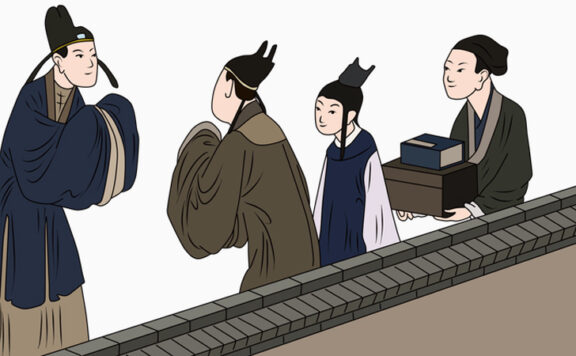
3 Kinds of Ancient Workplace Fatigue
Ever stared at the clock on a Wednesday afternoon, feeling a strange cloud of exhaustion follow you home? That, my friend, is what modern slang calls "workplace fatigue." It's the droopy eyes, the comfortable shoes, and the thousand-yard stare after a long shift. But before we pat ourselves on the back for inventing the grind, let's take a trip down memory lane. The ancient Chinese bureaucracy ran for thousands of years, and the "workplace fatigue" of its officials and laborers was arguably much heavier. From court officials waking up in the dead of night to beat cops who could never rest, let's unpack how our ancestors handled the daily 9-to-5—or in their case, the 3-to-5 AM. 1. Civil Servants Imagine setting your alarm for 2 AM. For a Ming Dynasty official, that was just another Tuesday. The founding emperor of the Ming Dynasty, Zhu Yuanzhang (朱元璋), demanded his court officials wait outside the palace gates by 3 AM for a 5 AM roll call, known as Dian Mao (点卯). One scholar-official, Qian Zai (钱宰), famously wrote a poem grumbling, "At the fourth drum I rise and put on my clothes, yet I fear I'll be late for the noon gate."… -
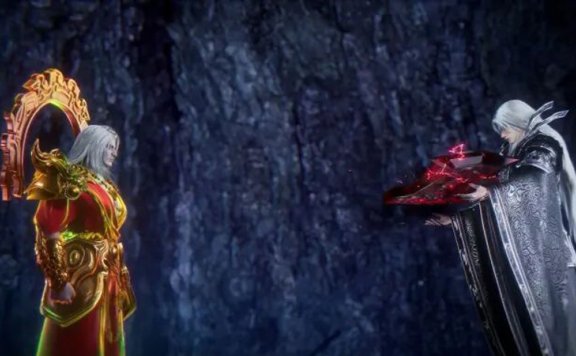
Renegade Immortal: Wang Lin's Tidal Abyss Windfall
In the treacherous depths of the Tidal Abyss, a place where most cultivators meet their doom, Wang Lin (王林) from Renegade Immortal (仙逆) transformed danger into a stunning windfall of power, ancient artifacts, and unparalleled spiritual evolution that would forever alter his path to immortality. The Tidal Abyss has always been whispered about in fearful tones among cultivators. It is a place where the very fabric of space seems to twist and tear, where ancient energies clash and create deathly currents capable of shredding both body and soul. For ordinary practitioners, venturing here is akin to walking into a dragon's den with no hope of return. Yet, for Wang Lin, this perilous location became a personal treasure trove. What started as a rescue mission for his ally Zhou Yi (周佚) turned into a series of fortuitous encounters. Zhou Yi, in a gesture of profound gratitude and recognition, severed his connection with his immortal sword and gifted it to Wang Lin. This was not merely a weapon transfer; it was the passing of a legacy. The sword, steeped in millennia of spiritual energy, immediately bonded with Wang Lin, becoming an extension of his will. Even Xu Liguo (许立国), Wang Lin's often…