Imagine an object that everyone possesses, made from the same material, and engraved with the details that make you, you. In our modern world, the answer springs to mind instantly: it’s an ID card. This little piece of plastic holds our birth date, our birthplace, and essentially summarizes all our social connections. In a way, it declares that we are who our society requires us to be. Within our familiar circles, we rarely need to prove our identity. But the moment we step into a completely new environment, our first task is to convince strangers that we are indeed ourselves, and not someone else.
The ID card is the physical key to that proof. Today, it’s a thin, simple card, yet it acts as a passport, safeguarding our journey wherever we go. But in the distant past, long before plastic and photographs, what object did a person use to answer the fundamental question: “Who are you?”
1. Sui and Tang Dynasties – Fish Tally
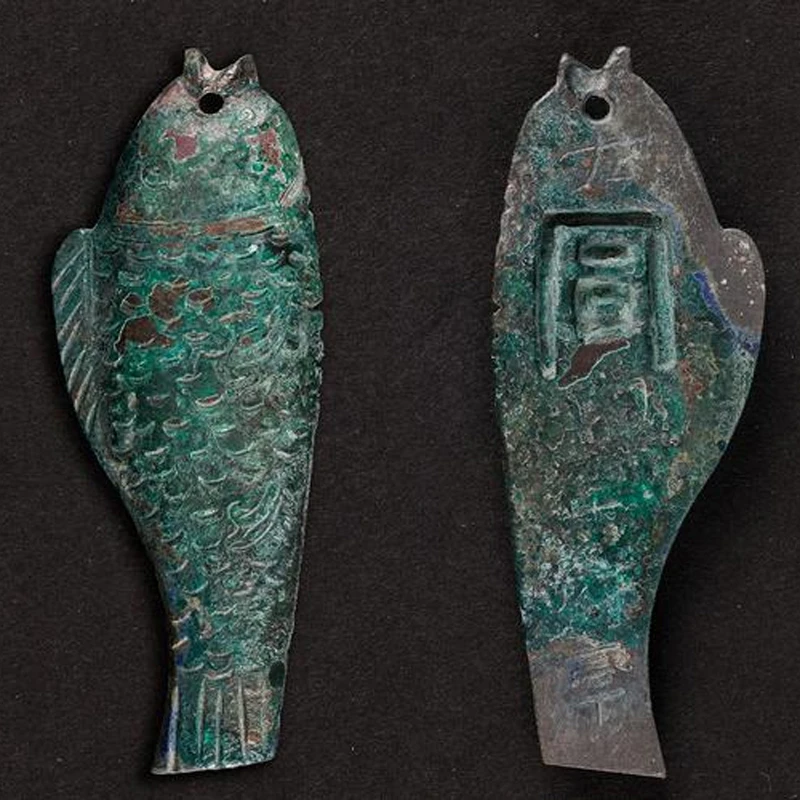
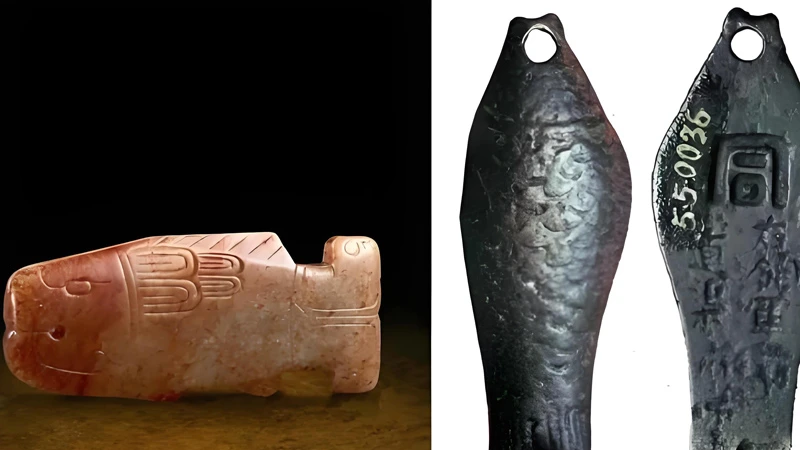
China’s earliest known official ID emerged during the Sui and Tang Dynasties. It was Emperor Taizong (太宗) of the Tang who, during his Zhenguan (贞观) era, distributed a unique item to his officials called a “fish tally”. This wasn’t just a card; it was a meticulously crafted object, usually made of wood or metal, shaped like a fish and split into two halves. Each half had a small hole so it could be tied to a belt. Engraved on its surface were the official’s name, his government post, and his specific rank.
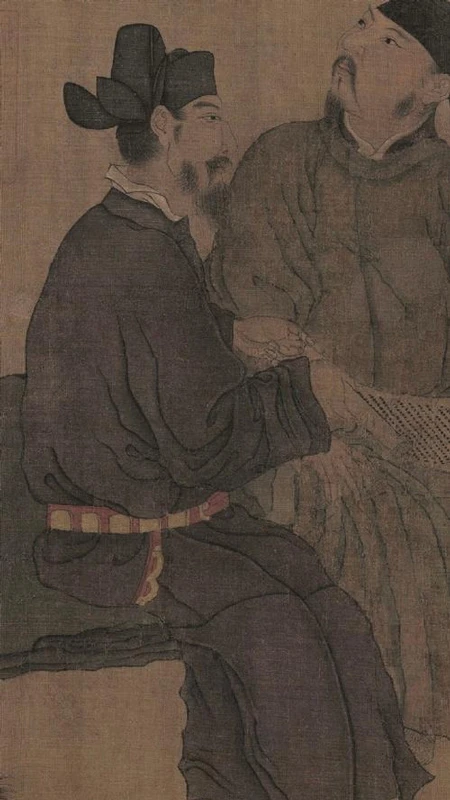
The material of the fish tally itself spoke volumes about the owner’s status. A prince or a high-ranking official of the third grade or above would receive one made of solid gold. Those of the fifth grade carried a silver one, while everyone from the sixth grade down had to make do with copper. For officials of the fifth rank and higher, the tally came with a specially designed pouch, known as a “fish pouch”, to hold it. Whenever an official needed to enter the palace gates, he was required to present his tally for verification. It wasn’t just a pass; it was a powerful symbol of his position in the world, a concept captured in the saying, “He who wears a fish tally shows his rank and answers the emperor’s call.”
What’s particularly fascinating is the built-in security system of the fish tally. It used a sophisticated method of matching halves. The left half was kept securely in the palace, serving as the official record. The right half was carried by the official himself. To verify someone’s identity, the two halves would be brought together. Only if they fit perfectly, with their inscriptions matching, would the person’s identity be confirmed. This system of pairing made forgery incredibly difficult, ensuring that the person carrying the right half was its legitimate owner.
2. Zhou Dynasty -Turtle Tally
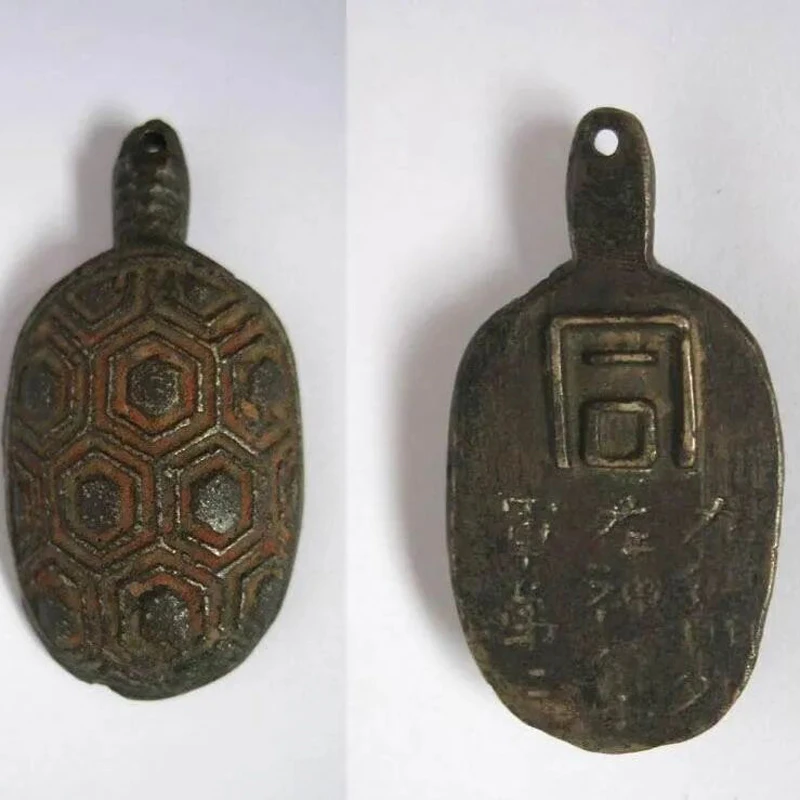
Things changed dramatically when Empress Wu Zetian (武则天) ascended the throne and established her own Zhou Dynasty, interrupting the Tang rule. In a move to symbolically break with the past, she replaced the fish tally. The new official ID took the form of a “turtle tally”. While it served the exact same purpose, the symbolism was completely different. The turtle, in Chinese tradition, is a creature of great longevity and wisdom, considered an auspicious emblem of status and good fortune.
The turtle tally, like its predecessor, was strictly graded by material. A prince or a top-tier official of the third grade and above would sport a prestigious gold turtle tally. Officials of the fifth rank and above used silver, and those of the sixth rank and below carried a copper version. The turtle was more than just a shape; it carried a deep cultural meaning. It represented a stable and honorable life, perfectly suited for the ruling class. This symbolism even seeped into the language of romance and marriage.
If a woman in ancient times married a man who wore a gold turtle tally, it meant her husband was a top-tier official, at least of the third rank, hailing from a powerful and wealthy family. This gave rise to a term that remains popular in Chinese culture to this day: “golden turtle son-in-law”, referring to a highly eligible and affluent bachelor. The famous Tang Dynasty poet Li Shangyin (李商隐) even referenced this in his verse, lamenting how a bride “regrets marrying a golden turtle son-in-law, for he must leave their warm bed for the early morning court.” The turtle tally directly inspired the romantic ideal.
3. Ming Dynasty – Ivory Plaque
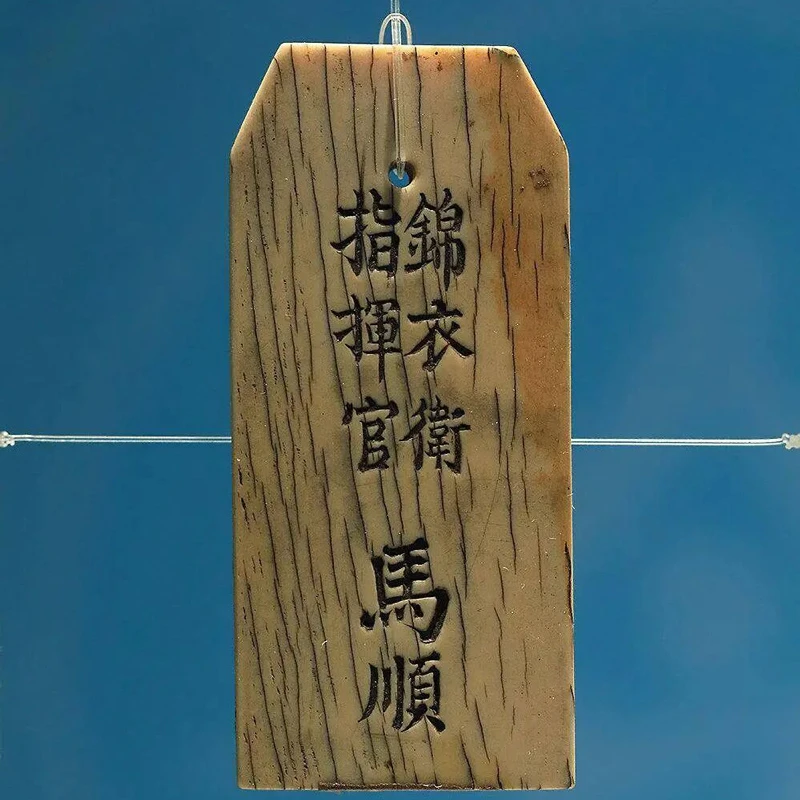
As time marched on, the fish and turtle tallies eventually fell out of use. By the Ming Dynasty, a new form of ID had taken center stage: the “ivory plaque”. This was a significant evolution, moving towards something more recognizable to us today. The plaque was thin, light, and compact, often made from materials like ivory, animal bone, wood, or metal. It resembled a modern business card in size and shape, making it far more convenient to carry than a clunky metal figurine.
Engraved on an ivory plaque was a wealth of personal data. It would list the holder’s name, his birthplace, details of his official position, his rank, his annual salary, and the specific government department he worked for. It was a comprehensive summary of his professional life. Importantly, its use was no longer restricted to high-ranking officials entering the palace. Historical records from the time note that anyone who needed to enter and exit government offices, regardless of their social standing, was required to wear an ivory plaque to avoid suspicion.
The Ming court strictly regulated these plaques, dividing them into five official categories. The laws were also incredibly severe when it came to misuse. It was strictly forbidden to lend your plaque to another person. The law code Collected Statutes of the Ming (明会典) stipulated harsh punishments: anyone entering a government area without a plaque would receive eighty blows with a heavy stick, and both the person who lent a plaque and the person who borrowed it would be beaten one hundred times. Your plaque was yours alone, tied intrinsically to your office. In fact, the only way an official would be stripped of his plaque was if he was dismissed from his post.
4. Qing Dynasty – Waist Plaque
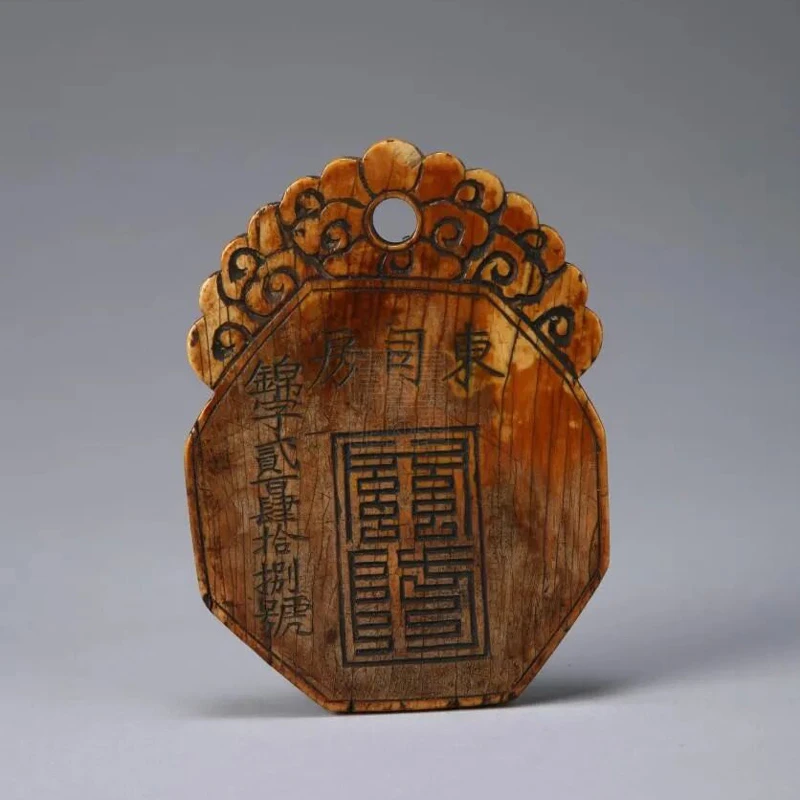
The Qing Dynasty, which followed the Ming, largely continued the plaque system, though the name evolved to “waist plaque”. The information carved onto it became even more detailed. Besides the standard name, age, work unit, and official title, the plaque would now also specify its exact purpose. It was a more refined tool for a vast and complex imperial bureaucracy. But the most significant upgrade in the Qing era was a new and surprisingly effective form of anti-counterfeiting.
On higher-grade waist plaques, officials began engraving a physical description of the holder right onto the tag. You might find phrases like “fair complexion, no beard” or “has a black mole” carved into the wood or ivory. This brilliant, low-tech solution meant that even if a thief managed to steal a plaque, he couldn’t easily use it. After all, finding someone else with a fair face, no beard, and a mole in exactly the same spot was highly unlikely. This simple addition of biometric data made the ID much more personal and secure.
For the common people, however, there was no such thing as a permanent ID. Their lives were controlled through a strict system of household registration. Whenever a commoner needed to travel far from home, they had to apply to the local authorities for a “road guide”, a temporary permit. This document would state their name, hometown, and the reason for their journey. So, from the gold and silver tallies of Tang officials to the descriptive waist plaques of the Qing, and even the humble road guide for a traveler, the methods may have changed, but the fundamental human need to prove “I am me” has remained a constant throughout history.