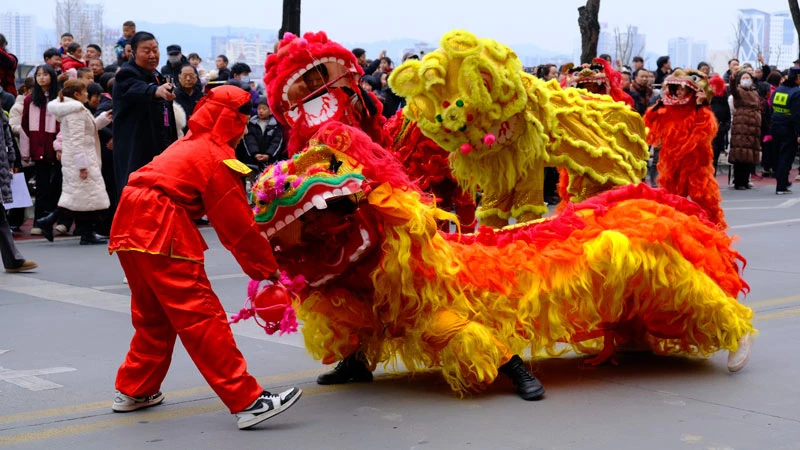
When the thunder of drums rolls across the frozen soil of northern China and the sharp clang of gongs pierces the winter air, you know the She Huo (社火) has begun. This ancient festival, a boisterous carnival of gods and men, transforms villages into living stages. Masks leer, stilt-walkers tower above the crowd, and painted processions snake through the streets.
But amidst all this color and chaos, there is always one performer that draws the crowd into a tight, breathless circle: the lion. It is not merely an act; it is the heartbeat of the celebration. Its presence transforms a simple parade into a sacred ritual, a tangible link between the people, their land, and the heavens. Why, in this pageant of folk art, does the lion always take center stage? The answer lies in a story that spans centuries, blending faith, art, and the very soul of a community.
Exotic Beast to Holy Guardian
The lion is not a native creature of the Chinese plains, yet it has roared in the country’s imagination for over two thousand years. Its journey into the heart of She Huo begins with the Han Dynasty, when these magnificent animals were first presented as rare tributes from Central Asia. To the ancient Chinese, they were not just beasts, but divine omens—auspicious animals whose arrival signified the blessing of the heavens. This perception was profoundly deepened with the spread of Buddhism.
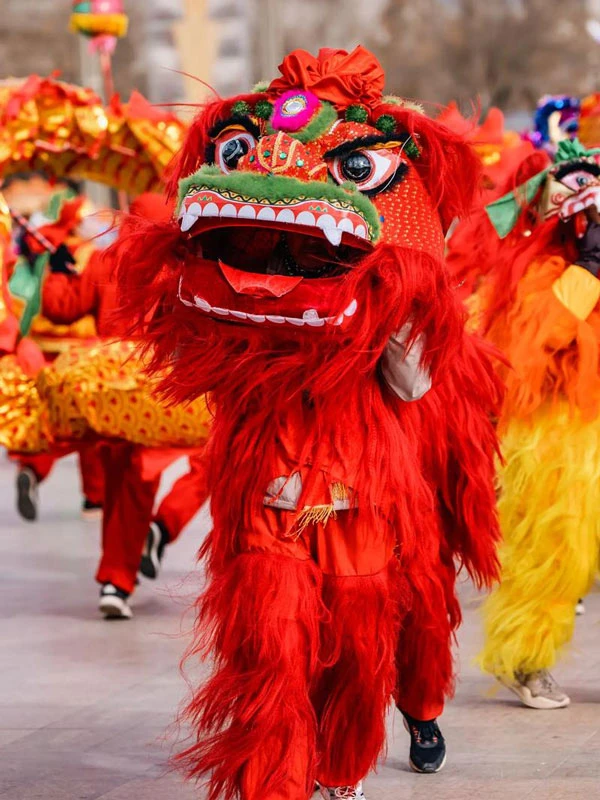
The lion was elevated to a sacred status, becoming the majestic mount of the Bodhisattva Manjusri and a fierce protector of the Buddhist faith. The concept of the “Lion’s Roar” echoed through temples, symbolizing the power of the dharma to awaken the ignorant and shatter delusion. This religious symbolism merged seamlessly with folk beliefs. A record from the Northern Wei Dynasty, the Luoyang Qielan Ji (洛阳伽蓝记), describes “exorcist lion” dances during Buddhist processions, marking the creature’s first steps from the altar into the secular world.
By the Tang Dynasty, this evolution was complete. The lion dance was codified into the grand court performance of the Five Directions Lions Dance, where lions of five colors symbolized the harmony of the universe, with the yellow lion at the center representing imperial power. Over the following centuries, this majestic art form descended from the palace to the streets, finding its perfect home in the vibrant, grassroots energy of the She Huo festival.
A Fierce Dance for Peace and Plenty
At its core, She Huo is a ritual of exorcism and renewal. The character Huo is central to its name, representing the purifying power of flame to drive away the dark spirits of winter and pestilence. It is here that the lion’s role becomes most vital. Revered as the king of beasts, it embodies righteous, overwhelming power. Its very presence is believed to be a potent charm against malevolent forces, capable of sweeping away the bad luck and misfortunes accumulated over the past year. As the procession winds through every lane and alley, the lion leaps, tumbles, and sways its head.
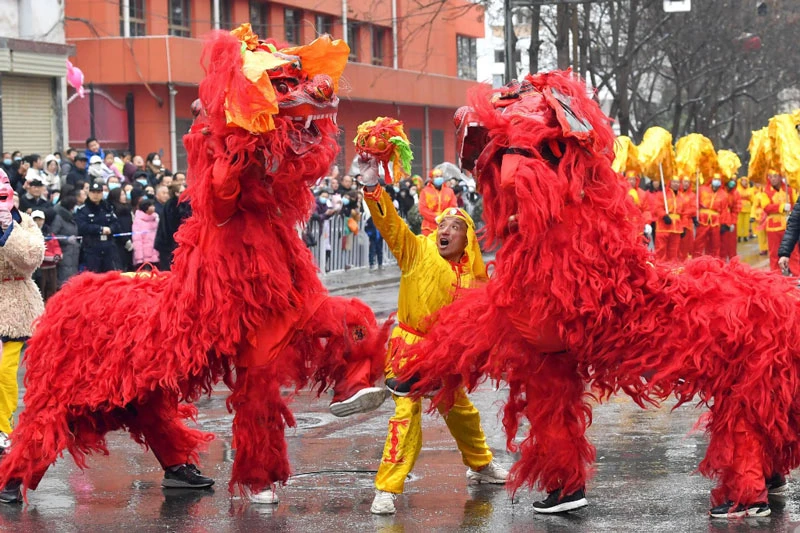
Firecrackers explode at every doorstep, a percussive symphony meant to terrify evil spirits, while the lion chases them away, blessing each home with safety and peace. But the lion’s duty extends beyond mere protection. In a deeply agrarian society, its dance is also a prayer for the harvest. The iconic Cai Qing (采青) ritual, or “plucking the greens,” is a highlight of the performance. The lion must skillfully reach up to snatch a bundle of green vegetables, often with a red envelope tucked inside, hung high above the door of a home or business.
The greens symbolize life and growth, while the red envelope holds money. This act is a vivid, kinetic prayer for prosperity, a wish for businesses to flourish and fields to yield abundant crops. The lion’s playful struggle becomes the community’s collective hope for the coming year.
Weaving the Fabric of Community
To watch a She Huo lion dance is to witness a marvel of coordination. The creature is brought to life by two performers—one manipulating the head, the other the body and tail—moving as a single, fluid entity. Their movements are guided by a warrior holding an embroidered ball, their rhythm dictated by the thunderous beat of the drum. This is not just a performance; it is the ultimate expression of She Huo’s communal spirit. The festival itself is a product of collective effort, from crafting the elaborate costumes to organizing the parade. But the lion dance is the most demanding test of this collaboration.
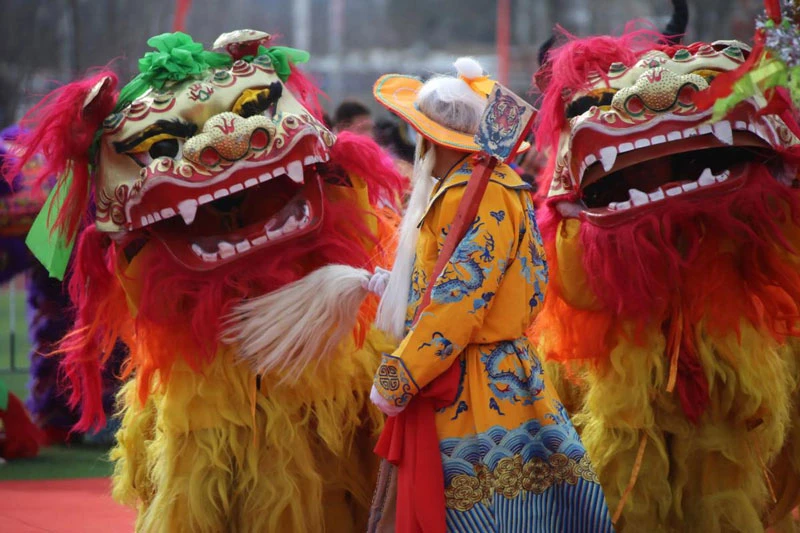
The dancer at the head must convey the lion’s very spirit—its curiosity, its bravery, its playfulness—while the one at the tail must mirror his partner’s every shift in weight and movement. A single misstep can break the illusion and ruin the routine. This necessity for perfect, wordless cooperation binds the villagers together, strengthening the ties of kinship and neighborhood. The art is passed down through generations: the elderly teach the traditional steps and the craft of building the lion’s frame from bamboo; the young men dedicate themselves to the acrobatic training; and the children, watching wide-eyed, dream of the day they will step into the costume.
The lion dance is thus a living repository of intangible cultural heritage, a vibrant thread connecting the past to the future. It reinforces values of teamwork, respect for elders, and shared identity, ensuring that with every leap and roar, the community reaffirms its own bonds. When the performance ends and the lion’s head is removed, it is often a sweat-drenched neighbor, not a stranger, who smiles back at the crowd, having just carried their collective hopes on his shoulders.