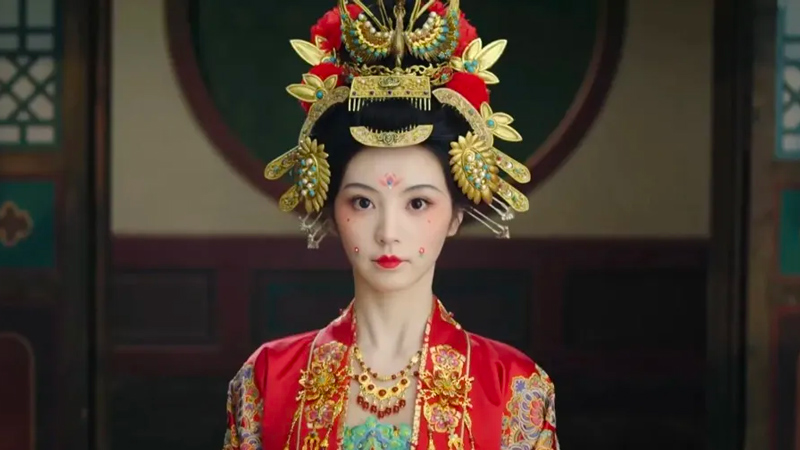
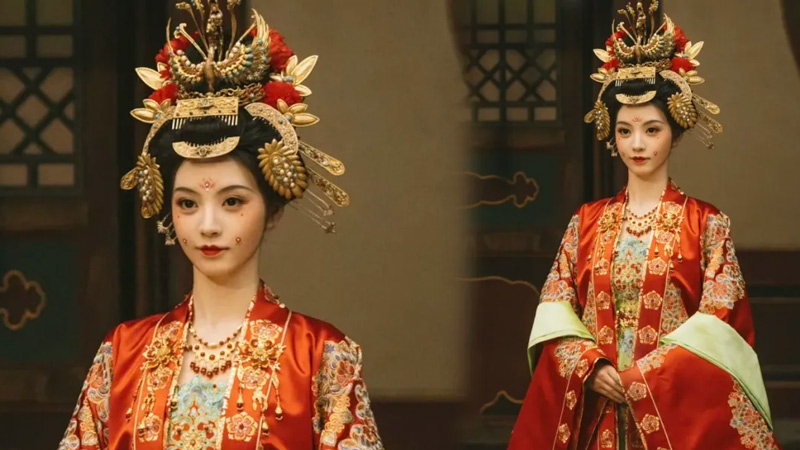
Beyond mere decoration, the elaborate bridal makeup and headdress worn by actress Tian Xiwei (田曦薇) in the historical drama Moonlit Reunion (子夜归) are deeply rooted in the symbolic visual language of the late Tang and Five Dynasties periods.
Beyond Makeup: Symbols on Skin
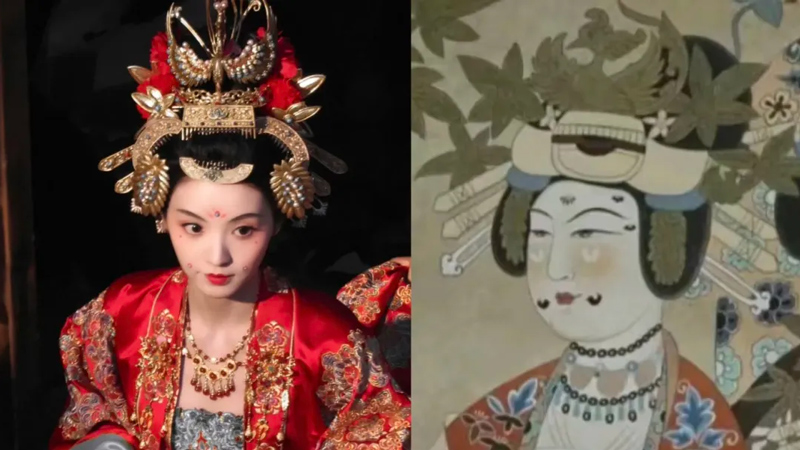
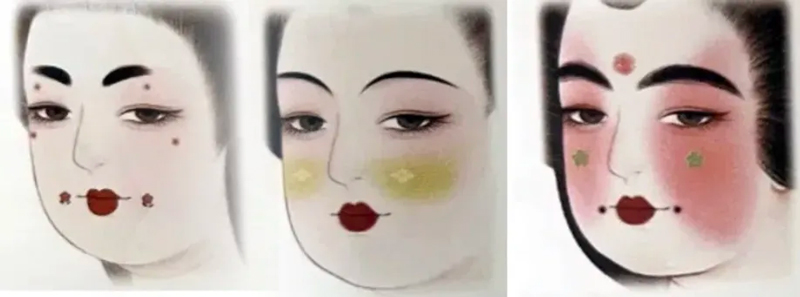
Tian Xiwei's striking bridal look in the historical drama Moonlit Reunion sparked heated debate. Many viewers questioned the elaborate floral patterns adorning her face and the large, distinctive ornaments flanking her temples. Rather than random excess, this aesthetic authentically channels late Tang Dynasty (618-907 AD) and Five Dynasties (907-960 AD) artistry. The intricate facial designs, known collectively as Mian Ye (面靥), transformed skin into a canvas for symbolic meaning. Different motifs—Niao Ye (鸟靥), Hua Ye (花靥), or Xing Ye (星靥)—served as auspicious emblems, reflecting an era where multicultural exchange and Buddhist influences permeated beauty ideals.
The application method fascinated historians. Beyond painted designs, historical texts like Ling Biao Lu Yi (岭表录异) document using dried botanicals adhered with fish-glue. This practice evolved into lavish displays during the late Tang, where nobles competed in ornamental excess. Mian Ye expanded beyond traditional cheek placements, climbing to foreheads and framing noses. While visually dense, these arrangements followed deliberate compositional rules, creating an ordered complexity that conveyed mystique rather than chaos.
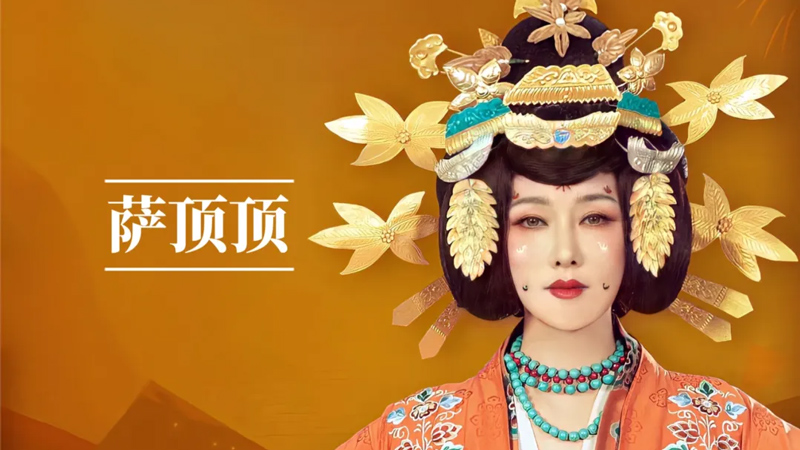
Criticism about overcrowding holds merit when compared to period benchmarks. A more harmonious representation exists in singer Sa Dingding's (萨顶顶) recreation, where a larger hairstyle base better balances the ornate accessories. Tian’s smaller hair bun unintentionally amplified the visual weight of the temple ornaments, contributing to the "crowded" critique some viewers expressed.
Crowning Glory: The Phoenix Ascendant
The headpiece drew equal attention, particularly the imposing Feng Guan (凤冠). This wasn't mere decoration; it represented the pinnacle of Tang avian symbolism. Tang artisans synthesized features from multiple birds into their phoenix designs: an eagle’s sharp beak and claws, a pheasant’s layered tail feathers, and a rooster’s distinctive comb. As documented in texts like Zhang Hua’s (张华) annotations to Qin Jing (禽经), the Tang phoenix embodied a mythical hybrid—"swan-fronted, unicorn-reared, snake-necked, fish-tailed, dragon-patterned, turtle-bodied, swallow-jawed, and chicken-beaked."
Flanking the crown, the misunderstood temple ornaments were Yan Bin (掩鬓), large hairpins shaped like stylized flowers or leaves. Their positioning and size were consistent with high-status Tang women’s attire depicted in Dunhuang (敦煌) frescoes. These murals show noblewomen wearing multiple ornamental combs (梳栉), paired hairpins, layered necklaces (璎珞), and elaborate crowns during formal ceremonies. The "chaos" was curated grandeur.
Material wealth fueled this sartorial explosion. Prosperity allowed unprecedented experimentation in textiles and adornment. Garments featured exaggerated sleeves and trains, while headwear reached new heights of complexity. The Tang aesthetic embraced maximalism, viewing abundance as a manifestation of cosmic order and earthly power.
A Step Toward Makeup Styles
While imperfect, Tian Xiwei’s portrayal marks significant progress for historical accuracy in Chinese period dramas. Many productions default to simplified "internet-famous" makeup styles, erasing distinctive period features. Moonlit Reunion dared to showcase the bold, complex beauty standards of an era defined by cultural confluence and artistic confidence.
Understanding the symbolism transforms the viewing experience. The floral Mian Ye weren’t random doodles but wishes for fertility and fortune etched onto skin. The imposing phoenix crown wasn’t mere bulk; it was a heraldic emblem of imperial authority and cosmic balance. The large Yan Bin anchored the hairstyle, framing the face with deliberate symmetry.
This interpretation challenges modern minimalist preferences. Tang nobility saw beauty in layered abundance, finding harmony within apparent extravagance. The look serves as a vibrant reminder that historical aesthetics operated under different rules—rules valuing symbolic resonance and visible status over subtlety.
Ultimately, the discussion ignited by Tian Xiwei's bridal ensemble enriches appreciation for Tang visual culture. It pushes costume design beyond anachronistic prettiness toward thoughtful historical dialogue, proving that sometimes, "too much" is precisely right.