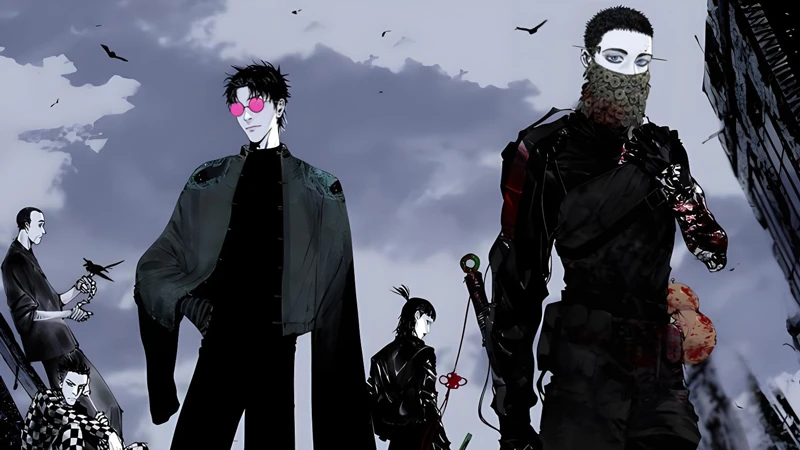
What happens when a routine food delivery becomes a one-way ticket to a world of Chinese horror? For 18-year-old courier Zhang Zha (张炸), a simple mistake—mixing up floor numbers—leads to a brutal murder and a terrifying rebirth in The Crow (楚乌). This new animated series, adapted from Mo Fei’s (墨飞) award-winning Manhua (漫画), arrives on Youku to redefine the genre.
It blends the mundane with the macabre, pulling viewers into a modern Jianghu (江湖) where restless spirits threaten the living and a secret organization fights in the shadows. Forget cultivation clichés; this story grounds its supernatural terror in the grit of everyday life, asking what happens when death isn’t the end, but the beginning of a much darker obligation.
The Lore of “Shang”
The genius of The Crow lies in its core concept: “Ren Si Hua Shang” (人死化殇). When individuals pass away with intense, unresolved obsessions, they do not simply fade away. Instead, they transform into Shang (殇)—malevolent entities fueled by lingering regret. These spirits can re-enter the human world through a mysterious, forbidden gateway, bringing chaos and danger to the realm of the living. This isn’t a random haunting; it’s a cosmic rule with dire consequences. Those who become entangled with this power, acting as the living conduit for these spirits, are known as “Shang Ren”, forever caught between two worlds. The lore immediately sets the stakes higher than a simple ghost story.
To combat this threat, a clandestine organization exists, named after the very birds that symbolize its purpose. Chu Wu (楚乌), derived from the Chinese word for crow, takes these often-misunderstood creatures as its emblem. In Chinese tradition, crows are frequently associated with death and the somber transition between worlds, making them the perfect symbol for a group dedicated to managing the “Shang” crisis. They operate just out of sight, their members skilled warriors and mystics who use ancient techniques to bind evil and protect ordinary people from horrors they cannot perceive. The organization itself feels like a character—ancient, weary, and armed with traditions that blend folk remedies with lethal combat, as seen with Xiao Ye’s (萧野) acupuncture needle techniques.
Zhang Zha’s Awakening
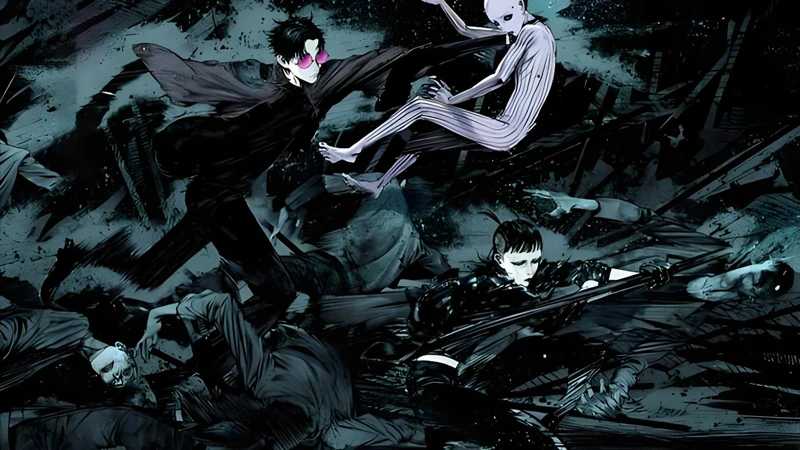
The story hooks audiences through its unlikely hero, Zhang Zha. He is not a chosen one from a prophecy; he is simply a kid trying to make a living. His fatal error—delivering food to a wrong, sinister apartment—results in him having his neck broken and being stuffed into a body bag. Yet, his story doesn’t end in the morgue. Waking up amidst the dead, he is suddenly engulfed in flames. Instead of killing him, this hellfire activates a dormant power implanted by the very gateway the “Shang” use, transforming him into a unique type of “Shang Ren.” This violent, fiery rebirth is visually stunning and immediately separates him from every other character in this modern Jianghu.
Thrust into a reality he cannot comprehend, Zhang Zha is found by the stoic and powerful Xiao Ye. Their initial encounter is a brutal clash, with Xiao Ye using precise golden needle techniques to subdue the confused young man. This conflict serves as the audience’s introduction to the rules of this hidden world. Xiao Ye becomes the mentor figure, dragging Zhang Zha to the Chu Wu headquarters to explain the truth: the world is teeming with “Shang” threats, and Zhang Zha’s new powers have painted a target on his back. Their relationship evolves from hostility to deep partnership, forming the emotional core of the series as they embark on a dangerous quest to find a missing child known as “Ghost Gate,” a journey that promises to reveal even darker secrets.
The Art and Animation of a New Classic
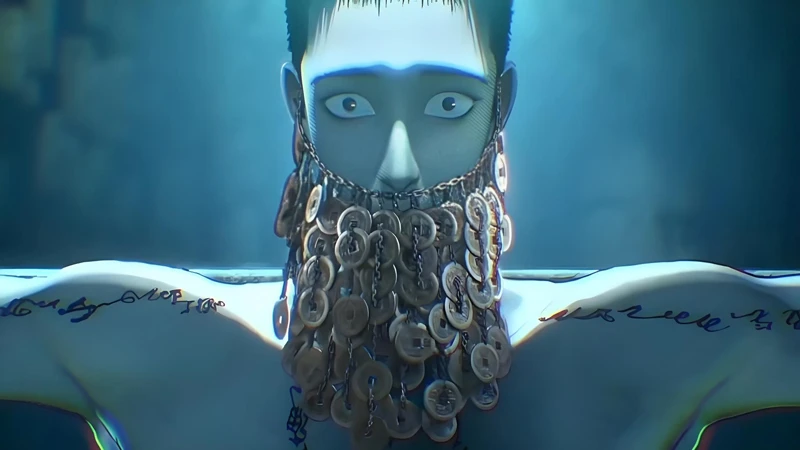
Following his success with Gu Wei Nan Ting, creator Mo Fei has cemented his reputation as a master of Chinese horror aesthetics. The original manhua for The Crow has already garnered critical acclaim, winning the Golden Dragon Award for Best Story Comic and Best Screenplay. Readers praise its cinematic panel layout and its ability to weave traditional symbols—like ancient coins used to cover eyes or intricately carved red coffins—into a modern visual language . The animation studio, Lishiguang (荔时光), faces the monumental task of translating this detailed, eerie art into motion, and early promotional videos suggest they are succeeding. The tension is palpable, with the haunted house scenes dripping in atmospheric dread.
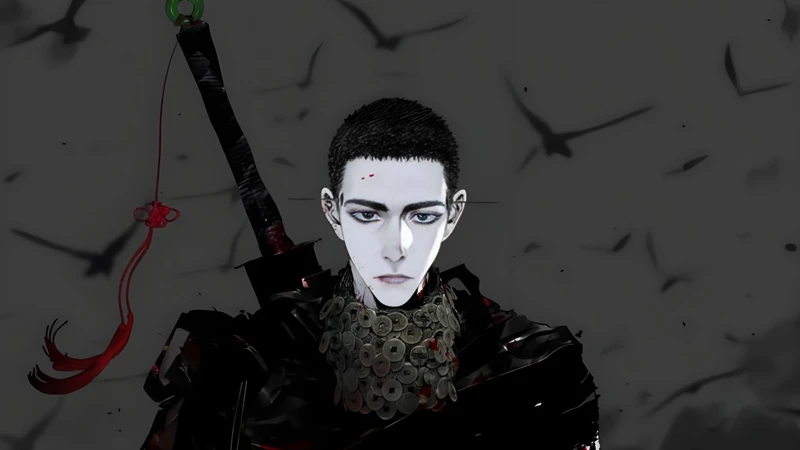
The animation promises to heighten the source material’s strengths by amplifying the visual impact of the supernatural battles. The horror is distinctly Chinese, relying not on jump scares alone but on a creeping dread rooted in folklore. This fusion of terror with high-octane action creates a unique viewing experience. In a market saturated with tales of immortal cultivation, The Crow stands out by focusing on the raw struggle of ordinary humans against an extraordinary evil. It leverages elements of folk customs to ground its fantasy, making the terror feel more immediate and culturally resonant. As Zhang Zha and Xiao Ye navigate this shadow war, the animation promises to be a landmark series that proves Chinese horror can be both intellectually chilling and viscerally thrilling.