Forget roses. This Qixi (七夕) Festival, the air in ancient China was filled with the scent of peach blossoms, the elegance of peony buds, and the quiet symbolism of a hundred flowers, each petal a whispered word of love.
1. Peach Blossom: Love in Full Bloom
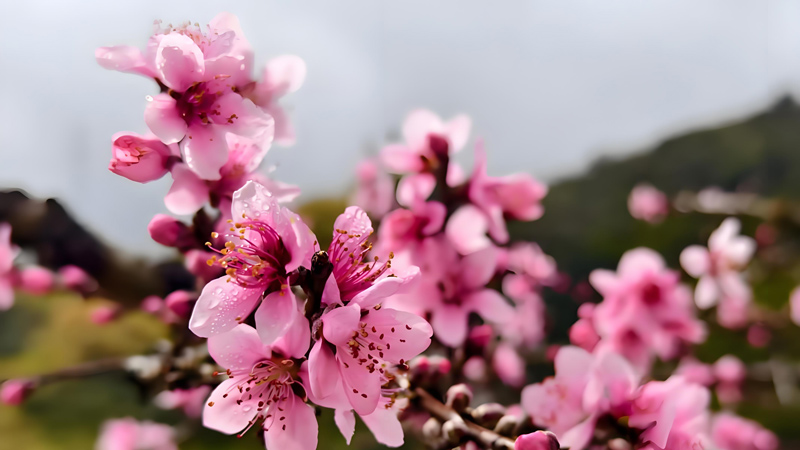
If love had a season, it would be spring, and its most iconic flower is the peach blossom. Its symbolism is woven into the very fabric of Chinese literature, beginning with the ancient Book of Songs (诗经): "The peach tree is young and elegant; brilliant are its flowers." This verse wasn't just about a tree; it was a wedding hymn, wishing a bride happiness and prosperity. The vibrant, pink blossoms became synonymous with a woman's beauty at the height of her youth, as seen in Cui Hu's (崔护) famous Tang dynasty poem: "On this day last year, within this very gate, Her face and the peach blossoms reflected each other's pink."
But the peach blossom's meaning is deeper than mere beauty. In the classic novel The Dream of Red Mansions, a scene of wind-blown peach petals drifting to the ground stirs a profound melancholy in the heroine, Lin Daiyu (林黛玉). Seeing the fleeting nature of the blossoms as a mirror of love's own fragility, she gathers them for a burial, creating a poignant ritual to preserve their—and love's—purity. This duality, of radiant beauty and ephemeral existence, is why the peach blossom remains such a powerful emblem. Even today, to have "peach blossom luck" means you are lucky in love .
2. The Peony's Promise: A Gift at Parting
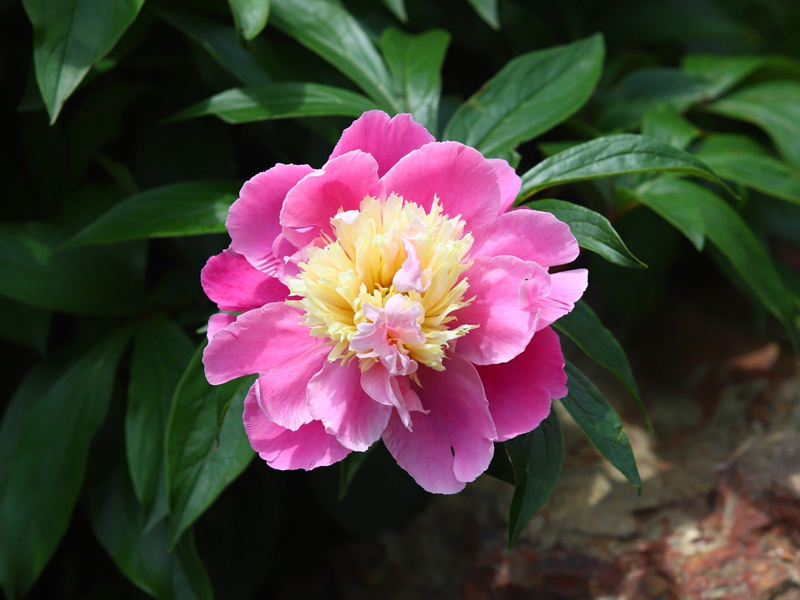
Imagine a scene from the Book of Songs: young men and women meet along the Qin and Wei rivers, their laughter mingling with the spring air. As they part, a boy plucks a flower and gives it to the girl he fancies. This wasn't a rose, but a peony. Known for its lush, graceful petals, the peony was a direct metaphor for a woman's beauty—the very name "shao yao (芍药)" is a homophone for "graceful and delicate."
Yet, this flower of stunning beauty carried a bittersweet secret. Because it was often given when lovers had to say goodbye, it earned the nickname "jiang li" (将离), meaning "to take leave" . The peony, therefore, embodies a more complex layer of love. It speaks of an attachment so deep that even the moment of parting is infused with emotion, a promise whispered into a flower meant to last until the next meeting. It is love acknowledged, cherished, and then carried away in hand, a token of a bond that distance cannot break .
3. The Acacia's Embrace: Harmony and Resolve
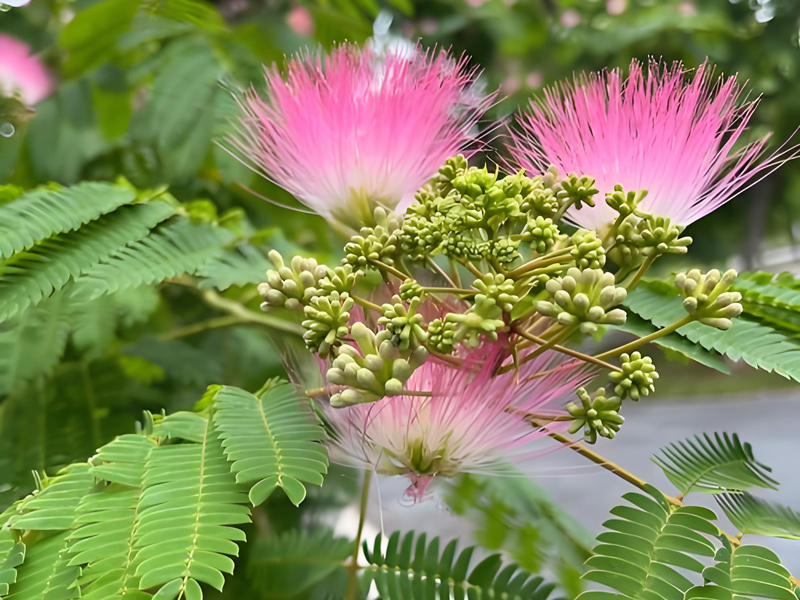
Walk through a classical Chinese garden and you might find the Acacia tree, its delicate, silky pink flowers and feathery leaves creating an aura of peace. Its very name means "together joy," and ancient custom held a beautiful belief: if a quarreling couple placed acacia flowers under their pillow, their anger would dissolve, and harmony would be restored. This wasn't mere folklore; texts like the Shennong Ben Cao Jing (神农本草经) praised its medicinal ability to "calm the mind and bring joy" .
The acacia tree's behavior is a living metaphor for a happy marriage. During the day, its paired leaves spread wide, embracing the sun. At night, they fold together, as if in a gentle, shared slumber. This daily rhythm perfectly mirrored the ideal of spouses who support each other's individual endeavors by day and reunite in close companionship each night . It is love not just as passion, but as a gentle, restorative partnership, a quiet promise of perpetual reconciliation and enduring familial bliss.
4. The Twin Lotus: An Inseparable Fate
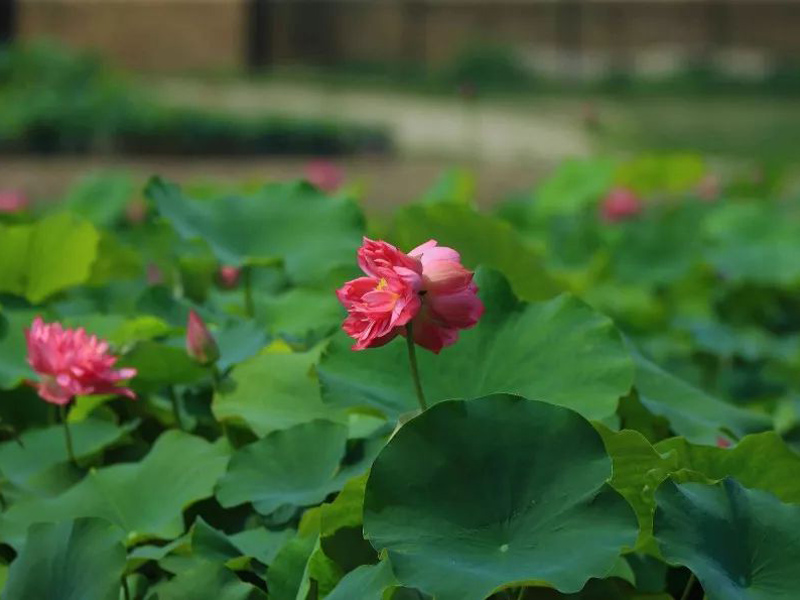
Walk past a pond in summer, and you might witness a botanical marvel: a single stem proudly bearing two lotus flowers. This is the Bingdi (并蒂) Lotus, a rare mutation considered one of the most powerful symbols of love. It is nature's own representation of an ideal match, "tian sheng yi dui (天生一对)"—a couple destined to be together. The image of two flowers sharing one life source, one stem, breathing and blooming in perfect sync, speaks of an inseparable bond, a love that endures through shared hardship and joy .
Legend tells of a pair of star-crossed lovers who, forbidden to marry, drowned themselves in a pond. The following year, the water was filled with bingdi lotuses in red and white, their colors intertwined. This solidified the flower's status as the ultimate emblem of "perfect harmony," a love so profound that even death could not sever its connection.
5. The Lily's Wish: A Century of Shared Peace
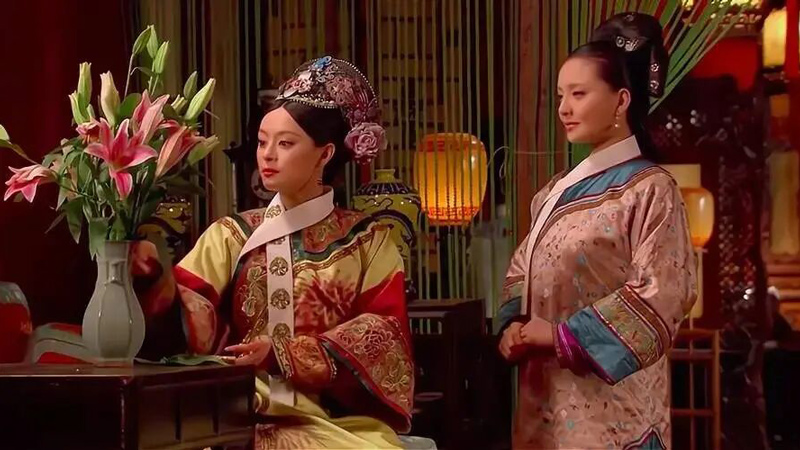
Not all love stories need to be grand tragedies. Some find their power in quiet devotion and a promise of forever. This is the realm of the lily. Its pure white petals, clasped tightly together, form a natural cup, visually echoing the phrase it represents: "bai nian hao he" (百年好合), meaning "happy union for a hundred years" . The name itself is a homophone for this beautiful wish. It is the flower of commitment, of the quiet, steadfast love that builds a life and a home.
In its elegance and pristine beauty, the lily evokes the purity and fidelity of a devoted partner. The poet Lu You saw in its bloom a "long-lasting spring" that could make one forget poverty and fill the heart with joy . It does not seek to be the most dazzling flower in the garden but instead offers a vision of enduring contentment. The lily is for the quiet mornings and shared evenings, a wish not for a dramatic flame, but for a gentle, steady light to guide a lifetime together.