Article
Search results:
-
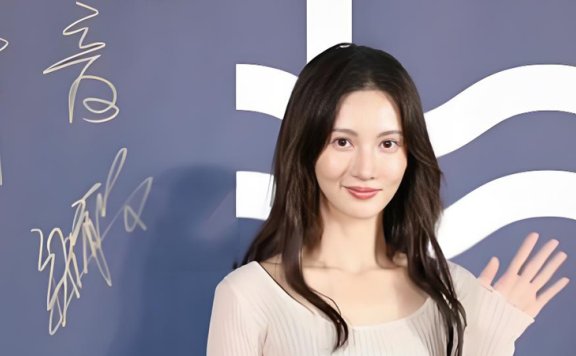
Jin Chen's Unplanned Red Carpet Stroll in Aranya
When a star steps onto the red carpet in vacation clothes, it does more than surprise—it challenges an entire culture of glamour. On September 7, Chinese actress Jin Chen (金晨), affectionately known as Da Xi (大喜) to her fans, made headlines not for a designer gown but for her ordinary outfit at the closing ceremony of the Waves Film Week in Aranya. Unlike other celebrities who spent hours preparing, she appeared in a casual crop top, jeans, flat shoes, and a simple LV scarf tied around her waist. Her makeup was light, almost bare-faced, as if she had just been strolling along the beach. The reason? She wasn’t even scheduled to attend. She was there as a tourist, invited last minute to walk the carpet. Her unpreparedness became her greatest asset. The Unplanned Walk Jin Chen’s team responded with humor and honesty. Her studio posted on social media, “The red carpet was a last-minute decision, and so was our notification. This is so Da Xi!” Instead of hiding behind excuses, Jin Chen embraced the situation. She joked that she was her own stylist, photographer, and makeup artist that day. A video of her leaving the event went viral—she was seen… -
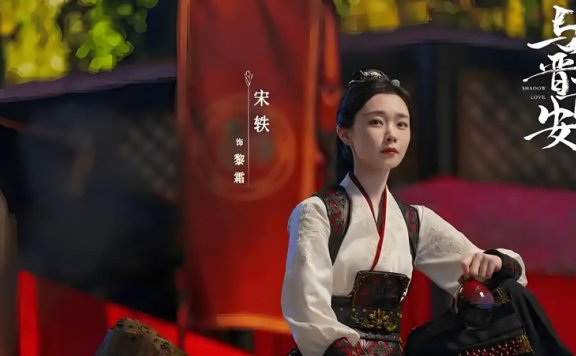
How Shadow Love's Ending Undermines Its Female Hero
The finale of the romantic fantasy drama Shadow Love (与晋长安) has sparked heated discussions among viewers, not for its grand romantic resolution, but for its perplexing character arc for the female lead. The series, starring Song Yi (宋轶) and Cheng Lei (丞磊), follows the story of a formidable female general whose identity and autonomy are systematically dismantled, all in the name of love. This narrative choice has left many audiences questioning the underlying message it sends about female empowerment in contemporary historical fantasies. A Warrior's Diminishment For the overwhelming majority of the series, Song Yi's character, General Li Shuang (黎霜), is a respected and capable military leader. She commands troops, strategizes in battle, and embodies strength and resilience. Her identity is firmly rooted in her duty to her country and her prowess as a warrior. The audience invests in her journey as a powerful woman navigating the complexities of war and political intrigue within the kingdoms of Yao (姚) and An Nan (谙南王). However, the narrative takes a sharp turn in the final act. After being captured in battle by Duan Aodeng (段敖登), her gradual shift from prisoner to love interest begins. Despite a brief period of harsh interrogation, she… -
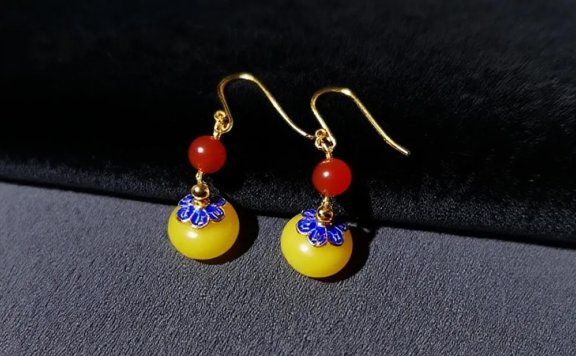
Creating Bold and Harmonious Looks with Amber's Warm Glow
Have you ever wondered how a single piece of amber jewelry can transform your entire look? Amber, a gemstone as ancient as time itself, carries a warm, organic energy that resonates deeply. Unlike heavier gemstones, it is remarkably lightweight and versatile, making it a favorite among jewelry enthusiasts. Its most common hues are varying shades of yellow and white, though the pristine white amber is a rare and costly find. This article will guide you through innovative ways to style this beautiful resin, moving beyond conventional pairings to create stunning, personalized statements that are uniquely you. Bold Color Clash For those who love to make a statement, the color clash technique is a powerful tool. This approach relies on pairing amber with gemstones in contrasting colors to create a dynamic and eye-catching visual impact. The goal is to achieve a balance where the warmth of the amber is both complemented and challenged by cooler or more vivid tones. Selecting the right companion beads is crucial for this style to work effectively and harmoniously. Excellent choices for this bold style include deep reds like Nanhong agate (南红玛瑙) or Zhanguohong (战国红), rich blues from Lapis Lazuli, and vibrant greens from turquoise or… -
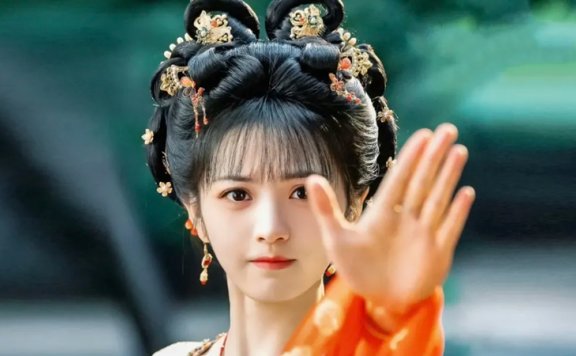
Can Domestic Costume Dramas Do Without Bangs?
Why do so many Chinese historical dramas insist on giving their female characters modern-looking bangs? This stylistic choice, frequently seen in everything from palace intrigues to Wuxia (武侠) adventures, often creates a jarring sense of anachronism for viewers. While intended to beautify the actors and perhaps conceal hairlines, these bangs frequently pull audiences out of the story, reminding them of contemporary fashion rather than immersive historical storytelling. This reliance on a modern aesthetic overlooks a rich tapestry of authentic, elegant hairstyling traditions from China's past that prioritized clean, expansive foreheads and sophisticated updos, proving that true classical beauty doesn't need to hide behind a fringe. The Bangs Anachronism Walk through any streaming platform's historical section, and you will be met with a parade of fringe. The flat bangs, side-swept bangs, wispy "baby hair" bangs, and airy bangs are all direct imports from modern-day hairstyling manuals. Their primary function in these dramas is to soften an actor’s features or mask a perceived high forehead, a concern rooted entirely in contemporary beauty standards. This creates a subtle but persistent dissonance; the elaborate costumes and sets aim for a historical feel, but the hairstyle instantly signals the 21st century. This trend is not… -
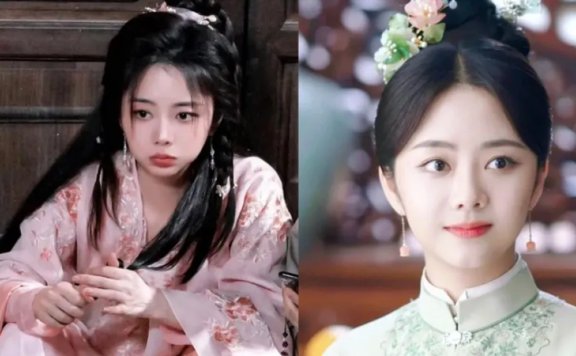
A Hairstyle Transformed Tan Songyun’s Look
When actress Tan Songyun (谭松韵) appeared in the new historical drama Against The Current (兰香如故), audiences were stunned. Her look wasn’t just different—it felt like a revelation. Gone were the structured, heavy styles of her previous Ming-era roles. In their place was something lighter, more poetic, and deeply rooted in classical Chinese aesthetics. This transformation wasn’t accidental. It was the result of deliberate, historically-informed styling centered around an ancient Han Dynasty hairstyle known as Ji Huan (髻鬟). This style did more than just change her appearance—it redefined her character’s grace, elegance, and inner strength, proving that sometimes, the smallest details carry the deepest meanings. The Ji Huan Ji Huan is a traditional hairstyle where hair is arranged into hollow, ring-shaped buns secured at the crown. The term breaks into two parts: Ji, meaning a coiled knot of hair, and Huan, referring specifically to the circular, ringlet form. Unlike solid buns, the hollow design of the Huan creates a sense of volume without weight, giving the hairstyle a floating, almost ethereal quality. This style became popular from the Han Dynasty onward and is frequently depicted in classical court paintings. Its beauty lies in its versatility. It could be worn as a… -
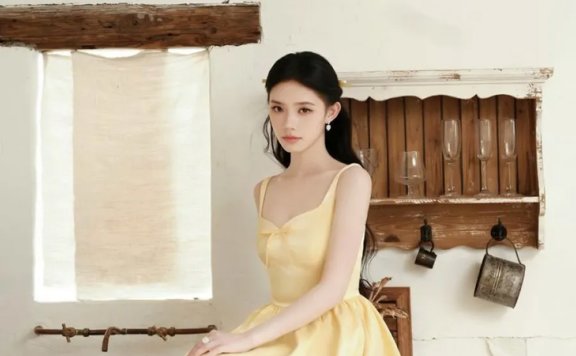
31-Year-Old Lin Yun’s Custard Bun Glow
In 2016, Lin Yun (林允) became an overnight sensation as the lead in The Mermaid (美人鱼), cementing her status as a “Stephen Chow Muse.” But in an industry where fame fades fast, the 31-year-old recently reclaimed the spotlight—not with a new movie, but a live stream look that’s been dubbed “custard bun sweet.” Raw photos and unfiltered moments have left netizens asking: “Is this really the same Lin Yun? She looks 10 years younger than her age!” The “Custard Bun” Aesthetic Lin’s live stream was a burst of spring warmth. She chose a satin dress in a soft yellow shade—shiny, smooth, and nearly identical to a freshly steamed custard bun. Her hair, styled in a half-up “princess do” with loose, face-framing waves, added to the dessert-like charm. Netizens flooded the chat: “She’s not a custard bun—she’s a custard fairy!” The look was youthful without being cloying, a balance many of her 30-something peers struggle to achieve. The dress itself stole the show. A light luxury brand’s fall new arrival, its satin texture caught the studio lights perfectly, making Lin look like she was wrapped in sunlight. “Even the fabric glows for her!” one user joked. “I’d never wear this color—I’d… -
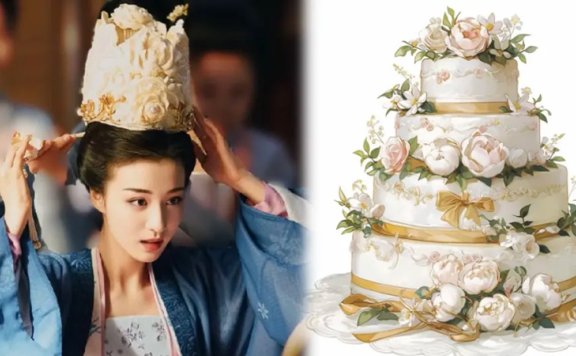
Wang Churan Wears a Cake on Her Head in Serenade of Peaceful Joy
In the historical drama Serenade of Peaceful Joy (清平乐), actress Wang Churan (王楚然) sparked online buzz with a headpiece that viewers likened to a lavish cream cake. This striking ivory crown, worn by her character Zhang Meihan (张妼晗), is far more than a stylistic whim. It is a meticulous recreation of the Chonglouzhi Guan (重楼子冠), a headdress whose design and name were inspired by a prized peony species recorded in the Song Dynasty text Record of Luoyang Flowers and Trees (洛阳花木记). This dramatic accessory opens a window into the sophisticated world of Song aesthetics, where fashion, botany, and social hierarchy intertwined to create some of history's most elegant and meaningful headwear. A Crown Fit for a Flower The real-life inspiration for the crown was the Chonglouzhi peony, cultivated by skilled gardeners to grow over two feet tall with layers of petals that resembled a stacked pavilion. Artisans, captivated by this natural wonder, translated its form into an exquisite headdress. The drama highlights the strict sumptuary laws of the era through a plotline where Emperor Renzong of Song punishes an official for presenting the crown, underscoring how such items were governed by status and regulation. The crown was not merely decorative;… -
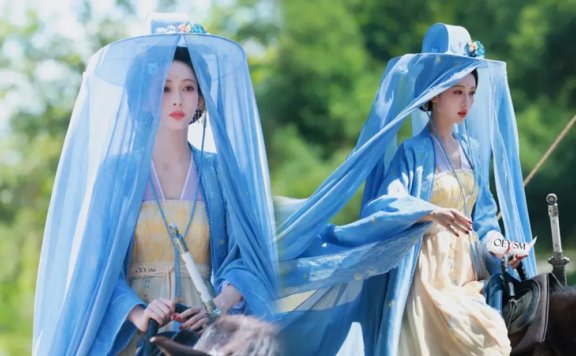
The Story of Weimao and Mili in Tang Dynasty China
When watching Tang Dynasty-set dramas, have you ever wondered why some female characters wear hats with long veils covering their faces—or even their entire bodies? These headpieces, often called "face-covering hats" in period shows, come in varying styles: some veils drape to the shoulders, others sweep down to the ankles. But what lies behind these differences? Were ancient women truly hidden so thoroughly, or was there more to these hats than meets the eye? Let’s uncover the stories woven into Tang Dynasty headwear—Weimao (帷帽) and Mili (羃篱). Weimao vs Mili: Fabric, Length, and Timeline First, a quick clarification: Weimao and Mili are distinct, though often confused. Weimao, made of cloth or thin silk, features a wide brim with short veils that typically reach the neck—just enough to "lightly cover" the face, as Tang records describe. Mili, by contrast, is crafted from bamboo with longer veils that can shroud the entire body. Their popularity also shifted over time: Mili dominated in the early Tang (618–649 CE), while Weimao rose to fame during Empress Wu Zetian’s reign (690–705 CE) before fading in the Kaiyuan era (713–741 CE). For example, Yang Zi’s Weimao in the drama Flourished Peony (国色芳华) aligns closely with historical… -
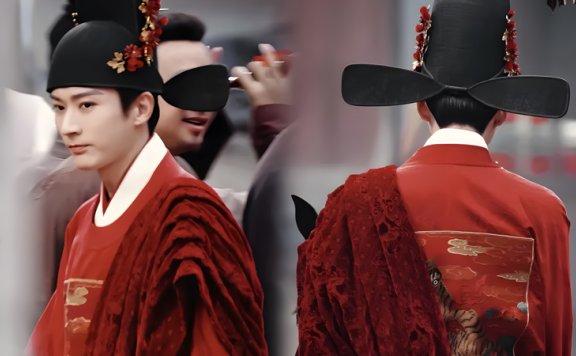
The Significance of Liu Xueyi’s Pihong in Against the Current
Why is Liu Xueyi (刘学义) wearing a red velvet drape in his wedding scene? This question has sparked curiosity among viewers of the period drama Against the Current (兰香如故), where the actor’s costume features a striking crimson cloth over his left shoulder. Rather than a costume mishap, this detail is deeply rooted in historical tradition—a symbol of celebration known as Pihong (披红), or “draping red.” Symbol of Achievement During the Ming and Qing dynasties, Pihong was predominantly worn by scholars who had passed imperial examinations. Achieving the title of Zhuangyuan (状元) or Jinshi (进士) was met with great honor, and the draping of red cloth symbolized joy and intellectual triumph. The phrase “spring breeze” captures this euphoric moment—a scholar riding through the capital, admired by all. The fabric used for Pihong was typically lightweight silk, brocade, or fine satin, avoiding bulkiness. In Against the Current, the velvet-like material may seem unusual, but it stays true to the concept of ceremonial draping. Originally reserved for academic achievements, the practice gradually extended to other significant life events. Historical records, such as the Ming novel Joyful Feuds (欢喜冤家·二十三回), describe scholars wearing Pihong with floral headpieces—a duo of honor. This combination highlighted one’s social… -
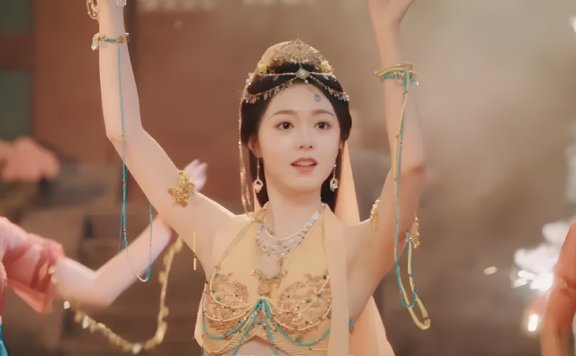
The Lost Diversity of Ancient Chinese Dance Attire
Have you ever noticed how often chest-baring dresses dominate dance scenes in today"s historical dramas? This singular style, frequently referred to as the "Dunhuang style," has become a ubiquitous visual shorthand. But a glance through history"s rich tapestry reveals a far more diverse and fascinating story of dance attire, where each dynasty expressed its unique aesthetic and cultural values through movement and fabric. Warring States Elegance During the Warring States period, the ideal of a slender, graceful figure was paramount. This is perfectly captured in the carved "Yu Wu Ren (玉舞人)" figurines. These artifacts depict dancers in long, trailing Zhiju (直裾) robes with flowing sleeves, their hair styled in intricate buns. The emphasis on a tiny waist was not merely aesthetic; it was a cultural reflection of the Chu kingdom"s famous preference for slender figures, a trend so influential it was said the kingdom"s people would starve themselves to achieve it. The dance movements from this era aimed for an ethereal, floating quality. Dancers used their elongated sleeves and heavy skirts to create beautiful, sweeping motions, making their bodies seem almost weightless. This connection between costume and choreography was intrinsic, with the clothing designed to enhance and amplify the dancer"s… -
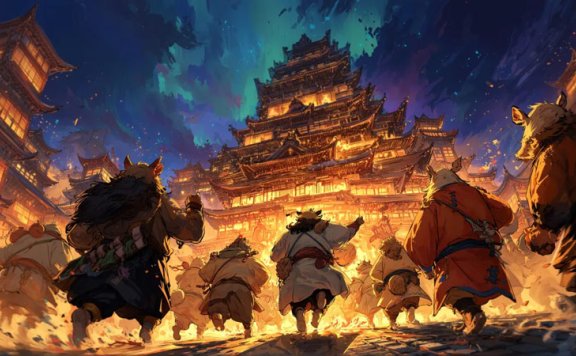
The AI-Powered Ink-Wash Fantasy of The Spirit of the Mountain
When mythical beasts, ink-wash aesthetics, and cutting-edge AI technology collide, what kind of magic can they create? The team behind The Spirit of the Mountain (有山灵), an AIGC-powered full-process animation, offers a compelling answer through their creative journey. Crafting Eastern Philosophy The Spirit of the Mountain unfolds in a fantasy world rooted in the Classic of Mountains and Rivers, a revered ancient Chinese text. Narrated from the perspective of a rat spirit, the story follows Shu Laoda (鼠老大), who gains a unique ability—immunity to all poisons—from his upbringing. Raised with "Chinese-style family values" emphasizing integrity ("a good rat doesn’t steal rice; poverty can’t dim one’s spirit"), Shu Laoda navigates tasks assigned by the Cat Master of the Medicine Pavilion, facing trials of character from other beastlords while growing wiser. The inspiration struck when the creative team explored illustrated editions of the Classic of Mountains and Rivers. "Those weird, slightly absurd images stuck in my mind," says Pang Jia (庞佳), a lead creator. "I thought, what if we turn that wonder into a story with cultural depth and a rich world—not just another monster tale?" Producer Li Wei (李玮) highlights the project’s cultural ambition: "It’s not just showcasing AI’s ability to… -
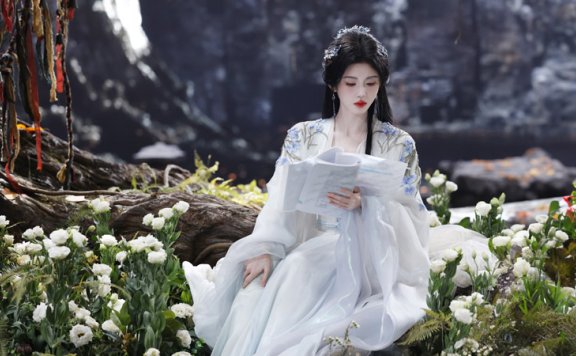
Styling Story of Ju Jingyi's Lace Headpieces in Lai Zhan
When photos from the set of the new historical drama Lai Zhan (来战) surfaced online, they sparked an unexpected debate. Actress Ju Jingyi (鞠婧祎) was seen wearing a headpiece adorned with lace, a detail that quickly divided netizens. Some compared it to a childhood costume accessory, while others posed a more profound question: Is lace purely a Western concept, or does China possess its own ancient tradition of delicate, openwork fabric? This seemingly simple fashion critique opened a door to a much larger conversation about cultural heritage, perception, and the untold stories woven into the very threads of history. Lace's Journey East The word "lace" itself is derived from the Latin "laqueus," meaning noose or snare, later evolving through English and French to describe intricate openwork fabric. Historically, the lace we recognize today is indeed a European innovation. It blossomed in the sixteenth century within the workshops of Italy and Flanders, transforming from simple cords into a luxurious art form created by looping, twisting, or knitting thread. Intricately made by hand from linen thread, it was exceedingly valuable. This European lace was introduced to China during the late Ming Dynasty, most likely by Western missionaries like Matteo Ricci. These missionaries… -
Song Zuer's Bone Art Figure Sparks Concern Amidst Career Resurgence
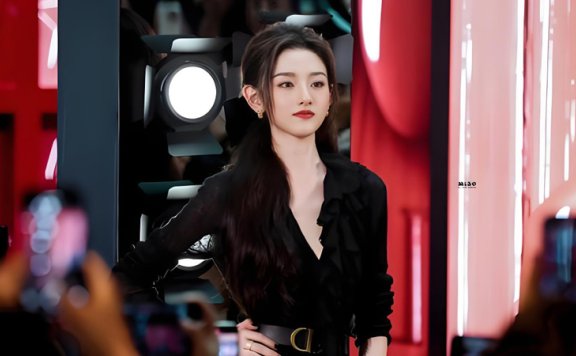
On a bustling September afternoon in 2025, Song Zuer (宋祖儿) stepped into Nanjing’s Deji Plaza, instantly turning the shopping mall into a frenzy of flashing cameras and excited whispers. Clad in a sleek black dress and stiletto heels, her frame—defined by razor-thin legs and a collarbone that cut through the light—ignited a storm of conversation: Was this the peak of elegance, or a worrying extreme? As fans jostled for photos and social media exploded with posts, one question loomed larger than the crowd itself: In the era of "flow aesthetics," where does beauty end and health begin? The Nanjing Spectacle Up close, Song’s figure defied typical standards. Her legs, straight as pencils, seemed to stretch endlessly beneath the hem of her dress. Every contour of her collarbone and ribcage was visible under the spotlights, sparking gasps from onlookers. "This isn’t just slim—it’s a work of bone art," murmured a fan nearby. The scene split opinions: Some praised her discipline, calling it "what stardom demands," while others frowned, muttering, "Is this even healthy?" Compared to her earlier "cheerful girl" image with a round, lively face, her current look felt like a drastic shift, leaving many to wonder, "How long can she… -

Is the Silliest Character in Midnight Return Also the Luckiest?
In the bustling, supernatural-infused capital of the Tang Dynasty, one man's incredible luck challenges the very notion of survival. The period drama Moonlit Reunion (子夜归) presents a world where demons lurk in shadowy alleys and celestial beings walk among mortals. At the heart of this tale is Mei Silang (梅四郎), a character whose foolish demeanor belies an astonishing talent for escaping peril. While others rely on strength or cunning, he navigates danger with a unique blend of naivety and pure-heartedness, making him the most fortunate soul in all of Chang'an (长安). The Unlikely Survivor Mei Silang seems to attract trouble with a frequency that would doom any ordinary man. His habit of secretly sketching the fierce demon hunter, Liu Taizhen (柳太真), draws the attention of a shadow demon that nearly ends his life. Yet, at the critical moment, the subject of his affections arrives to save him. This pattern of narrow escapes defines his existence. On another occasion, he mistakenly brings home what he believes to be a simple loach, only to discover it is the powerful snake spirit, Xuan Hui (玄虺). Fortunately, the spirit is not malevolent, sparing his life once again. His lack of awareness extends to being… -
How the When Destiny Brings The Demon Finale Failed Its Fans
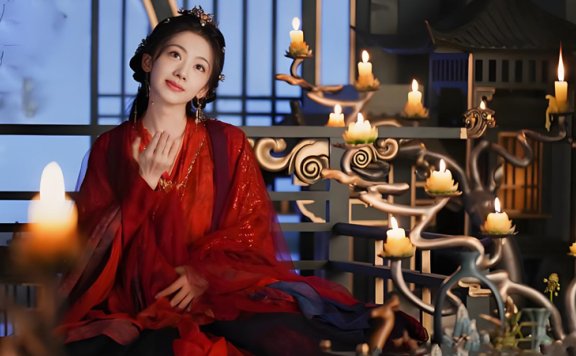
After weeks of binge-watching When Destiny Brings The Demon (献鱼), viewers were ready for a satisfying payoff. Instead, the finale delivered a jarring slap in the face—leaving fans asking: Did the writers truly think this would work? Let’s unpack why the show’s closing moments felt more like a middle finger than a resolution, from plot holes that could sink a ship to a protagonist reduced to a hollow shell. Reality Clashes Hard For 30+ episodes, Liao Tingyan (廖停雁) lived in a dreamy Xiuxian (修仙) world—until the finale yanked her back to "reality." Fresh out of that fantasy, she’s still got bandages on her head but is already drowning in work tasks from a cold, unflinching boss. The message? Even in TV land, you can’t escape the grind. This brutal contrast between her magical adventures and soul-crushing 9-to-5 might aim for "relatable," but it backfires. One minute she’s flying with immortals; the next, she’s begging for a deadline extension. The whiplash makes the fantasy feel less like an escape and more like a tease. Then there’s the medical nonsense. Throughout the series, Liao’s "dreams" cut to chaos: doctors performing CPR, monitors beeping, her life hanging by a thread. But post-finale? A… -
Could a Two-Thousand-Year-Old Hairstyle Inspire Today's Fashion?
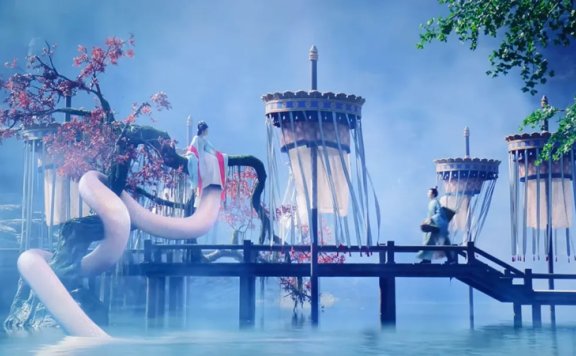
In the new historical drama Moonlit Reunion (子夜归), actress Wang Jiayi (王佳怡) captivates audiences with a striking hairstyle resembling coiled serpents. This unique look is not a modern invention but draws from ancient Chinese traditions. While viewers express astonishment at such boldness, they are actually witnessing the revival of a legendary hairstyle known as the Spiritual Snake Bun. This intricate design, with its twisting and looping forms, seems to defy gravity and conventional aesthetics. Its origin, rooted in myth and historical records, reveals a fascinating blend of artistry and cultural expression. The Legend Uncoiled Legend tells of Zhen Mi (甄宓), a renowned beauty who became an empress during the Wei dynasty. After she entered the palace, a mystical green snake appeared. It was not a creature of fear but an omen of good fortune, often seen holding a red pearl in its mouth. Every morning, as Zhen Mi sat at her dressing table, the serpent would coil itself into different shapes before her. Intrigued by these ever-changing forms, she began to replicate them in her hair. Each day brought a new design, so intricate and unique that no one could duplicate them exactly. Thus, the Spiritual Snake Bun was born.… -
Wangli Danni's Strategic Rebranding Through Guochao and Physique
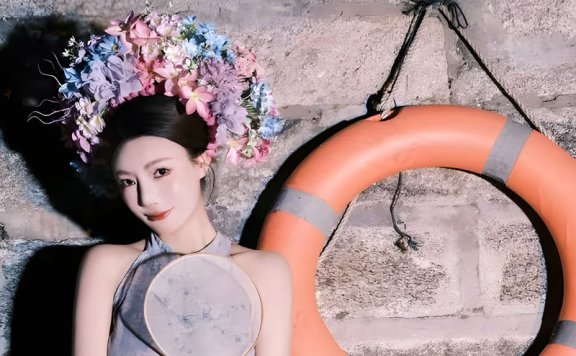
Since 2016, Wangli Danni (王李丹妮) has transformed from a "controversial figure of physical appeal" to a subject of "refined aesthetic discussion." Her commercial portfolio has evolved, casual outfit photos remain a hit, and her latest Qipao and hairpin portrait series has catapulted her back into the spotlight. With a cinched waist, smooth hip line, and a waist-to-hip ratio that netizens call "unreal," the question "Is this still her?" hangs heavy, inviting curiosity and debate. Design Nuances The visual storytelling starts with meticulous details. A coiled hairstyle pairs with a Qipao of silk-like, subtle patterns; wispy temple hair softens the cheekbones; just three hairpins add elegance without clutter. Side-backlighting sculpts her waist into a textbook "S-curve," amplifying her figure. Comments split: some praise "revived classical beauty," others question "over-editing." The photos walk a tightrope between realism and idealism—hinting at authenticity through visible pores and nasolabial folds under harsh light, yet using precise makeup highlights to create a "fake natural" effect. This strategy anchors credibility in minor flaws while retaining a dreamy vibe. Behind the curves lies a system, not magic. Wang revealed in fitness vlogs her 60cm waist and 20% body fat, maintained through cyclical squats and hip bridges. Photographers switched… -
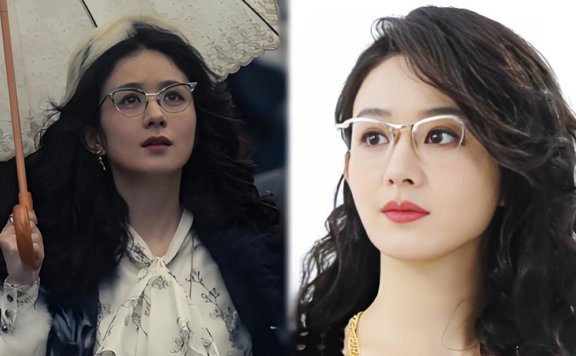
Zhao Liying's Quiet Intensity in She's Got No Name Silences Critics
When Zhao Liying’s (赵丽颖) emotionally restrained performance in The House of Arowana streamed on December 20, 2024, a stunning reversal unfolded. Overnight, "Zhao Liying’s underrated acting skills" trended explosively, silencing years of skepticism about her abilities. This 38-year-old actress, once criticized as expressionless and overacting, now commands respect as Xilin (西林), an intellectual whose quiet intensity captivated audiences. Her journey from doubted star to validated artist reveals uncomfortable truths about our perception of performers. The Unfolding Controversy Doubts shadowed Zhao Liying for years. After her breakout role in The Journey of Flower, critiques called her "wooden." When The Story of Minglan aired, accusations of "overacting" followed. Before She's Got No Name’s (酱园弄) release, prominent screenwriter Wang Hailin (汪海林) publicly questioned her casting, suggesting co-star Yang Mi (杨幂) outperformed her. Fans clashed fiercely as "poor line delivery" and "traffic stars ruin arthouse films" dominated discussions. Amidst this storm, Zhao remained characteristically silent. She never engaged in online battles or defended herself in interviews. Industry insiders whispered about the immense pressure on "85 Generation Flowers" – actresses born in the 1980s facing intense scrutiny over every flaw. Yet Zhao focused solely on her craft, embodying a work ethic that ignored the noise.… -
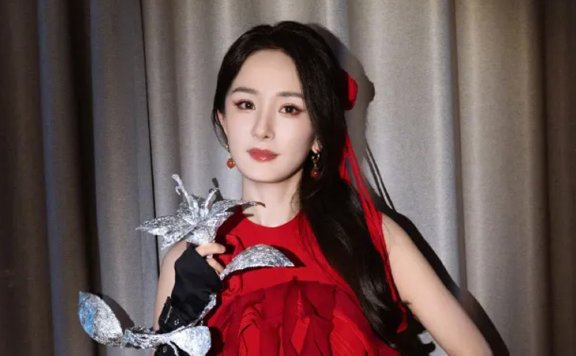
Yang Mi's Crimson Look: Rivals Her Legendary Chinese Paladin 3 Role?
Yang Mi (杨幂), a name synonymous with both acting prowess and captivating style, has once again ignited the internet. Her recent appearance, showcased by her studio, features a breathtaking transformation centered around a bold, vibrant red gown. This look isn't just another photoshoot; it evokes powerful nostalgia and sparks conversations about her enduring star power and artistic evolution. The simplicity and intensity of the crimson ensemble, paired with her striking poses and undeniable charisma, create a moment that transcends mere fashion, transporting fans back to a beloved chapter in her career while showcasing her current radiant vitality. It’s a powerful visual statement about an actress constantly refining her craft and presence. The Crimson Muse Draped in a flowing, fiery red gown, Yang Mi commanded attention. The dress wasn't an isolated statement; every detail harmonized. Matching crimson earrings and a red head ribbon complemented the outfit, amplifying a sense of unified, vibrant beauty. Her long, dark hair cascaded softly to one side, framing a face adorned with meticulously applied, elegant makeup. The overall effect was one of stunning simplicity – proof that powerful style doesn’t always require complexity. Her poised demeanor radiated confidence and grace. Adding an unexpected, edgy element to… -
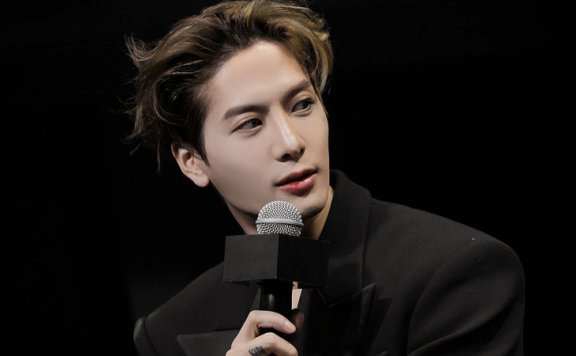
What Fuels Jackson Wang's Unstoppable Rise?
News of Jackson Wang collapsing due to suspected food poisoning after an event in Hangzhou sent shockwaves through his global fanbase. Images and videos circulating online showed a tense atmosphere as the multi-talented performer was rushed for medical care. Reports later confirmed food poisoning, thankfully non-critical. Intriguingly, several Hangzhou residents reported similar symptoms that day, pointing towards a specific restaurant. This incident, however, is just the latest chapter in the story of an artist defined by relentless drive and resilience. From an elite athletic background to the grueling K-pop training system and now a global solo star and entrepreneur, Wang's journey is a testament to sheer determination. Forged in Discipline Born in 1994 into a Hong Kong sporting dynasty, Jackson's path seemed predestined for athletic glory. His father, a fencing world champion, and his mother, a former gymnast, instilled rigorous discipline early. Wang took up fencing seriously around age seven or eight, quickly accumulating junior competition medals. The demanding household environment fostered an intense work ethic and a refusal to accept defeat. "If I decide to do something, I have to be the best," was his childhood mantra, a trait that became his bedrock. He pushed through punishing physical training…
