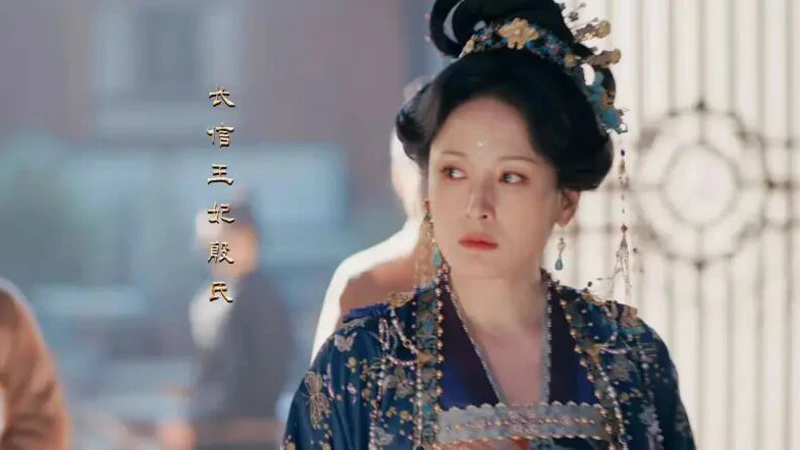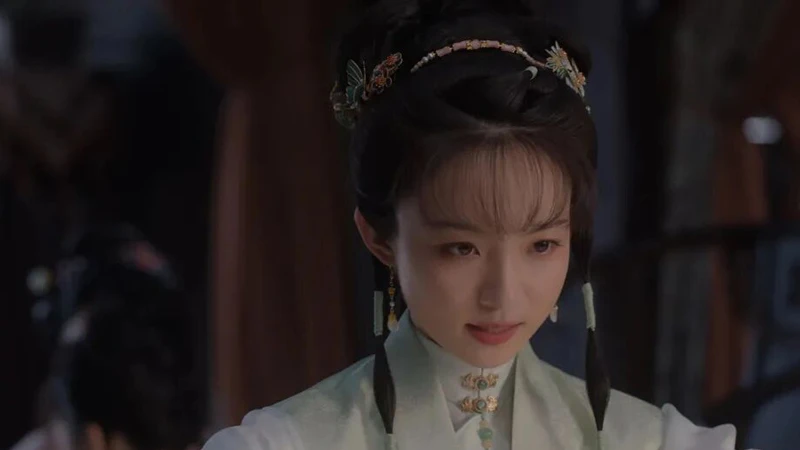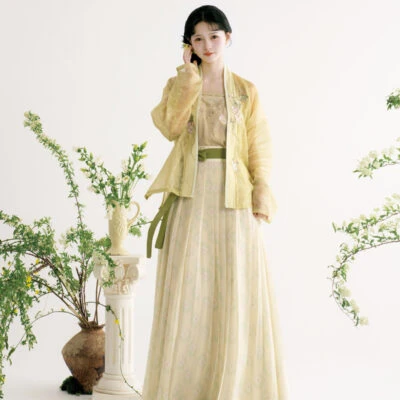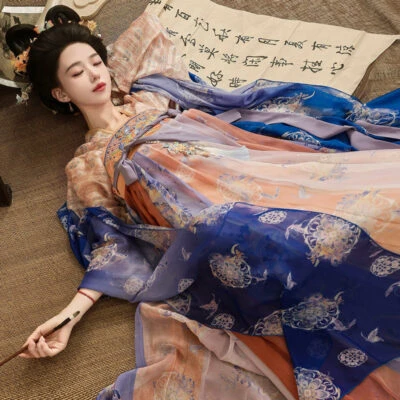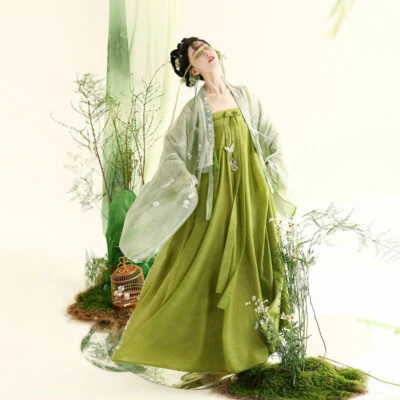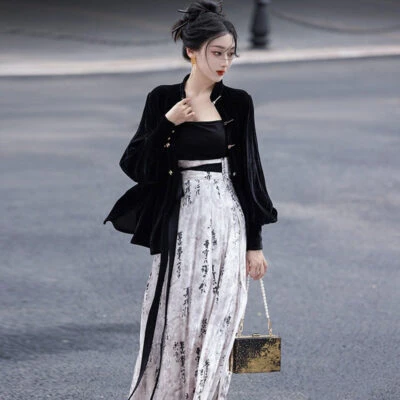
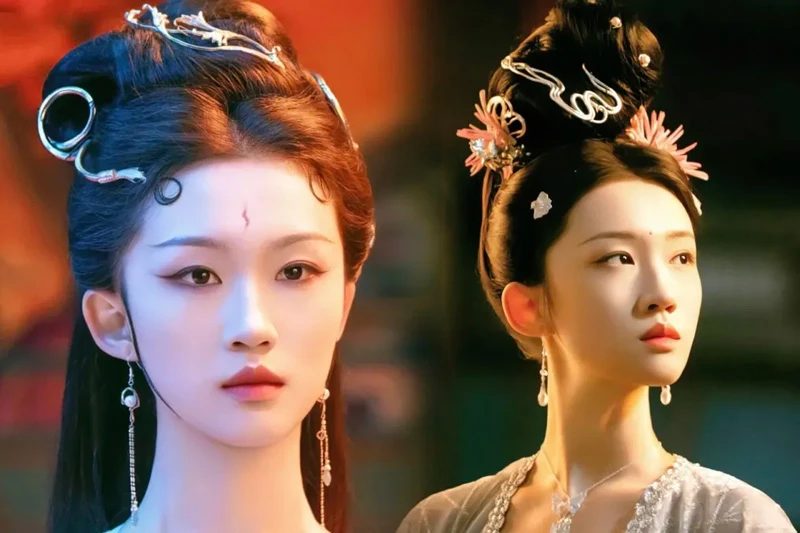
In the new historical drama Moonlit Reunion (子夜归), actress Wang Jiayi (王佳怡) captivates audiences with a striking hairstyle resembling coiled serpents. This unique look is not a modern invention but draws from ancient Chinese traditions. While viewers express astonishment at such boldness, they are actually witnessing the revival of a legendary hairstyle known as the Spiritual Snake Bun. This intricate design, with its twisting and looping forms, seems to defy gravity and conventional aesthetics. Its origin, rooted in myth and historical records, reveals a fascinating blend of artistry and cultural expression.
The Legend Uncoiled
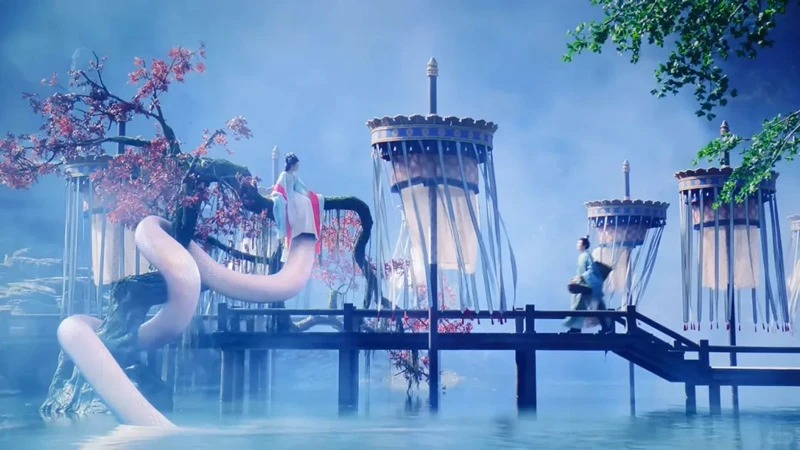
Legend tells of Zhen Mi (甄宓), a renowned beauty who became an empress during the Wei dynasty. After she entered the palace, a mystical green snake appeared. It was not a creature of fear but an omen of good fortune, often seen holding a red pearl in its mouth. Every morning, as Zhen Mi sat at her dressing table, the serpent would coil itself into different shapes before her. Intrigued by these ever-changing forms, she began to replicate them in her hair. Each day brought a new design, so intricate and unique that no one could duplicate them exactly. Thus, the Spiritual Snake Bun was born.
This story was not confined to a single text. It weaves through centuries of literature, from the Wei Jin period’s Records of Picking Orchids (采兰杂志) to the Yuan dynasty’s Lang Huan Ji (琅嬛记) and the Qing dynasty’s Night Boat (夜航船). Each account adds a layer to the myth, celebrating not only the hairstyle’s beauty but also the empress’s unparalleled charm. Writers across generations marveled at her ingenuity, describing her hair as a masterpiece that complemented her peerless appearance. The tale transcended mere documentation, becoming a symbol of divine inspiration and artistic innovation.
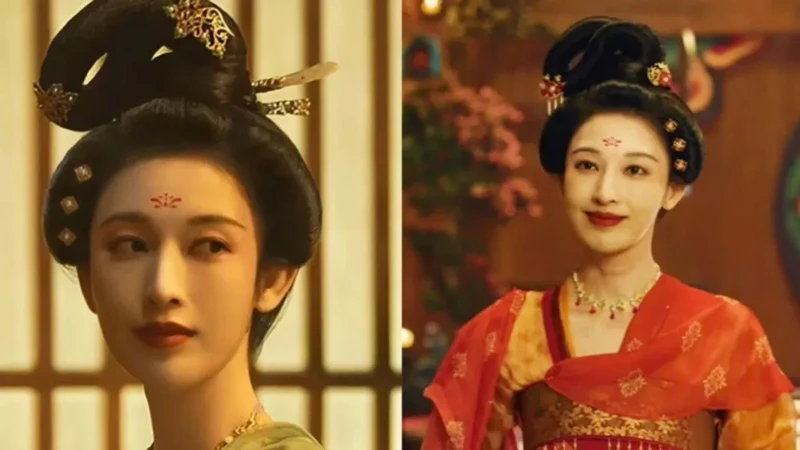
The serpent’s influence extended beyond myth. It represented a departure from rigid, symmetrical traditions. Instead of neat and orderly buns, this style embraced asymmetry and dynamic movement. It mirrored the serpent’s natural coils, full of energy and unpredictability. This was not just about aesthetics; it was a reflection of a broader cultural shift. During the Wei Jin period, society began to value individual expression and emotional freedom, moving away from strict conventions. The hairstyle embodied this spirit—unrestrained, imaginative, and deeply personal.
Form and Symbolism
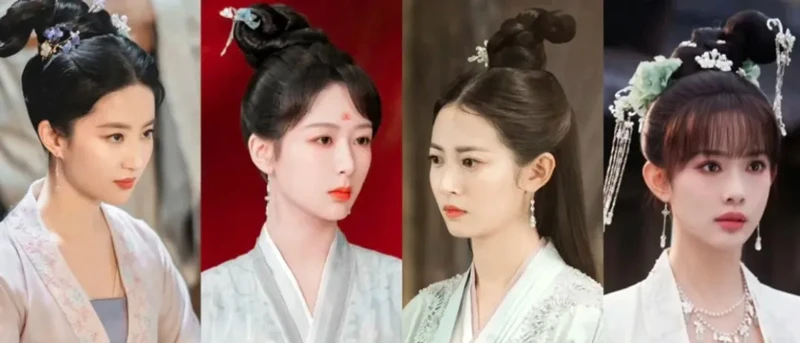
So, what did the Spiritual Snake Bun actually look like? Historical descriptions and classical paintings offer clues. It was characterized by its winding, twisting form, often resembling intertwined ropes or spirals. Artists used techniques like “wan” (绾), “rao” (绕), and “huan” (鬟) to create these complex structures. The result was a hairstyle that seemed alive, with a sense of motion and fluidity. It could be worn high or low, simple or elaborate, adapting to the wearer’s mood or the occasion.
Its variability was its defining feature. Unlike formal court styles, which followed strict rules, this bun encouraged creativity. A woman could design it anew each day, making it a true extension of her identity. Scholars like Gao Qiang (高强) have noted that this hairstyle captured the essence of its era. It took inspiration from nature—a living, moving creature—and transformed it into wearable art. This bold approach to beauty aligned perfectly with the period’s intellectual currents, which prized spontaneity and the heartfelt expression of inner self over outward conformity.
The bun’s symbolism runs deep. In Chinese culture, the snake is often associated with wisdom, transformation, and grace. By adopting its form, the wearer channeled these qualities. The style was more than decoration; it was a statement of confidence and individuality. It celebrated the idea that true beauty lies in uniqueness and innovation. This ancient practice resonates strongly today, as modern fashion increasingly values personal style over mass trends. The Spiritual Snake Bun reminds us that creativity has always been at the heart of cultural advancement.
Modern Echoes
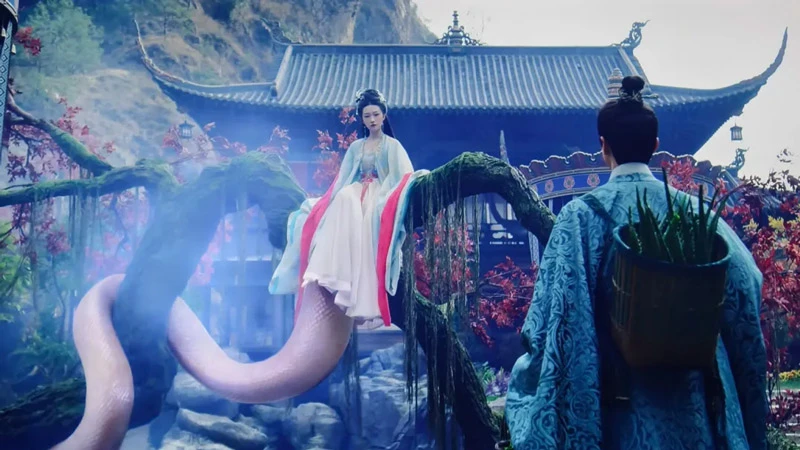
Today, this ancient hairstyle is experiencing a resurgence, thanks in part to period dramas like Moonlit Reunion. Actress Wang Jiayi’ portrayal has sparked curiosity and admiration among viewers. Many are surprised to learn that such a dramatic look has historical roots. Social media buzzes with comments like, “Our ancestors were so daring!” and “How did they even create this?” This renewed interest is part of the larger Guochao (国潮) movement, where traditional elements are reinterpreted in contemporary contexts.
The appeal lies in its blend of mystery and artistry. Modern hairstylists study old paintings and texts to recreate the Spiritual Snake Bun, though achieving its complexity remains a challenge. Its “dead knot” appearance, where hair seems permanently intertwined, requires advanced skill. Yet, this difficulty only adds to its allure. It represents a connection to a past where aesthetics were deeply intertwined with philosophy and storytelling. For younger generations, it is a way to engage with history not as a static subject but as a living, evolving inspiration.
This revival is more than a trend; it is a testament to enduring cultural confidence. The Spiritual Snake Bun shows that innovation is not new to Chinese tradition—it is embedded within it. By embracing such unique heritage, people today are not just copying the past but dialoguing with it. They are recognizing that true cultural strength comes from honoring individuality and creativity. As audiences admire Wang Jiayi’s serpent-inspired hair, they are participating in a timeless exchange between history and modernity, where ancient artistry continues to inspire new forms of expression.