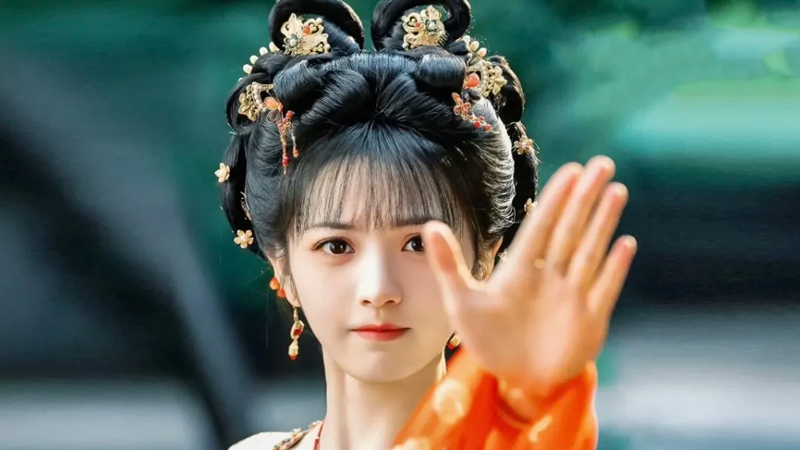
Why do so many Chinese historical dramas insist on giving their female characters modern-looking bangs? This stylistic choice, frequently seen in everything from palace intrigues to Wuxia (武侠) adventures, often creates a jarring sense of anachronism for viewers. While intended to beautify the actors and perhaps conceal hairlines, these bangs frequently pull audiences out of the story, reminding them of contemporary fashion rather than immersive historical storytelling. This reliance on a modern aesthetic overlooks a rich tapestry of authentic, elegant hairstyling traditions from China's past that prioritized clean, expansive foreheads and sophisticated updos, proving that true classical beauty doesn't need to hide behind a fringe.
The Bangs Anachronism
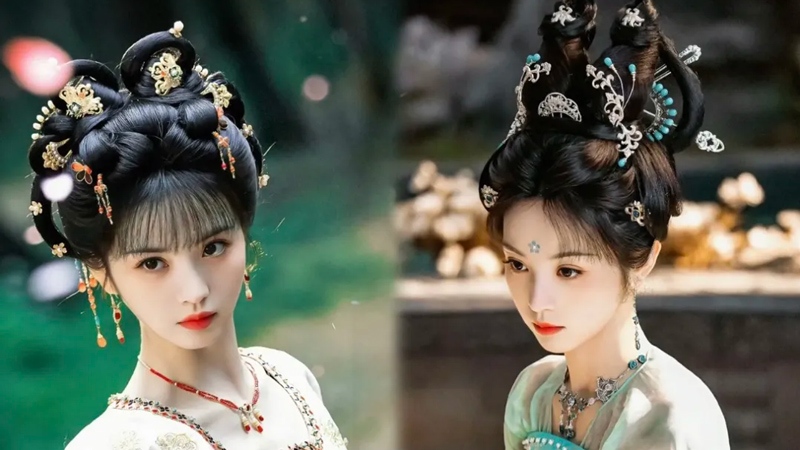
Walk through any streaming platform's historical section, and you will be met with a parade of fringe. The flat bangs, side-swept bangs, wispy "baby hair" bangs, and airy bangs are all direct imports from modern-day hairstyling manuals. Their primary function in these dramas is to soften an actor’s features or mask a perceived high forehead, a concern rooted entirely in contemporary beauty standards. This creates a subtle but persistent dissonance; the elaborate costumes and sets aim for a historical feel, but the hairstyle instantly signals the 21st century.
This trend is not merely a matter of aesthetic preference but one of historical accuracy. In traditional Chinese culture, an adult woman’s hairstyle was a sign of her maturity and elegance. The forehead was not something to be hidden away. Instead, it was framed and highlighted by intricate braids, buns, and accessories, all sleeked into place with traditional pomades like paohua shui (刨花水). A visible, clear forehead was considered a mark of beauty and grace.
The persistence of this trend can be traced back to the influence of early Hong Kong and Taiwanese film and television productions. These popular works often employed bangs to flatter their stars, establishing a visual shorthand for "beauty" in a historical context. This convention was then adopted and amplified by mainland productions, leading to the current ubiquity of styles that feel more at home on a city street than in a royal palace.
Authentic Historical Alternatives
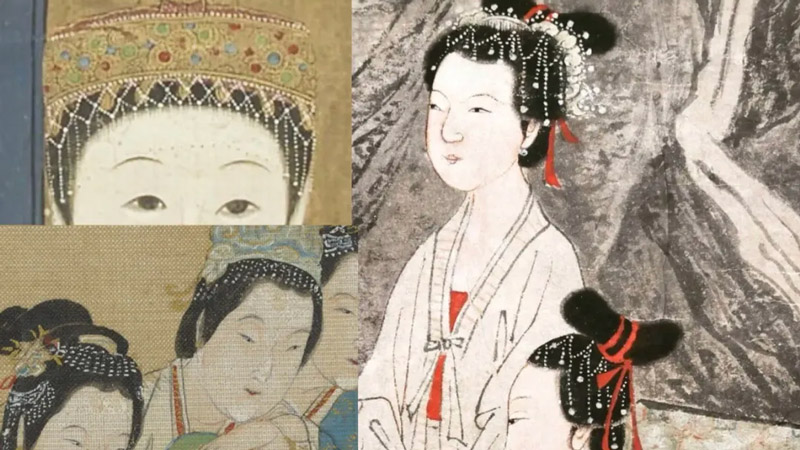
Ironically, traditional hairstyling offers a multitude of elegant solutions for the very concerns modern bangs seek to address, all without a pair of scissors in sight. During the Song Dynasty, the Yunbin (云鬓) style was immensely popular. This involved arranging the hair into soft, overlapping loops and coils at the hairline, resembling layered clouds. This technique added volume and a beautiful, structured frame to the face without requiring a single hair to be cut.
Another ingenious method involved the use of accessories designed specifically to adorn the hairline. The Song and Ming Dynasties saw the use of Lianshu (帘梳) and Weiji (围髻). These were often netted or beaded accessories, sometimes with a comb attachment for security, that were worn around the base of the bun. They featured dangling elements made of pearls or jade that gracefully rested on the forehead, providing decoration and a subtle softness without obscuring the face or breaking historical authenticity.
These accessories evolved into elaborate art forms. The Zhu Yingluo (珠璎珞), a type of netted pearl cap or ornament, could be worn as a headdress with strings of pearls that delicately draped across the brow. This was a symbol of status and refinement, a far cry from the simple, cut fringe we see today. It solved the "problem" of the hairline by celebrating it with exquisite craftsmanship and luxury.
Beyond the Fringe
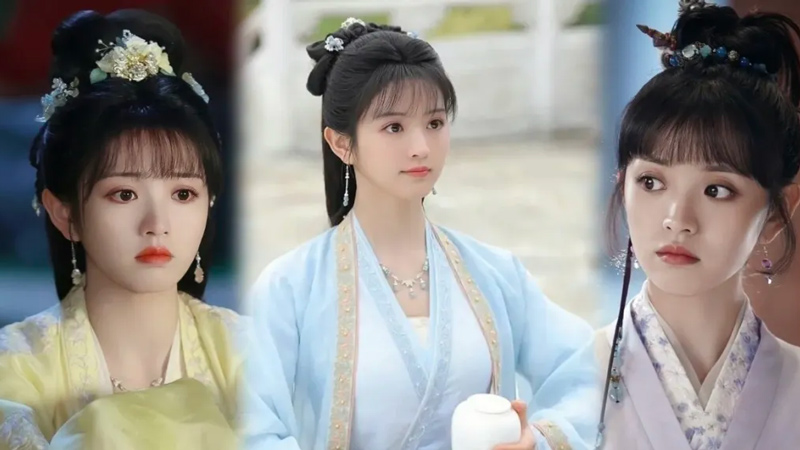
In most of her roles, Tian Xiwei (田曦薇) is known for her signature blunt bangs. However, for certain scenes or events, her hair was styled up in a more traditional manner. The transformation was striking; the updo lent her character a newfound air of authority, maturity, and solemnity that resonated deeply with audiences.
This sparked a lively debate among fans. One camp argues that incorporating modern bangs is a form of creative innovation, a fusion of old and new that makes historical characters more relatable to today's youth. They see it as a harmless stylistic liberty, much like the creative costuming found in fantasy genres. However, a stronger contingent laments that "the bangs are hiding the true beauty of Chinese actresses." They argue that these modern additions dilute the cultural authenticity and prevent viewers from appreciating the classical elegance these stories aim to portray.
The impact even extends beyond television into the Hanfu revival movement. Many enthusiasts, inspired by the dramas, replicate the simplified buns, modern bangs, and even loose, flowing hair—a style rarely seen in historical accounts of daily life—alongside their beautiful traditional clothing. The resulting look, while often pretty, becomes a confusing hybrid that lacks a clear historical identity.
Ultimately, the solution is not to abandon creativity but to dig deeper into a rich cultural history that is already full of it. Stylists have a vast and beautiful toolkit from which to draw: the Cloud-like hair, the encircling Weiji, and countless other documented styles. Moving beyond the fringe allows for a more immersive and authentic viewing experience, one where the hairstyles are as much a part of the story as the costumes and the sets. It’s time to let classical beauty shine, unobscured.