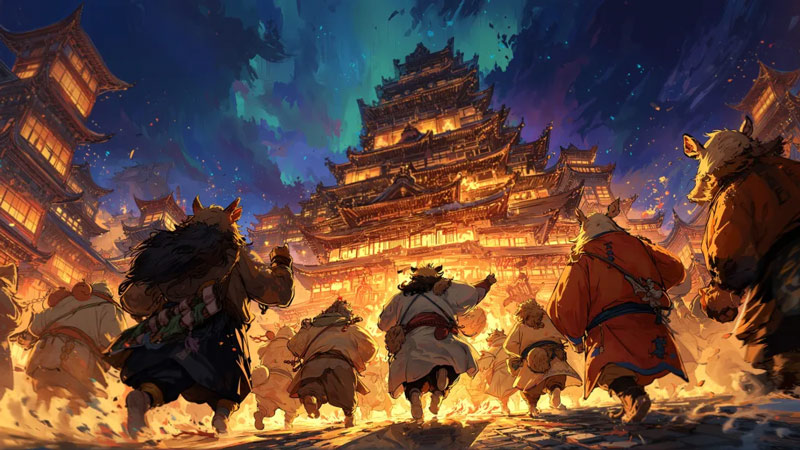
When mythical beasts, ink-wash aesthetics, and cutting-edge AI technology collide, what kind of magic can they create? The team behind The Spirit of the Mountain (有山灵), an AIGC-powered full-process animation, offers a compelling answer through their creative journey.
Crafting Eastern Philosophy
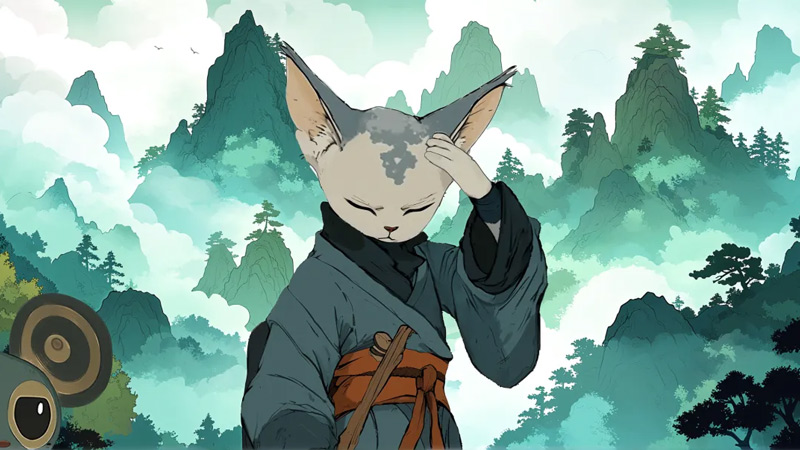
The Spirit of the Mountain unfolds in a fantasy world rooted in the Classic of Mountains and Rivers, a revered ancient Chinese text. Narrated from the perspective of a rat spirit, the story follows Shu Laoda (鼠老大), who gains a unique ability—immunity to all poisons—from his upbringing. Raised with "Chinese-style family values" emphasizing integrity ("a good rat doesn’t steal rice; poverty can’t dim one’s spirit"), Shu Laoda navigates tasks assigned by the Cat Master of the Medicine Pavilion, facing trials of character from other beastlords while growing wiser.
The inspiration struck when the creative team explored illustrated editions of the Classic of Mountains and Rivers. "Those weird, slightly absurd images stuck in my mind," says Pang Jia (庞佳), a lead creator. "I thought, what if we turn that wonder into a story with cultural depth and a rich world—not just another monster tale?"
Producer Li Wei (李玮) highlights the project’s cultural ambition: "It’s not just showcasing AI’s ability to generate continuous content. We want to use AI to tell an original story steeped in Eastern philosophy and human warmth." The team targets Gen Z, teenagers, and young adults—demographics drawn to novelty, Guofeng (国风) aesthetics, and innovative storytelling.
Ink-Wash Aesthetics and Character Design
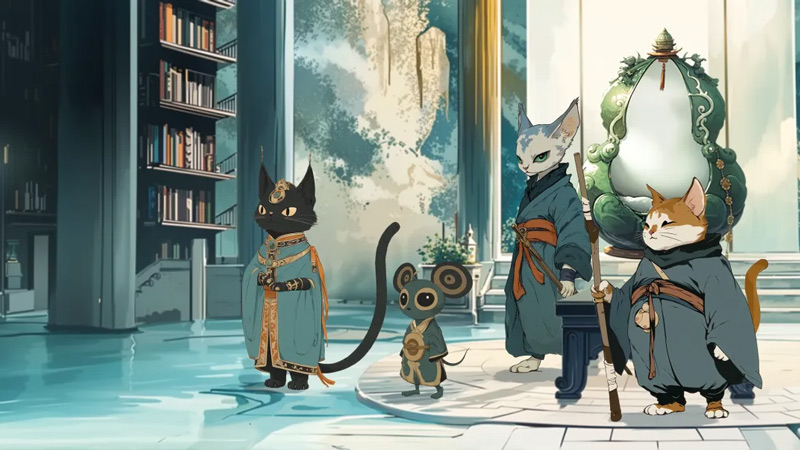
The animation’s defining feature is its "Guofeng mythical fantasy" style. All characters are rendered in low-saturation ink-wash art, blending traditional softness with AI-generated futurism. Among the diverse cast—including the Cat Master, Bear Instructor, and Fox Shopkeeper—brothers Si Ting (四亭) and Ba Dang (八當) received the most detailed crafting. Ba Dang’s squinted eyes amplify his adorable, naive charm, while Si Ting’s focused expressions and deliberate movements reinforce his calm, steady nature.
Character design extends beyond faces: clothing, gestures, and color palettes ensure each role feels distinct yet unified. "This balance creates a harmonious, layered beauty in both individual interactions and group scenes," shares Pang Jia.
Scene design posed equal challenges. Settings like the Medicine Pavilion, Demon Market, and Dragon Bone Cliffs each have "signature colors": the Pavilion and Rat Hole in soothing teal, the Demon Market in lively yet tense red. The trickiest was the Medicine Pavilion’s interior. After debates, the team reimagined it as a towering "inner world" with floor-to-ceiling shelves and cabinets—doubling as the Cat Master’s personal climbing frame. "When that layered, mysterious yet playful space took shape, we were all amazed," Pang Jia recalls.
Honoring Tradition Through Innovation
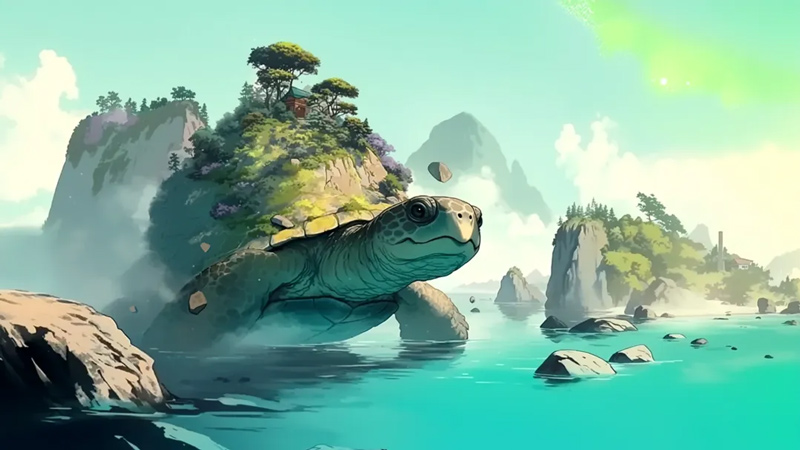
A standout innovation is merging Full-Form Rubbing—an intangible cultural heritage—with AI animation. "Full-Form Rubbing preserves traces of what’s vanishing or unseen," explains Pang Jia. "Similarly, The Spirit of the Mountain revives forgotten spirits, legends, and hidden human-nature connections. It’s not just a formal experiment; it’s a conceptual echo—both ‘observe’ and ‘recreate’ to tell stories."
In the series, a Full-Form Rubbing artisan bridges reality and the spirit world, respecting tradition while finding fresh expression. This fusion redefines AI’s role: instead of cold technology, it becomes an extension of art, transforming "sterility" into heartfelt narrative.
The Spirit of the Mountain pioneers a new content creation model—one where AI enhances, rather than replaces, creativity. By weaving Chinese traditions, Guofeng aesthetics, and technology, it delivers a viewing experience that feels both familiar and fresh. Its journey of exploration, though just begun, has already sparked a new conversation about the future of storytelling.