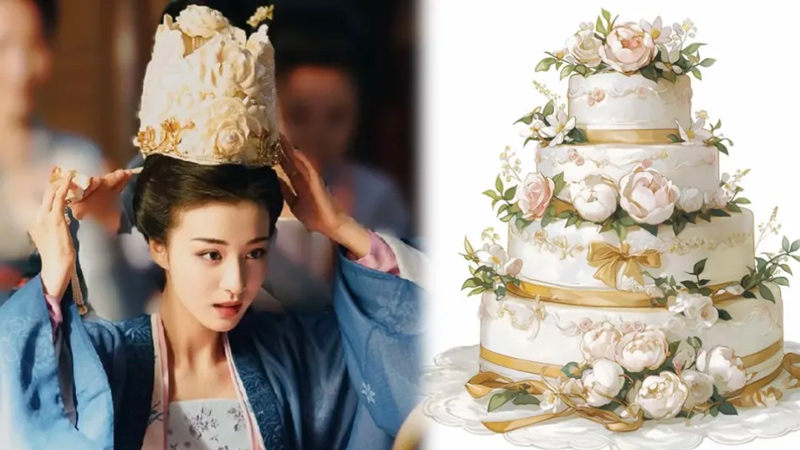
In the historical drama Serenade of Peaceful Joy (清平乐), actress Wang Churan (王楚然) sparked online buzz with a headpiece that viewers likened to a lavish cream cake. This striking ivory crown, worn by her character Zhang Meihan (张妼晗), is far more than a stylistic whim. It is a meticulous recreation of the Chonglouzhi Guan (重楼子冠), a headdress whose design and name were inspired by a prized peony species recorded in the Song Dynasty text Record of Luoyang Flowers and Trees (洛阳花木记). This dramatic accessory opens a window into the sophisticated world of Song aesthetics, where fashion, botany, and social hierarchy intertwined to create some of history's most elegant and meaningful headwear.
A Crown Fit for a Flower
The real-life inspiration for the crown was the Chonglouzhi peony, cultivated by skilled gardeners to grow over two feet tall with layers of petals that resembled a stacked pavilion. Artisans, captivated by this natural wonder, translated its form into an exquisite headdress. The drama highlights the strict sumptuary laws of the era through a plotline where Emperor Renzong of Song punishes an official for presenting the crown, underscoring how such items were governed by status and regulation. The crown was not merely decorative; it was a symbol of prestige and cultural refinement, its ownership and display carefully controlled within the imperial court.
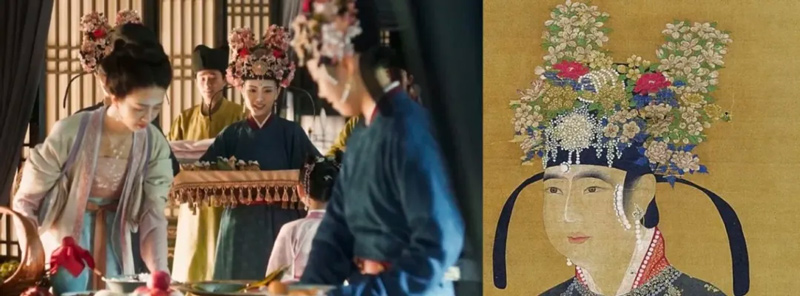
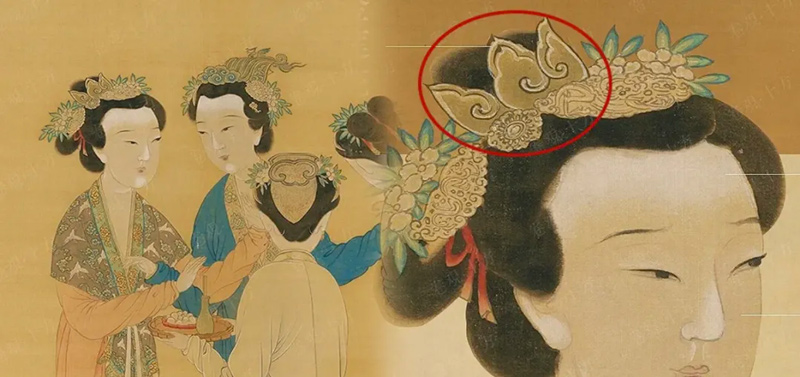
Crafting such a piece was a feat of artistry. Historical paintings, like Qian Xuan's (元钱) Ladies Enjoying the Cool (招凉仕女图), depict these crowns with astonishing height, often estimated at nearly two feet, with three distinct tiers. Artisans constructed them using a lightweight frame woven into petal-like layers, covered with delicate cicada-wing gauze. The base was adorned with green leaf decorations, and sheer veils cascaded down the back, creating an ethereal, almost divine silhouette reminiscent of Guanyin (观音).
The Song Dynasty Silhouette
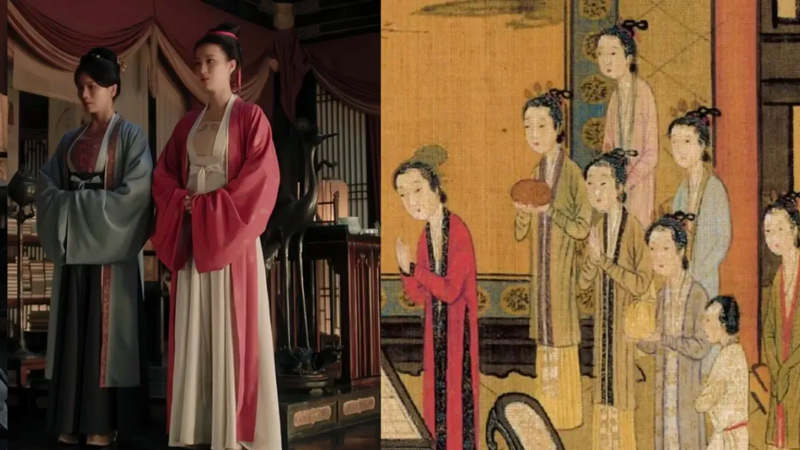
The Chonglouzhi Guan was a product of its time, perfectly aligned with the evolving Song aesthetic. As the Southern Song period progressed, fashion shifted towards a slender, elegant, and refined silhouette. This was the era of the Beizi (褙子) and other narrow, form-fitting garments, often with side slits that elongated the body's lines. The towering headdresses complemented this trend perfectly. Their vertical extension created a visual effect that mirrored the famed "Slender Gold" calligraphy style of Emperor Huizong, emphasizing a graceful, lofty, and slender ideal of beauty.
This pursuit of elegance was deeply embedded in the culture. The popularity of flower-adornment, or Zanhua (簪花), saw both men and women in the capitals of Bianjing (汴京) and Lin'an (临安) decorating their hair with blossoms. Women wore realistic artificial flowers made of silk and paper, while men donned fresh flowers at significant events as a sign of respect. This practice was even formalized into state ritual, with emperors bestowing flowers upon officials during grand ceremonies as a high honor. Within this context, the crafted floral crown became the ultimate expression of this cultural passion.
Ancient Courts to Modern Runways
The influence of these historical headpieces extends far beyond the Song Dynasty. While they represent a peak of Chinese craftsmanship, the act of making a bold statement with hairstyle and headwear is a universal language of fashion. Centuries later in the West, French Queen Marie Antoinette became famous for her extravagant coiffures, which sometimes featured sculpted models of ships, reflecting a similar desire for novelty and status. This parallel shows how different cultures, separated by time and space, often arrive at similar expressions of identity and power through personal adornment.
Today, the legacy of the Chonglouzhi Guan is experiencing a vibrant revival. Contemporary designers are looking to these ancient treasures for inspiration, translating their layered structures into modern clothing designs and experimenting with material combinations that echo historical craftsmanship. This dialogue between past and present enriches modern fashion, proving that these designs feel just as innovative and "explosive" to a 21st-century audience as they did centuries ago. True cultural confidence, it seems, comes not from replicating the past, but from creatively transforming it for a new era.