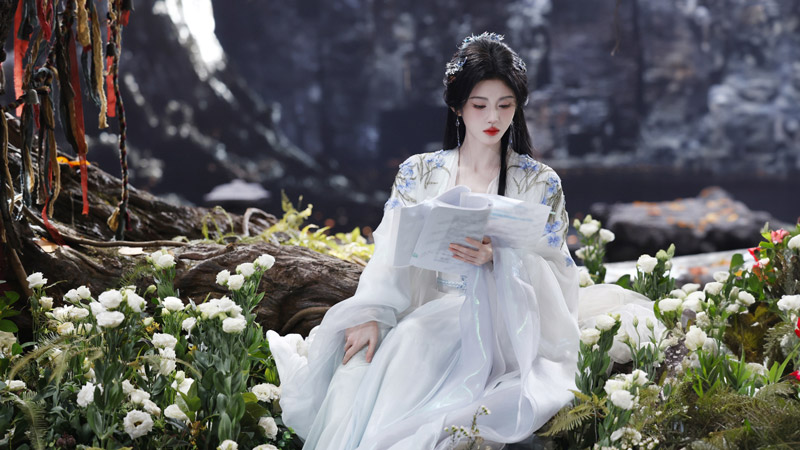
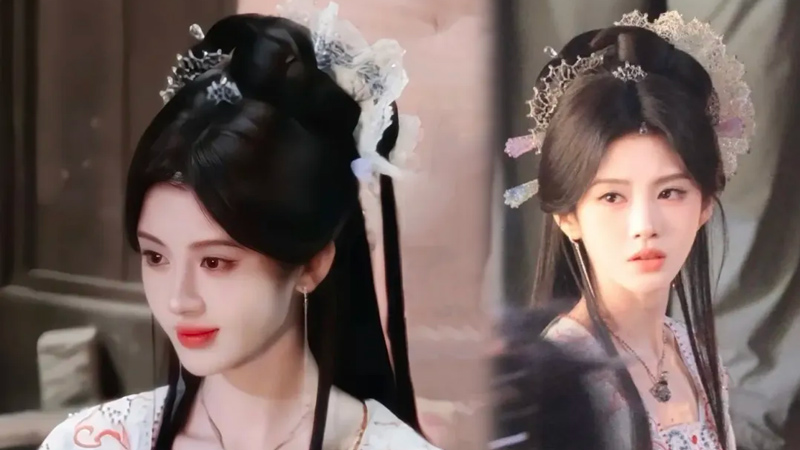
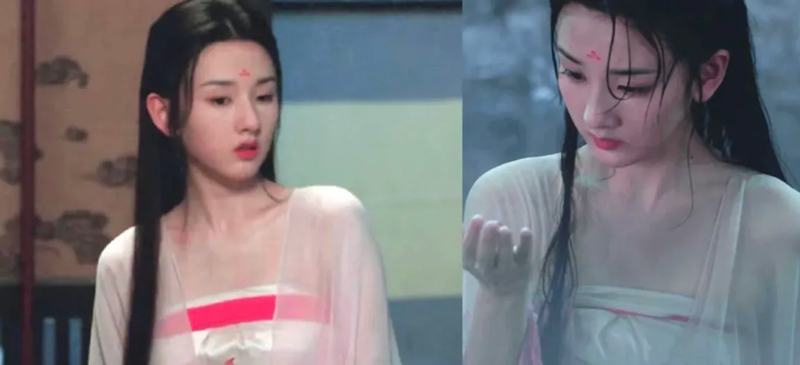
When photos from the set of the new historical drama Lai Zhan (来战) surfaced online, they sparked an unexpected debate. Actress Ju Jingyi (鞠婧祎) was seen wearing a headpiece adorned with lace, a detail that quickly divided netizens. Some compared it to a childhood costume accessory, while others posed a more profound question: Is lace purely a Western concept, or does China possess its own ancient tradition of delicate, openwork fabric? This seemingly simple fashion critique opened a door to a much larger conversation about cultural heritage, perception, and the untold stories woven into the very threads of history.
Lace's Journey East
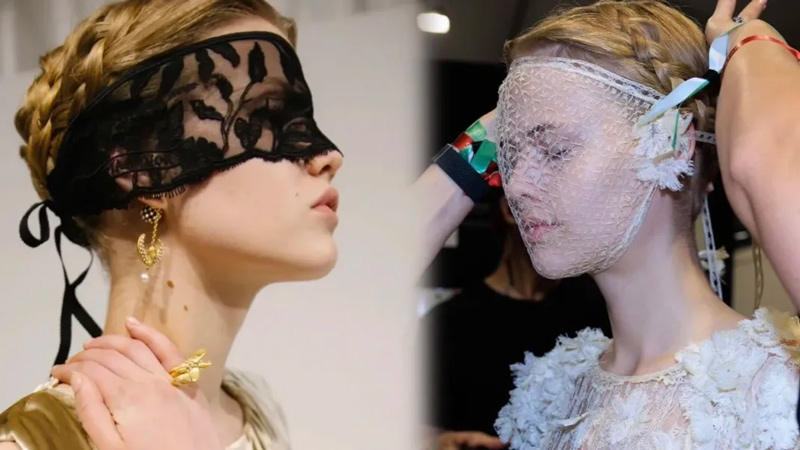
The word "lace" itself is derived from the Latin "laqueus," meaning noose or snare, later evolving through English and French to describe intricate openwork fabric. Historically, the lace we recognize today is indeed a European innovation. It blossomed in the sixteenth century within the workshops of Italy and Flanders, transforming from simple cords into a luxurious art form created by looping, twisting, or knitting thread. Intricately made by hand from linen thread, it was exceedingly valuable.
This European lace was introduced to China during the late Ming Dynasty, most likely by Western missionaries like Matteo Ricci. These missionaries arrived from the very regions where lace production thrived, and the delicate fabric trimming their clerical garments offered a new aesthetic to Chinese artisans and elites. It became a symbol of status and refinement, adopted into various forms of dress and eventually finding its way into the wardrobes of film and television, as seen in Lai Zhan.
China's Sheer Elegance
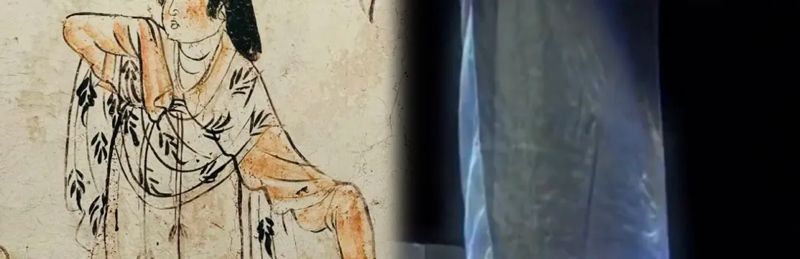
To ask if China had its own "lace," however, is to ask the wrong question. Chinese textile history presents a different, yet equally sophisticated, answer to the desire for beauty through transparency. Instead of applied ornamentation, ancient Chinese weavers mastered the loom itself, creating breathtakingly sheer fabrics where patterns were born from the weave. For over two thousand years, they developed an exquisite philosophy of “transparency”.
They achieved this through two primary fabrics: Sha (纱) and Luo (罗). Sha is a plain-weave, porous gauze, light and mist-like. Luo is a more complex twisted warp weave, resulting in stable yet ethereal holes in the fabric. The pinnacle of this craft is exemplified by the legendary Su Sha Dan Yi (素纱襌衣) from the Mawangdui Han Dynasty tomb, which weighs a mere 49 grams and is renowned for being "lighter than smoke."
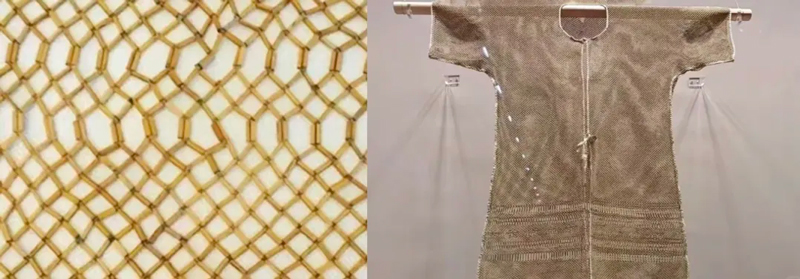
Beyond silk, ingenuity extended to other materials. The Zhu Yi (竹衣) was a summer garment crafted from thousands of fine bamboo tubes and ramie thread. Worn under formal clothing, it provided a cooling layer of air circulation, absorbed sweat, and helped maintain the outer garment's crisp silhouette. This innovative use of natural resources demonstrates a parallel pursuit of comfort and elegance through complex craftsmanship.
A Call for Revival
The tragic twist in this story is one of visibility and continuity. While European lace was industrialized and continuously reinterpreted by fashion houses, allowing it to remain a recurring trend, many of China's sublime weaving techniques like Sha and Luo fell into obscurity. The reasons are complex: the techniques are incredibly difficult to master, transmission through apprenticeships is fragile, and modernization prioritized speed over meticulous handcraft.
Today, these fabrics are often confined to museum displays or ancient texts. The few workshops that still produce authentic Sha and Luo struggle to meet demand, making these fabrics luxury items. There's a painful irony in discussing intangible cultural heritage while such profound examples of advanced aesthetics and technical skill remain largely unrecognized by the public.
The challenge, then, is not to prove China had "lace" but to rediscover and reinvent these textile marvels for a modern audience. They deserve more than to be mere symbolic accents; they need contemporary designers to engage with them, to translate their inherent poetry—the play of light, shadow, and texture—into a language that speaks to today's world. The goal is a true renaissance where ancient threads are woven into the fabric of modern life, making tradition not a relic to be preserved, but a living, wearable art form.