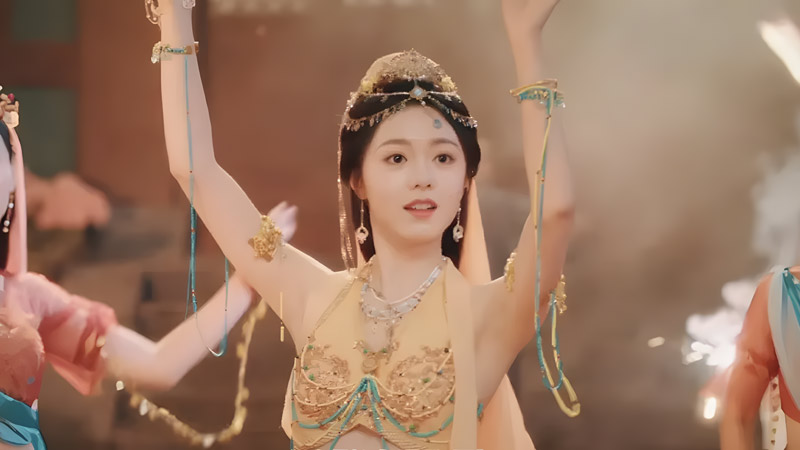
Have you ever noticed how often chest-baring dresses dominate dance scenes in today"s historical dramas? This singular style, frequently referred to as the "Dunhuang style," has become a ubiquitous visual shorthand. But a glance through history"s rich tapestry reveals a far more diverse and fascinating story of dance attire, where each dynasty expressed its unique aesthetic and cultural values through movement and fabric.
Warring States Elegance
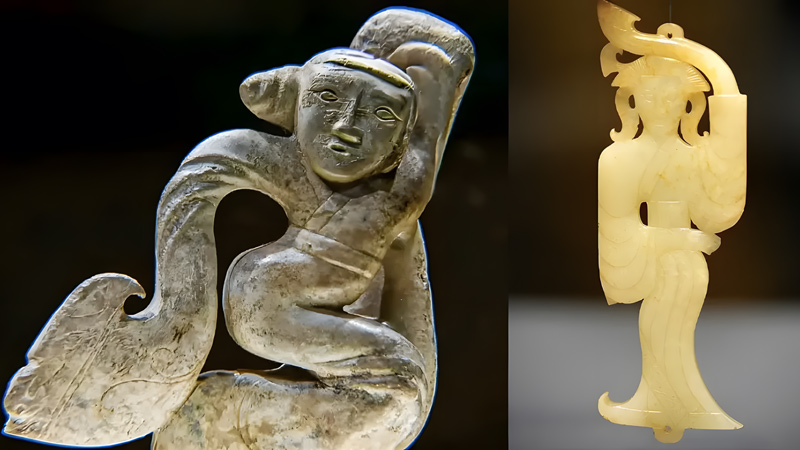
During the Warring States period, the ideal of a slender, graceful figure was paramount. This is perfectly captured in the carved "Yu Wu Ren (玉舞人)" figurines. These artifacts depict dancers in long, trailing Zhiju (直裾) robes with flowing sleeves, their hair styled in intricate buns. The emphasis on a tiny waist was not merely aesthetic; it was a cultural reflection of the Chu kingdom"s famous preference for slender figures, a trend so influential it was said the kingdom"s people would starve themselves to achieve it.
The dance movements from this era aimed for an ethereal, floating quality. Dancers used their elongated sleeves and heavy skirts to create beautiful, sweeping motions, making their bodies seem almost weightless. This connection between costume and choreography was intrinsic, with the clothing designed to enhance and amplify the dancer"s every gesture.
Image bricks from the time frequently show these scenes, immortalizing dancers mid-twirl, their long skirts sweeping the ground and sleeves cutting through the air. The visual focus was always on the flowing lines created by the costume, a testament to an artistry that valued elegance and lightness above all else.
Han Dynasty Fluidity
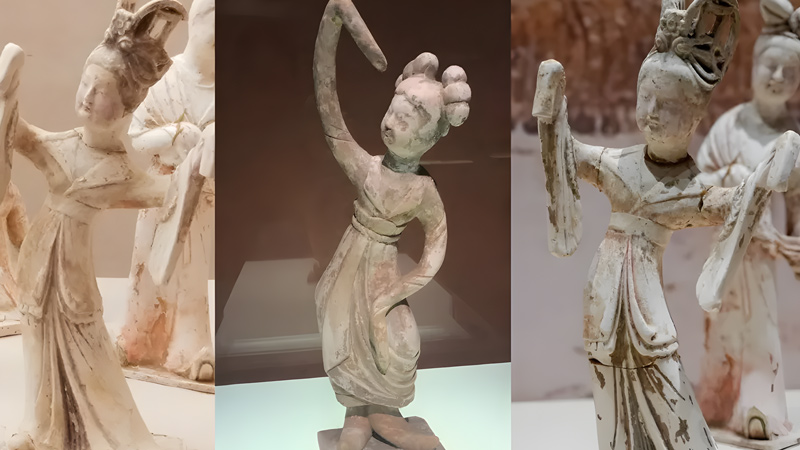
The Western Han Dynasty favored a more restrained and gracefully flowing style. A quintessential example is the painted pottery figurine of a female long-sleeve dancer. Her hair is swept up into a bun, and she wears a cross-collar garment underneath an elegant, floor-length outer robe.
This style of dress facilitated the iconic "Yechangju (曳长裾)" or "Feiguangxiu (飞广袖)," which was meticulously described in historical texts like the Miscellaneous Records of the Western Capital (西京杂记). The dancer"s posture is natural and relaxed (舒展), resembling flowing water, with the costume contributing profoundly to the overall visual poetry of the performance.
The art of long-sleeve dance, often combined with Pangu (盘鼓) drum dancing, had roots in the Shang and Zhou dynasties but reached a new level of maturity during the Han. Its artistic influence is so enduring that echoes of its spirit can still be seen in modern Chinese classical dance productions.
Tang Dynasty Diversity
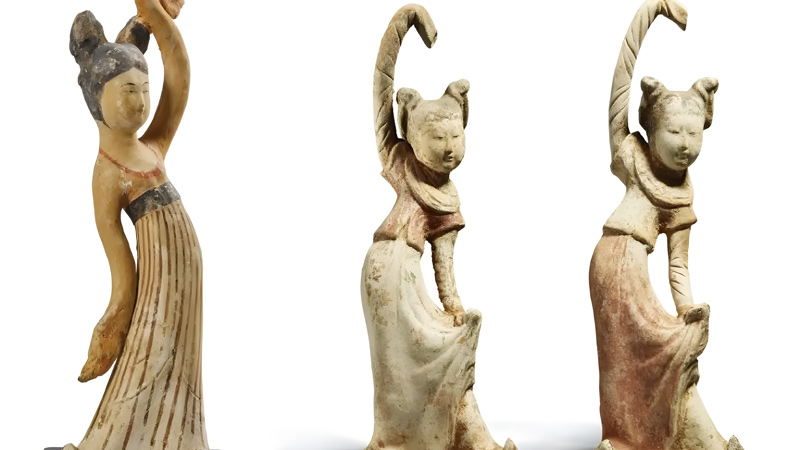
The Tang Dynasty, known for its cultural openness and prosperity, boasted an incredible variety of dance costumes that extended far beyond the chest-baring dress. Dancers adorned themselves in everything from traditional Ruqun to exotic Hufu inspired by Central Asian styles.
The popularity of the swift Huxuanwu (胡旋舞) led to the adoption of the Fanlingpao (翻领袍), a distinctive tur-style robe with a folded collar worn over a Han-style skirt. This combination created a striking three-dimensional effect, and the intricate patterns on the fabric added a timeless, celestial beauty to the dynamic performance.
Tang dance was meticulously categorized. Alongside grand imperial performances, folk dances thrived in public spaces and the mansions of scholars. The era absorbed influences from the Silk Road, creating a beautiful fusion. Dancers in traditional gowns performed lyrical "Ruanwu (软舞)," their loose, graceful costumes matching the dance"s gentle tempo. Others in Tanling gowns with wide sleeves might perform the legendary Nichang Yuyi Wu (霓裳羽衣舞). The sheer diversity, from the soft and graceful to the powerfully swift, reflected the Tang"s magnificent cultural spectrum.
Song and Ming Refinement
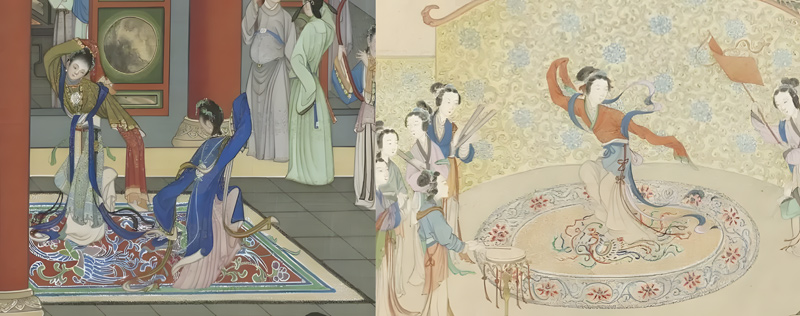
Following the Tang, the dance costumes of the Song and Ming dynasties presented a more refined and scholarly elegance. They often adhered to the traditional upper garment-lower skirt format, showcasing a return to classical Han Chinese aesthetics.
The sophistication lay in the meticulous details, patterns, and a conscious effort to echo the charm of previous golden ages. Dancers frequently wore the popular Beizi (褙子), a long overcoat, as an outer layer, integrating contemporary fashion into their performance attire. This created a distinct "retro" that was both elegant and intellectually evocative.
The focus was less on explosive visual impact and more on refined, delicate beauty. The costumes complemented a dance style that valued precise, controlled movements and subtle expression, mirroring the broader cultural and philosophical shifts of the time towards introspection and scholarly pursuits.
Beyond the Chest Dress
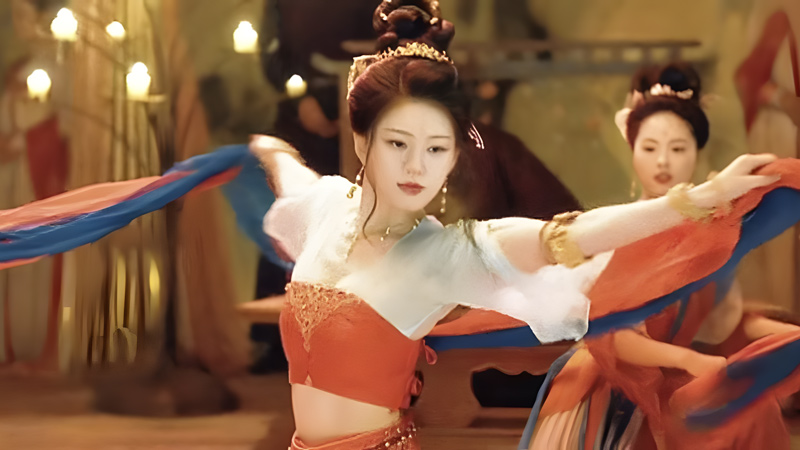
The modern obsession with the "Dunhuang style" chest dress is likely due to its immediate visual power—the flying ribbons and fluid lines are undeniably cinematic and have become easily recognizable for audiences. While beautiful, this convenience has come at the cost of historical diversity.
This simplification overlooks China"s vast and rich history of dance and music. Each dynasty developed its own unique sartorial language for performance, deeply intertwined with its social customs, foreign exchanges, and artistic ideals. The chest-baring dress is just one chapter in a much longer and more fascinating story.
By looking beyond this single style, filmmakers and designers have an incredible opportunity to rediscover and showcase this breathtaking variety. Exploring the distinct elegance of the Warring States, the flowing grace of the Han, the explosive diversity of the Tang, and the refined beauty of the Song and Ming would bring a new level of authenticity and visual wonder to historical storytelling, finally allowing this magnificent heritage to dance again in all its true colors.