Article
Search results:
-
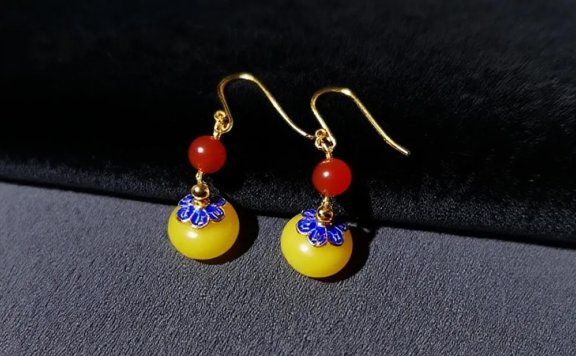
Creating Bold and Harmonious Looks with Amber's Warm Glow
Have you ever wondered how a single piece of amber jewelry can transform your entire look? Amber, a gemstone as ancient as time itself, carries a warm, organic energy that resonates deeply. Unlike heavier gemstones, it is remarkably lightweight and versatile, making it a favorite among jewelry enthusiasts. Its most common hues are varying shades of yellow and white, though the pristine white amber is a rare and costly find. This article will guide you through innovative ways to style this beautiful resin, moving beyond conventional pairings to create stunning, personalized statements that are uniquely you. Bold Color Clash For those who love to make a statement, the color clash technique is a powerful tool. This approach relies on pairing amber with gemstones in contrasting colors to create a dynamic and eye-catching visual impact. The goal is to achieve a balance where the warmth of the amber is both complemented and challenged by cooler or more vivid tones. Selecting the right companion beads is crucial for this style to work effectively and harmoniously. Excellent choices for this bold style include deep reds like Nanhong agate (南红玛瑙) or Zhanguohong (战国红), rich blues from Lapis Lazuli, and vibrant greens from turquoise or… -
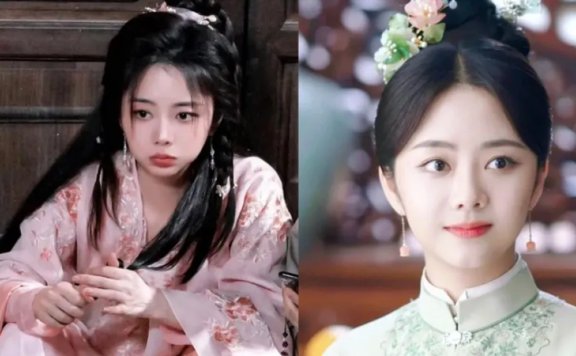
A Hairstyle Transformed Tan Songyun’s Look
When actress Tan Songyun (谭松韵) appeared in the new historical drama Against The Current (兰香如故), audiences were stunned. Her look wasn’t just different—it felt like a revelation. Gone were the structured, heavy styles of her previous Ming-era roles. In their place was something lighter, more poetic, and deeply rooted in classical Chinese aesthetics. This transformation wasn’t accidental. It was the result of deliberate, historically-informed styling centered around an ancient Han Dynasty hairstyle known as Ji Huan (髻鬟). This style did more than just change her appearance—it redefined her character’s grace, elegance, and inner strength, proving that sometimes, the smallest details carry the deepest meanings. The Ji Huan Ji Huan is a traditional hairstyle where hair is arranged into hollow, ring-shaped buns secured at the crown. The term breaks into two parts: Ji, meaning a coiled knot of hair, and Huan, referring specifically to the circular, ringlet form. Unlike solid buns, the hollow design of the Huan creates a sense of volume without weight, giving the hairstyle a floating, almost ethereal quality. This style became popular from the Han Dynasty onward and is frequently depicted in classical court paintings. Its beauty lies in its versatility. It could be worn as a… -
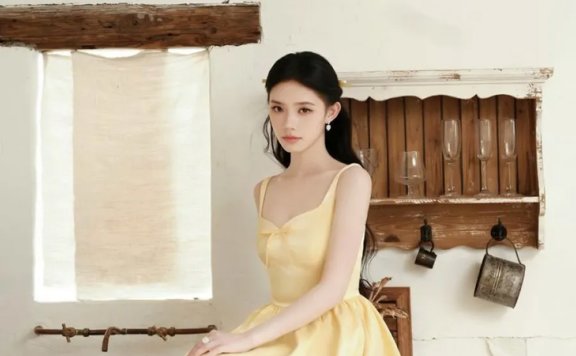
31-Year-Old Lin Yun’s Custard Bun Glow
In 2016, Lin Yun (林允) became an overnight sensation as the lead in The Mermaid (美人鱼), cementing her status as a “Stephen Chow Muse.” But in an industry where fame fades fast, the 31-year-old recently reclaimed the spotlight—not with a new movie, but a live stream look that’s been dubbed “custard bun sweet.” Raw photos and unfiltered moments have left netizens asking: “Is this really the same Lin Yun? She looks 10 years younger than her age!” The “Custard Bun” Aesthetic Lin’s live stream was a burst of spring warmth. She chose a satin dress in a soft yellow shade—shiny, smooth, and nearly identical to a freshly steamed custard bun. Her hair, styled in a half-up “princess do” with loose, face-framing waves, added to the dessert-like charm. Netizens flooded the chat: “She’s not a custard bun—she’s a custard fairy!” The look was youthful without being cloying, a balance many of her 30-something peers struggle to achieve. The dress itself stole the show. A light luxury brand’s fall new arrival, its satin texture caught the studio lights perfectly, making Lin look like she was wrapped in sunlight. “Even the fabric glows for her!” one user joked. “I’d never wear this color—I’d… -
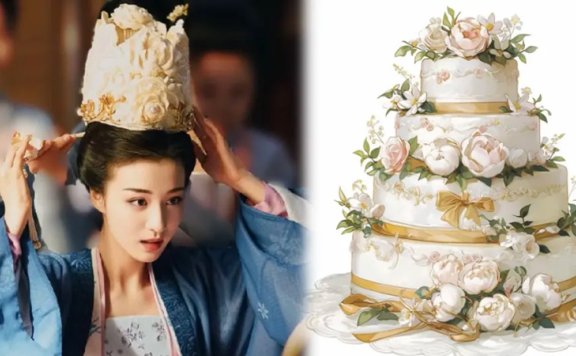
Wang Churan Wears a Cake on Her Head in Serenade of Peaceful Joy
In the historical drama Serenade of Peaceful Joy (清平乐), actress Wang Churan (王楚然) sparked online buzz with a headpiece that viewers likened to a lavish cream cake. This striking ivory crown, worn by her character Zhang Meihan (张妼晗), is far more than a stylistic whim. It is a meticulous recreation of the Chonglouzhi Guan (重楼子冠), a headdress whose design and name were inspired by a prized peony species recorded in the Song Dynasty text Record of Luoyang Flowers and Trees (洛阳花木记). This dramatic accessory opens a window into the sophisticated world of Song aesthetics, where fashion, botany, and social hierarchy intertwined to create some of history's most elegant and meaningful headwear. A Crown Fit for a Flower The real-life inspiration for the crown was the Chonglouzhi peony, cultivated by skilled gardeners to grow over two feet tall with layers of petals that resembled a stacked pavilion. Artisans, captivated by this natural wonder, translated its form into an exquisite headdress. The drama highlights the strict sumptuary laws of the era through a plotline where Emperor Renzong of Song punishes an official for presenting the crown, underscoring how such items were governed by status and regulation. The crown was not merely decorative;… -
The Story of Weimao and Mili in Tang Dynasty China
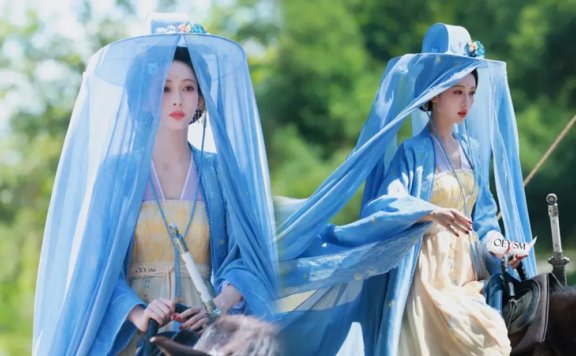
When watching Tang Dynasty-set dramas, have you ever wondered why some female characters wear hats with long veils covering their faces—or even their entire bodies? These headpieces, often called "face-covering hats" in period shows, come in varying styles: some veils drape to the shoulders, others sweep down to the ankles. But what lies behind these differences? Were ancient women truly hidden so thoroughly, or was there more to these hats than meets the eye? Let’s uncover the stories woven into Tang Dynasty headwear—Weimao (帷帽) and Mili (羃篱). Weimao vs Mili: Fabric, Length, and Timeline First, a quick clarification: Weimao and Mili are distinct, though often confused. Weimao, made of cloth or thin silk, features a wide brim with short veils that typically reach the neck—just enough to "lightly cover" the face, as Tang records describe. Mili, by contrast, is crafted from bamboo with longer veils that can shroud the entire body. Their popularity also shifted over time: Mili dominated in the early Tang (618–649 CE), while Weimao rose to fame during Empress Wu Zetian’s reign (690–705 CE) before fading in the Kaiyuan era (713–741 CE). For example, Yang Zi’s Weimao in the drama Flourished Peony (国色芳华) aligns closely with historical… -
The Lost Diversity of Ancient Chinese Dance Attire
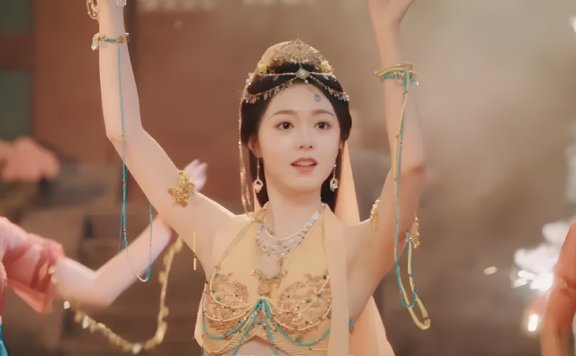
Have you ever noticed how often chest-baring dresses dominate dance scenes in today"s historical dramas? This singular style, frequently referred to as the "Dunhuang style," has become a ubiquitous visual shorthand. But a glance through history"s rich tapestry reveals a far more diverse and fascinating story of dance attire, where each dynasty expressed its unique aesthetic and cultural values through movement and fabric. Warring States Elegance During the Warring States period, the ideal of a slender, graceful figure was paramount. This is perfectly captured in the carved "Yu Wu Ren (玉舞人)" figurines. These artifacts depict dancers in long, trailing Zhiju (直裾) robes with flowing sleeves, their hair styled in intricate buns. The emphasis on a tiny waist was not merely aesthetic; it was a cultural reflection of the Chu kingdom"s famous preference for slender figures, a trend so influential it was said the kingdom"s people would starve themselves to achieve it. The dance movements from this era aimed for an ethereal, floating quality. Dancers used their elongated sleeves and heavy skirts to create beautiful, sweeping motions, making their bodies seem almost weightless. This connection between costume and choreography was intrinsic, with the clothing designed to enhance and amplify the dancer"s… -
The Art of Garnet and Cloisonne Jewelry
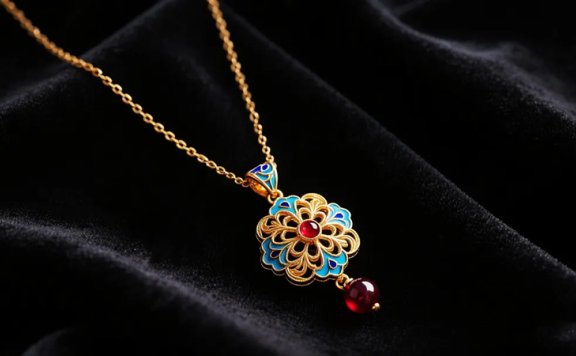
In the world of accessories, few stones carry the versatile charm of garnet. Its deep, wine-red hue acts not just as a color but as a bridge—connecting eras, styles, and materials with effortless grace. When paired with the vivid, artisan-crafted beauty of Cloisonne, garnet doesn’t just accessorize; it tells a story. This is not merely about wearing jewelry; it’s about curating a look that resonates with elegance, cultural richness, and personal expression. Whether you're dressing for a casual day out or a formal event, the combination of garnet and Cloisonne offers a unique blend of warmth and sophistication, making every outfit not just worn, but experienced. Bracelet Designs Imagine a bracelet where deep red garnet beads play the leading role, accented by small, intricate Cloisonne pieces. The contrast is striking—the organic richness of the stone against the crafted brilliance of enameled metal. This combination works beautifully with traditional attire like Qipao or modern linen ensembles. For an added touch of elegance, consider attaching a delicate tassel or pendant. It’s a piece that draws the eye and sparks conversation, blending classic aesthetics with wearable art. What makes this pairing so special is its flexibility. Garnet’s color is warm and neutral enough… -
Styling Story of Ju Jingyi's Lace Headpieces in Lai Zhan
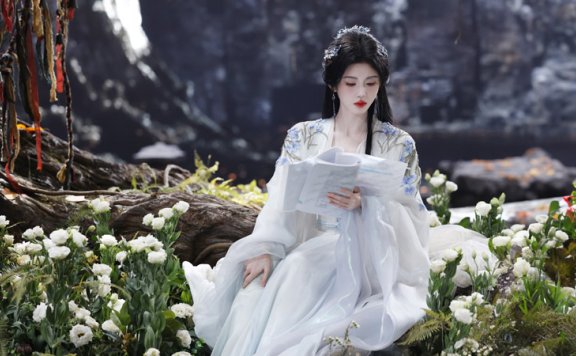
When photos from the set of the new historical drama Lai Zhan (来战) surfaced online, they sparked an unexpected debate. Actress Ju Jingyi (鞠婧祎) was seen wearing a headpiece adorned with lace, a detail that quickly divided netizens. Some compared it to a childhood costume accessory, while others posed a more profound question: Is lace purely a Western concept, or does China possess its own ancient tradition of delicate, openwork fabric? This seemingly simple fashion critique opened a door to a much larger conversation about cultural heritage, perception, and the untold stories woven into the very threads of history. Lace's Journey East The word "lace" itself is derived from the Latin "laqueus," meaning noose or snare, later evolving through English and French to describe intricate openwork fabric. Historically, the lace we recognize today is indeed a European innovation. It blossomed in the sixteenth century within the workshops of Italy and Flanders, transforming from simple cords into a luxurious art form created by looping, twisting, or knitting thread. Intricately made by hand from linen thread, it was exceedingly valuable. This European lace was introduced to China during the late Ming Dynasty, most likely by Western missionaries like Matteo Ricci. These missionaries… -

Is the Silliest Character in Midnight Return Also the Luckiest?
In the bustling, supernatural-infused capital of the Tang Dynasty, one man's incredible luck challenges the very notion of survival. The period drama Moonlit Reunion (子夜归) presents a world where demons lurk in shadowy alleys and celestial beings walk among mortals. At the heart of this tale is Mei Silang (梅四郎), a character whose foolish demeanor belies an astonishing talent for escaping peril. While others rely on strength or cunning, he navigates danger with a unique blend of naivety and pure-heartedness, making him the most fortunate soul in all of Chang'an (长安). The Unlikely Survivor Mei Silang seems to attract trouble with a frequency that would doom any ordinary man. His habit of secretly sketching the fierce demon hunter, Liu Taizhen (柳太真), draws the attention of a shadow demon that nearly ends his life. Yet, at the critical moment, the subject of his affections arrives to save him. This pattern of narrow escapes defines his existence. On another occasion, he mistakenly brings home what he believes to be a simple loach, only to discover it is the powerful snake spirit, Xuan Hui (玄虺). Fortunately, the spirit is not malevolent, sparing his life once again. His lack of awareness extends to being… -
How The Ming Dynasty's Costume is Captivating the Modern World
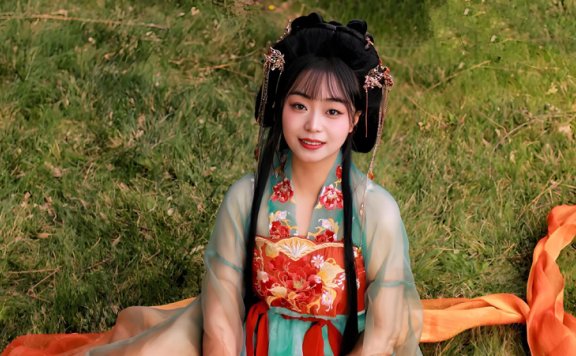
Have you ever wondered what makes a garment more than just fabric? In the bustling streets of modern China, a style from centuries past is making a stunning comeback. This is not merely a fashion trend; it is a journey into an era where clothing was a language of its own, speaking volumes about status, artistry, and identity. The sartorial legacy of the Ming Dynasty offers a unique window into a world of sophisticated aesthetics and social order, a world that continues to captivate designers and cultural enthusiasts today. Its appeal lies in a powerful combination of structured elegance and deep symbolic meaning, providing a rich source of inspiration far beyond the history books. Iconic Silhouettes Several key elements define Ming attire, making it instantly recognizable. The most famous is arguably the Mamianqun (马面裙), or "horse-face skirt." This ingenious design featured four overlapping panels—two in the front and two in the back—with pleated sides. When the wearer walked, the skirt created a graceful, flowing wave-like motion. Its design was both slimming and practical, allowing for ease of movement. Today, it remains a cornerstone of any Hanfu enthusiast's wardrobe, celebrated for its timeless elegance. Another defining feature was the stand-up collar,… -
How Chasing Jade First Trailer Forges a New Path for Historical Dramas
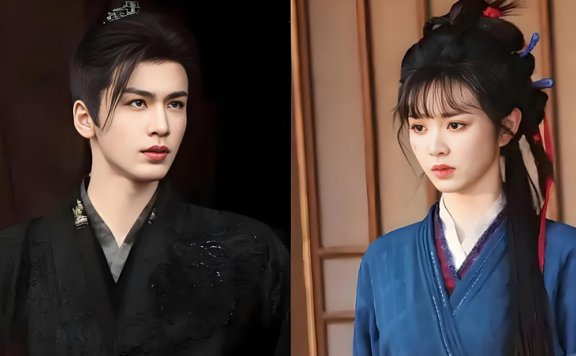
When it comes to historical romance dramas, many viewers brace for the same old tropes—fluffy Xianxia (仙侠) love stories with endless sugar-sweet moments. But a new series is shattering these expectations. "Chasing Jade First Trailer (逐玉), Tencent’s highly anticipated historical political revenge drama set to premiere in late 2025, introduces a fresh narrative: a butcher’s daughter wielding a cleaver on the battlefield, a fallen marquis drenched in blood seeking vengeance, and a fake marriage that blossoms into genuine devotion. This isn’t just another romance; it’s a bold reimagining of what historical love stories can be. Zhang Linghe’s Warrior Makeover For many, Zhang Linghe (张凌赫) remains etched in memory as Xie Wei (谢危), the calculating noble in Story of Kunning Palace (宁安如梦)—clad in snowy robes, his gaze sharp as a blade. But "Chasing Jade First Trailer" reveals a drastically different side of the actor. As Xie Zheng (谢征), his character delivers a visual knockout with a battle-scarred appearance: blood-stained armor, a gritty aura, and raw masculinity that radiates from every frame. Early set photos sent fans into a frenzy. Comments like “Is this a war god or a fairy?” and “Zhang Linghe’s historical costumes are my life!” flooded social media. This… -
Could a Two-Thousand-Year-Old Hairstyle Inspire Today's Fashion?
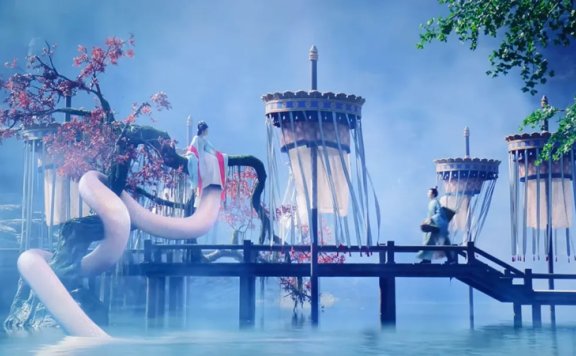
In the new historical drama Moonlit Reunion (子夜归), actress Wang Jiayi (王佳怡) captivates audiences with a striking hairstyle resembling coiled serpents. This unique look is not a modern invention but draws from ancient Chinese traditions. While viewers express astonishment at such boldness, they are actually witnessing the revival of a legendary hairstyle known as the Spiritual Snake Bun. This intricate design, with its twisting and looping forms, seems to defy gravity and conventional aesthetics. Its origin, rooted in myth and historical records, reveals a fascinating blend of artistry and cultural expression. The Legend Uncoiled Legend tells of Zhen Mi (甄宓), a renowned beauty who became an empress during the Wei dynasty. After she entered the palace, a mystical green snake appeared. It was not a creature of fear but an omen of good fortune, often seen holding a red pearl in its mouth. Every morning, as Zhen Mi sat at her dressing table, the serpent would coil itself into different shapes before her. Intrigued by these ever-changing forms, she began to replicate them in her hair. Each day brought a new design, so intricate and unique that no one could duplicate them exactly. Thus, the Spiritual Snake Bun was born.… -
What Fuels Jackson Wang's Unstoppable Rise?
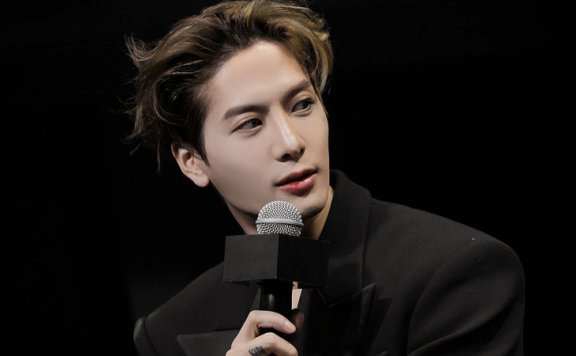
News of Jackson Wang collapsing due to suspected food poisoning after an event in Hangzhou sent shockwaves through his global fanbase. Images and videos circulating online showed a tense atmosphere as the multi-talented performer was rushed for medical care. Reports later confirmed food poisoning, thankfully non-critical. Intriguingly, several Hangzhou residents reported similar symptoms that day, pointing towards a specific restaurant. This incident, however, is just the latest chapter in the story of an artist defined by relentless drive and resilience. From an elite athletic background to the grueling K-pop training system and now a global solo star and entrepreneur, Wang's journey is a testament to sheer determination. Forged in Discipline Born in 1994 into a Hong Kong sporting dynasty, Jackson's path seemed predestined for athletic glory. His father, a fencing world champion, and his mother, a former gymnast, instilled rigorous discipline early. Wang took up fencing seriously around age seven or eight, quickly accumulating junior competition medals. The demanding household environment fostered an intense work ethic and a refusal to accept defeat. "If I decide to do something, I have to be the best," was his childhood mantra, a trait that became his bedrock. He pushed through punishing physical training… -
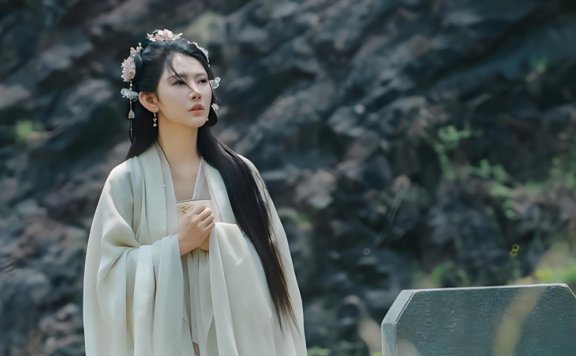
The Masterful Portrayal of a Modern Hero in Fuliu Ji Changsi
Move over, predictable palace intrigues. The historical drama landscape is being reshaped by Fuliu Ji Changsi (拂柳寄长思), a series captivating audiences with its profound exploration of vengeance, sacrifice, and ultimate transcendence. This production masterfully intertwines intense personal anguish with the weight of national crisis, creating a resonant narrative that resonates far beyond typical costume drama fare. Forget petty squabbles over favor; here, personal vendettas collide with the existential threat of war, forging a story of remarkable emotional and ideological depth. Expanding the Narrative Horizon Traditional dramas often confine their characters within gilded cages of familial power struggles. Fuliu Ji Changsi shatters these walls. The story orbits Huo Qingchen (霍清辰), the privileged heir of a marquis household, whose world implodes spectacularly. Betrayed by his elder brother, stripped of his inheritance, abandoned by his lover, and facing death, his fall is catastrophic. Yet, this devastating personal tragedy is merely the first act. The narrative scope expands relentlessly. Huo Qingchen's quest for personal justice becomes entangled with volatile court politics, escalating tensions that spill onto the nation's borders as foreign invaders threaten. The stakes evolve dramatically, shifting from reclaiming lost honor to defending the very existence of his homeland. This deliberate structural escalation… -
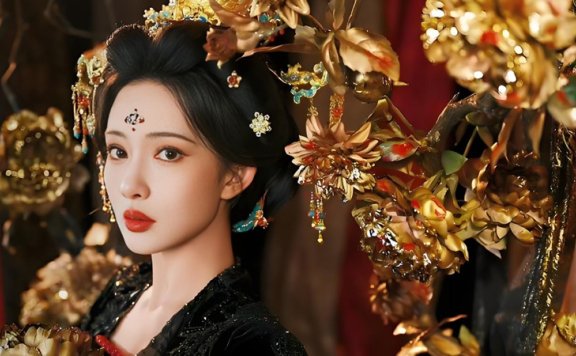
The Makeup Mask: Why Meng Ziyi's Look Never Changes?
Open any historical drama starring Meng Ziyi (孟子义) from the past few years, and you might experience unsettling a sense of familiarity. Whether she portrays a warrior in Blossom (九重紫), or a princess in the newly announced Tigers Sniff the Rose (尚公主) , her face presents a strikingly identical canvas. The same sharply winged eyeliner, the same meticulously separated lashes, the same pronounced under-eye brightness, the same matte blush placement, and, invariably, the same bold crimson lips. This signature "Meng Ziyi makeup" appears permanently affixed, transcending dynasties and disregarding character backgrounds, leaving audiences bewildered and increasingly critical. It prompts a blunt question: has the entire Hengdian (横店) film studio adopted a single downloadable makeup template? The Carbon-Copy Controversy Public reaction to Meng Ziyi's consistent look ranges from weary sighs to sharp critiques. Many viewers find the unchanging, heavily contoured makeup aging and uninspired, clashing violently with the historical settings. "Does she own only one shade of lipstick?" some ask pointedly online. Others lament that her appearance feels less like authentic period styling and more like a series of personal glamour shots, utterly devoid of the visual cues needed to distinguish different eras or social standings within the narratives. Comparisons inevitably… -
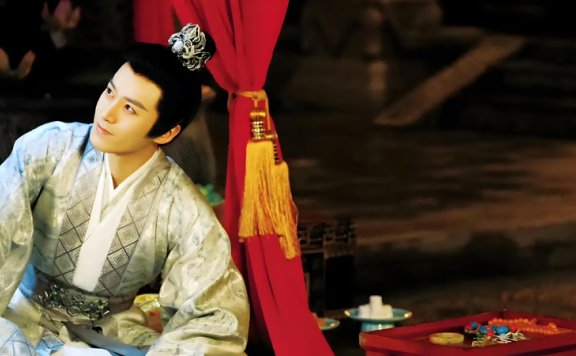
Voyage to Haihun - A Time Traveler's Odyssey
Chinese streaming platform Tencent Video has ignited screens with its new costume drama, Voyage to Haihun (海昏行). Premiering its first eight episodes on August 30, 2025, the series rapidly captivated audiences, trending fiercely with viewership soaring past the ten thousand mark. Blending time-travel, infinite loop mechanics, and historical legend, it thrusts modern disillusionment into the heart of the Western Han Dynasty (206 BC – 9 AD). The story follows Wang Heng (王衡), a down-on-his-luck contemporary man catapulted into the past by a mysterious bronze Qilin (麒麟, mythical Chinese creature). Finding himself entangled with the fierce female warrior De Jiu (得九) and the complex nobleman Liu He (刘贺), Wang Heng navigates treacherous historical currents, armed with future knowledge and an uncanny ability to reset fate. This potent mix has sparked fervent debate, leaving audiences divided on its merits. Beyond Time Travel The show's explosive debut hinges on its audacious central mechanic. Wang Heng possesses a "rebirth after death" ability, akin to reloading a saved game. This "retry" function creates intense immersion as he repeatedly alters his path. Early episodes showcase desperate, often comedic, attempts by Wang Heng and Liu He to escape their initial confinement – stealing seals, plotting elaborate horse… -
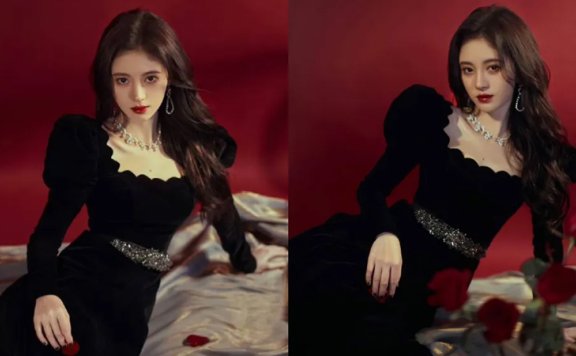
How Ju Jingyi Masters Focused Beauty and Strategic Styling
Once hailed as the undisputed "aesthetic queen" of China's entertainment industry, Ju Jingyi (鞠婧祎) has long captivated audiences not only with her talent but also with her meticulously crafted public image. Her appearance at the 2019 Weibo Night became an iconic internet moment, setting a new standard for celebrity styling and sparking countless tutorials. Yet, recent photos suggest subtle but noticeable shifts in her signature look, which have sparked debates among fans and beauty enthusiasts alike. Some argue her current style lacks the initial wow factor, while others find her evolution even more mesmerizing. What remains undeniable, however, is her status as a self-made beauty icon, celebrated for her strategic and learnable approach to aesthetics. This article delves into the three core pillars of "Ju Xue" (鞠学)—the art of Ju Jingyi's style transformation: her precisely focused makeup philosophy, her mastery of mature yet delicate dressing, and her overarching styling strategies that extend beyond facial features. From weightless eye makeup and refined brow shaping to strategic color harmony and architectural hair volume, her methods demonstrate how deliberate refinement can enhance natural features without overwhelming them. Her journey offers valuable insights into building a cohesive and elevated personal style through control, balance,… -
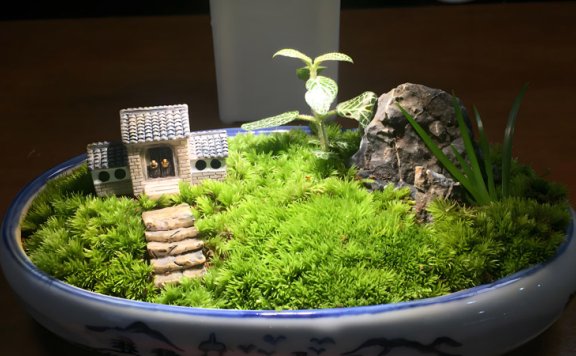
A Step-by-Step Guide to Crafting and Caring for Micro-landscapes
A micro-landscape, also known as a terrarium or plant-scape, refers to a creative and self-sustaining micro-ecosystem that integrates plants with similar ecological habits—such as ferns, mosses, and small foliage plants—along with decorative elements including stones, gravel, and ornamental accessories. These components are artfully arranged within a small container according to principles of landscape design and aesthetic composition. Drawing on years of practical experience in design and construction, this article systematically introduces key techniques for creating and maintaining miniature landscapes. It covers essential design principles, selection criteria for suitable plants, accessories and containers, as well as methods for assembly and long-term care. 1. Essential Guidelines for Miniature Landscape Design Creating a micro-landscape involves blending nature into tiny spaces, focusing on safety, economy, and aesthetics. Start with non-toxic plants to avoid allergens, choosing common species initially to save costs before advancing to rarer ones. This approach ensures a manageable and rewarding hobby, where balance in all elements enhances the overall appeal without overwhelming the creator. 1.1 Harmony in Variety Plant selection should avoid chaos by finding similarities in color, shape, or texture. Emphasize unity to highlight a focal species, ensuring the design remains cohesive and reflects the intended theme without clutter. Contrast… -
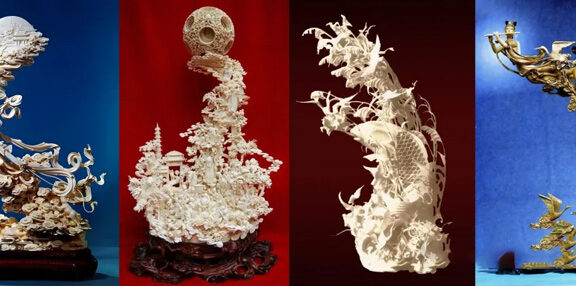
Artistic Characteristics of the 4 Major Ivory Carving Crafts in China
Chinese ivory carving, with its profound historical evolution, is renowned for its exquisite craftsmanship, diverse categories, distinctive ethnic charm, and strong regional characteristics. The introduction of the "Double Hundred" in the 1950s further stimulated the flourishing development of China's arts and crafts, significantly refining and consolidating the unique regional styles of ivory carving. From the 1950s to the 1980s, ivory products became one of the major exports in China's craft sector, with specialized art factories across the country nurturing talents and advancing creative techniques. This era not only contributed substantially to socio-economic and cultural development but also gave rise to recognized regional schools, most notably the "Four Major Ivory Carvings" from Beijing, Guangzhou, Shanghai, and Nanjing, sometimes expanded to include Fuzhou. Many other regions also developed their own traditions, leaving behind a rich cultural legacy and artistic heritage for future generations. 1. Beijing Ivory Carving: Millennia in the Making For over two thousand years, Beijing has been a pivotal center for ivory carving, an art form deeply intertwined with Chinese cultural identity. Evidence from a Warring States period tomb at Huangtupo (黄土坡), Beijing, yielded an ancient ivory comb, marking its early roots. Flourishing particularly during the Ming and Qing dynasties,… -
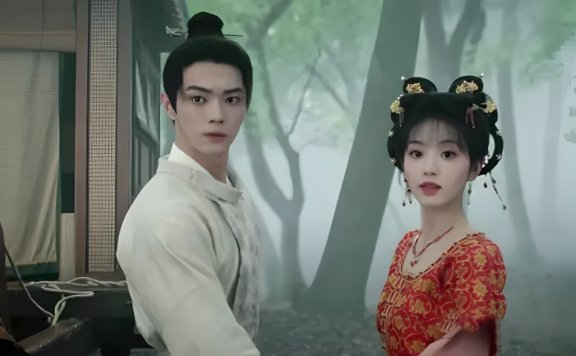
The Midnight Bargain: Can Love Outlast Heaven's Wrath?
As Moonlit Reunion (子夜归) barrels towards its finale, fans are holding their breath. The latest previews paint a picture of desperate choices and shattered memories. Wu Zhen's (武祯) body buckles under the strain of the Demonic Infant Core, while her devoted husband, Mei Zhuyu (梅逐雨), races against time to save her. The cryptic actions of the obsessive Wu Zishu (无字书) only deepen the peril, forcing Wu Zhen towards a potentially catastrophic transformation into a full demon. Will their love story culminate in triumph or tragedy? The clues lie scattered across tense previews and whispered lore, hinting at a resolution forged in sacrifice and ancient magic. The Descent and the Price Wu Zishu's misguided attempt to forcibly infuse Wu Zhen with demonic energy is a disaster. He fails to grasp a crucial truth: even achieving full demonic form cannot halt the physical decay caused by the malevolent Core residing within her. Instead, the influx of raw power and the lingering resentment of sacrificed minor demons act as potent fuel for the Core, accelerating its efforts to shatter the ancient seal placed by the former Cat Lord. This explains Wu Zhen's agonizing reaction during the process – her body is a battleground.…