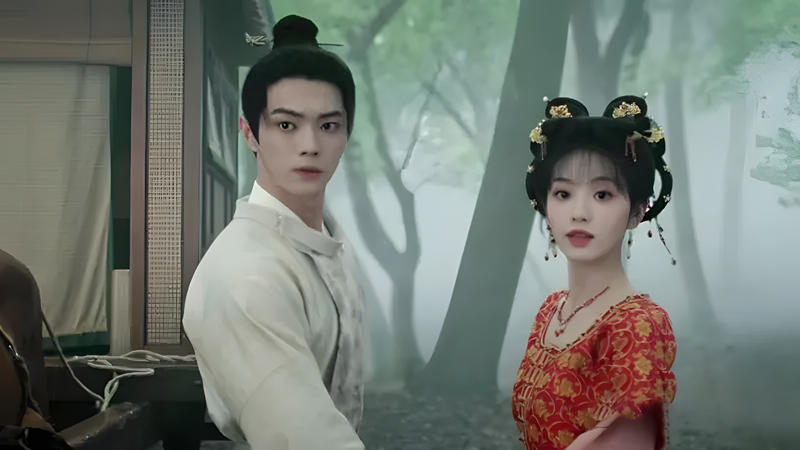
As Moonlit Reunion (子夜归) barrels towards its finale, fans are holding their breath. The latest previews paint a picture of desperate choices and shattered memories. Wu Zhen's (武祯) body buckles under the strain of the Demonic Infant Core, while her devoted husband, Mei Zhuyu (梅逐雨), races against time to save her. The cryptic actions of the obsessive Wu Zishu (无字书) only deepen the peril, forcing Wu Zhen towards a potentially catastrophic transformation into a full demon. Will their love story culminate in triumph or tragedy? The clues lie scattered across tense previews and whispered lore, hinting at a resolution forged in sacrifice and ancient magic.
The Descent and the Price
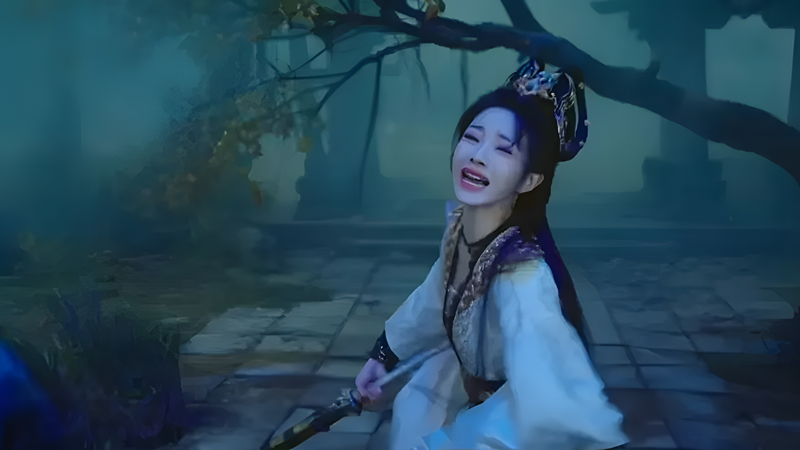
Wu Zishu's misguided attempt to forcibly infuse Wu Zhen with demonic energy is a disaster. He fails to grasp a crucial truth: even achieving full demonic form cannot halt the physical decay caused by the malevolent Core residing within her. Instead, the influx of raw power and the lingering resentment of sacrificed minor demons act as potent fuel for the Core, accelerating its efforts to shatter the ancient seal placed by the former Cat Lord. This explains Wu Zhen's agonizing reaction during the process – her body is a battleground.
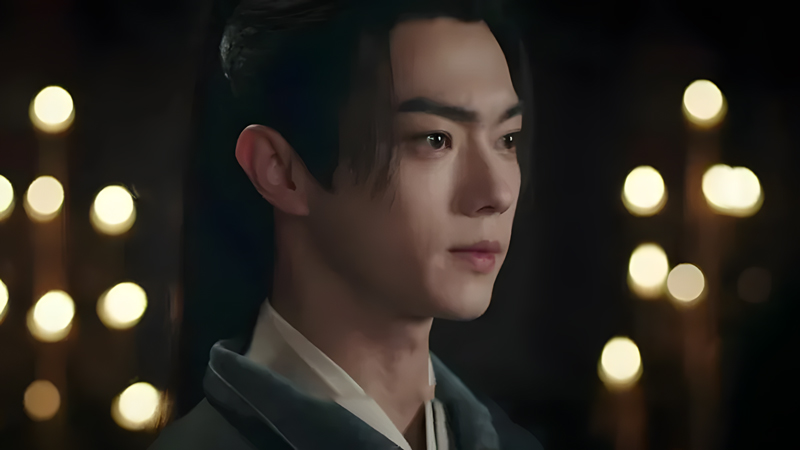
Mei Zhuyu's intervention in the nick of time likely saves her from immediate destruction, but the violent surge of the Core's power exacts a heavy toll. Wu Zhen's mind fractures, regressing to her sixteen-year-old self, blissfully unaware of her current tribulations and her profound bond with Mei Zhuyu. Tian Xiwei's (田曦薇) portrayal captures this jarring innocence perfectly . Their subsequent journey, glimpsed in previews, sees Mei Zhuyu desperately seeking mystical cures for her worsening demonic lesions, a quest met with crushing failure. Conventional healing cannot touch a curse woven by fate itself.
Meanwhile, the treacherous Grey Elder seizes the chaos, plotting to steal the Core and aid its escape, even attempting to breach the Demon Market's protective barrier to grant it access to its primordial source of strength . His ambition sets him on a collision course, likely ending in a fatal confrontation with either Wu Zishu or Wu Zhen herself. The stakes for the realm escalate alongside the personal tragedy unfolding.
Echoes of a Doomed Past
Driven to extremes, Mei Zhuyu turns to the ancient power of the Changxi Palace (常羲宫). Preview scenes show him taking the amnesiac Wu Zhen there, seeking answers not in medicine, but in temporal magic. He needs to understand the nature of her tribulation – the "heavenly calamity" she faces. Their journey yields a grim revelation: Wu Zhen's affliction is not an illness, but a predestined trial. Saving her requires unraveling its origin.
A pivotal moment in the Changxi Palace hints at the solution. The amnesiac Wu Zhen, drawn to the palace's mystical aura, playfully suggests learning Taoist arts to become "dual-cultivated" in both demonic and Taoist paths. This seemingly casual remark resonates deeply. Preview footage later shows Wu Zhen wielding the legendary Changxi Mace – a weapon only a true master of both paths might command. Supporting this theory, preview text boldly states: "With human form and demonic power, together they defy the heavenly calamity" . The "calamity" points unmistakably to the Demonic Infant Core, suggesting its defeat requires a unique fusion of forces.
Mei Zhuyu's journey back in time reveals the heartbreaking origin of Wu Zhen's burden. Evidence strongly suggests the Core initially targeted him. As a child, Mei Zhuyu gifted young Wu Zhen a lantern in the Demon Market. The Core, emerging from the Market and sensing the potent aura of the former Cat Lord (Mei Zhuyu's father) lingering on the lantern, mistakenly identified Wu Zhen as its target bearer. This explains the lantern's prominent focus during Wu Zhen's initial attack and the Core's residual recognition of Mei Zhuyu's familiar energy later . Her suffering began as a tragic case of mistaken identity.
A Bargain Struck in Blood
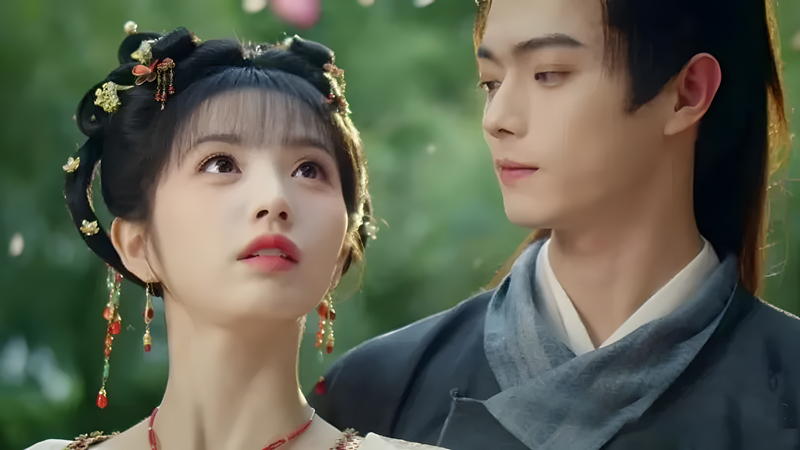
Facing this devastating truth, Mei Zhuyu makes the ultimate sacrifice. Previews depict him attempting to transfer the cursed Core from Wu Zhen into his own body. The original lore implied this act would be fatal for the bearer seeking to destroy the Core. Mei Zhuyu's poignant line to Wu Zhen – "It's a pity life is so short" – underscores his acceptance of this grim outcome. His love manifests as a willingness to die for her freedom.
Yet, hope persists for a happy ending. The source novel provides a crucial precedent: when pushed to the brink by the Core, the couple was saved by the lingering spiritual essence of the first Cat Lord. Since the novel concluded positively, the drama adaptation is expected to follow suit. Furthermore, official previews showing a body-swap scenario (a plot point from the novel occurring before the final battle in the original timeline) appear in the drama's context after the Core battle, evidenced by Wu Zhen's flat stomach. This timeline shift strongly suggests Mei Zhuyu survives the confrontation .
Wu Zishu's arc hurtles towards a violent conclusion. His history as the Core's enforcer, responsible for atrocities in Chang'an eighteen years prior, compounded by his recent murder of minor demons and collusion with the Grey Elder, marks him for execution under demonic law. As the Cat Lord, Wu Zhen, bound by duty and justice, will be his executioner. For the fanatically devoted Wu Zishu, death at her hands may be his twisted form of absolution . His demise paves the way for resolution.
Finally, the question of longevity. A human and a demon (or even a transformed Wu Zhen) face mismatched lifespans. The novel hinted at a bittersweet compromise, with Wu Zhen visiting Mei Zhuyu in spectral cat form. The drama offers potential for greater fulfillment. Mei Zhuyu's discovery of his heritage – learning his father was the former Cat Lord – raises the tantalizing possibility he possesses latent supernatural traits, perhaps making him a demi-demon with extended life. Combined with Wu Zhen potentially completing her demonic transformation after the Core's removal, their path to a truly enduring union seems plausible. Love, it appears, might just forge its own timeless covenant against heaven's decree.