Article
搜索结果:
-
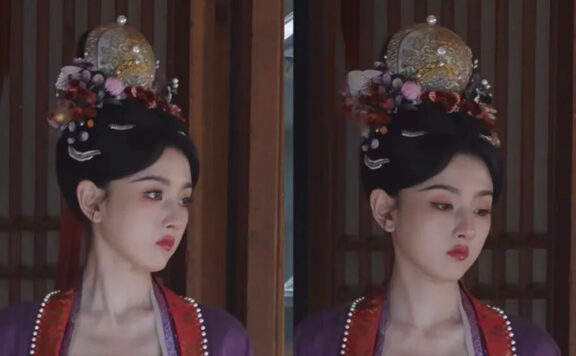
Is That a Scallop or a Song Dynasty Crown?
When photos from the set of Si Gong Ling (司宫令) surfaced online, fans did a double take. There stood Song Zuer (宋祖儿), dressed in period costume as Wu Mangmang (吴蒖蒖), with what looked like a giant scallop shell perched on her head. Social media erupted in amused confusion. Was this a quirky new fashion statement? A props department joke? Actually, it was neither. That “seashell” is a faithful—if slightly dramatized—recreation of a Tuan Guan (团冠), a round crown worn by women in the Song Dynasty. What seems bizarre to modern eyes was once a symbol of elegance, status, and everyday practicality. Let’s crack open this historical headwear and see what lies beneath the glossy surface. Not a Seashell The crown on Song Zuer’s head follows a distinct curve: arched at the top, slightly tapered on the sides, and rounded like an inverted bowl. From the front, it really does resemble half a scallop shell. That’s because the Tuan Guan’s basic silhouette is round, plump, and gently domed—think of a shallow ceramic bowl or a flattened ball. The drama’s costume department made it flatter and shinier for the camera, which amplified the seafood resemblance. But the original was never meant to… -
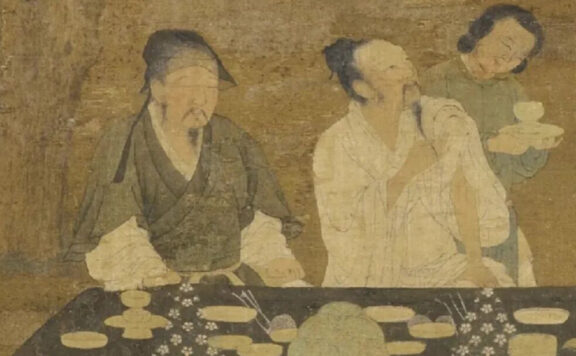
5 Spring Pastries That Taste Like the Season
When mid-spring arrives in the ancient Chinese calendar, peach trees burst into bloom and swallows return north. The air itself seems to hum with fresh energy. Long before refrigerators or artificial flavors, the Chinese people developed a beautiful habit: they captured the fleeting spirit of spring inside small, steamed cakes. These weren't just snacks. They were edible poems, a way to taste the season itself. From the Tang dynasty kitchens to the gardens of Song dynasty scholars, every pastry told a story of patience, observation, and deep respect for nature's rhythm. Let me take you on a journey through five spring pastries that reveal how ancient China truly ate—and lived—the season of renewal. 1. Xing Lao (杏酪) In early spring, apricot flowers open first. The Tang dynasty text Shanfu Jing Shou Lu (膳夫经手录) describes a delicacy called Xing Lao. To make it, people ground almonds into a fine paste, then cooked it with sticky rice until it became a translucent, jelly-like cream. The color resembled fresh lard. One drop of apricot blossom essence gave it the clean sweetness of spring mornings. Song dynasty scholar Lin Hong (林洪) mentioned a similar treat called Xing Tang (杏饧) eaten around the Cold Food… -

The Demon Hunter: Guochao Animation Goes Global
Can The Demon Hunter (沧元图) Season 3 Redefine Chinese Animation's Global Path? A record-breaking hit from Youku (优酷), this Guochao (国潮) anime has not only shattered domestic viewing records but also captured serious international attention. In late 2025, CNBC reported on the show’s rising popularity in Thailand and Vietnam, highlighting how its third season amassed over 9.37 million internal reservations—an all‑time high for Chinese animation. With over 11.92 million followers on Youku and 1.27 million subscribers on YouTube, it proves that well‑crafted New Guofeng (国风) stories can travel far. The secret? A long‑term commitment to quality, a bold fusion of traditional aesthetics with modern animation, and a strategic push from Youku to turn original Chinese content into a global cultural phenomenon. The Fire Within Why does The Demon Hunter burn so brightly? It starts with patient IP building. The first season (2023) scored 8.6 on Douban (豆瓣) and became the first Chinese anime to hit number one on TikTok’s trending list. It laid a solid foundation of trust. By season two, the team upgraded the visuals, blending Shui Mo (水墨) ink effects with Peking opera mask motifs and even a “silent episode” – over 300 special‑effect shots with no dialogue,… -
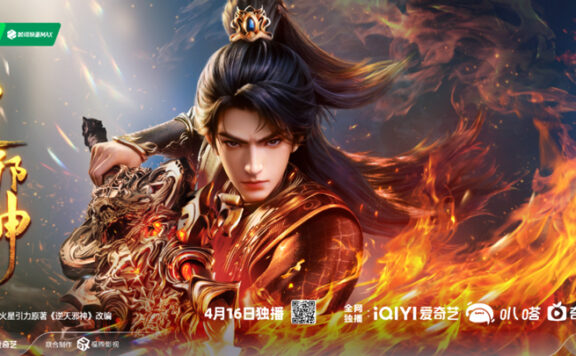
Against the Gods Premieres April 16
On April 16, iQiyi launched the much-anticipated Against the Gods (逆天邪神), a sequel to the hit animated series. Produced by iQiyi’s High-Energy Studio in partnership with Fu Xi (福煦) Film, the show updates every Thursday at 9 AM, with VIP members getting three episodes on day one. The story follows young Yun Che (云澈) on a year-long journey of survival and growth. He enters a hidden realm, uncovers his lost past, and faces brutal trials like a royal wedding raid and a family revenge. Unlike the first season, this yearly edition promises non-stop action and emotional depth, keeping viewers hooked for twelve months. The New Season Adapted from Mars Gravity’s popular fantasy novel, the new season picks up right after the Cang Feng (苍风) Ranking Battle. Yun Che no longer fights alone. He teams up with companions to explore a secret zone called the Hidden Realm. There, he slowly pieces together his true origins—secrets that powerful enemies want buried. The show does not rush these revelations. Instead, it lets each clue land with weight, making the mystery feel real and urgent. What makes this season different? The writing balances big fight scenes with quieter moments of doubt and loyalty. Yun… -
The Ancient Lazy Rest in Veil of Shadows
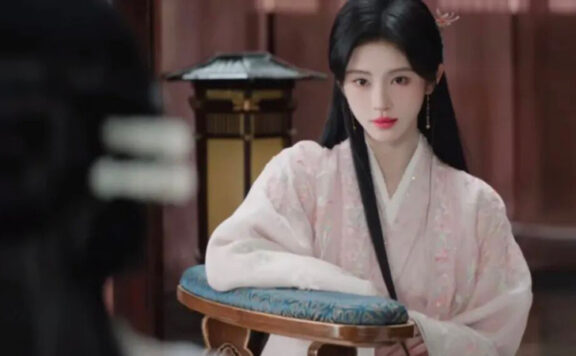
Have you noticed how characters in Chinese dramas never seem to sit straight? In Veil of Shadows (月鳞绮纪), Ju Jingyi (鞠婧祎) as Lu Wuyi (露芜衣) leans lazily on what looks like a chair armrest. The same thing appears in The Legend of Shen Li (与凤行), Nirvana in Fire (琅琊榜), and The Story of Minglan (知否). It looks comfortable—almost too comfortable. But here's the catch: that thing isn't a chair at all. It's an ancient piece of furniture called Yinji (隐几), also known as Pingji (凭几) or Yiji (倚几). Think of it as a portable sofa armrest from thousands of years ago. People placed it on a bed or mat, leaned an elbow on it, and instantly felt like they were floating. No back support, no cushion—just a wooden frame that somehow works. And the best part? It was designed to be moved outside. So next time you see a historical drama character slouching in perfection, know that they're not being rude. They're just using the original lazy tool. The 'Lazy Rest' Explained The earliest record comes from Zhuang Zi (庄子), specifically the chapter "On the Equality of Things," where a master sits while leaning on a Ji. That's over two… -
How Jiu Ying Fell for Ji Ling’s Trap in Veil of Shadows
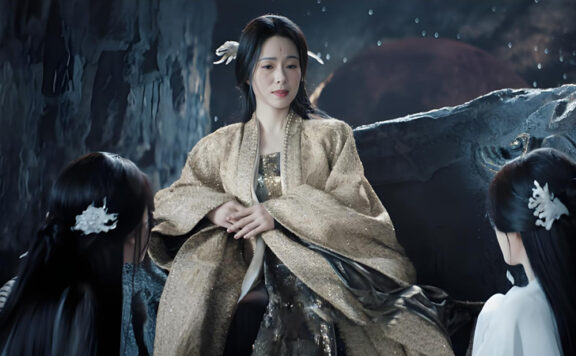
She's an ancient beast who has lived for tens of thousands of years. She nearly destroyed the world. She's so sharp that she can spot a lie from a mile away. So how did Jiu Ying (九婴), the main villain of Veil of Shadows (月鳞绮纪), get tricked by a few simple sentences from Ji Ling (寄灵), a blind fox from under Nan Shan (南山)? The answer isn't that Ji Ling is some master manipulator. It's that Jiu Ying's own mind built the trap for her. She wanted something so badly that her common sense took a holiday. And that made her the easiest mark in the entire drama. The Arrogance of an Ancient Beast Jiu Ying has been around since before humans learned to make fire. She's seen empires rise and crumble. She's watched heroes beg and villains weep. In her eyes, Ji Ling is a child playing dress-up. She doesn't fear his little schemes because she believes she can crush him with one claw behind her back. The power gap between them is that enormous. Remember, it took nine dragons sacrificing themselves just to seal her away the first time. Each dragon swallowed one of her nine heads. And… -

Is Ling Cage's Mark and Bai Yuekui Heading to Space in 2026?
Ling Cage (灵笼), a Chinese 3D animated series, has done what few dared to dream. It earned a competition slot at Annecy International Animation Film Festival, the so-called “Oscar of animation”. The first two seasons alone pulled in over 1 billion views and 11 million followers on Bilibili, while holding a rock-solid Douban (豆瓣) score of 8.9. Now, a feature film and a third season are racing toward 2026. The story will leave the ruined ground behind and shoot into space. This is not a sequel—it is a rebirth. Staggering Stats Numbers do not lie. Ling Cage has accumulated more than 1 billion total views across its run. Its follower count on Bilibili alone exceeds 11 million, making it a flagship title for the platform’s domestic animation push. On Douban, over 100,000 users have rated it, and it still sits at 8.9. Overseas, on IMDb, it holds a 9.5—a record for any Chinese animated work. These figures are not just big; they are unprecedented for a hard sci-fi original IP from China. What makes these stats more impressive is the context. Ling Cage started as a niche original property, not an adaptation of a popular novel or comic. It built… -
Bai Ze’s True Power in Sword of Coming
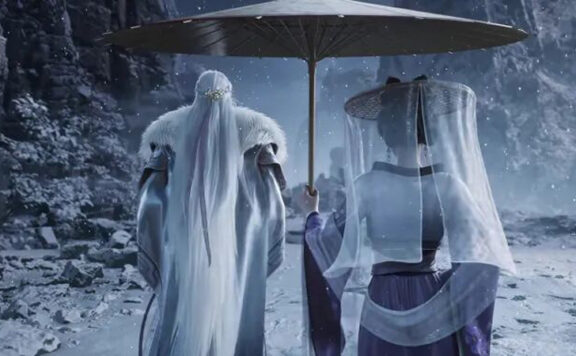
What happens when the first demon spirit of heaven and earth casts a single glance? In the animated series Sword of Coming 2 (剑来2), Bai Ze (白泽) does exactly that to a reckless fox demon named Qing Ying (青婴). He does not raise a hand, chant a spell, or draw a weapon. He simply looks at her. And in that moment, one of her nine tails is gone. This is not a fight. It is a lesson in absolute power. The scene shocks viewers because Qing Ying is no weakling—she has reached the eleventh realm and shapeshifts as an eight-tailed fox. Yet against Bai Ze, she might as well be a candle facing a typhoon. The show reveals something terrifying about him: the fewer demons remain in the world, the stronger he becomes. But what truly drives this ancient being? Not bloodlust, not ambition. He wants peace between humans and demons, a wish that has made him a prisoner of his own making. One Reckless Mouth, One Severed Tail When Bai Ze first meets Chen Ping'an (陈平安), he barely exchanges a few words before turning to leave. Yet his sharp eyes immediately notice that Chen Ping'an's "bridge of immortality" is… -
4 Ways to Style Garnet Jewelry for a Look
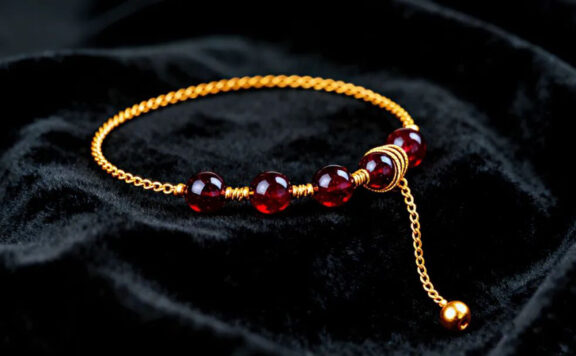
Many women own a garnet bracelet but rarely wear it, thinking it looks dull or outdated. In fact, wine red garnet and Zi Ya Wu (紫牙乌) have beautiful deep colors, but they only shine when paired with the right accessories. Below are four perfect pairings to bring out the best in your garnet, for daily casual wear or glamorous occasions. Garnet & Pearl The combination of deep red garnet and creamy white pearl is elegant and balanced, like red wine beside a seashell. The strong red tone softens beautifully, while the pearl gains a warm glow instead of appearing overly formal on its own. This pairing flatters women in their 30s and 40s, suitable for both office meetings and dinner parties—polished and confident without being flashy. For the best look, choose white or cream pearls slightly larger than garnet beads; pink pearls should be avoided as they clash with the stone’s warm hue. Many who wear this combination receive compliments, often mistaken for designer jewelry. Feminine, graceful, and versatile, it is a timeless match that belongs in every jewelry collection. Garnet & Cloisonné Cloisonné, a traditional Chinese craft with vivid blue enamel, creates a striking contrast with garnet. As complementary… -
Ju Jingyi’s Floral Headdress in Veil of Shadows Sparks Debate
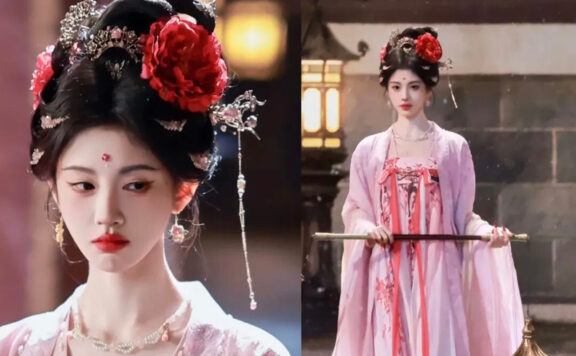
Is Ju Jingyi (鞠婧祎) wearing a flower the size of a dinner plate on her head in the new costume drama Veil of Shadows (月鳞绮纪)? Netizens think so, and they are not happy. The actress, playing a character named Lu Wuyi (露芜衣), recently unveiled a Tang Dynasty-inspired look that features an enormous, bright pink blossom perched atop her elaborate bun. While the drama promises fantasy and romance, the internet has zeroed in on one question: is that flower historically possible, or just a stylistic train wreck? The answer, according to historical records and paintings, leans heavily toward the latter. This isn't just about one actress's accessory—it's about how modern productions misunderstand an entire era's aesthetic. Let's dig into why that flower feels so wrong, and what Tang women actually put in their hair. Historical Reality If you time-traveled to the late Tang or Five Dynasties period, you would be hard-pressed to find a lady sporting a flower as loud and oversized as the one on Lu Wuyi's head. Tomb murals and religious paintings from that era tell a different story. In scenes of daily life, women with complex, sky-high buns often accessorized with small, delicate blossoms or a combination of… -
Eye Veil: Ming Dynasty's Social Anxiety Solution
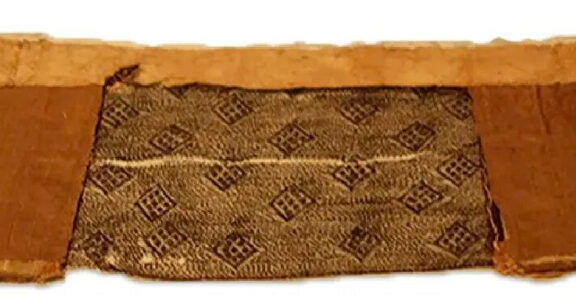
In a world where social anxiety feels like a modern epidemic, imagine stepping out with a face covering that hides your expression, blocks the sun, and excuses you from awkward greetings. Sounds like a designer gadget from today’s e-commerce sites, right? Surprisingly, this accessory existed centuries ago in Ming Dynasty China. It wasn't a medical mask or a fashion statement for celebrities—it was the“eye veil,” a square silk cloth with two narrow slits for the eyes. People wore it alone, tied behind the head, often made of thin gauze decorated with pearls. It kept dust away, shaded the face from harsh sun, and—most intriguingly—offered a perfect escape from social obligations. Think of it as a portable invisibility cloak for the socially overwhelmed. And one of its most famous fictional users? Jin Ping Mei’s (金瓶梅) notorious playboy, Ximen Qing (西门庆), who donned it to hide his identity while sneaking around town. But was he hiding from enemies—or from having to bow and chat? Let’s pull back the veil. Face Hiding, Freedom Finding Why would a grown man in the Ming Dynasty walk around with his face nearly covered? Portuguese missionary Álvaro Semedo, in his book History of the Great and Renowned… -
Does Dilraba's Face Fit Love Beyond the Grace?
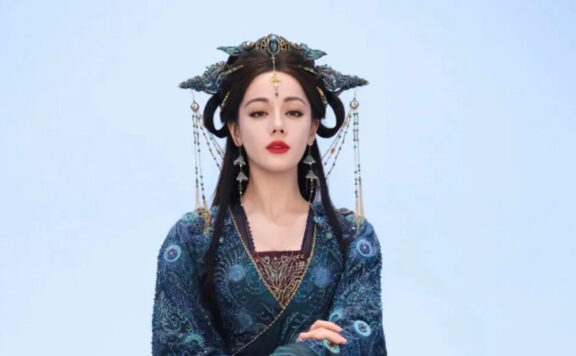
Why does Dilraba look stunning in some ancient dramas but oddly mismatched in others? Her role in the upcoming series Love Beyond the Grace (白日提灯) has sparked fresh debate among costume drama fans. The answer lies not in her acting but in the clash between her bone structure and traditional Chinese costume design. Most ancient Chinese faces, whether in paintings or on screen, follow a flat, soft contour—rounded cheeks, low cheekbones, and a broad yet gentle jawline. That look reads as noble and graceful. Dilraba, however, carries a sharp, three-dimensional face shaped by a different ancestry. Her deep-set eyes, high nose bridge, and prominent cheekbones belong to what historians call Hu Feng (胡风), or "barbarian wind." This term doesn't carry a modern insult; it refers to the cultural and physical influences from Central Asian nomadic groups that poured into Tang dynasty China. Understanding this history explains why her beauty shines only when costume designers stop forcing her into traditional Han Chinese molds and instead embrace her unique heritage. The Huihu Connection Hu Feng wasn't a vague trend. It came from real people. One of its strongest carriers was the Huihu (回鹘), also known as the Uyghur ancestors. Originally called Huige… -
Love Beyond the Grace: Desire Traps the Schemer
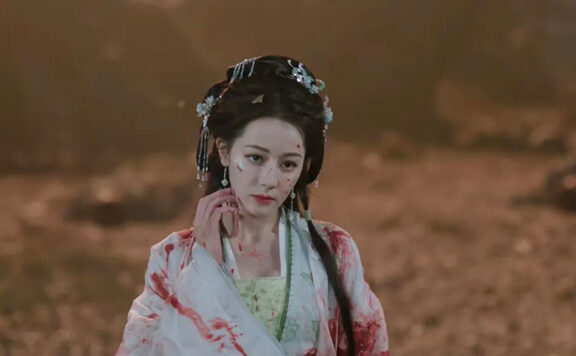
In Love Beyond the Grace (白日提灯), the spirit lord He Simu (贺思慕) has swapped senses twice with her ally Duan Xu (段胥). The first time, she nearly perished after Fang Chang (方昌) betrayed her. The second time, she survived an attack from Song Xingyu (宋兴雨), the master of Jiuling Dian (亼灵殿). Each exchange costs her all spiritual power—a secret only she and Duan Xu know. When betrayal struck, she teased Duan Xu as a suspect. But in truth, Fang Chang’s clumsy plot revealed the real enemy. It was never the puppet-master Song Xingyu (宋兴雨), nor Bai Sanxing (白散行) imprisoned in the Jiugong (九宫) Labyrinth. The one who truly wants the Wanling (万灵) Lantern—and has loved He Simu for 400 years—is her own right-hand man, Yan Ke (晏柯). A Foolish Betrayal Fang Chang, disguised as a minor spirit, kept urging a ghost named Chen Ying (沉英) to seize the Wanling Lantern. That lantern represents the supreme authority of the spirit realm’s ruler. For four centuries, many wandering spirits resented He Simu’s reign, but those who dared to challenge her were annihilated. The survivors either lacked power or could not find her weakness. Fang Chang’s trap, however, was laughably crude. He set… -
Renegade Immortal: Duel on Ran Yun Star
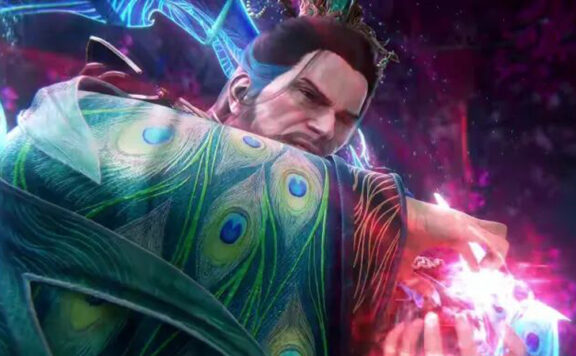
In the latest arc of Renegade Immortal (仙逆), a deadly obsession takes center stage on Ran Yun Star (冉云星). Huan Mei (幻眉), having undergone the Huan Family’s forbidden Blood Exchange Ritual, skyrockets from the early Ask Zenith stage to its peak in just half an incense stick’s time. But this power comes at a terrible cost—her clan elder, Huan Wuqing (幻无情), sacrifices his own cultivation level to help her master the long-lost Wanhuan Tianmo Dao (万幻天魔道). He is thrilled, not out of loyalty, but because he sees her as a future meal. Huan Mei knows this all too well. In the ruthless world of cultivation, being a furnace for someone else’s power is common. She has accepted her fate—until she spots the one man she hates more than anyone: Wang Lin. The Price of Power Huan Mei never asked for the Huan Family’s twisted gift. When Huan Wuqing drained himself to push her to perfection, he was not being generous. He was fattening her up. The Wanhuan Tianmo Dao, a technique lost for millions of years, is now hers—but ownership means nothing when your owner is watching. She remembers how Qian Feng (乾风) once used Hong Die as a cauldron.… -
Sword of Coming 2: A Basket That Escaped Disaster
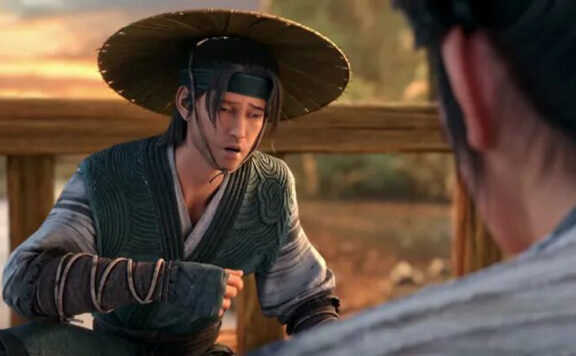
In the animated series Sword of Coming 2 (剑来2), a simple act of kindness nearly turned into a deadly trap. Deep inside the mystical Lizhu (骊珠) Cave Heaven, a well-meaning man named Li Er (李二) tried to help a poor teenager named Chen Ping'an. He offered to sell him a strange item called the Dragon King Basket along with a Golden Carp. But before the deal could close, a passing prince snatched them away. What seemed like bad luck for Chen turned out to be a miracle. That basket was no ordinary tool—it was a nightmare device that could have gotten him killed before he ever left the town. The story hides a dark secret about power, fear, and a young man's strange love for money over magic. The Lucky Intercept Li Er always thought Chen Ping'an (陈平安) was a good kid. He wanted to give him a break but didn't want to hand out freebies. Selling the Dragon King Basket and the Golden Carp at a low price seemed like a fair way to help. However, fate had other plans. Prince Gao Xuan (高煊) of the Sui Dynasty and his guard Wu Diaosi (吴貂寺) happened to pass by. Their… -
Love Beyond the Grace: Why She Chose Him
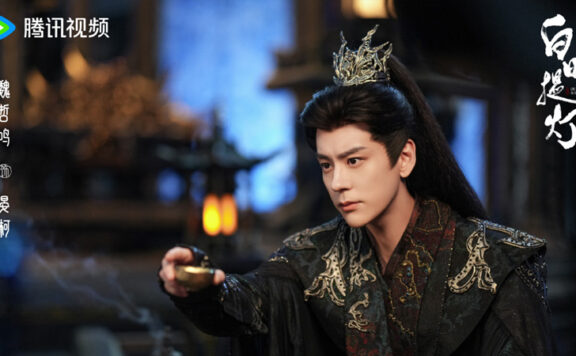
For four hundred years, she ruled the dead. She watched twenty-three mortal men live, love, and die in her arms. And through all those centuries, one ghost stood beside her—silent, patient, waiting. He painted her portraits. He helped her crush rebellions. He climbed the ranks of Gui Xu (归墟) to become her right hand. Yet she never once looked at him the way she looked at a dying soldier named Duan Xu (段胥). Why would a woman who could love two dozen strangers refuse the one who stayed four hundred years? The answer isn’t just a murdered father. It runs deeper than revenge. It lives in what each of them truly wanted from the world—and from her. The Throne or the Order? Yan Ke (宴柯) had been a prince in his mortal life. He fought for a crown, lost, and was torn apart by horses in the public square. Death did not cleanse his hunger. It only sharpened it. He rose as a vicious ghost, and his obsession never changed: absolute power. He killed He Simu’s (贺思慕) father to clear a path to the throne of Gui Xu. But he wasn’t strong enough to take it for himself. So he… -
Ingenious Kitchen Wonders of the Past
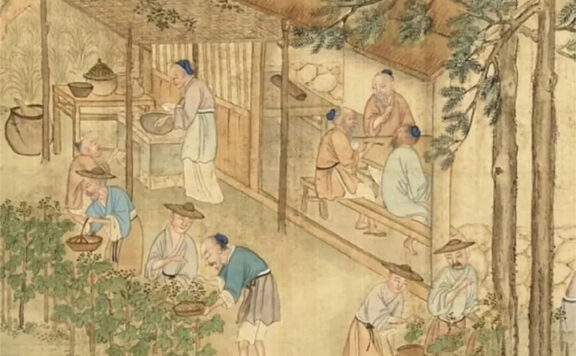
Step into a modern kitchen with its induction cooktops, smart steamers, and six-burner gas stoves. It feels like the peak of convenience, doesn’t it? But what if a time machine whisked you back 2,000 years to a Han Dynasty (汉朝, 206 BCE–220 CE) kitchen? You might drop your spatula in shock. Ancient Chinese cooks had gadgets that look suspiciously like “black tech” from the future. No electricity. No stainless steel. Just raw intelligence and a deep understanding of fire, water, and steam. From a 7,000-year-old steamer to a collapsible bronze camping stove, their tools tell a story of relentless innovation. This article unpacks three game-changing devices that turned ancient kitchens into labs of culinary genius. Forget what you think you know about “primitive” cooking. These inventions—the Yan (甗), the Han energy-saving stove, and the Tiger-shaped portable range—prove that our ancestors didn’t just survive. They thrived, feasted, and engineered their way to flavors we still chase today. The Steam Master Long before pressure cookers hissed on modern stoves, the Bronze Yan was doing something almost magical. Its name sounds like “yen,” but it wasn’t for looking. This 3,000-year-old device from the Western Zhou Dynasty (西周, 1046–771 BCE) was a two-part steamer.… -
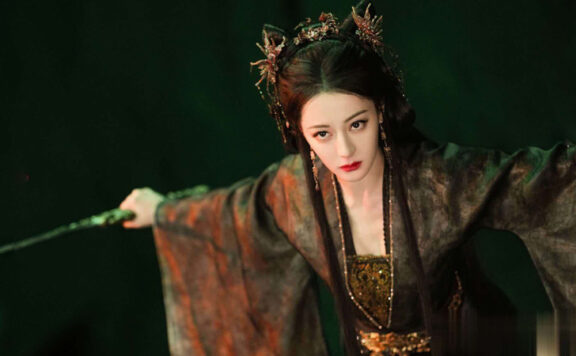
Love Beyond the Grace: He Simu’s Mortal Senses
Love Beyond the Grace (白日提灯) just dropped, and within hours, screens flooded with a red-robed, white-haired figure. That’s He Simu (贺思慕), the Ghost King of Gui Xu (归墟), played by Dilraba. She looks like a storm carved into human shape. But here’s the twist that punches through the usual fairy-tale fluff: this immortal ruler has spent four hundred years feeling absolutely nothing. No hunger. No cold. No joy. She cannot see a sunset, taste a berry, or weep at a loss. She commands death itself, yet she has never truly lived. The drama doesn't ask you to swoon over a supernatural romance. It asks something harder: what if eternal life meant eternal numbness? And what happens when a dead queen borrows a living man's senses? The Hollow Crown He Simu sits on a throne of shadows. As the Ghost King, she guides souls across the boundary between life and death. Mortals fear her. Spirits obey her. But inside her chest, there is no heartbeat, no longing, no rage. For four centuries, she has watched spring flowers bloom without seeing their colors. She has lifted a wine cup without smelling the rice fermenting. She has listened to lovers whisper without understanding… -
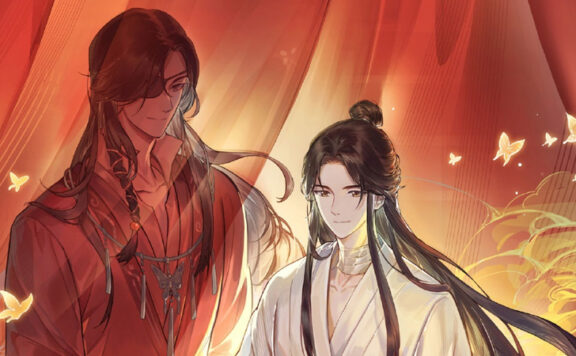
8 Chinese Animations Crossing Cultural Borders
Donghua (动画) has carved a unique space in global animation, not merely as entertainment but as a vessel for stories that resonate across cultures. While fantasy and martial arts often serve as the backdrop, the true engine of this international wave is a deep, often raw, exploration of human connection, destiny, and emotion. The following four series, each distinct in genre and style, demonstrate how complex narratives and breathtaking artistry have captivated audiences worldwide, proving that a well-told story transcends language and geography. Heaven Official's Blessing (天官赐福) The adaptation of Heaven Official's Blessing became an immediate global phenomenon upon its release, topping Netflix charts in numerous regions. The story’s engine is a profound connection between two powerful beings: a disgraced prince-god and a formidable ghost king. Their relationship, built on a single act of rescue centuries prior, is portrayed with an almost aching tenderness. The animation excels at translating the novel’s intricate emotional landscape into visual poetry, particularly in scenes where a simple touch of hands conveys a bond that has weathered eight hundred years of separation and longing. https://youtu.be/SiL9q5hjO2I?list=RDSiL9q5hjO2I The series' appeal is magnified by its meticulous production quality. Every frame is composed with a painter’s eye, from the… -
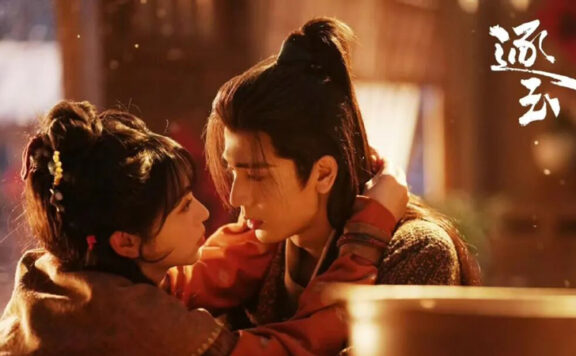
The Rise of Multi-Thread CPs in Period Dramas
In period dramas today, love stories no longer orbit a single couple. Instead, a single series now offers three or more fully formed relationships, each with its own arc and spotlight. These pairs are no longer mere assistants to the leads; they carry their own distinct personalities and moments to shine. Titles like Perfect Match (五福临门) and Pursuit of Jade (逐玉) have shown that a secondary couple can captivate audiences just as fiercely. This shift reflects how the genre is maturing. The creative challenge now lies in weaving multiple, fully realized romances together without losing clarity or emotional impact—all within a limited runtime. Romance Unfolded in Many Pairs Multiple Love Lines, One Story World has become a powerful engine for costume dramas, offering audiences a buffet of romantic flavors within a single narrative. Instead of betting everything on one central couple, these shows create a constellation of relationships, each with its own distinct tone and dynamic. This approach doesn't just pad the runtime; it strategically captures a wider audience by catering to varied tastes. One viewer might be drawn to the slow-burn intensity of a marriage of convenience, while another prefers the angsty pull of a forbidden connection. By weaving…