Article
搜索结果:
-
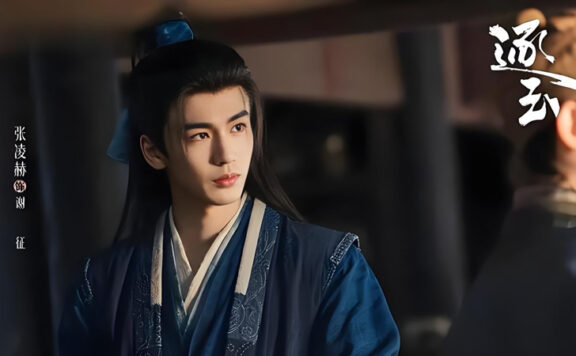
Pursuit of Jade: Heart in the Ordinary
Pursuit of Jade (逐玉) isn’t just another period drama. He shattered records by doing something unexpected: grounding grand storytelling in the grit of daily life. Against the odds of a struggling genre and the bite of short-form content, he proved that substance still commands attention. Viewers didn’t just watch; they demanded more, proving that authentic craft, not spectacle, holds the real power to break through. A Slow Burn That Resonates In a media landscape obsessed with instant gratification and viral metrics, a drama’s opening reception can often feel like a verdict. When Pursuit of Jade premiered, the initial chatter was far from welcoming, suggesting a rocky path ahead. Yet, true success rarely conforms to the noise of trending topics; it is ultimately decided by the audience who takes the time to watch. What followed was not a simple rebound but a compelling case of quiet, then thunderous, validation. The numbers began to tell a story: a dominant market share, viewership milestones, and a surge in platform popularity. These statistics were not isolated victories but pieces of a larger puzzle, revealing a work whose impact was both broad and deeply felt. A Rare Harmony The truly astonishing aspect of Pursuit of… -
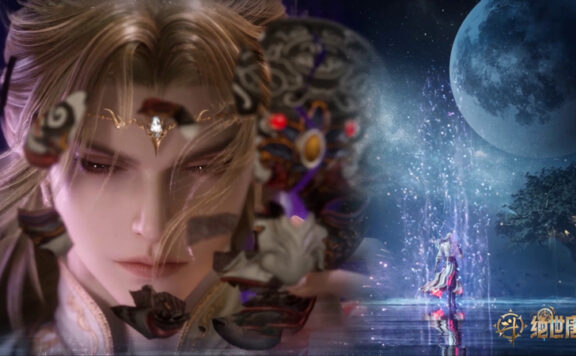
The Peerless Tang Clan: How Tang San Trapped Rong Nianbing
He was a god who never wanted the throne. He dreamed of traveling the universe with his eight wives, leaving behind the politics and power struggles of the divine realm. But in The Peerless Tang Clan (绝世唐门), Rong Nianbing (融念冰), the God of Emotions, learns a hard lesson: when you play chess with Tang San (唐三), you don’t make a move. He makes it for you. What looked like a shortcut to freedom was actually a trap that cost him his divine position, his liberty, and ultimately, his future. How did the God of Emotions become the most thoroughly outmaneuvered deity in the entire pantheon? The Reluctant Deity and the Perfect Pawn In the celestial hierarchy of the Douluo (斗罗) Divine Realm, Rong Nianbing was an anomaly. He possessed a top-tier First-Class God position, wielding immense power, yet his heart was never in it. His singular ambition was to escape the divine bureaucracy and live a life of carefree adventure across countless worlds with his eight wives. This very desire made him vulnerable. Tang San, the realm’s de facto ruler, saw not a powerful ally, but a loose end that needed securing. His foresight was chillingly precise: he predicted the… -
Renegade Immortal: Why Wang Lin Reached Luo Tian
What if a single object could defy the gravitational pull of entire universes? In the world of Renegade Immortal (仙逆), that object exists, and it has fundamentally altered the path of its holder. The journey between star domains is not merely a physical voyage; it is an assault on the very essence of a cultivator’s being. For Wang Lin (王林), the perilous passage from the Alliance Star System to the Luo Tian ( (罗天) Star System was not a gamble, but a certainty. The reason lies not in brute force, but in a treasure so profound that its true potential remains untapped. This is the story of how a single artifact redefined the limits of power and survival. The Unawakened Key It is a common misconception that Wang Lin has mastered his most powerful asset. In reality, he has barely scratched the surface. The Celestial Reversal Bead he carries is not just a protective charm; it is a high-order artifact from a bygone era, its capabilities so immense that his current cultivation level simply cannot unlock them. When the mysterious woman from the scroll spoke of the tidal abyss leading to the Luo Tian Star System, her confidence in him… -
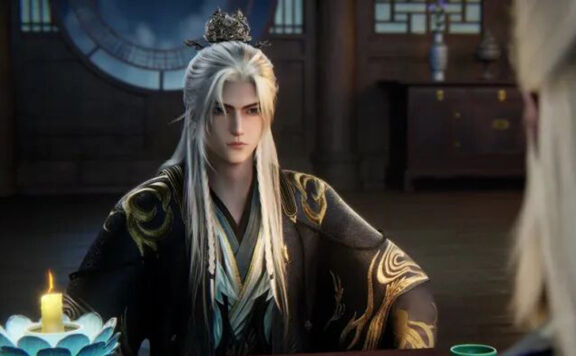
Renegade Immortal: Wang Lin’s Bold Heist
Is This the Ultimate Heist? How One Man’s Crisis Became Another’s Fortune in Renegade Immortal In the treacherous expanse of the Luo Tian (罗天) Star Domain, where power dictates survival and grudges span millennia, an unexpected reunion sets the stage for a high-stakes gamble. The animated series Renegade Immortal (仙逆) delivers a masterclass in strategic opportunism, proving that for the cunning, another’s impending doom is simply a business opportunity waiting to be seized. When a ruthless enforcer arrives to exact bloody vengeance for a decades-old death, three trembling patriarchs find their only hope for survival lies not in a righteous battle, but in the pockets of a man they were trying to trap. Crisis Point: A Reckoning Four Years in the Making The Huan (幻) Clan of the Thousand Illusions Star does not forget. They do not forgive. When a member of their esteemed family perished on Ran Yun (冉云) Star under mysterious circumstances, the three ruling patriarchs—of the Ran, Zhao (赵), and Sun (孙) families—spent four agonizing years waiting for the axe to fall. Their dread materializes in the form of Huan Wuqing (幻无情), a being whose name itself means “heartless illusion.” His directive is absolute: he intends to… -
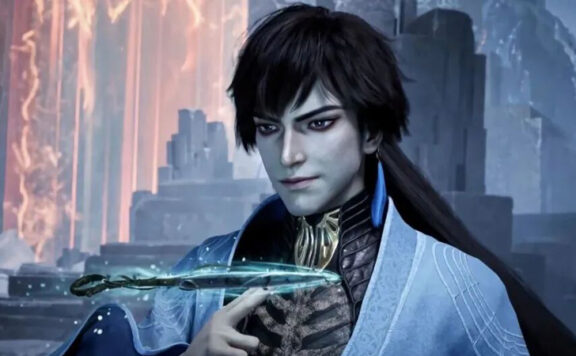
A Mortal's Journey: Xuangu Bone Chronicles Announced in 2027
The animation studio behind the hit series A Mortal's Journey (凡人修仙传) has officially announced a spin-off that no one saw coming. Instead of continuing the adventures of the beloved protagonist, they are diving headfirst into the dark, tragic past of one of the story's most formidable antagonists. Xuangu Bone Chronicles (玄骨传), a 12-episode season, is scheduled for a summer 2027 release. This isn't just a side story; it’s a deep exploration of a character defined by betrayal, ambition, and a centuries-long struggle against a fate that seemed sealed from the start. With a production cycle of roughly 18 months utilizing Unreal Engine 5 and motion capture technology, the project promises to deliver a cinematic experience that fills a critical gap in the original narrative, transforming a villain into a protagonist whose story is just as compelling as the hero’s. Why a Villain’s Story Now? In a landscape saturated with stories of righteous heroes and their inevitable rise, focusing on a character like Xuangu feels like a deliberate, calculated risk. His birth name was Xiao Cha (萧诧). He was once a prodigious talent, a rising star within his sect. Yet, his journey was not one of steady ascension but a series of… -
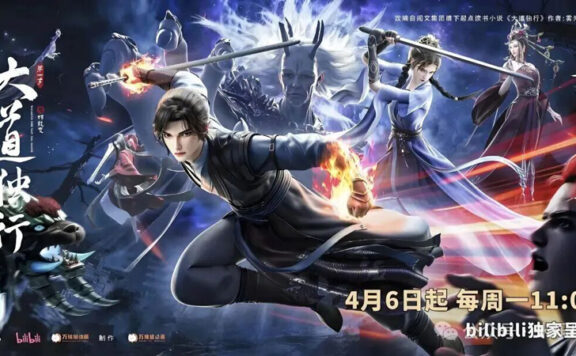
The Great Path Arrives April 6, 2026
Can a Killer From a Land Without Spirituality Really Defy Heaven and Become a God in Walking the Way All Alone (大道独行之蝶龙变)? This new Chinese animation doesn’t offer a lucky protagonist who stumbles into success. Instead, it presents a lone wolf from a spiritually barren wasteland who must carve his own path to immortality through sheer force of will. Set to premiere on April 6, 2026, exclusively on Bilibili, this 16-episode series based on the novel by Wu Wai Jiangshan (雾外江山) introduces Luo Li (洛离), a character whose journey begins not with a gift, but with a grim struggle for survival. The Lone Walker: Born in the Bleak Land Luo Li’s story starts in Yinzhou (银州) Continent, a place known as the Land Without Spirituality. Here, he wasn’t a chosen one but a child forged in hardship. Growing up in desperate circumstances, he became a top assassin in the Heavenly Jue Assassination Hall. His life is defined by a mystery—the truth of his origins—and the dying wish of his father, Master Ciyun (慈云). From the very beginning, the narrative strips away any notion of a charmed life. He possesses no innate spiritual roots, the typical prerequisite for cultivation, and he… -
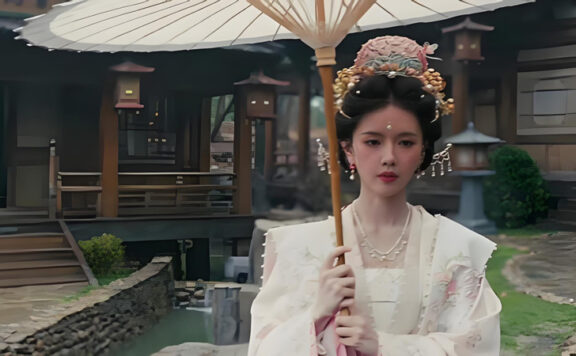
Gongsun Yin & Qi Shu’s Forbidden Love in Pursuit of Jade
Gongsun Yin (公孙鄞) and Princess Qi Shu (齐姝): Why Does the Most Restrained Love in Pursuit of Jade (逐玉) Hit Harder Than Any Confession? The hit drama Pursuit of Jade is nearing its finale, and while the main storyline has its merits, it’s the secondary couple—Gongsun Yin and Qi Shu—that has truly captured attention. In an era where romantic dramas are saturated with grand, in-your-face declarations of love, their relationship offers something far more compelling: restraint. It is a romance built on unspoken understanding, deliberate distance, and a profound respect for the boundaries of their time. This isn’t the modern fantasy of love conquering all; it is a story where love must navigate the unyielding structures of ancient society, making every suppressed glance and measured word a testament to its depth. Their journey is not about passionate rebellion, but about the quiet, heartbreaking dignity of two people who understand the rules of their world all too well. Bound by Invisible Walls Their connection begins in the most unlikely of places—not with a meeting, but with a game of chess played across the courtyards of Guangling (广陵). Neither sees the other, nor do they exchange names. They communicate solely through their… -
Sword of Coming: Li Baoping Stands Up for Li Huai
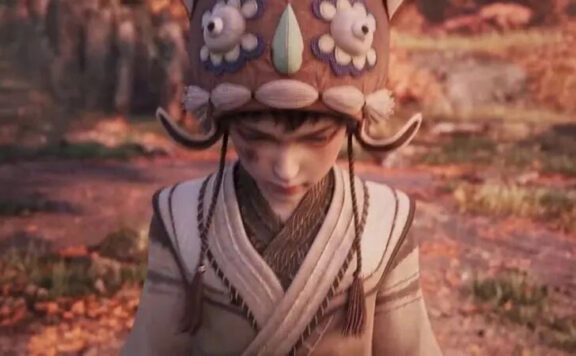
Why Did a Girl with a Knife Solve What a Boy with a Teacher Could Not in Sword of Coming (剑来)? On the grounds of the Da Sui (大隋) Mountain Cliff Academy, a young boy named Li Huai (李槐) is having a terrible time. He is not like his peers, Li Baoping (李宝瓶) and Lin Shouyi (林守一), who are known for skipping class. Instead, he sits through every lesson, but his head is always nodding off. The vice-master of the academy looks at him and sees a dull mind, a student with no apparent talent for scholarship. It is hard for anyone to imagine that this sleepy boy was once a student of the revered Master Qi Jingchun (齐静春). But a master like Qi does not make mistakes in his choices. Since arriving here, Li Huai has been quietly miserable, his heart heavy with thoughts of a person he misses—Chen Ping’an (陈平安). As if his sadness were not enough, he becomes the target of some local bullies, making his situation truly pitiful. The Unsheathed Spirit: A Sword in the Hands of a Girl Li Baoping’s anger boils over when she sees how cruelly the bullies have treated Li Huai. What… -
White Bone Demon Wu Opera July 4 2026
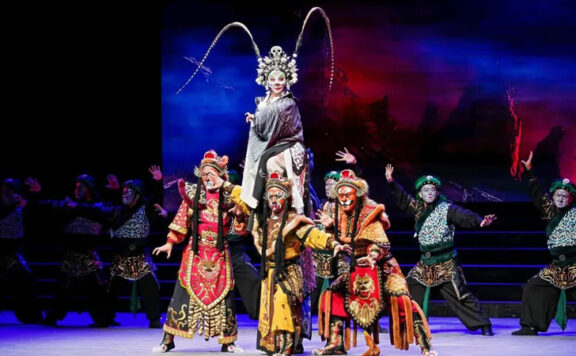
Wu Opera (婺剧) is about to do something that most people would never expect from a 500-year-old tradition: it will make you forget you’re watching a stage at all. In July 2026, the ensemble from Lan Xi (兰溪) is bringing its explosive production of Three Times Beating the White Bone Demon (三打白骨精) to the Quanzhou Grand Theater. And if the online buzz—which has already surpassed 100 million views—is any indication, this is not your grandparents’ opera. It’s a high-octane spectacle where ancient martial arts meet drone technology, and where a villain can transform from a delicate maiden to a skeletal wraith in the time it takes to blink. Performance Time: Saturday, July 4th, 2026 at 19:30 Venue: Quanzhou Grand Theatre The Shape-Shifting Art of Villainy The performance’s most talked-about moment belongs to the antagonist. In a sequence lasting mere seconds, the actress playing the White Bone Demon undergoes a transformation so fluid it borders on sorcery. She sheds three distinct faces in rapid succession, her ornate robes dissolving into stark white burial clothes. It is not merely a magic trick; it is a visual deconstruction of the creature’s nature. The audience sees the entity peel away the layers of “flesh”… -
One Question That Shuts Down All Doubts
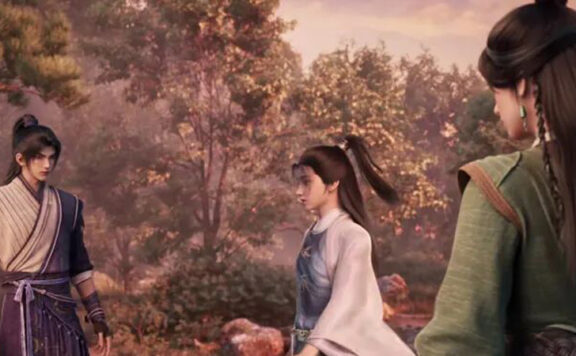
Are These Three Disciples Wasting Time at Shanyai Academy (山崖书院) in Sword of Coming 2 (剑来2)? One Critical Question Silences the Doubters. In the animated series Sword of Coming 2, the journey of three young individuals—Li Baoping (李宝瓶), Lin Shouyi (林守一), and Li Huai (李槐)—reaches a pivotal moment upon their arrival at Shanyai Academy in the Sui (隋) Dynasty. This institution, led by Mao Xiaodong (茅小冬), a junior disciple of the revered Qi Jingchun (齐静春), is a place of rigorous scholarly pursuit. However, the trio’s initial days are far from welcoming. They find themselves isolated, their behaviors deemed unconventional by the academy’s vice principal. He scrutinizes them not as promising students but as misfits, openly favoring two other disciples, Xie Xie (谢谢) and Yu Lu (于禄), for their refined manners and scholarly potential. Yet, this assessment, based solely on surface-level observations, overlooks a fundamental truth about the children’s destinies, a truth that a single, sharp retort from the academy’s master will soon lay bare. Short-Sighted Judgments The vice principal’s critique begins with Lin Shouyi. He acknowledges the boy’s natural talent but laments his constant truancy. Instead of attending class, Lin Shouyi disappears into the library. The problem, according to the… -
The Unspoken Truth of Wei Qilin in Pursuit of Jade
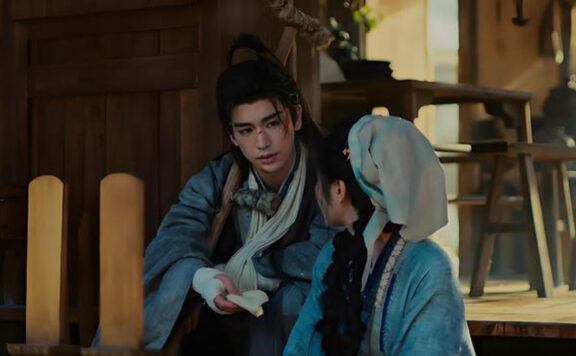
In the midst of a battlefield confrontation, a young woman’s blade reveals a past her family tried to bury. She discovers her father is not the humble butcher she remembers, but the most hated man in the empire—a traitor accused of causing the deaths of thousands. The truth, however, is buried under layers of royal conspiracy, a forbidden love, and a desperate sacrifice. The question that haunts her is one that cuts to the heart of power itself: who truly decides what makes a villain, and how many must suffer to protect that lie? A Butcher’s Daughter, A Traitor’s Blade The clash of steel on the battlefield brought more than the threat of death to Fan Changyu (樊长玉). When the Prince of Changxin (长信) recognized the style of her blade, he didn’t see a soldier; he saw a legacy. He spoke of the Wei brothers and named a man she knew only from childhood rhymes: Wei Qilin (魏祁林), the great traitor. In that moment, her world fractured. The loving father who taught her to fight, the honest butcher who never cheated a customer, was the very villain whose name was used to scare children. Her father was Wei Qilin. Her… -
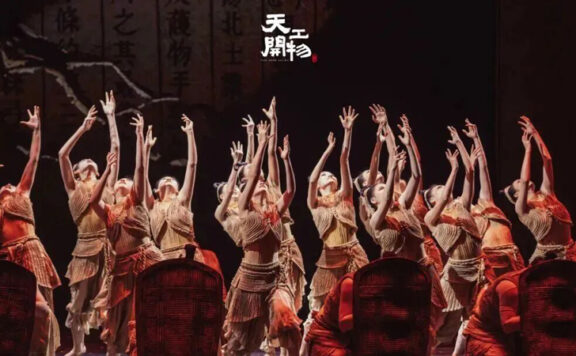
Tiangong Kaiwu Dance Opera: June 26–27
Song Yingxing (宋应星) and his masterpiece Tiangong Kaiwu (天工开物) were once nearly erased from his homeland’s official records. Yet this 17th-century encyclopedia of technology quietly crossed oceans, ignited industrial movements in Japan, shaped scholarship in Korea, and shattered translation records in Europe. Now, in the summer of 2026, this forgotten legacy returns to Huizhou (惠州) not as a dusty text, but as a breathtaking dance spectacle. Can a modern theater production truly resurrect the soul of a work that changed the world from the shadows of history? Performance Time: June 26-27, 2026 Venue: Huizhou Culture and Art Center·Opera House The Untold Story of a Lost Chinese Classic When Tiangong Kaiwu was first published in 1637, it was the world’s first systematic documentation of Chinese agricultural and industrial technology. It detailed everything from planting rice to smelting iron, from papermaking to shipbuilding. Yet within decades, the book disappeared from its country of origin. The History of Ming (明史) ignored it. The imperial Siku Quanshu (四库全书) library refused to include it. It was as if the work had never existed. But while it sank into obscurity at home, it began a remarkable journey abroad that would redefine how the world saw Chinese… -
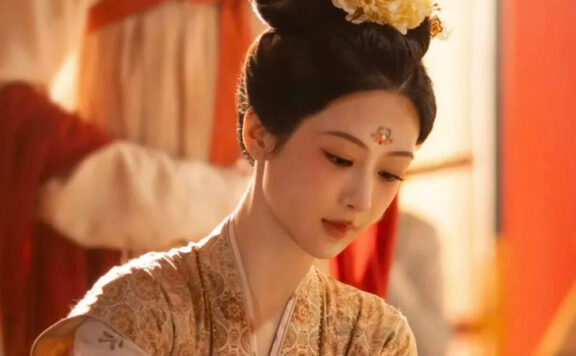
Tang Dynasty Peach Blossom Makeup Guide
Can a 1,300-Year-Old "Peach Blossom Makeup" Still Make You the Center of Attention This Spring? Forget the predictable rosy glow. The most captivating beauty trend this season isn’t born from a modern marketing campaign, but unearthed from the lavish courts of the Tang Dynasty. It’s a look that speaks of prosperity, cultural openness, and a bold, unapologetic femininity. More than just paint on a face, the "Peach Blossom Makeup" was a statement of an era where women, draped in silks and crowned with towering coiffures, celebrated their presence with artistry. This guide won’t just show you how to replicate a historical look; it will reveal how to channel its confident, radiant spirit using techniques both ancient and wonderfully simple. Prepare to step out of winter’s shadow and into a legacy of beauty that feels as fresh as the first bloom of spring. The Golden Age of Glamour To understand the allure of this look, we must first visit the bustling streets of Chang’an (长安), the capital of the Tang Dynasty. This was a period of unprecedented prosperity and international exchange, a melting pot where ideas and aesthetics from Persia, India, and Central Asia flowed freely. This openness profoundly influenced the… -
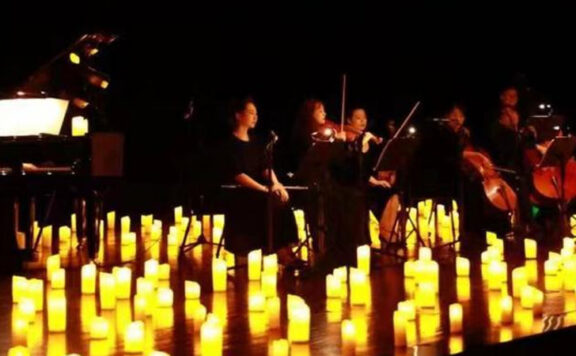
May 20: All About You Candlelight Opera
What if the most profound declaration of love required no words at all? In an age of digital noise and perpetual distraction, a quiet revolution is taking place, one lit not by neon, but by the gentle flicker of a thousand candles. On May 20, 2026, the Quanzhou Grand Theater will transform into a sanctuary of sound and shadow. It is here that the immersive candlelight concert, All About You, will unfold. This event is more than a performance; it is a carefully orchestrated escape. Drawing inspiration from the WWF’s Earth Hour, it merges the pursuit of romance with a commitment to sustainability, proving that the most intimate experiences often thrive in the quietest, most conscientious spaces. Performance Time: May 20, 2026 Venue: Quanzhou Grand Theatre A Sanctuary of Flickering Light Step inside, and the traditional grandeur of the opera hall melts away. The stage and the audience area are bathed not in the harsh, uniform glare of spotlights, but in the soft, personal glow of countless candles. Each flame dances independently, casting moving shadows that seem to breathe with the audience. It strips away the formality of a typical concert, replacing it with a sense of shared, hushed anticipation.… -
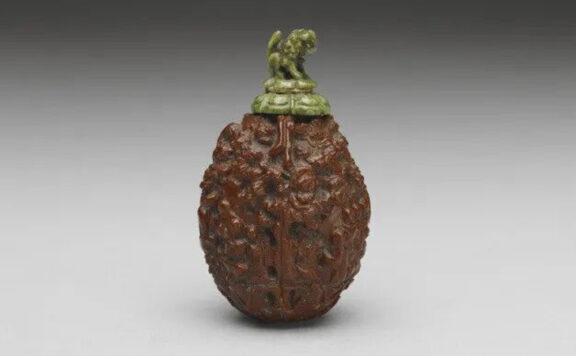
The Story of the Chinese Snuff Bottle
What Was the Real Purpose of the snuff bottle? A Tiny Vessel That Captured an Empire’s Soul To understand the snuff bottle, one must first understand what it was designed to hold: snuff. Imported from the West around the late Ming dynasty’s Wanli (万历) era, powdered tobacco quickly became more than a habit in China. It evolved into a ritual, a social currency, and eventually, a catalyst for one of the most exquisite art forms in history. Unlike a cigarette, snuff was a finely ground powder, often blended with precious herbs like musk and borneol. It was a sensory experience meant to clear the mind, not just the lungs. Yet, while the snuff itself would disappear in a fleeting puff, the vessel that contained it—the snuff bottle—was destined for permanence, transformed from a simple container into a profound symbol of status, artistry, and personal identity. A World in the Palm of Your Hand For the Qing dynasty elite, the snuff bottle was an essential daily companion, valued for both its physical utility and its role in a complex social code. The act of taking snuff was believed to have tangible health benefits. The The Dream of Red Mansions (红楼梦), a… -
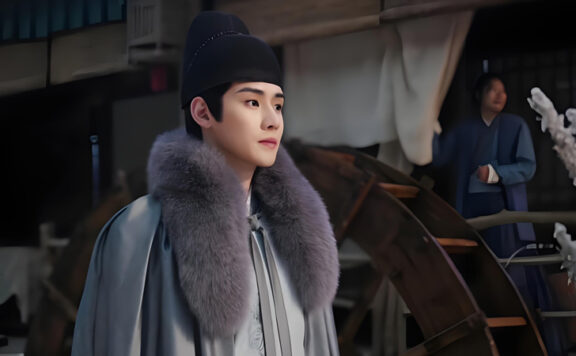
Would Li Huai’an Win Fan Changyu Without Xie Zheng?
In the episode of Pursuit of Jade (逐玉), Li Huai’an (李怀安) appears in the same frame as Fan Changyu (樊长玉) again. The barrage lights up with viewers who find themselves drawn to the pair. Some note she has always favored the gentle, scholarly type, and he fits that image perfectly. Others joke that the two deserve their own separate drama. A common sentiment runs through the comments: if they had met earlier, before Xie Zheng (谢征) entered the picture, they would have been a natural match. Watching the scene, it is easy to see why people think that way. The atmosphere between them carries a certain warmth, and Li Huai’an himself seems genuinely moved. But even if he had crossed paths with her before Xie Zheng did, the outcome would not have changed. The truth is not hidden in their first meeting but in who he is at his core. What She Says She Wants Before Fan Changyu ever met Xie Zheng, she had a fiancé who was a scholar. She has mentioned more than once that she prefers men of learning. Xie Zheng, a military man, has felt the sting of that preference on more than one occasion. Li… -

Top 10 Performances in Pursuit of Jade
The finest performances in Pursuit of Jade (逐玉) unfold in the spaces between words—a glance held a moment too long, a tremor masked by a steady hand, silence that speaks louder than any line. Here, actors do not simply inhabit roles; they build entire lives from accumulated details. Here is a ranking of 10 actors' acting skills. 1. Liu Lin (刘琳) In the heart of the story stands Zhao Daniang (赵大娘), the neighborhood's anchor. She is not a grand figure but the woman whose door is always open, whose voice carries the familiar rhythm of daily concern. Her affection for the two sisters next door is not stated but shown through a thousand small actions: a scolding about chores, a worried glance during a storm. Actor Liu Lin builds this character from the ground up, avoiding any hint of theatricality. When she fusses, it is with the impatience of genuine care; when she celebrates, it is with the unrestrained joy of a woman who has known hardship. The performance is a masterclass in building a life through accumulation, each scene adding another layer of authenticity until the audience forgets they are watching a scripted drama. The emotional climax arrives during… -

Love Beyond the Grace Premieres March 28
Can a 400-Year-Old Ghost King Find Sensation in a Human’s Touch? Love Beyond the Grace (白日提灯) Lights Up the Screen with a Sensory Romance! The moment one story ends, the next begins. As the curtain falls on Pursuit of Jade (逐玉), a new obsession is already on the horizon, ready to fill the void. For those who have been captivated by epic tales of power and fate, the wait is almost over. The streaming platform Tencent Video seems to know exactly what its audience craves, lining up a drama that promises not just a new story, but an entirely new sensory experience. Set to premiere on March 28, 2026, Love Beyond the Grace is stepping into the spotlight, and it brings with it a premise so unique it has the potential to redefine the genre. This isn't just another historical fantasy; it is a story about feeling the world through another’s eyes, quite literally. The Ghost King and the General: A Pact of Flesh and Soul At the heart of this series is a concept both intimate and perilous: the sharing of senses. He Simu (贺思慕), portrayed by the magnetic Dilraba Dilmurat, is no ordinary heroine. She is the most powerful spirit… -
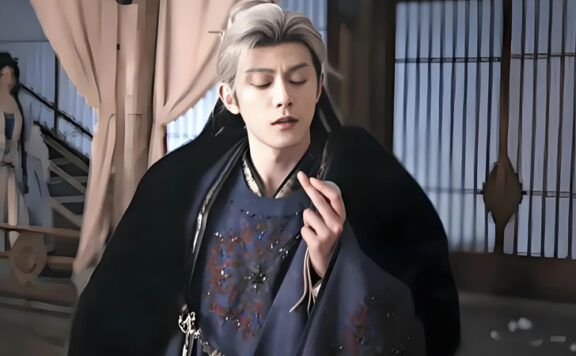
3 Tragic Fates in Pursuit of Jade
Can a Single Moment of Fire, a Word of Arrogance, or a Family’s Ambition Define a Lifetime of Irreversible Tragedy? In the sweeping narrative of Pursuit of Jade (逐玉), the line between villain and victim blurs as the story barrels toward its climax. The series introduces its antagonists not merely as embodiments of evil, but as souls caught in the merciless machinery of fate. One man never truly escaped the flames that devoured his childhood; another saw his entire future collapse because of a single careless boast; and a third spent two decades in exile, attempting to atone for sins he was born into. These are not simple stories of good versus evil, but profound explorations of how trauma, arrogance, and misguided loyalty can forge paths from which there is no return. 1. Qi Min (齐旻) He was born a prince, the grandson of the emperor, a child seemingly blessed by the heavens. As the Crown Prince’s eldest son, Qi Min’s (齐旻) future was one of privilege and power. But the imperial court was a viper’s nest. Caught in the crossfire of a succession struggle, his life was nearly extinguished before it truly began. His mother, in a desperate act… -
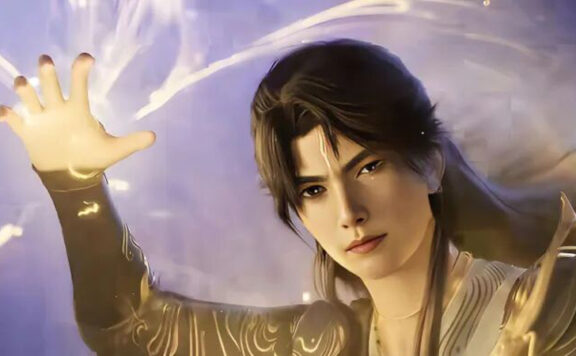
Ye Fan’s Rise Against the Chosen One
For years, fans of the hit animated series Shrouding the Heavens (遮天) have waited for the moment a simple young man from Earth would stop running and start fighting back. That moment has finally arrived. The first-ever animated movie, Shrouding the Heavens: The Coffin That Challenged a God (遮天: 背棺战王腾), drops on April 4th. With over 90 minutes of runtime, it promises to deliver the most explosive turning point in the story. This is not just another battle. It is the scene where Ye Fan (叶凡), a boy with no background and no support, carries a bronze coffin onto sacred ground to destroy the arrogance of a so-called "prodigy." It is a story of love, rage, and the birth of a legend. Love as a Declaration of War At its heart, this story begins with a simple, powerful emotion: love for a girl trapped by her own family. Ji Ziyue (姬紫月), the lively and kind young mistress of the Ji family, is not being married; she is being traded. The powerful Wang family from the northern plains wants her, and her own relatives see her only as a bargaining chip to acquire a powerful martial arts manual. She is a…