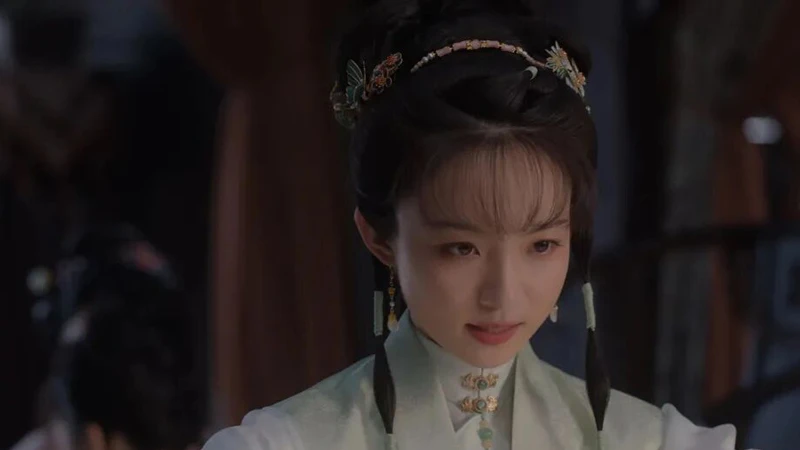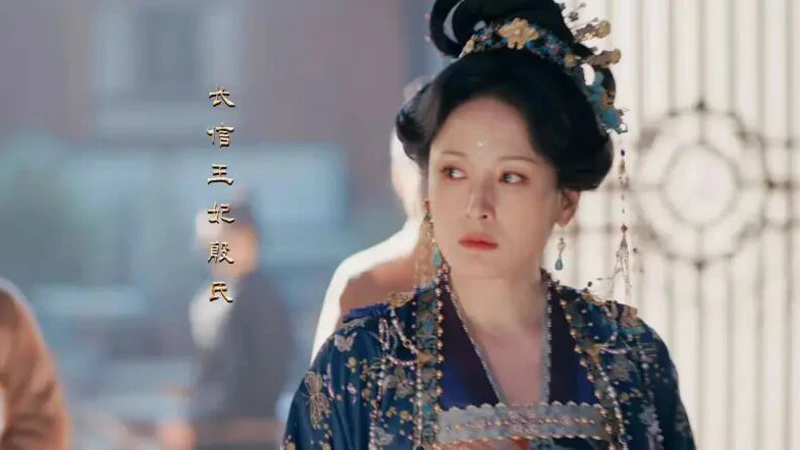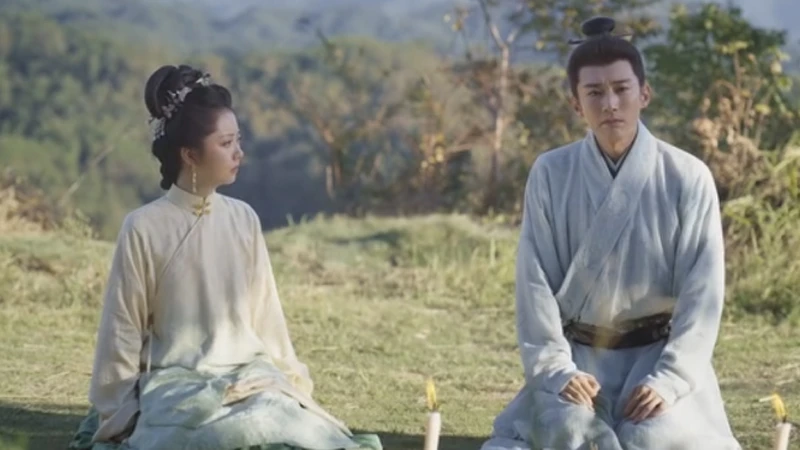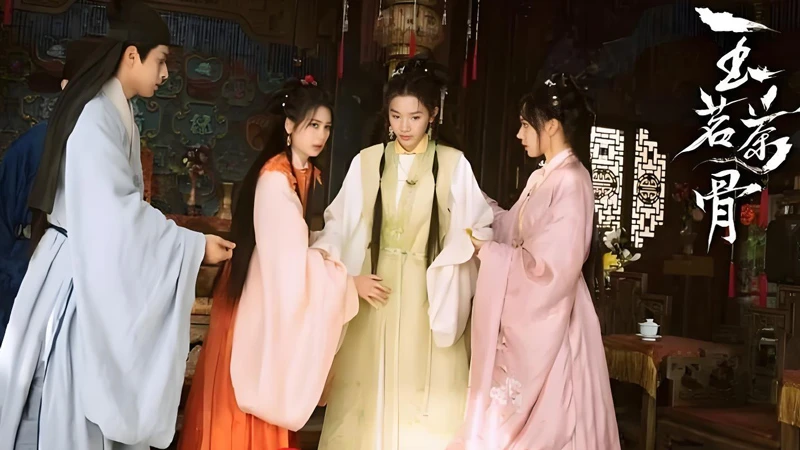
In the opulent world of Glory (玉茗茶骨), power is a delicate brew, steeped in tradition and simmering with familial rivalry. Everyone has a role: the brilliant heir, the jealous sibling, the overlooked cousin. Yet, amidst the calculated moves within the Rong Mansion, the most formidable player emerged from the place least expected. She was the one everyone dismissed, the blind daughter born to a servant, the one they called Wu Mei (五妹). While others saw a fragile girl to be pitied or ignored, they failed to recognize the sharpest mind in the room. This is not a story of overt strength, but of perception manipulated and trust weaponized. The real drama was not in the boardrooms or tea fields, but in the quiet, unseen calculations of the sister nobody thought to watch.
The First Betrayal
Wu Mei’s initial position was one of apparent vulnerability. As the blind fifth daughter of a concubine, she was marginalized by her grandmother and sisters. Her strategy was one of selective alliance and perceived utility. She attached herself to the ambitious Second Sister, offering counsel and appearing to be a loyal, if pathetic, follower. This was her camouflage. The turning point came with a plot against the sixth sister. While Second Sister schemed, Wu Mei performed her first silent pivot. She did not aid the conspiracy; instead, she carried the details to the eldest, Rong Shanbao (荣善宝). This information allowed Rong Shanbao to stage a counterplot, fake the sixth sister’s death, and crush a rival.
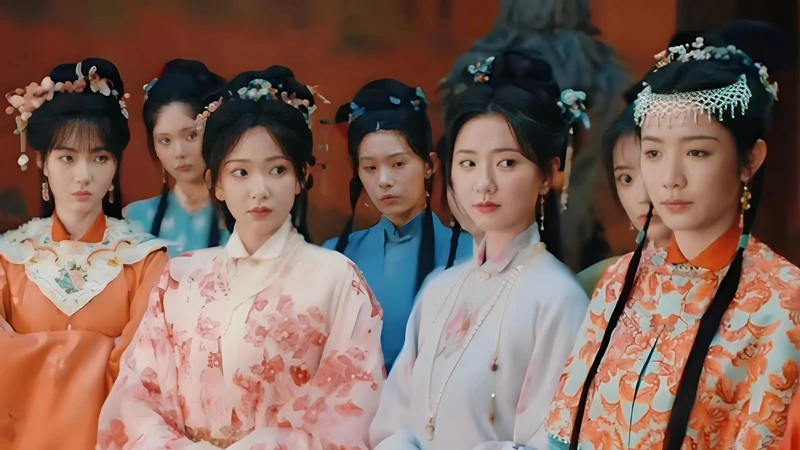
In a single move, Wu Mei eliminated a threat for Rong Shanbao and, more importantly, presented herself as a valuable informant. Her reward was not gold or land, but something far more precious: the eldest sister’s tentative trust.
This trust was not built on affection, but on demonstrated value. Wu Mei proved she had access to critical information and the willingness to trade it. She positioned herself as someone who understood the brutal calculus of the family’s power struggles. Her blindness, ironically, became an asset; no one believed she could see the board clearly enough to play her own game. They were wrong. Her allegiance was not to a person, but to the momentum of chaos, which she expertly nudged in directions that carved a path for herself.
By betraying the scheming Second Sister, she didn’t just gain an ally in Rong Shanbao; she created a vacancy in the family’s power structure and took a step closer to filling it.
A Deeper Sacrifice
To cement her new position, Wu Mei offered a sacrifice so profound it seemed to erase all doubt about her loyalty. She allowed her own fiancé, Bai Yingsheng (白颖生) , to be framed and imprisoned. She knew he was innocent, yet she withheld this truth from both him and Rong Shanbao. She let the eldest sister “discover” the truth through her own investigation. The chilling brilliance of this move was twofold.
First, it cemented her image as utterly devoted to Rong Shanbao, willing to sacrifice her personal future for the elder sister’s cause. Second, it demonstrated ruthless pragmatism that even Rong Shanbao respected. As Bai Yingsheng himself noted, this was a definitive act of submission. Wu Mei traded a marriage for a more powerful currency: unquestioned credibility within the inner circle of the family’s rising power.
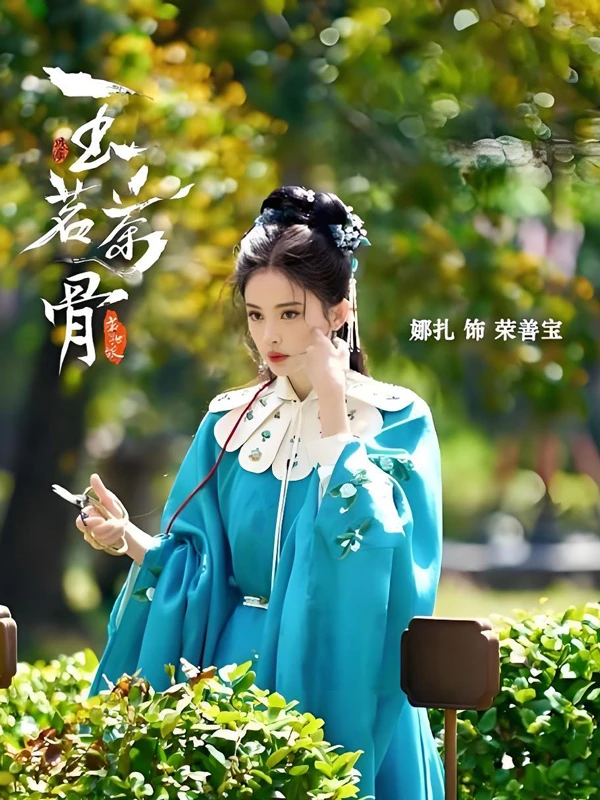
The emotional impact of this betrayal was calculated. It presented Wu Mei as someone beyond sentimental attachments, a quality highly valued in a dynastic struggle. She transformed her greatest personal liability—her arranged engagement—into her strongest political asset.
The message to Rong Shanbao and the observing grandmother was clear: here was a person whose ambition and loyalty to the family’s core power outweighed everything else. She was not a romantic heroine; she was a strategist of cold blood. This act severed her last perceived sentimental tie, making her movements afterwards even more unpredictable and her motives seemingly aligned solely with the family’s—or more specifically, the matriarch’s—interests.
The Final Pivot
Just when it seemed Wu Mei had secured her place as Rong Shanbao’s shadow, she struck again. Rong Shanbao, in a very public display, admitted to harboring a key witness, earning popular acclaim but angering the conservative grandmother. As the matriarch’s fury began to subside, Wu Mei arrived with a masterclass in subtle sabotage.
Under the guise of self-reproach, she “confessed” that she had overheard Rong Shanbao’s plans but failed to stop Fourth Sister from participating. Her words were a poison pill. They framed Rong Shanbao’s act not as impulsive nobility, but as a calculated, manipulative scheme that involved and endangered other sisters. The grandmother, a master of manipulation herself, instantly understood the implication: Rong Shanbao was playing her own game, using family as pawns.
The result was catastrophic for Rong Shanbao. The matriarch’s renewed wrath left her kneeling for hours in punishment, her health failing. Wu Mei’s intervention was devastatingly effective because it weaponized the grandmother’s deepest fears: loss of control and factionalism within the family.
With this move, Wu Mei accomplished her ultimate goal. She had used Rong Shanbao to break Second Sister’s influence, and now she used the grandmother to check Rong Shanbao’s rise. In the resulting vacuum, she stood alone. Second Sister was disgraced, Fourth Sister was exiled to the tea mountains, Rong Shanbao was in disgrace, and the other sisters were irrelevant. The blind, disregarded fifth sister was now the only one without a visible stain, positioned closest to the source of all power: the grandmother’s favor.
Her performance of meekness was a perfect disguise, allowing her to navigate the crosscurrents of family politics unseen. She didn’t just play both sides; she manipulated all sides into weakening each other. The anticipated duel between Rong Shanbao and Wu Mei is now set, but the battlefield has shifted. Rong Shanbao must fight an enemy who understands her completely, who helped build her up only to tear her down, and who has already won the most critical ground—the mind of the matriarch. The true Bone of Tea is not found in the delicate leaves, but in the steely resolve hidden within the family’s most fragile vessel.