Article
Search results:
-
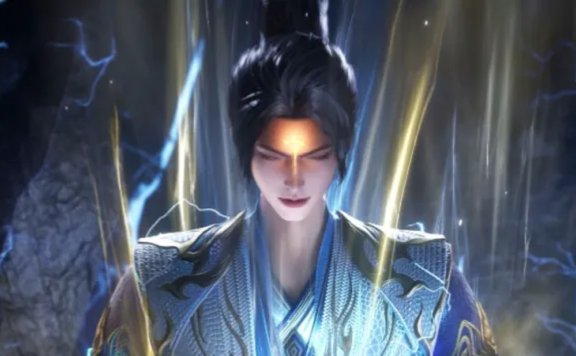
The Great Ruler 2: Conquering China and the World
The social media storm was instant and immense. After a three-year wait, the return of The Great Ruler 2 (大主宰2) in early 2026 didn't just meet expectations; it shattered them. Securing a permanent spot in the top five trends on Weibo, generating billions of views on Douyin, and breaking ten thousand simultaneous comments on Bilibili, the series claimed seventh place on the monthly domestic animation chart with 107 million views. Yet its most surprising achievement was becoming a new benchmark for Chinese animation's global reach. This deeply rooted Eastern fantasy series sparked a "Thai-dub viewing craze" across Southeast Asia, landing high on iQIYI's international non-drama popularity charts. In an era dominated by short-form video snippets, how did a weekly serialized animation achieve this trifecta of fandom celebration, broader cultural penetration, and international success? The answer lies not in nostalgia alone but in a fundamental evolution of the industry itself. The Evolving IP Ecosystem The moment Xiao Yan (萧炎) appeared at Beicang (北苍) Academy with his daughter Xiao Xiao (萧潇), and Lin Dong's (林动) figure flashed within a spirit array, the internet erupted. The long-awaited reunion of author Tiancan Tudou's (天蚕土豆) three iconic protagonists was a masterstroke in fan service. However,… -
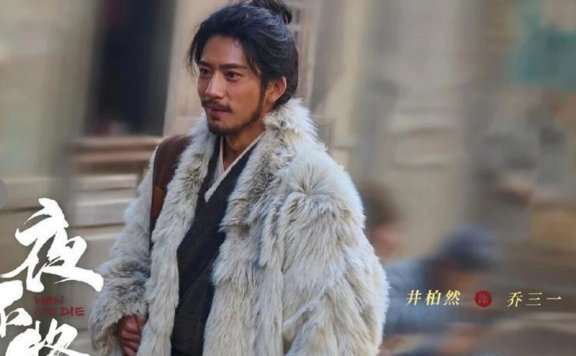
Win or Die Arrives on iQiyi Feb 15
In the vast expanse of China's streaming landscape, where historical dramas often revisit familiar tales of emperors and scholars, a new series is breaking ground by venturing into the shadows of history. Win or Die (夜不收), premiering on iQiyi, dares to spotlight a group so covert that even official records offer only fragmented glimpses. This is not a story of palace intrigue but of survival on the desolate frontier, focusing on the Ming Dynasty's most elusive special forces unit—the Ye Bushou (夜不收), or "Night Raiders." With over 1.2 million advance reservations, the series has ignited fervent anticipation, promising a raw, unflinching look at the forgotten ghosts who guarded the empire's borders. The Ghosts of the Frontier The Ye Bushou operated in the harsh realities following the Tumu (土木) Crisis, a catastrophic military defeat for the Ming. Unlike the iconic Jinyiwei (锦衣卫) with their ornate uniforms and authority, these soldiers were anonymous. Their existence was defined by extreme risk, conducting reconnaissance deep behind enemy lines and carrying critical intelligence across lethal terrain. Historical accounts suggest their survival rate was abysmally low, often below ten percent. They were the true, unsung perimeter of the empire, masters of disguise, horsemanship, and archery, whose… -
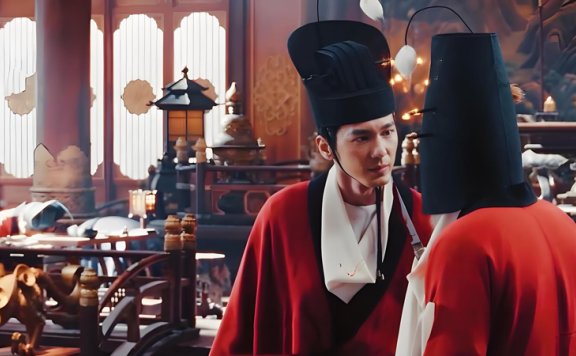
Swords into Plowshares: Qian Hongchu's Art of Power
The throne room was silent, the air thick with tension and the metallic scent of blood yet to be spilled. On his very first day as King of Wuyue (吴越), Qian Hongchu (钱弘俶) faced an unthinkable provocation. A minor official, He Chengxun (何承训), paraded into court bearing the severed head of a respected senior statesman, Shuiqiu Zhaoquan (水丘昭券), and his entire family. The audacious claim? He acted on orders from the mighty Regent, Hu Jinsi (胡进思). In that frozen moment, the young king, played with captivating intensity by Bai Yu (白宇) in the historical drama Swords into Plowshares (太平年), made a choice that would redefine his reign and the kingdom's future. He drew a sword and executed the messenger on the spot. This single act of brutal defiance was not mere impulse; it was a masterful political stratagem born of deep conviction, psychological insight, and a startling lack of personal ambition. The Public Execution The strike of the sword was swift and final. Before Hu Jinsi, the militarily powerful regent who had essentially forced the crown upon him, could react, Qian Hongchu ended He Chengxun’s life. The blood sprayed onto the faces of Hu Jinsi and his son, a visceral,… -
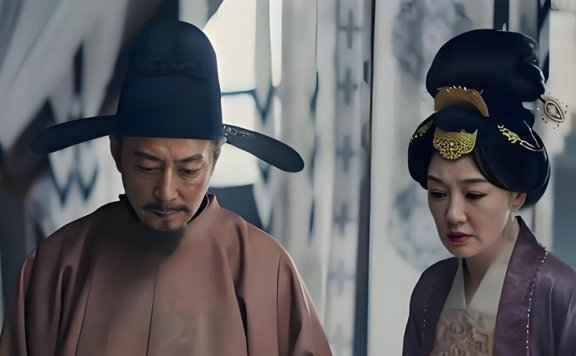
Swords into Plowshares: Li Sanniang’s Legacy Beyond the Later Han
In the chaotic tapestry of China's Five Dynasties and Ten Kingdoms period, where empires rose and fell with the seasons, one dynasty's story is often overshadowed by its breathtaking brevity. The Later Han dynasty, a mere flash in the pan of history, lasted only four tumultuous years. Yet, within that fleeting moment of power, it housed a love story of such enduring, humble humanity that it would outlast the dynasty itself by centuries. This is not a tale of grand political machinations, but of the people who lived and loved within them. The recent television drama Swords into Plowshares (太平年) has brought this poignant narrative back into the light, focusing not on the emperor's throne, but on the woman who stood beside him: a peasant girl who became an empress, remembered not for her reign, but for her heart. The People's Empress The figure at the center of this story is Empress Li. In historical records and the folk operas that made her famous, she is affectionately called Li Sanniang (李三娘). Her origin story is unlike any other in the annals of Chinese empresses. She was not born into nobility or political alliance. She was a commoner from Jinyang (晋阳),… -
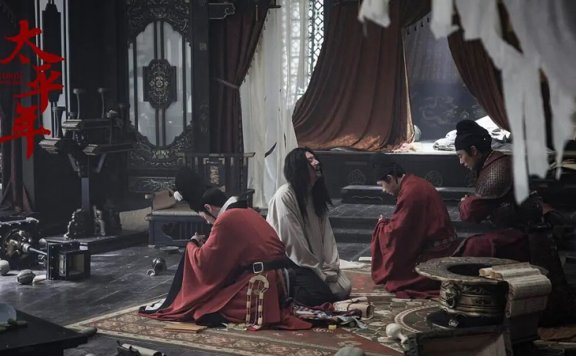
Swords into Plowshares: A Brilliant Historical Epic Marred by Flawed Lead Roles
As the flagship historical drama for China Central Television's new year, Swords into Plowshares (太平年) has made a significant impact. Set against the turbulent backdrop of the Five Dynasties and Ten Kingdoms period, it demonstrates a cinematic quality often reserved for film, from its meticulous costume and set design to its sprawling, visceral battle sequences. In an era dominated by short-form content, this series makes a compelling case for the enduring power and depth of long-form television. It ambitiously attempts to weave a complex tapestry of a fractured era, where power shifted like sand and heroes and villains rose and fell with dizzying speed. The narrative successfully creates a palpable, grim atmosphere of instability, using multiple perspectives to explore the brutal mechanics of history and the intricate souls caught within it. The Ensemble's Triumph The drama's greatest strength lies not in its protagonists, but in its richly drawn supporting cast. The chaotic historical period provides fertile ground for vivid portraiture, and the series seizes this opportunity. Even characters with minimal screen time are imbued with startling clarity and memorability. This meticulous casting and performance have led viewers to claim that certain portrayals have "monopolized" the image of these historical figures… -

Song Yi Shines in a Peony-Embroidered Bandeau Gown
The recent red carpet event witnessed a moment of pure visual poetry, courtesy of actress Song Yi (宋轶). Her appearance silenced the usual buzz with a breathtaking display of artistry in fashion. She arrived wearing a bandeau gown adorned with blossoming peonies, a vision that seemed to transcend the event itself. The ensemble did not merely clothe her; it transformed the space around her into a living canvas of spring. This was not just a celebrity in a dress, but a deliberate, beautiful statement on the harmonious blend of classical Eastern aesthetics and contemporary design sensibility. In that moment, she became less a star walking a carpet and more an embodiment of a timeless, gentle grace reimagined for the modern eye. The Living Painting The genius of the gown lies in its subtle narrative. The bandeau top features a delicate ombre effect, fading from a soft sky blue. This hue mirrors the gentle expanse of a spring morning, providing a serene backdrop for the gown's true focal point: an exquisite embroidery of pink and white peonies scattered across the skirt. The flowers are rendered with artful precision, neither too dense nor too sparse, evoking a sense of cultivated wildness. The… -
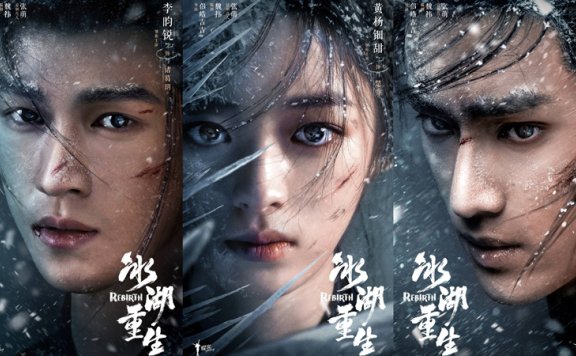
Rebirth: The Epic Sequel to Princess Agents
A cliffhanger has haunted fans of the epic drama Princess Agents (楚乔传): the image of the male lead, Zhuge Yue (诸葛玥), sinking into a frozen lake, followed by the heroine Chu Qiao (楚乔) leaping in after him. This unresolved moment became a legendary "unhealed wound" in Chinese television history. Now, the official sequel, titled Rebirth (冰湖重生), has been announced, promising to pick up the story directly from that icy plunge. Slated for a simultaneous release on major streaming platforms iQiyi and Tencent Video, the series aims not just to continue a story, but to mend a seven-year-old heartache for its devoted audience. New Faces, Familiar Souls The cast, while not the original ensemble, represents a thoughtful new generation. Playing the adult Chu Qiao is Huang Yang Tiantian (黄杨钿甜), who once portrayed the younger version of the character. Now 16, she has undergone intensive martial arts training for months. Her performance showcases a steely determination that feels like a natural evolution from the resilient girl audiences remember. She embodies the seasoned "Xiuli King (秀丽王)," a leader forged through hardship, with fight scenes that are powerful and grounded. Taking on the pivotal role of Zhuge Yue is Li Yunrui (李昀锐). His approach… -
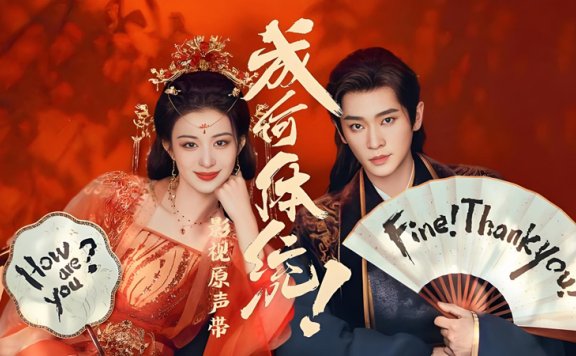
How Dare You Modern Transplants Survive as Ancient Villains
In the crowded landscape of historical dramas, a new contender has shattered expectations with a modern twist. The series How Dare You (成何体统), based on the popular novel by Qi Yingjun (七英俊), has become a viral sensation, not for its lavish costumes or epic battles, but for its hilarious and heartfelt premise. It follows two people from the modern world who find themselves trapped in the roles of villains in a historical romance novel. Their mission isn't to conquer the throne in a typical way, but simply to survive the plot. With over 1.5 million advance reservations on iQiyi and daily topic views soaring past hundreds of millions, the show has turned a phrase once used to scold improper behavior into a badge of honor for a generation of viewers. Modern Struggles, Ancient Setting Wang Cuihua (王翠花), a weary office worker in our world, falls asleep reading a sensational novel and wakes up as its most hated character: the scheming concubine Yu Wanyin (庾晚音), destined for a gruesome death. Panicked and aware of the story's ending, she adopts a strategy of sheer survival, hoping to lie low. However, the palace is a dangerous workplace. Her plans are upended when she… -
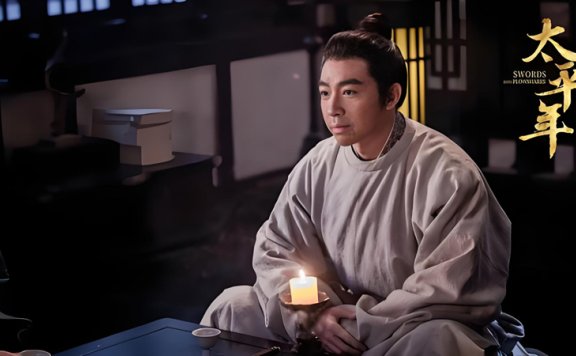
Guo Wei Chose 4 Widows Over Imperial Convention
In the chaotic final years of the Five Dynasties period, a most unlikely emperor rose to power. Guo Wei (郭威), founder of the Later Zhou (后周) dynasty, carved out a realm of relative stability praised by historians. Yet his personal life was a tapestry of profound tragedy and unconventional choices. While other rulers sought virginal consorts from noble families, his heart consistently turned to widows and remarried women. Each of his four wives came to him having loved and lost before, their lives intertwined with the era's violence. This preference, startling for its time, reveals a man shaped more by personal connection and shared hardship than by imperial convention or political calculation. His story, dramatized in the series Swords into Plowshares (太平年), is not one of glorious conquest, but of a man who built a kingdom only to watch everyone he loved perish before him. 1. Chai Shi (柴氏) Before the crown, there was Chai Shi. She was no young maiden but a former attendant in the palace of a previous emperor, released and returning home when she crossed paths with a common soldier named Guo Wei. Recognizing his potential where others saw only a rough military man nicknamed "Sparrow… -
Forbidden Zone Powers in Perfect World’s Great War
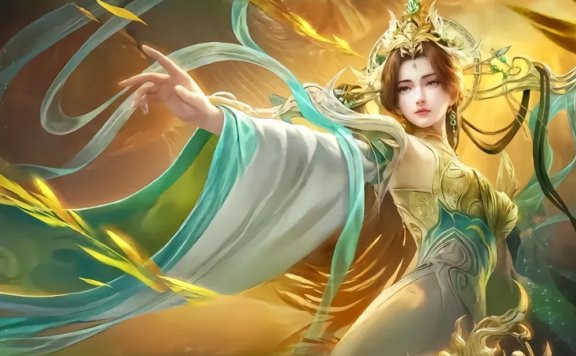
The chaos of the Ancients' Era left the Nine Heavens and Ten Earths shattered. Its laws were incomplete, the path to immortality decayed. Yet, pockets of immense, dormant power persisted. These were the Forbidden Zones, realms isolated by the world’s own fractured rules, where survivors from a more glorious age slumbered. They were relics of the Immortal Ancient Era, damaged true immortals, and reclusive giants—the most concentrated assembly of supreme beings left. When the cataclysm arrived, when the foreign and terrifying Other Realm launched its invasion, these guardians did not stir. From their secluded sanctuaries, they watched the devastation unfold in silence. Their inaction became the war’s greatest mystery. What could make such powerful entities turn their backs on the very world they once swore to protect? Betrayal's Bitter Legacy The founders of the three greatest Forbidden Zones were not native to this land. They were Xianwang (仙王), immortal kings dispatched from the higher Immortal Domain as reinforcements during an ancient war against the dark creatures. They fought desperately, sacrificing everything for victory. Their reward was not honor, but suspicion. Merely for having engaged the darkness, they were branded as contaminated, exiled from their home. The final blow was not… -
Chen Yanxi in a Petal-Adorned Lilac Gown
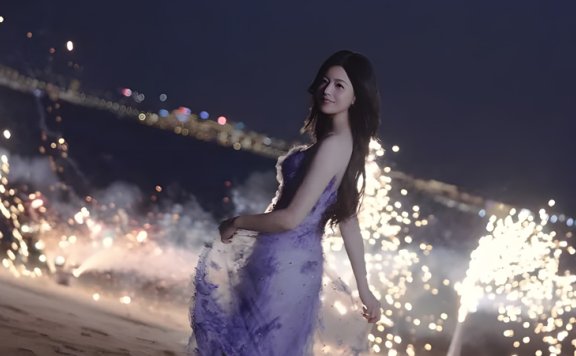
The glow of camera flashes often illuminates more than just fabric and sequins; it can cast a new light on an entire public persona. When Chen Yanxi (陈妍希) stepped onto the event floor recently, the conversation shifted. Gone were the dated comparisons and past critiques. In their place was a singular, captivating vision: a woman enveloped in the soft, dreamlike haze of pale purple, her gown a blooming garden of delicate petals. This was not merely a red carpet appearance. It was a statement, a quiet but powerful recalibration of her aesthetic identity that resonated far beyond the event's walls. The image of her in that exquisite dress instantly became a focal point, challenging previous narratives and inviting a fresh appreciation for her evolving presence in the public eye. The Vision in Violet The immediate impact of the look was visual and emotional. The gown’s color, a delicate whisper between lilac and heather, possessed an innate serenity. It did not scream for attention but rather emanated a gentle authority. This shade, notoriously difficult to wear, acted as a perfect complement to her complexion, creating a harmonious and luminous effect. The choice felt both modern and timeless, tapping into the season's… -
Are These Five Chinese Animations the Next Big Thing in 2026?
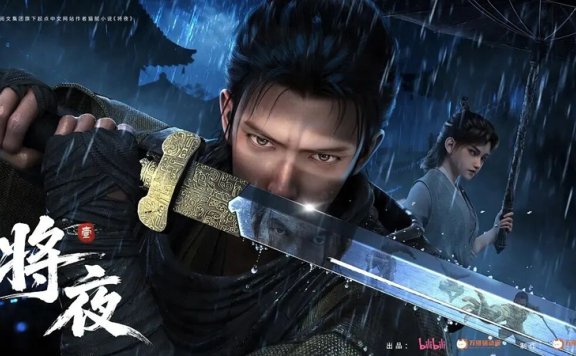
The year 2026 is shaping up to be a landmark moment for Chinese animation. Forget the old stereotypes; a new wave of titles is crashing onto screens, offering everything from nostalgic adventures and epic mythologies to gritty survival tales and supernatural horror. This isn't just about flashy visuals anymore. Audiences are demanding faithful adaptations, compelling world-building, and raw, authentic storytelling that resonates. From long-awaited literary adaptations to bold original concepts, these five upcoming series represent the diverse ambitions and mature tastes defining the scene. They promise to deliver the depth, excitement, and sheer originality that fans have been craving. Qixing Luwang Gong (七星鲁王宫) Some stories are beloved not for their novelty, but for their familiar essence. The animated adaptation of Qixing Luwang Gong faces this challenge head-on. Based on the iconic first chapter of the hit novel series, its success hinges not on reinvention, but on perfect execution. Fans know the beats: Wu Xie (吴邪), armed with his grandfather's mysterious scroll, is lured by his uncle into the treacherous Lu Wang (鲁王) Palace. The anticipation lies in seeing this world realized with modern 3D animation—the eerie Green-Eyed Fox Corpse, the monstrous Nine-Headed Snake Cypress, all rising from the page. The… -
Angela Zhang Dazzles in a Mermaid Gown Adorned
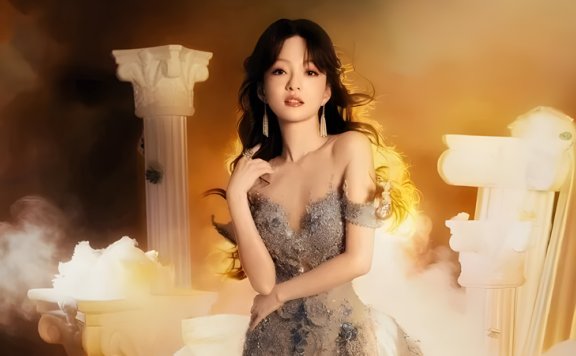
On a recent evening, the familiar glow of camera flashes captured something extraordinary. Taiwanese singer and actress Angela Zhang did not merely arrive at an event; she materialized from a dream. Her appearance in a stunning mermaid gown instantly dominated social media, not just for its beauty but for the powerful statement it made. This was more than a dress; it was a narrative of transformation, proving that captivating style is an art form of presence and proportion, not merely physical stature. The Anatomy of a Dream The gown itself was a masterpiece of textile illusion. Constructed from nude tulle, it was meticulously adorned with a gradient of silver-gray and ice-blue crystals. From a distance, it created the effect of wearing a shimmering galaxy. Up close, the careful placement of each crystal mimicked the play of light on ocean waves, giving the impression of movement even in stillness. Its construction was a study in precision. A sweetheart neckline perfectly framed her shoulders and collarbone, drawing attention upward. The fitted bodice traced her frame seamlessly before the fabric exploded into a soft, ethereal train on one side. This single-sided cascade billowed gently with her every step, adding drama without overwhelming her petite figure.… -
All of Wang Lin's Immortal Guards in Renegade Immortal
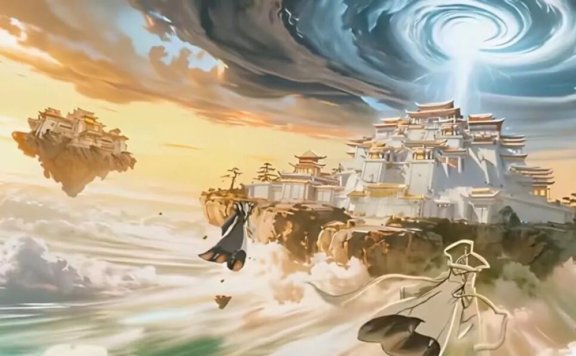
In the vast and perilous world of Renegade Immortal (仙逆), survival often demands more than sheer personal strength. For the protagonist Wang Lin (王林), a significant part of his power stemmed from a formidable, silent force: his Immortal Guards. These were not mere puppets, but transformed cultivators, born from a ruthless and nearly-lost art. The process to create one was a harrowing ordeal, requiring a willing subject to surrender body and soul, enduring trials that few survived. Against all odds, Wang Lin successfully forged several of these entities. They became his unwavering shields and decisive spears across countless battles, their individual stories weaving a complex tale of power, sacrifice, and unexpected redemption. Their total number might seem small, but their collective impact on his journey was profound. The Reluctant First Wang Lin's initial foray into this forbidden craft began not by choice, but from desperate necessity. His first subject was Du Jian (杜建), an arrogant disciple from the Tianyun (天运) Sect who had planned to betray him. Trapped together in the Chaotic Expanse, Wang Lin offered Du Jian a grim bargain: submit to becoming an Immortal Guard in exchange for a chance to break through to the next cultivation stage.… -
Unveil: Jadewind Premieres Globally on February 5
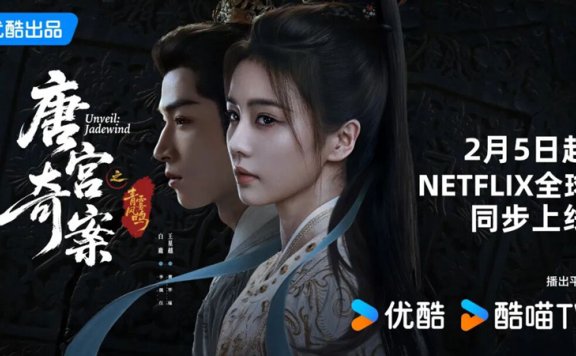
This February, a new historical mystery series is making waves even before its global debut. Unveil: Jadewind (唐宫奇案之青雾风鸣), starring Bai Lu (白鹿) and Wang Xingyue (王星越), premiered domestically on CCTV-8 and Youku. Its simultaneous global release on Netflix marks a significant step for Chinese period dramas. At its heart, this isn't just another palace tale. It follows Li Peiyi (李佩仪), a county magistrate's daughter burdened by a past family massacre, who becomes an investigator in the Inner Bureau. Her path crosses again with Xiao Huaijin (萧怀瑾), a man who saved her life in childhood. Together, they unravel intricate cases—"The Guest Star Over the Maiden," "The Flower on the Wall," "The Bloody Talent"—that expose the hidden plights of women within the palace's deep walls. The producers at Killer Whale Entertainment's Gleaner Studio aim to guide viewers into the story through a "her perspective," creating a bridge between modern audiences and the struggles of women from over a millennium ago. The Power of a "Her Perspective" Breaking from tradition, this series consciously shifts the narrative focus. For too long, historical detective stories have been dominated by male protagonists. Unveil: Jadewind places a complex female character at its center. Li Peiyi is not… -
Why Hu Jinsi Served Qian Hongchu but Deposed Qilang in Swords into Plowshares
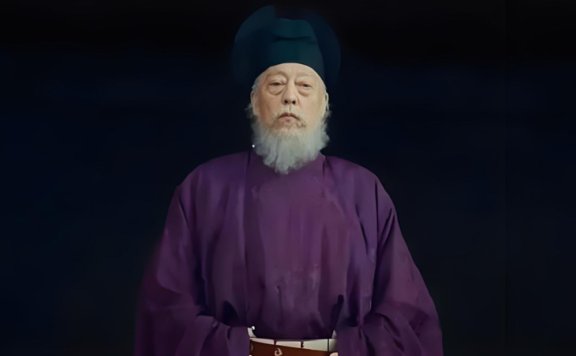
In the swirling political currents of the tenth-century Wuyue (吴越) Kingdom, depicted in the historical drama Swords into Plowshares (太平年), a minister's loyalty becomes the ultimate test of a ruler's worth. The narrative pivots on a stark contradiction: the powerful minister Hu Jinsi (胡进思) shows utter contempt for one young king, publicly humiliating and ultimately deposing him, yet willingly kneels in submission to another. This is not a simple story of ambition, but a pointed examination of what separates a failed monarch from a successful one. The answer, buried within court intrigues and personal clashes, boils down to a fundamental trait often overlooked in the pursuit of power. Qilang's (七郎) Fatal Flaws From the moment he ascended after his brother's death, the king known as Qilang operated from a place of deep insecurity. He saw Hu Jinsi, a seasoned minister who had served previous rulers, not as a potential ally but as a direct threat to his authority. His first act was to exclude Hu from critical deathbed deliberations, a clear signal of distrust that resonated through the court. Qilang's perception created its own reality; by treating Hu as an enemy, he ensured the minister would act as one. His… -
Why Hanfu’s Zhongfeng Endures—Beyond a Simple Stitch
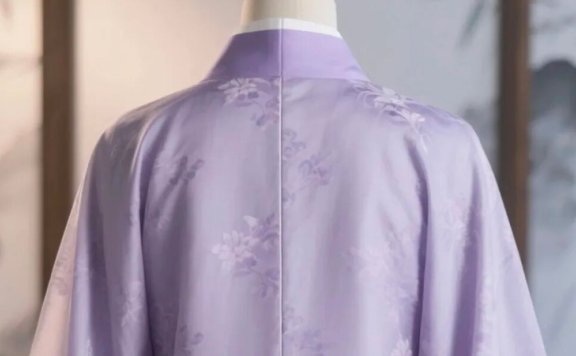
Have you ever noticed the perfectly straight vertical line running down the front and back of traditional Hanfu? This is no mere decorative stitch or accidental wrinkle. In an age of seamless, stretch-knit fabrics, this deliberate opening in the garment tells a story far older than fast fashion, weaving together threads of ancient necessity, structural genius, and profound philosophy. This central seam, or Zhongfeng (中缝), is a signature element, a quiet yet powerful statement embedded in the cloth itself. While its presence is now a defining characteristic, its origins are remarkably humble, born from the simple limitations of the loom. Loom to Line Centuries ago, textile technology set clear boundaries. The width of a single bolt of handwoven cloth was narrow, often just 50 to 60 centimeters. This presented a practical puzzle for tailors: how to create a garment wide enough to comfortably drape the human body. The ingenious solution was both simple and elegant. Two lengths of cloth were joined together along their selvedges, creating a single, wider panel with a seam precisely down the middle. This was the birth of the Zhongfeng, a direct result of material constraints. Yet, what began as a necessity quickly revealed an unexpected… -
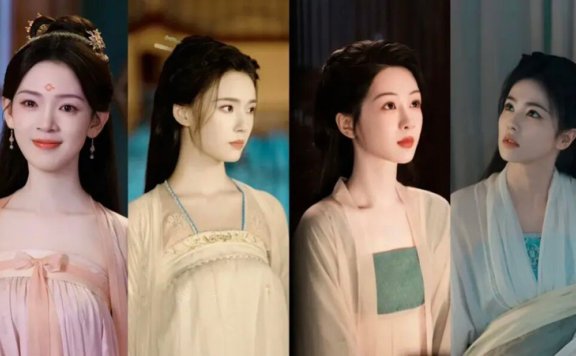
What Did It Really Take to Get Dressed in Imperial China?
Modern mornings are a race against the clock. We grab clothes, zip, button, and dash out the door. For the elite of ancient China, dressing was a deliberate, time-consuming ritual that set the rhythm for the entire day. Far from a simple task, it was a physical undertaking governed by strict rules of propriety, material limitations, and social station. This process, often perceived today as impossibly cumbersome, reveals a world where clothing was not just covering but a complex language of identity and status. The Principle of Layers The foundation of traditional dress was a "from the inside out and bottom to top" approach. Each layer had a designated purpose and position. The foundational garment was the Xieyi (亵衣), a simple undergarment akin to modern underwear. Over this, one would don the Zhongyi (中衣) or middle garment, a full-length robe that served as a base layer. The outermost robe completed the essential trio. In colder months, this system expanded dramatically, with quilted jackets and fur-lined cloaks added for warmth, creating a heavy, insulating shell. For daily wear, the number of layers could be relatively modest, similar in count to modern clothing but vastly different in form. A Tang Dynasty woman… -
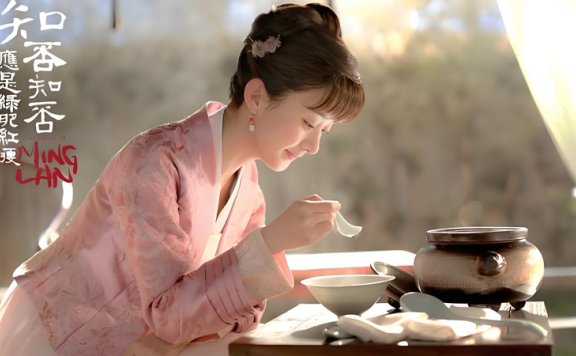
Unveiling the Historical Stories Behind Chinese Morning Meals
Have you ever wondered what people in ancient China ate to start their day? The morning meal, often overlooked, carries within its steam and flavor a profound history of social change, economic shifts, and daily survival. From the strict schedules of imperial courts to the bustling street stalls of the Republican era, breakfast in China is far more than just food; it is a living chronicle. The story begins not with three meals, but with two. During the Shang Dynasty, the daily eating routine was governed by the sun and social station. The two meals were called Yongshi (饔食), eaten around nine in the morning, and Sunshi (飧食), taken in the late afternoon. This "two-meal system" reflected the agricultural rhythms and resource limitations of the time. It wasn't until the Han and Tang dynasties, with greater prosperity and urbanization, that a third meal—breakfast as we recognize it—began to solidify its place, particularly among the elite and city dwellers. Yet, the old ways persisted; even in the Qing Dynasty, many in the north still ate twice a day, while southerners more commonly enjoyed three, a testament to regional economic and climatic differences. Ancient Morning Rituals If you could time-travel to a… -
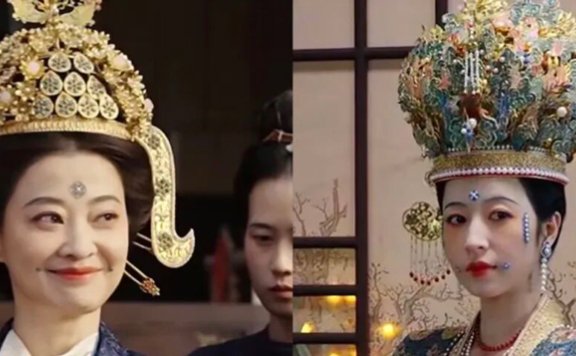
Tang-Song Crowns Collide in Swords into Plowshares
Why do two very different historical crowns keep appearing in the same Chinese dramas? In the recent series Swords into Plowshares (太平年), eagle-eyed viewers noticed the simultaneous presence of two distinct, ornate headdresses for noblewomen. While both are stunning, they hail from different centuries, raising questions about historical timelines and costume design choices in period television. This isn't an isolated case; these crowns have become frequent guests in shows spanning various dynastic settings, from Tang to Song. Their recurring appearance offers a fascinating glimpse into how Chinese television visualizes the past, often prioritizing visual grandeur over strict chronological accuracy. Understanding their real-world origins reveals a rich history of ritual, status, and aesthetic evolution. The Blossoming Headdress The first type, the Flower Hairpin Crown, finds its roots in the Sui and Tang dynasties. It was a formal headdress for noblewomen and high-ranking female officials. This crown is not a single solid piece but a sophisticated assembly. Its core components include a base frame, wing-like Bobin (博鬓) that frame the face, delicate gold floral diadems, and numerous hairpins and "flower trees" adorned with gems and pearls. The number of these floral elements was strictly regulated to indicate the wearer's rank, with an…
