
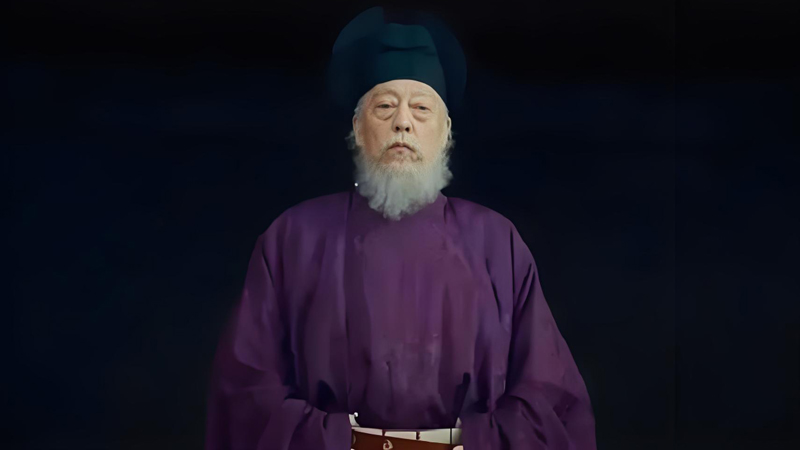
In the swirling political currents of the tenth-century Wuyue (吴越) Kingdom, depicted in the historical drama Swords into Plowshares (太平年), a minister's loyalty becomes the ultimate test of a ruler's worth. The narrative pivots on a stark contradiction: the powerful minister Hu Jinsi (胡进思) shows utter contempt for one young king, publicly humiliating and ultimately deposing him, yet willingly kneels in submission to another.
This is not a simple story of ambition, but a pointed examination of what separates a failed monarch from a successful one. The answer, buried within court intrigues and personal clashes, boils down to a fundamental trait often overlooked in the pursuit of power.
Qilang's (七郎) Fatal Flaws
From the moment he ascended after his brother's death, the king known as Qilang operated from a place of deep insecurity. He saw Hu Jinsi, a seasoned minister who had served previous rulers, not as a potential ally but as a direct threat to his authority. His first act was to exclude Hu from critical deathbed deliberations, a clear signal of distrust that resonated through the court. Qilang's perception created its own reality; by treating Hu as an enemy, he ensured the minister would act as one. His reign became a self-fulfilling prophecy of isolation and paranoia.
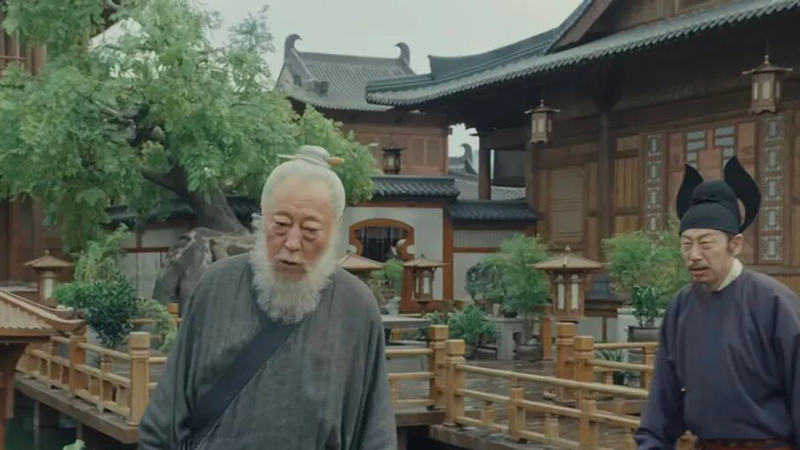
Qilang's approach was fundamentally flawed because it lacked strategic clarity. He feared Hu Jinsi's influence but hesitated to take decisive action against him, vacillating between suspicion and inaction. He attempted to rally other ministers like Shuiqiu Zhaoquan (水丘昭券) to his side, but these moves were transparent and clumsy. Even his own brother, the future King Qian Hongchu (钱弘俶), recognized the folly. Qilang listened only to flatterers and whispers, unable to discern wise counsel from malicious slander. He ruled by reaction, not vision, eroding the stability of the kingdom he sought to control.
Hu Jinsi, for all his personal ambition, was primarily a pragmatist invested in the state's continuity. He understood that his power was inextricably linked to a stable Wuyue. Qilang's indecisiveness and narrow perspective threatened that foundation. Where Qilang saw only personal slights and conspiracy, Hu evaluated capability. The young king failed to grasp that a minister's loyalty could be earned through competent leadership, not demanded through fear alone. His inability to project strength or offer clear direction left him vulnerable, confirming Hu's belief that he was unfit to rule.
Qian Hongchu's Authority
The transition to Qian Hongchu, or Jiulang, was not passive acceptance but a forceful seizure of the narrative. When a sycophant presented the head of a slain minister, falsely claiming Hu Jinsi's order, Qian Hongchu did not hesitate. In a stunning public display, he denounced the act, executed the liar on the spot, and restored the minister's honor. This was more than justice; it was a masterful demonstration of control. He instantly established a new rule: under his watch, chaos and deceit would not be tolerated, even from the most powerful.
Qian Hongchu communicated his authority through unambiguous action. He directly challenged Hu Jinsi, asking if he still intended to install him as king, turning a moment of potential crisis into a platform for his sovereignty. His message was clear: he would be king on his own terms. This decisive prowess stood in stark contrast to Qilang's dithering. Qian understood that in a court accustomed to manipulation, raw, controlled assertion was the only language that would be heard and respected.
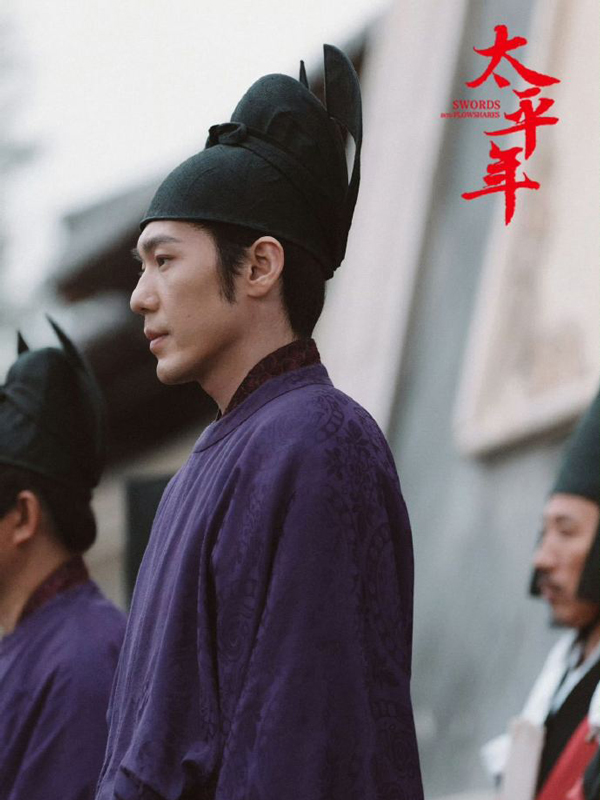
His earlier exploits, such as boldly confronting officials in Wenzhou (温州) and Taizhou (台州), were not mere recklessness but calculated steps to build a reputation. He made people fear his resolve before they could question his youth. Faced with a minister like Hu Jinsi, who respected strength above all, Qian Hongchu proved he could be more formidable. He did not seek to eliminate Hu immediately but to subdue him, showing an understanding of power dynamics that his predecessor utterly lacked. He commanded submission by deserving it.
Knowing Thyself
The core distinction between the two rulers was self-awareness. Qian Hongchu possessed a lucid understanding of his own position, his strengths, and the limits of his power. This clarity allowed him to make bold, calculated risks. He knew when to strike and when to consolidate, never overreaching beyond what the moment could bear. This quality earned him respect beyond the palace walls, marking him as a figure of potential stability in a fragmented era. He ruled with a sense of proportion that inspired confidence.
In contrast, Qilang operated with profound self-deception. He believed the crown alone conferred authority, blind to the fact that true power must be cultivated and asserted. His lack of self-awareness manifested as petty distrust and strategic blindness. He could not see how his own actions fostered the very opposition he feared. Where Qian Hongchu assessed situations, Qilang merely reacted to threats, real or imagined. This made him a puppet of circumstance, easily manipulated and ultimately discarded.
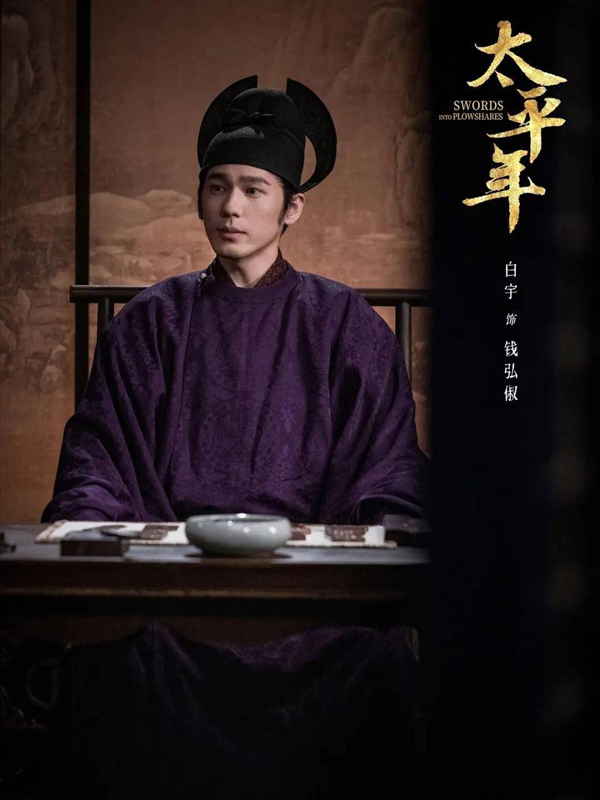
For Hu Jinsi, this trait was the ultimate metric. His service was not to a bloodline but to a capability that ensured the kingdom's—and consequently his own—future. Qilang's insecure flailing promised only instability. Qian Hongchu's assured command, rooted in a realistic self-assessment, promised order and continuity. Hu was a man of power, and he recognized a kindred spirit in Qian, not in the title he held but in the manner he wielded it. The kneeling was not surrender to a person, but acknowledgment of an undeniable force.
The lesson of Swords into Plowshares transcends historical drama. In any arena of leadership, authority is rarely about position alone. It is granted by those who observe a leader's grasp of reality, their decisive action, and, most crucially, their understanding of themselves. Qilang lost a throne because he never truly comprehended what it required to hold one. Qian Hongchu secured his by demonstrating that he did, proving that before one can command a kingdom, one must first command a clear-eyed view of one's own place within it.
