
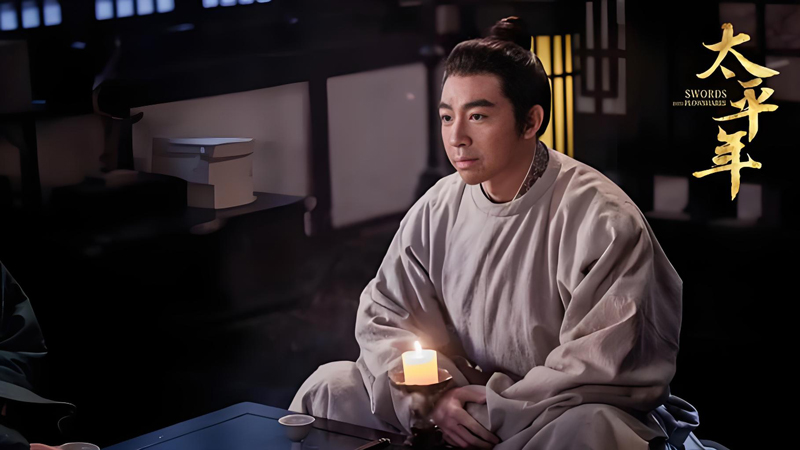
In the chaotic final years of the Five Dynasties period, a most unlikely emperor rose to power. Guo Wei (郭威), founder of the Later Zhou (后周) dynasty, carved out a realm of relative stability praised by historians. Yet his personal life was a tapestry of profound tragedy and unconventional choices. While other rulers sought virginal consorts from noble families, his heart consistently turned to widows and remarried women.
Each of his four wives came to him having loved and lost before, their lives intertwined with the era's violence. This preference, startling for its time, reveals a man shaped more by personal connection and shared hardship than by imperial convention or political calculation. His story, dramatized in the series Swords into Plowshares (太平年), is not one of glorious conquest, but of a man who built a kingdom only to watch everyone he loved perish before him.
1. Chai Shi (柴氏)
Before the crown, there was Chai Shi. She was no young maiden but a former attendant in the palace of a previous emperor, released and returning home when she crossed paths with a common soldier named Guo Wei. Recognizing his potential where others saw only a rough military man nicknamed "Sparrow Guo," she insisted her parents allow the marriage. Her wisdom and her substantial dowry became the foundation of his climb from soldier to general. She provided not just wealth but crucial counsel, a true partner in ambition. Tragically, she died before witnessing his ultimate triumph. Having borne him no sons, she had earlier adopted her nephew, Chai Rong (柴荣), who would become Guo Wei's heir. In a lasting tribute to her pivotal role, Guo Wei, upon becoming emperor, posthumously honored her as his sole empress, Shengmu Huanghou (圣穆皇后).
Her influence extended far beyond her lifetime. The heir she chose, Chai Rong, would become one of the most capable rulers of the era, briefly continuing his adoptive father's reforms. Thus, the discerning widow from his humble beginnings shaped the dynasty's very lineage. Her story underscores a central theme: for Guo Wei, a woman's worth was measured by her intellect and faith in him, not by an untouched past. In the unstable world of the tenth century, her seasoned judgment was a far greater asset than youthful innocence.
2. Yang Shufei (杨淑妃)
His subsequent marriages were brief, shadowed by loss, and severed by the relentless political upheaval of the age. Following Chai Shi's death, Guo Wei married Yang Shi, a woman known for her beauty and intelligence from a respectable family. Her life too had been marked by tragedy; she was twice widowed before becoming Guo Wei's wife. Their time together was cut short when she died of illness during the Later Jin dynasty, over a decade before Guo Wei ascended the throne. He later honored her as a Shufei, or Virtuous Consort.
3. Zhang Qingyun (张卿云)
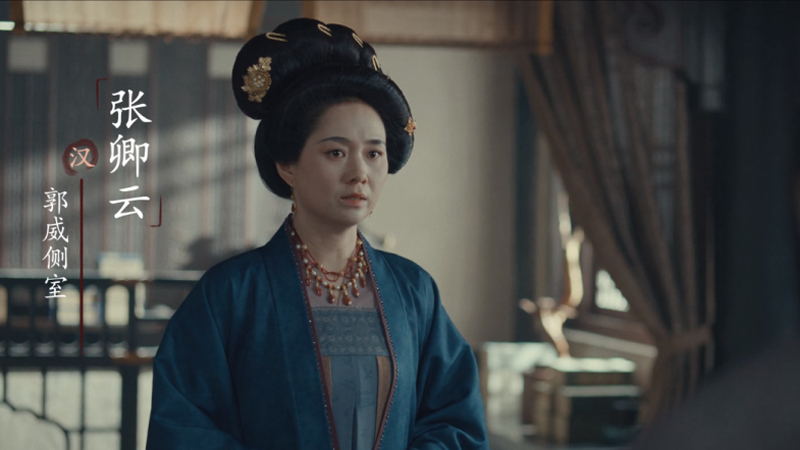
Zhang Qingyun as she is named in Swords into Plowshares, met a far more brutal fate. A capable manager of his household after Yang Shi's passing, her moment of supreme courage and loyalty was dramatized powerfully. When Guo Wei led his troops to challenge the corrupt court, his son Chai Rong (柴荣) secretly returned to the capital to evacuate the family. Zhang Qingyun, understanding the political implications, made a fateful choice. She declared that if the household fled, it would confirm accusations of rebellion. She and the others would stay, becoming hostages to fortune, while Chai Rong escaped to warn his father. Her final, tearful words were a plea for vengeance if the worst should happen. The worst did. The imperial court, in retaliation, executed every member of Guo Wei's family in the capital, including Zhang Qingyun and all the children.
4. Dong Defei (董德妃)
The horrific massacre left only one of Guo Wei's companions alive: Dong Shi (董氏). She had entered his life as a concubine, recommended by his second wife Yang Shi, who had been her close friend. Dong Shi was also a widow, her first husband killed during a Khitan invasion. By accompanying Guo Wei on his military campaign, she accidentally avoided the slaughter at home. When Guo Wei finally took the throne, the once-crowded family quarters were empty. Dong Shi, the sole survivor, was elevated to Defei, or Consort of Virtue, to preside over the desolate inner court. Her tenure was short. She died at thirty-nine, just one year before the emperor himself, leaving him in utter solitude for his final days.
This final, quiet companionship underscores the profound loneliness of his reign. His biological children were dead, murdered. The wives who had shared his long journey from obscurity to power were all gone. The throne, won through blood and strategy, was a solitary peak. His unconventional choices in love, which provided him with partners of resilience and experience, ultimately led him to a uniquely tragic destination: a ruler with no family to succeed him, no partner to share his burden, a king truly alone in his palace.
A Legacy of Heartbreak
Guo Wei's story defies easy categorization. He was a capable ruler credited with bringing order, yet his personal life was a series of devastating losses. His consistent attraction to remarried women suggests a man who valued maturity, shared life experience, and perhaps a mutual understanding of loss over traditional marital politics. In a time of endless war and betrayal, these women represented a different kind of stability—emotional and pragmatic.
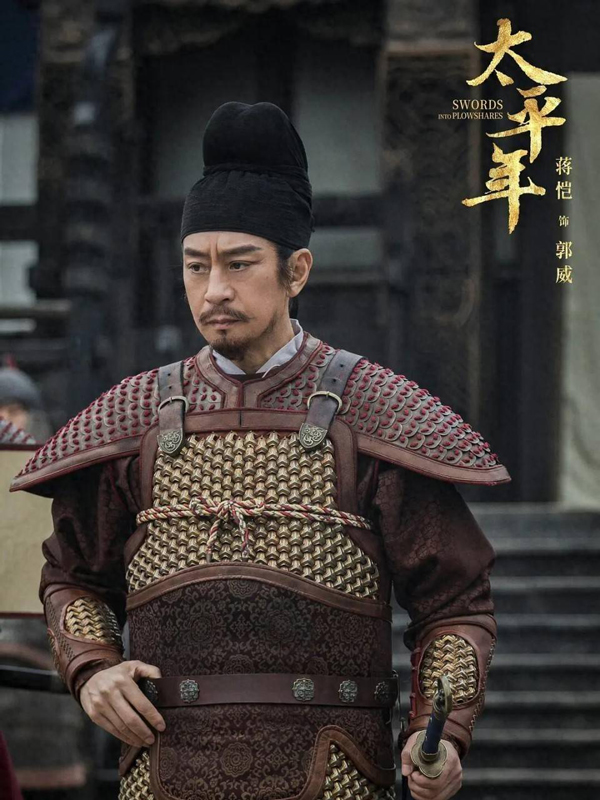
The tragedy that consumed his family also poisoned his legacy. While he founded a dynasty, its future rested on an adopted heir, not a blood descendant. The promising reign of Chai Rong was cut short by early death, and the Later Zhou dynasty itself proved fleeting. Thus, Guo Wei's life stands as a poignant paradox: a king who could conquer a kingdom but could not protect his own home, a man who sought love in the arms of survivors only to be left as the final, most bereaved survivor of all. His reign reminds us that historical significance and personal happiness are rarely aligned, and that the weight of a crown is heaviest when there is no one beside you to help bear it.
