
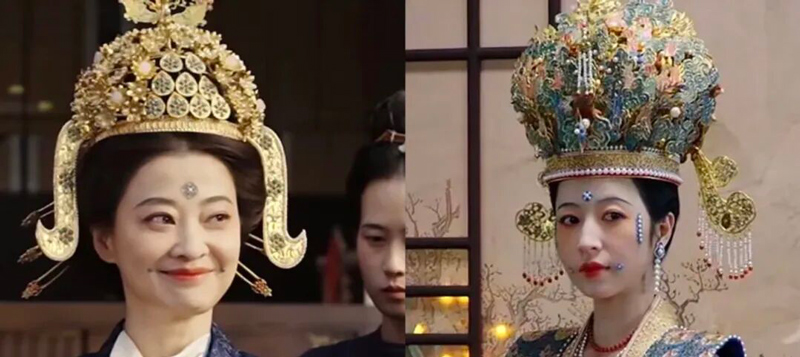
Why do two very different historical crowns keep appearing in the same Chinese dramas? In the recent series Swords into Plowshares (太平年), eagle-eyed viewers noticed the simultaneous presence of two distinct, ornate headdresses for noblewomen.
While both are stunning, they hail from different centuries, raising questions about historical timelines and costume design choices in period television. This isn't an isolated case; these crowns have become frequent guests in shows spanning various dynastic settings, from Tang to Song. Their recurring appearance offers a fascinating glimpse into how Chinese television visualizes the past, often prioritizing visual grandeur over strict chronological accuracy. Understanding their real-world origins reveals a rich history of ritual, status, and aesthetic evolution.
The Blossoming Headdress
The first type, the Flower Hairpin Crown, finds its roots in the Sui and Tang dynasties. It was a formal headdress for noblewomen and high-ranking female officials. This crown is not a single solid piece but a sophisticated assembly. Its core components include a base frame, wing-like Bobin (博鬓) that frame the face, delicate gold floral diadems, and numerous hairpins and "flower trees" adorned with gems and pearls. The number of these floral elements was strictly regulated to indicate the wearer's rank, with an empress entitled to twelve and the numbers decreasing down the hierarchy.
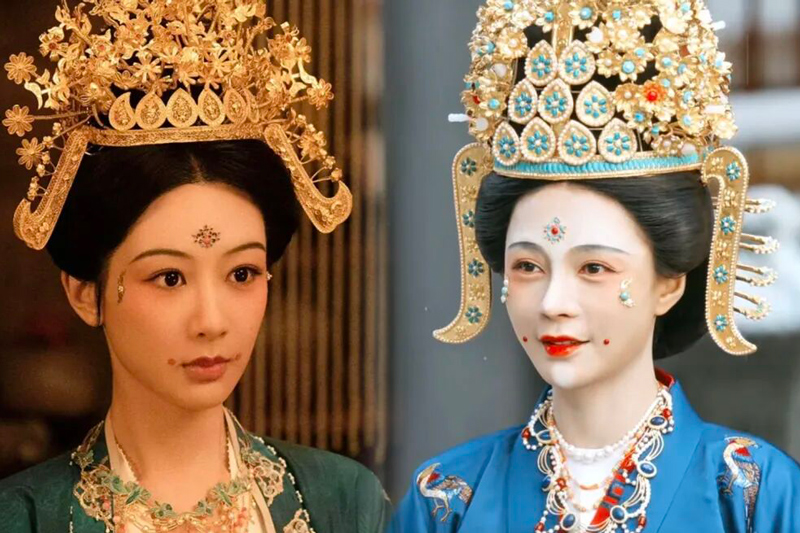
Modern audiences might recognize this layered, blooming crown from dramas like Flourished Peony (国色芳华) and Wind From Luoyang (风起洛阳), where it featured prominently in wedding scenes. Its design is often based on archaeological finds, most notably the crown excavated from the tomb of Empress Xiao (萧皇) of the Sui dynasty. The painstaking process of assembling it—first the base, then the Bobin, followed by diadems and finally the hairpins—explains why it was reserved for the most significant ceremonies. In the upcoming drama Marriage for the Country (江山为聘), actress Wu Jinyan's (吴谨言) character wears a variant of this crown, modified with a beaded face curtain for dramatic effect, showcasing how designers adapt historical artifacts for the screen.
The Flower Hairpin Crown represents the peak of Tang dynasty elegance and bureaucratic symbolism. Its structure, meant to be deconstructed, allowed for flexibility. A noblewoman might wear only parts of the full set for less formal events. When fully assembled, it created a breathtaking, wide silhouette that signified both beauty and immense social power. Its popularity in television reflects a cultural nostalgia for the Tang's perceived openness and prosperity, making it a go-to choice for conveying imperial splendor, even in stories set in later periods.
A Regal Revolution
The second crown represents a significant shift in style and iconography. The Dragon-Phoenix Crown became the standardized formal wear for empresses during the Song dynasty. It is characterized by a more unified, helmet-like crown body, still flanked by Bobin, but now prominently featuring three-dimensional figurines of celestial beings, dragons, and phoenixes. A central dragon head, often holding a pearl in its mouth, crowns the structure. This move from floral abstraction to mythical literalism marked a new chapter in imperial regalia.
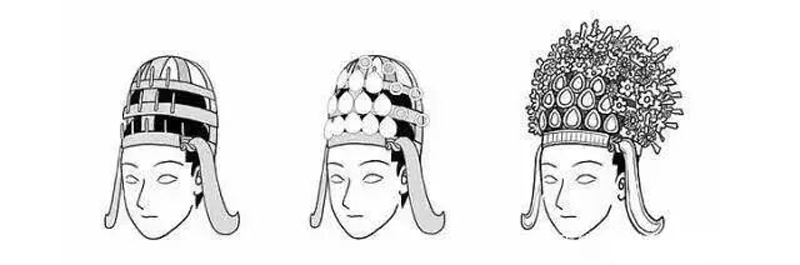
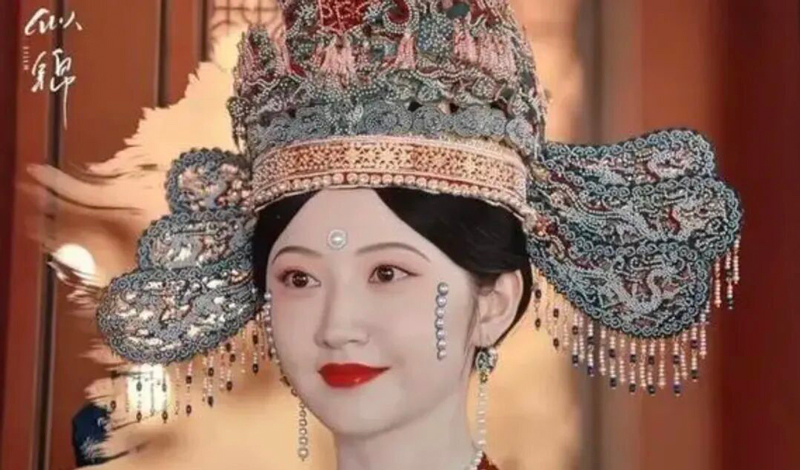
This crown's standardization is credited to the Huizong (徽宗) Emperor in the 12th century, who codified ritual costumes. The official design, recorded as the "Nine Dragons, Four Phoenixes, and Twelve Flower Hairpins Crown," solidified a style that would influence later dynasties, especially the Ming. Its most accurate modern reproduction is widely considered to be in the series Serenade of Peaceful Joy (清平乐), which meticulously portrays Song court life. Actress Jing Tian (景甜) also wore a version of this crown in the drama Si Jin (似锦), demonstrating its status as the definitive Song empress symbol.
Unlike its Tang predecessor, the Dragon-Phoenix Crown projects authority through direct symbolism. The dragons represent imperial power, while the phoenixes symbolize the empress. The inclusion of the Queen Mother of the West and other immortal figures connects the wearer to divine legitimacy. This crown was designed to be seen as an indivisible unit of power, which is perhaps why it appears so consistently and recognizably in television productions set in the Song dynasty and beyond.
When Timelines Collide
The simultaneous use of these two crowns in Swords into Plowshares creates a historical puzzle. The series is set in the turbulent Five Dynasties and Ten Kingdoms period, which served as a bridge between the Tang and Song eras. This was a time of fragmented regimes and cultural mixing, where Tang traditions persisted while new Song conventions were slowly forming. Costume styles were indeed in flux, incorporating both residual Tang elements and emerging new trends.
However, the fully formed, codified Dragon-Phoenix Crown seen in later Song art is a historical anachronism if placed in a early or mid-10th-century setting. Its appearance in Swords into Plowshares alongside the Tang-style Flower Hairpin Crown compresses a century of sartorial evolution into a single frame. This is a conscious creative decision, not an accident. Designers blend the most visually iconic elements from different periods to immediately communicate character status and court setting to a modern audience familiar with these symbols from other shows.
This practice highlights a key tension in historical drama production. Absolute accuracy can sometimes be visually confusing or lack immediate impact. The Flower Hairpin Crown signals "Tang-style grandeur" to viewers, while the Dragon-Phoenix Crown screams "Imperial Song." By using both, the production visually claims the legacy of two great dynasties for its narrative, crafting a richer, if less precise, aesthetic world. It serves as a reminder that television history is always a curated spectacle, where the logic of drama often trumps the timeline of the history books.
