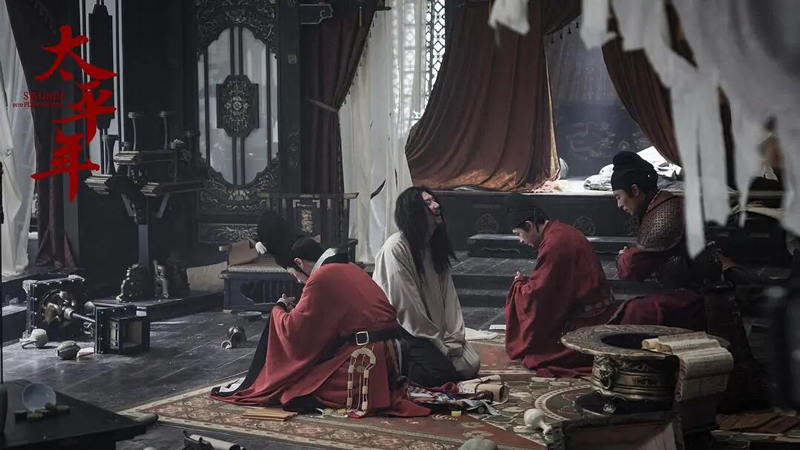
As the flagship historical drama for China Central Television's new year, Swords into Plowshares (太平年) has made a significant impact. Set against the turbulent backdrop of the Five Dynasties and Ten Kingdoms period, it demonstrates a cinematic quality often reserved for film, from its meticulous costume and set design to its sprawling, visceral battle sequences.
In an era dominated by short-form content, this series makes a compelling case for the enduring power and depth of long-form television. It ambitiously attempts to weave a complex tapestry of a fractured era, where power shifted like sand and heroes and villains rose and fell with dizzying speed. The narrative successfully creates a palpable, grim atmosphere of instability, using multiple perspectives to explore the brutal mechanics of history and the intricate souls caught within it.
The Ensemble's Triumph
The drama's greatest strength lies not in its protagonists, but in its richly drawn supporting cast. The chaotic historical period provides fertile ground for vivid portraiture, and the series seizes this opportunity. Even characters with minimal screen time are imbued with startling clarity and memorability. This meticulous casting and performance have led viewers to claim that certain portrayals have "monopolized" the image of these historical figures for a generation. The actors don't just play roles; they seem to embody them, setting a new benchmark for how these figures from the distant past might be remembered.
A prime example is the portrayal of Li Yu (李煜), the famously poetic last ruler of the Southern Tang state. Though appearing only briefly in early episodes, actor Niu Chao (牛超) captures the character's innate melancholy and artistic fragility with such precision that the performance sparked immediate and widespread acclaim online. This phenomenon underscores a critical achievement: the series frequently aligns perfectly with the audience's historical imagination, making the distant past feel intimate and authentic.
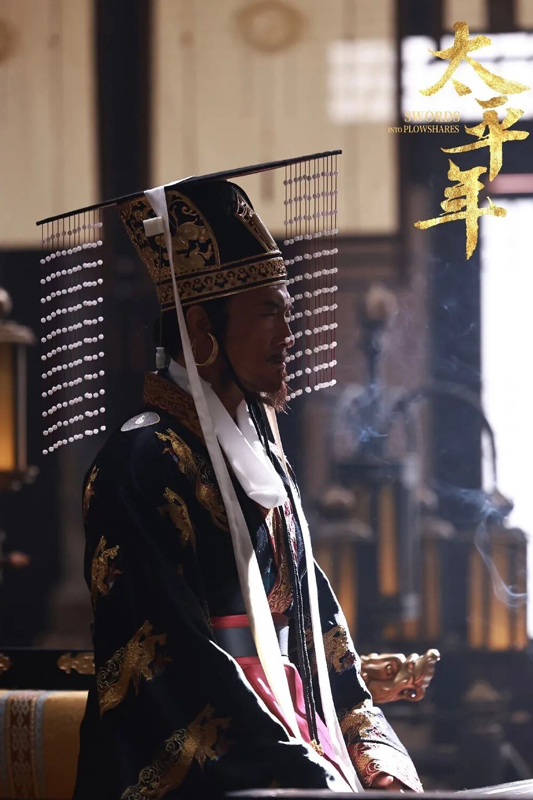
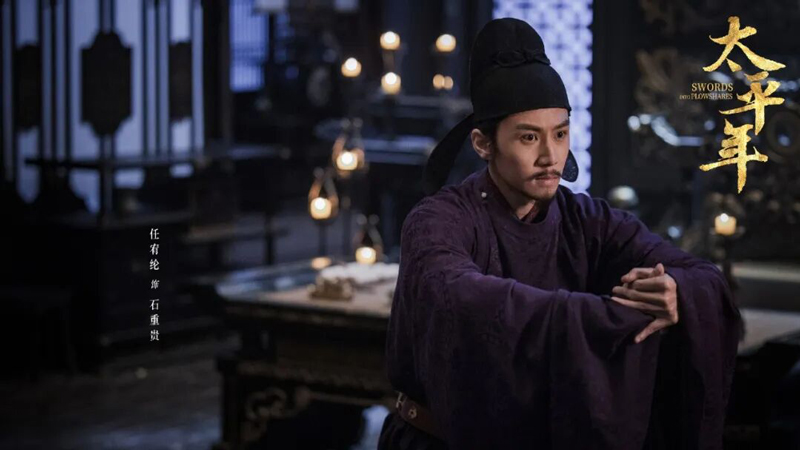
This consistency extends to other key figures. He Ziming's (赫子铭) performance as Yelü Deguang (耶律德光), the Khitan emperor, is a masterclass in contained power. With his distinctive large earrings and a gaze that mixes nomadic ruggedness with imperial authority, he commands every scene. For an actor who had receded from the public eye, this role serves as a powerful comeback. Similarly, Ren Youlun's (任宥纶) portrayal of the tragic Emperor Shi Zhonggui (石重贵) is heartbreaking. He navigates the character's arc from a confident, ambitious young ruler to a broken man forced into a humiliating surrender with devastating effectiveness, particularly in the harrowing "Sheep Leading Ritual" scene.
Gems in the Rough
Swords into Plowshares has become a showcase for underrated talent, revealing what might be called "treasure actors." Jia Hongwei's (贾宏伟) performance as the villainous warlord Zhang Yanze (张彦泽) is terrifyingly good. He avoids cartoonish evil, instead projecting a chilling, casual malevolence. His low, almost relaxed delivery of monstrous commands makes his character's cruelty feel all the more real and unsettling. The series does not shy away from depicting the horrors he unleashes, using stark montages to show the suffering of common people during a city-wide sack, reminding viewers of the era's brutal axiom: better to be a dog in peace than a human in chaos.
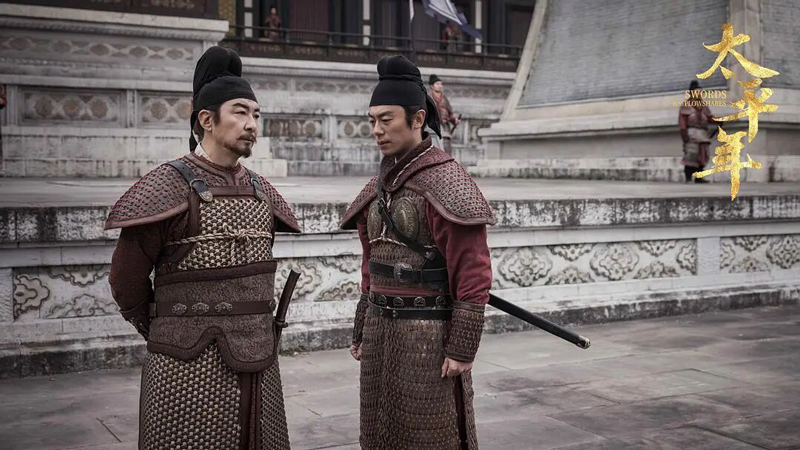
The depth of casting is evident in the smallest of roles. The actor playing the Grand Marshal Dai Yun (戴恽) in the Wuyue kingdom segment is instantly recognizable to many, adding a layer of familiarity. Wu Haochen (吴昊宸), as the new King Qian Hongzuo (钱弘佐), deftly portrays the hidden calculations of a young monarch ascending to power. Even Zhao Kuangyin's (赵匡胤) father, Zhao Hongyin (赵弘殷), is played with gravitas by an actor famous for another role, proving that no part is treated as insignificant. The central trio, dubbed the "F3" by fans—Guo Rong (郭荣), Zhao Kuangyin, and Qian Hongchu (钱弘俶)—hold their own, promising greater moments as the plot unfolds.
A Central Weakness
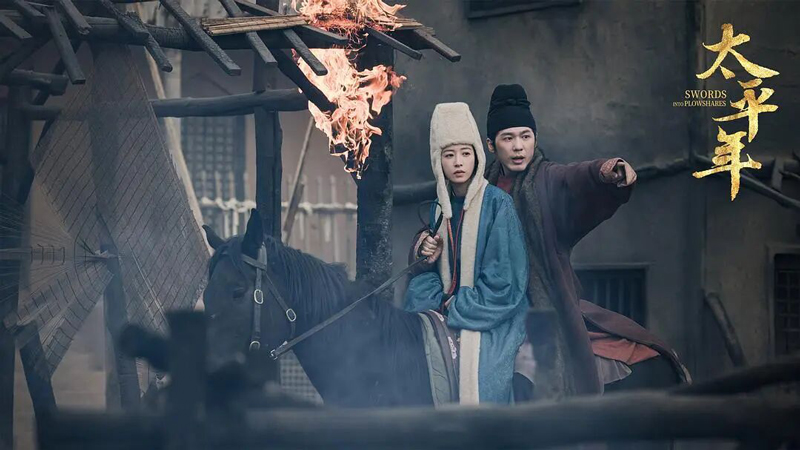
Despite these triumphs, the series harbors a frustrating flaw that stands in stark contrast: the underdevelopment of its female lead. While nearly every other character, major or minor, is granted complexity and motive, Sun Taizhen (孙太真), played by Zhou Yutong (周雨彤), remains a narrative ghost. She possesses no discernible agency, functioning primarily as an appendage to the male lead. Her character fails to react meaningfully to the cataclysmic events surrounding her, creating a jarring disconnect. This isn't a failure of acting but of writing; the script simply did not build her a personhood.
This deficiency culminates in poorly conceived romantic scenes that clash violently with the show's otherwise serious tone. In one particularly criticized moment, with enemy forces at the gates, she chooses to ask the male lead about marriage and burial arrangements. Such dialogue feels transplanted from a lightweight romantic drama, breaking the hard-earned historical immersion. Many viewers admit to fast-forwarding through the lead couple's segments, noting that removing them entirely would surprisingly have zero impact on the main political and military narrative—a damning indictment of their relevance.
Furthermore, the series misses a crucial perspective. Though titled Swords into Plowshares and filled with speeches about seeking stability for the common people, the "common people" themselves remain faceless NPCs, merely suffering in the background. The absence of a single fleshed-out civilian character to ground the epic scale in human experience feels like a missed opportunity to fully explore the era's true cost. Nonetheless, the show's strengths in depicting the historical chessboard and its players are formidable. It is a compelling, if imperfect, journey into a complex past, proving that well-made historical dramas still hold immense power to engage and enlighten.
