
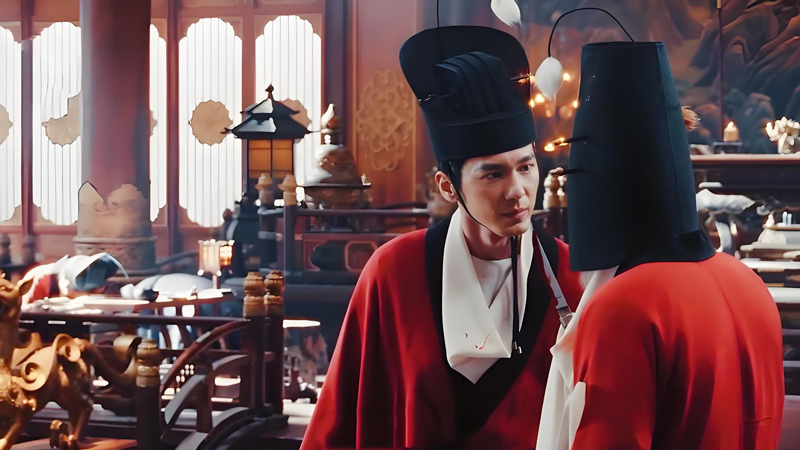
The throne room was silent, the air thick with tension and the metallic scent of blood yet to be spilled. On his very first day as King of Wuyue (吴越), Qian Hongchu (钱弘俶) faced an unthinkable provocation. A minor official, He Chengxun (何承训), paraded into court bearing the severed head of a respected senior statesman, Shuiqiu Zhaoquan (水丘昭券), and his entire family. The audacious claim? He acted on orders from the mighty Regent, Hu Jinsi (胡进思).
In that frozen moment, the young king, played with captivating intensity by Bai Yu (白宇) in the historical drama Swords into Plowshares (太平年), made a choice that would redefine his reign and the kingdom's future. He drew a sword and executed the messenger on the spot. This single act of brutal defiance was not mere impulse; it was a masterful political stratagem born of deep conviction, psychological insight, and a startling lack of personal ambition.
The Public Execution
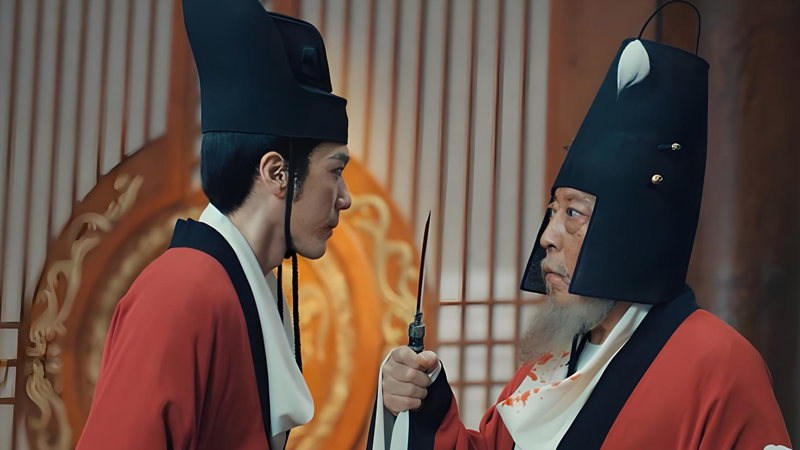
The strike of the sword was swift and final. Before Hu Jinsi, the militarily powerful regent who had essentially forced the crown upon him, could react, Qian Hongchu ended He Chengxun’s life. The blood sprayed onto the faces of Hu Jinsi and his son, a visceral, shocking image burned into the memory of every official present. This was not a discreet punishment but a spectacular, theatrical display of justice. The king transformed the courtroom into a stage for moral reckoning.
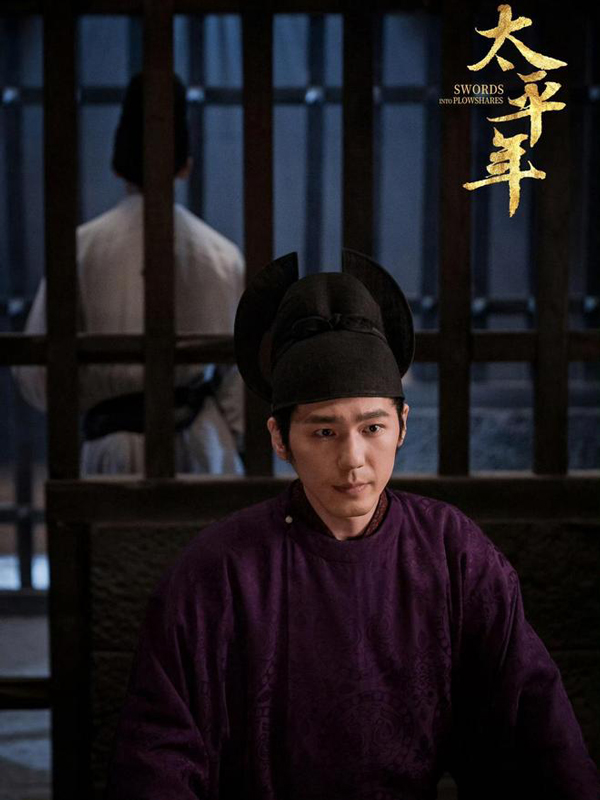
He offered no one, least of all the regent, a chance to explain or intervene. His action spoke a clear, violent language: certain boundaries were absolute. By framing the execution as a necessary act of justice for a heinous crime—the murder of a loyal official—Qian Hongchu immediately anchored his authority in a universal principle of right and wrong. He understood that while political power could be contested, a publicly affirmed moral law was far harder to overthrow.
The immediate aftermath proved his calculation correct. The spectacle left the court in stunned silence. That night, a telling shift occurred. No officials visited Regent Hu Jinsi’s residence, a stark break from tradition. The public execution had drawn a visible line in the sand, rallying silent consensus around the new king’s assertion of fundamental justice. Order was re-established not through negotiation, but through a decisive, principled act.
A King Without Desire
Qian Hongchu’s most potent weapon was his genuine reluctance to be king. He never sought the throne, believing others more capable. This absence of craving became his ultimate shield. As the philosopher Cheng Yi (程颐) later noted, having no selfish desires makes a person unyielding. With no burning desire to keep the crown, Qian Hongchu had no true fear of losing it.
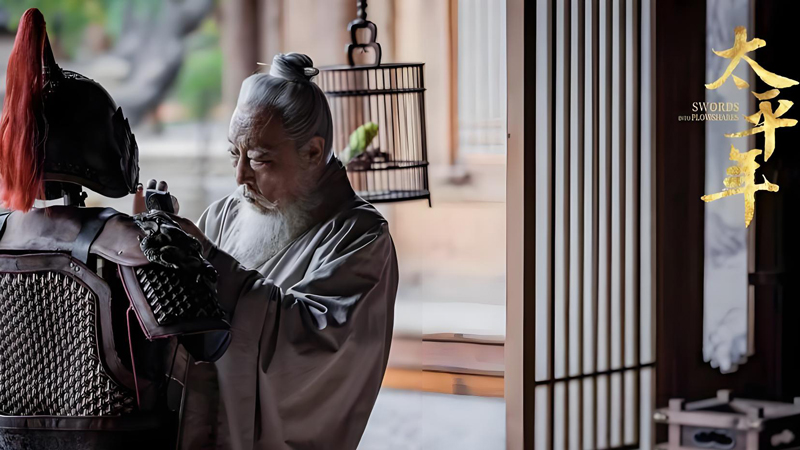
This psychological freedom allowed him to act with a boldness no ambitious ruler could risk. He openly challenged Hu Jinsi and the court, his demeanor suggesting he would willingly step aside if they disapproved of his methods. "I am stubborn. I settle scores. Do you still choose me?" his actions asked. This paradoxical stance disarmed the regent. How does one manipulate or threaten a man who views the ultimate symbol of power—the throne—as a burden rather than a prize?
Hu Jinsi, a master of political manipulation, found his usual tactics useless. He could command armies and orchestrate coups, but he could not create a personal vulnerability in the king to exploit. Qian Hongchu’s lack of "want" made him politically "hard," immune to the coercive pressures of ambition. His authority stemmed from acceptance of duty, not hunger for glory.
Knowing the Adversary
Beyond moral conviction and personal detachment, Qian Hongchu possessed sharp insight into his opponent. He understood Hu Jinsi’s complexities: his lust for authority, his residual sense of honor, and his deep concern for his family’s legacy. The king’s strategy was not one-dimensional confrontation but a nuanced dance of pressure and conciliation.
First, he granted Hu Jinsi the prestigious title of Chancellor, satisfying the regent’s lifelong yearning for formal, legitimate power. Then, after the execution, he skillfully ignored He Chengxun’s claim of acting on Hu’s orders. He publicly framed the act as a joint effort by the King and the Chancellor to rid the court of evil, forcing Hu Jinsi to publicly accept this skewed "credit." It was a move that simultaneously showcased their unity and reminded everyone where final authority now lay.
Finally, when Hu Jinsi feigned illness the next day, Qian Hongchu visited his bedside. There, he guaranteed the safety and prosperity of the Hu family for generations. This act of calculated magnanimity addressed the regent’s core fear for his descendants, effectively defusing his hostility. By knowing his adversary’s heart—his desires and his fears—the young king secured his rule not just through force, but through shrewd psychological resolution.
As Swords into Plowshares continues, it invites viewers to look beyond palace intrigue to the timeless mechanics of power, ethics, and human nature. The story of Qian Hongchu resonates because it reflects a perennial truth: true strength often lies in conviction rather than craving, and understanding an opponent can be more decisive than defeating them. It is a lesson that, as the ancients knew, remains eternally relevant for those who lead, and for those who watch.
