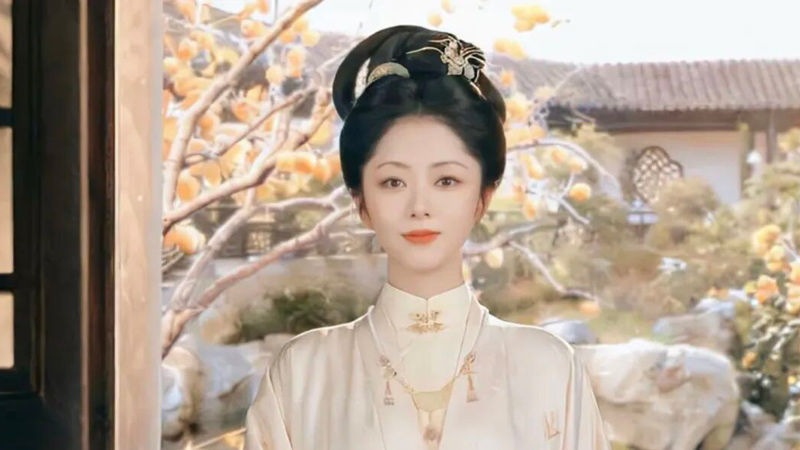
In Against the Current (兰香如故), Tan Songyun (谭松韵) and Liu Xueyi (刘学义) lead a story where small wardrobe choices speak loudly. Viewers notice the standing collars worn by Zheng Hehuizi (郑合惠子) and other women. At the throat sits a tiny pair of interlocking clasps. Many people still assume Hanfu relied only on ties. That idea is too simple. This essay looks at what the clasp does, where the drama gets it right, and where it slips. A button can be more revealing than a monologue.
Clasp and Class
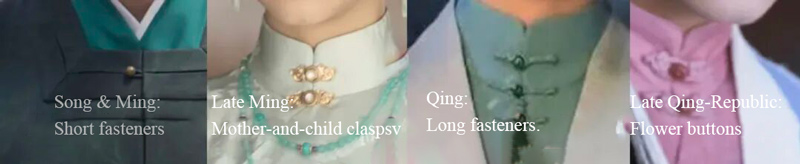
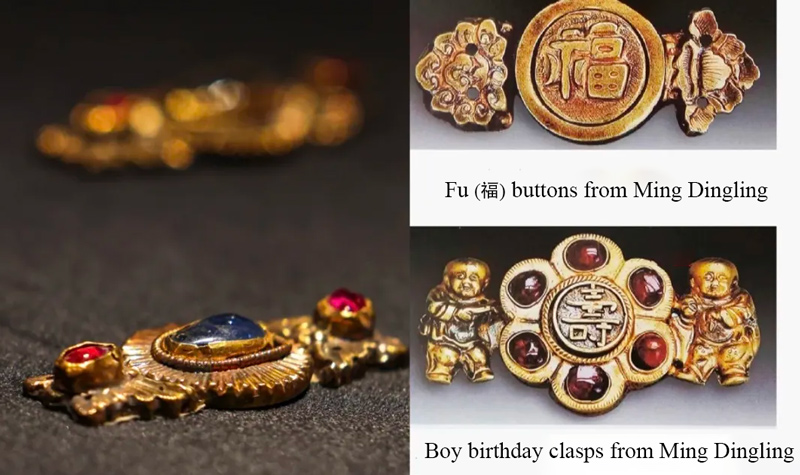
The mother-and-child clasp works like a snap, but its craft belongs to another age. One half has a raised head; the other has a ring or groove that grips it. Press, and the collar closes. Pull, and it opens. It is not the same as the centipede knot button of the Qing dynasty. Examples from the Ming dynasty were often metal or jade, used in small pairs. They sat at standing collars, front openings, or capes. Qing cloth buttons were braided strips, often lined up in long rows. Time, material, and use separate them clearly.
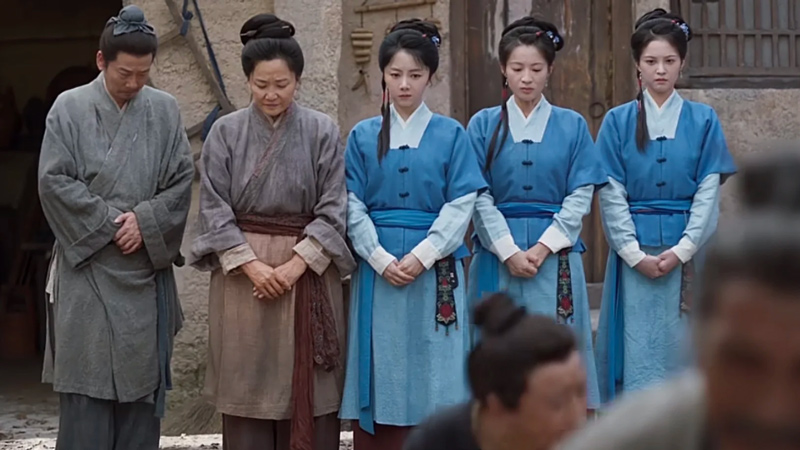
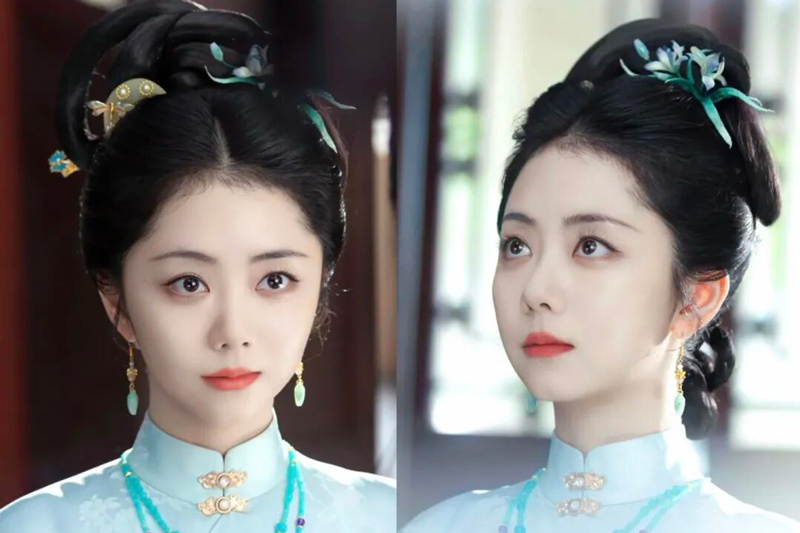
Still, not every Ming garment depended on clasps. Ties and cross-collars remained the main structure. Standing-collar jackets became popular later. The Little Ice Age made winters colder. A collar had to hug the neck, and ties alone left gaps for wind. A small clasp solved that problem. Function came first. In the drama, noble women often wear standing collars, while men, commoners, and servants wear cross-collars. That can make cross-collars look lower-class, which is misleading. Even wealthy wives in formal slanted-front robes sometimes wear cloth buttons here, which feels odd. Clasp material marks rank.
Take the heroine’s two looks. As Shen Jialan (沈嘉兰), a legitimate daughter of a great house, she wears fine cloth and gilded, silver, gem-set clasps with engraved patterns. After her family falls, she becomes Xu Lanxiang (许兰香), a maid in rough fabric. Her work clothes use cross-collars and aprons. Even when she wears a front-fastening jacket, the fancy metal is gone. Plain cloth buttons remain. Yet some cloth buttons in the show are too long and flower-shaped, closer to Qing or Republican-era knotted buttons. Ming common women mostly used simple short loop-and-knot cloth fasteners. Gilded or jade clasps belonged to officials’ wives and noble women. One collar can reveal a household’s money and rank.
Noble clasps were often gold, silver, or jade. They were not only useful. Their patterns carried private wishes. Excavated pieces show Butterfly and Flower, Bee Chasing Chrysanthemum, ruyi (如意), and lotus. In Butterfly and Flower, the insect and blossom complete each other only when the clasp closes. That echoes a hope for partnership and a stable life. A gilded Butterfly and Flower pair from the Dingling Mausoleum (定陵) has delicate wings and layered petals. It is a miniature carving, less a button than jewelry sewn to a robe.
Small Clues, Big Story
Why keep ties if buttons existed? Practicality. Ties adjust to a changing body. A padded jacket needs more or less cotton as seasons shift. Fixed buttons cannot adapt as easily. Ties also make washing simpler: untie them, and the outer fabric comes apart. The mother-and-child clasp guarded the collar, added warmth, and left the older structure intact. It stayed local, usually one or two pairs, rarely a dense row. This balance between old and new is clever. The drama could use it more carefully, but the basic idea is sound.
In the plot, the clasp becomes a quiet metaphor. Shen Jialan’s fortunes rise and fall through clothing details. As a noble daughter, the gilded clasp at her throat is pride made visible. As a maid, its absence stings. Historically, a metal clasp sits between two forces: Ming dress rules and a person’s shifting place. Class is not announced. It is fastened at the neck. When her identity changes, the collar changes first. The audience may not notice at once, but the costume remembers what the character cannot say.
The best costume detail does not shout. A pair of clasps can sit quietly, yet it tells us whether a woman belongs to a wealthy hall or a servant’s yard. It also warns writers: if later knotted buttons appear in a Ming scene, the audience may feel the wrong century. Accuracy does not require a lecture. One correct clasp, one plain tie, one worn collar can do the work. That is why the tiny fastening in Against the Current is worth pausing for. It connects character, history, and craft without saying a word.
Modern costume dramas often mix Ming, Qing, and Republican button styles. Against the Current uses Ming-style mother-and-child clasps, yet also includes knotted flower buttons from later periods. The flaw does not ruin the show. It is a common habit in historical television. A tiny clasp still holds taste and social order. It can mark a daughter, a widow, a servant, or a wife. It can whisper wealth, grief, or hope. So when a collar closes on screen, ask what the button is really saying. What do you think these old clasps were designed to tell us?