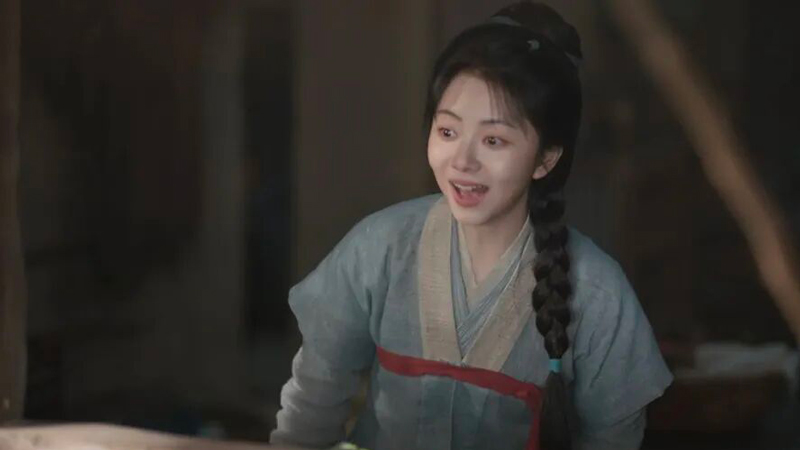
Recently, viewers of Against the Current (兰香如故) heard Tan Songyun (谭松韵), playing Xu Lanxiang (许兰香), call her foster mother Mama (妈妈). Many felt a jolt. In period dramas, they expect Niang (娘). “Mama” sounds modern, almost borrowed. The reaction is real, but history is messier. The show places its story in a Ming Dynasty market setting. The question is not whether the word existed. It did. The question is who used it, where, and how audiences learned to hear it. When a single syllable can pull a viewer out of a scene, the fault may lie less in the dictionary than in long TV habit.
Ancient Paper Trail
Old texts do not support the idea that Mama arrived from abroad in recent centuries. Guangya (广雅), a third-century dictionary, explained that “Ma means mother.” That line is missing in surviving copies, but Yupian (玉篇) kept the meaning. By the Southern Song, Wang Yingchen (汪应辰) wrote a funeral address that paired “Daddy and Mama” as parents. This is not slang invented for a modern script. It is written evidence. The word sat in the language for a long time, waiting in different corners of speech.
Song and Yuan fiction and southern opera use Mama often. Yijian Zhi (夷坚志) and Zhang Xie Zhuangyuan (张协状元) place it in daily speech. But the word carried a wider range then. It could mean an older woman, a wet nurse, a senior servant, or even a brothel keeper. Context decided the meaning. A single “Mama” in a Ming story is not automatically a mother. It may be a title, an address, or a role. That flexibility matters. It means a script can use the word without pretending that every ancient family sounded the same.
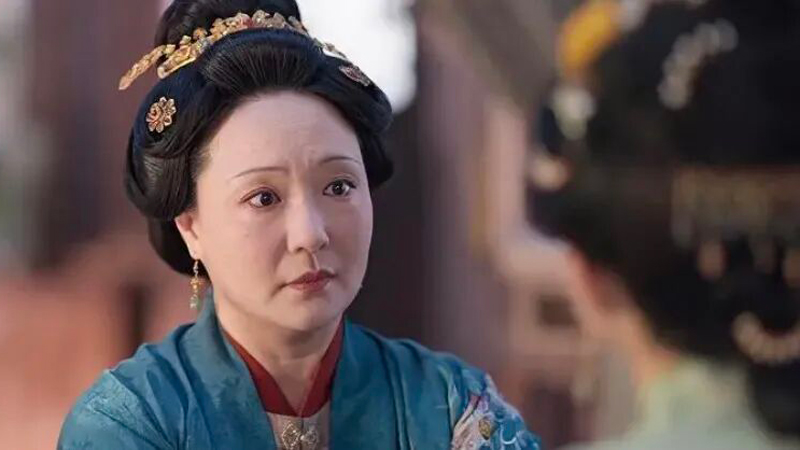
Dream of the Red Chamber (红楼梦) shows this range. Servants such as Zhou Rui’s (周瑞) wife and Lin Zhixiao’s (林之孝) wife are called Mama. Xue Baochai (薛宝钗) calls her mother Aunt Xue (薛) “Mama,” a warm merchant-family habit. In the Jia (贾) family, proper masters rarely use it for a birth mother. They prefer “Mother” or Tai-tai (太太). The word marks class and intimacy, not just biology. A servant, a merchant daughter, and a noble son could live in the same book and still address family in different tones.
This helps explain the choice in Against the Current. Xu Lanxiang moves between two homes. With her birth family, she can use formal terms. With her foster parents, she uses the street-level “Mama.” The contrast signals two identities. It is not lazy modern language. It is a small social signal. Still, a signal only works if viewers catch it. Many do not, because the sound feels wrong before the history arrives. A costume, a courtyard, and a formal bow can set a period scene. One familiar word can break it just as fast.
Habit Beats History
What about Niang? Many assume it has always meant mother. Older usage often meant a young woman: a girl, a bride, or a famous courtesan like Du Shiniang (杜十娘). The mother meaning belonged to a variant character, Niang (孃). In the Northern and Southern Dynasties, Ballad of Mulan (木兰诗) has “father and mother hear the daughter come.” That Niang is a mother. After the Tang, the two forms blurred. The simpler “娘” took both senses. So the word viewers trust as ancient is ancient, but its path is not as straight as they think.
During the Tang, Song, Yuan, and Qing periods, Niang was the common spoken word for mother in most ordinary homes. Northern and southern dialects might say Niang or A Niang (阿娘). Mama appeared in some dialects and market literature, but its meaning stayed broad. In the Ming, a poor urban family could say “Daddy and Mama.” A scholar-official family on a formal occasion would still say “Mother.” The words lived side by side, sorted by rank, region, and setting. A drama that ignores those lines may sound smooth, but it also flattens the past.
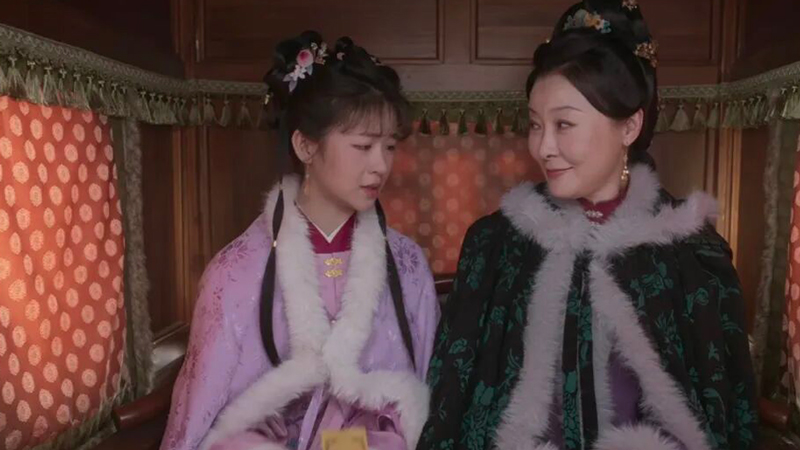
Why did Mama take over? The shift is modern. In the late Qing and Republican years, plain writing spread, and doubled syllables became popular. After 1949, standard Mandarin reached more homes. Babies also find the “ma” sound easy. Those forces pushed Mama into national use. Niang did not vanish. It remains in many local dialects. In standard speech, however, it became less common. So the past is not a single line. It is a set of overlapping habits, and television often chooses one habit and repeats it until it feels like law.
That overlap explains the discomfort. For decades, Chinese period dramas used Niang almost everywhere, whatever the dynasty. Viewers formed a reflex. When they hear Mama, their minds jump to a modern living room. The break feels sharp. History may allow the word, but habit controls the gut. In Against the Current, the choice fits a lower-class foster home. It still clashes with the bigger rule that Niang ruled ordinary speech in the Ming. If a script uses Mama for every class and every scene, the past can feel thin. If it uses the word with care, it can feel sharp and specific. Do you prefer Niang or Mama?