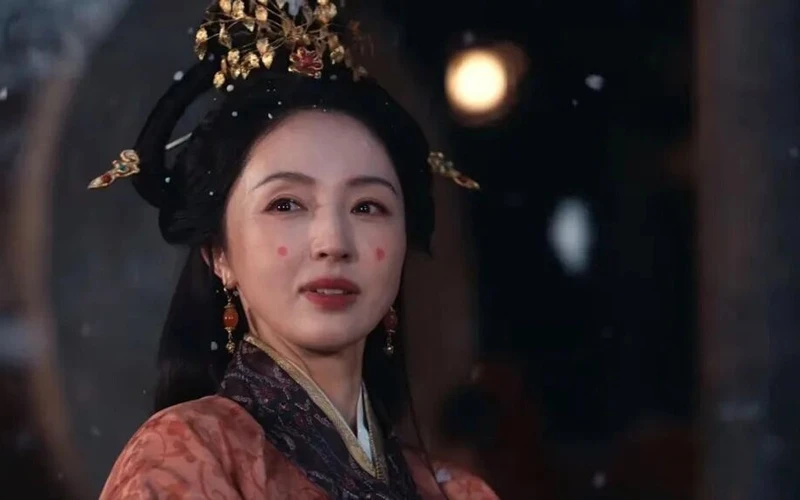
A single preview can change how viewers remember an actor. Dong Xuan has played brisk swordswomen and quiet women in period stories, yet her latest look in Jiangshan Datong (江山大同) pulls attention for a different reason: it does not shout. The drama is set in the Northern Wei period, and her costume places her among the nobility rather than at the edge of a battlefield. The cross-shaped bun, the gold flower-tree hairpin, the two round cheek marks, and the warm brown robe work as one system. Nothing feels stacked for a photo. That restraint is the hook. It makes you ask whether a historical costume can feel grand without becoming a display case.
Hair With Purpose
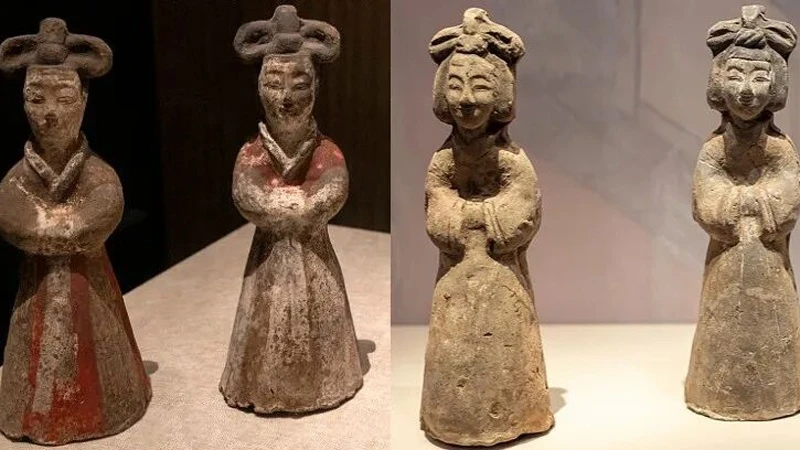
The bun is built on a simple geometry. Hair is coiled on top into two crossing axes, while the remaining strands form a matched loop on each side of the head. Soft, wide sideburns cover the ears and keep the silhouette from looking tight. This shape was common in early medieval China and appears on excavated tomb figurines. On camera, it gives the head weight without adding height for its own sake. It also frames the face in a way that suits an older noblewoman: calm, formal, and impossible to rush.
Above the bun sits a gold flower-tree ornament, with branches spreading outward and a red stone set near the center. The piece belongs to Xianbei (鲜卑) dress culture, and a comparable gold example was found in the tomb of Feng Sufu (冯素弗) at Beipiao (北票), Liaoning (辽宁). That detail matters. The ornament is not generic “ancient” decoration; it ties the character to a specific court culture. The red stone is small, but it gives the eye one bright point. Too often, period hair is buried under beads. Here, one ornament carries the rank.
Two gold hairpins sit horizontally on either side of the bun, each tipped with a tiny red stone that echoes the top piece. They do practical work as well: they hold the hairstyle firm. Visually, they stop the head from looking top-heavy. The whole arrangement stops at the right line. It signals status, yet it leaves room for Dong Xuan’s face. That balance is why the preview reads as a person, not a costume rack.
Quiet Makeup
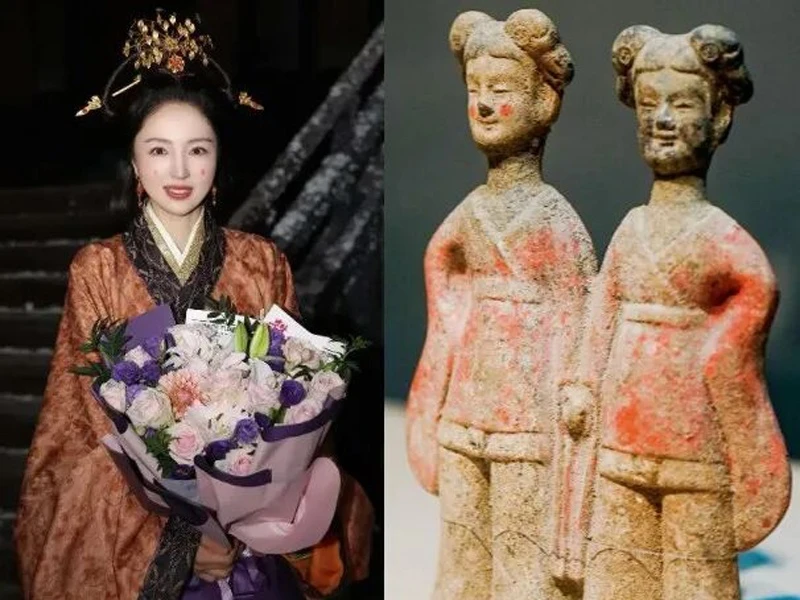
The round cheek marks are the first detail you notice after the hair. Two soft red dots sit near the smile lines, small enough to feel almost private. Similar marks appear in early imperial records, and they became a familiar court fashion in early medieval China. Dong Xuan’s version is plain: no curling patterns, no heavy color. The dots add warmth to the skin and draw attention to expression. When she speaks, the marks move with her. They do not sit on top of her like a mask.
Her brows are kept low and gentle, without a sharp upward lift. The lip color stays in a warm red range that connects with the cheek marks instead of competing with them. Base makeup is light. There is no heavy contour, no hard line around the eyes. The result feels close to a painted portrait, but it avoids stiffness. The face remains readable in close-up, which matters in a drama built on court talk and family rank.
This is where many historical looks fail. They add more because they fear silence. Dong Xuan’s makeup trusts silence. The cheek dots guide the gaze, the soft brows settle the expression, and the warm lip keeps the face alive. Her character likely belongs to the elder noble class, and the makeup gives her authority without making her cold. She looks like someone who has learned to wait before speaking. The styling supports that reading with very few marks.
Robe As Rank
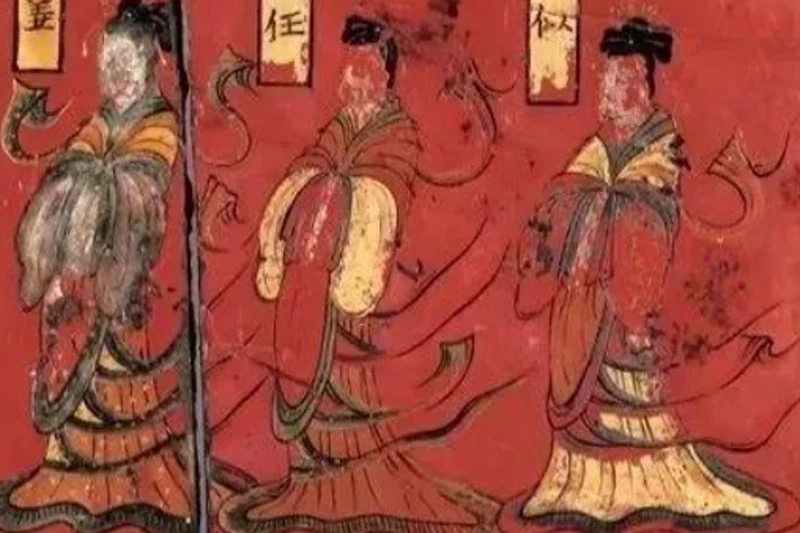
She wears a cross-collar, wide-sleeve long robe in a warm brown shade, with a subtle honeysuckle pattern in the same color family. After Emperor Xiaowen (孝文帝) pushed court dress toward Central Plains models, robes like this became a sign of rank and belonging. A lacquer screen from the tomb of Sima Jinlong (司马金龙) shows noblewomen in comparable cross-collar, wide-sleeve dress. The sleeves are generous, but the body stays long and clean. The fabric does not need shine. Its weight does the talking.
The collar and lapel carry dark brocade edging, layered with gold and a white lining. That trim does more than decorate. It narrows the visual field around the face and keeps the warm brown from going flat. The layers also echo the ordered ranks of court life: each edge has a job. The eye reads the face first, then the collar, then the robe. That order is deliberate. It makes the character look composed before she has said a line.
The role appears to be a Northern Wei noblewoman of the older generation, and Dong Xuan’s natural calm fits that space. She does not need a loud crown or a bright gown. The bun, the single flower-tree ornament, the small cheek dots, and the trimmed robe build a person who belongs in a formal hall. The preview works because the costume serves her presence. Put her in the frame, and the rank arrives without a speech. That is the real test of period styling, and this look passes it.