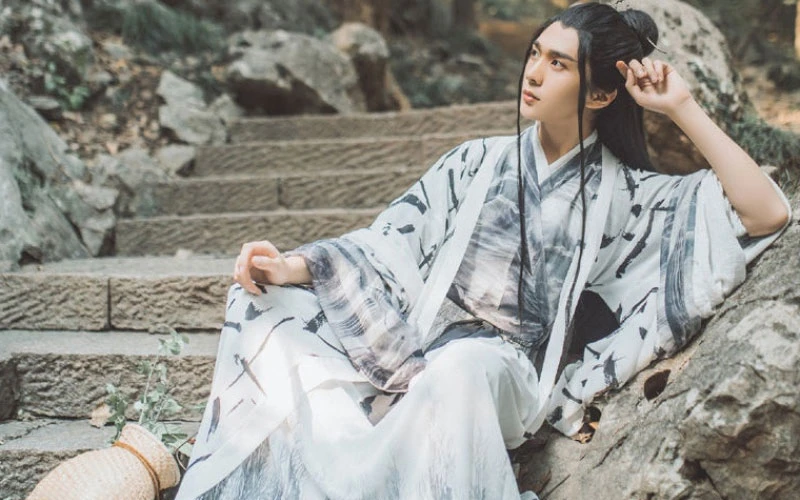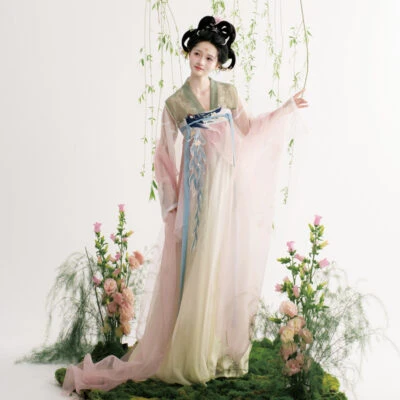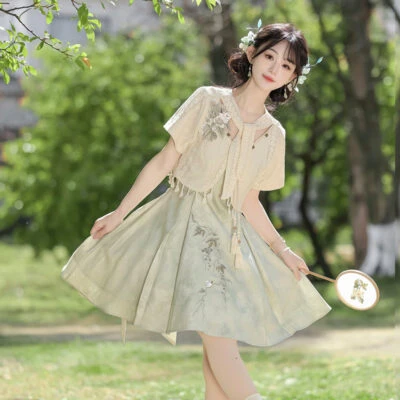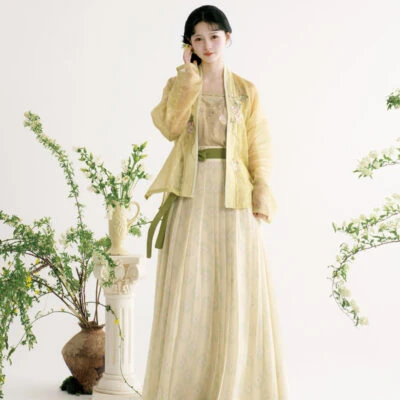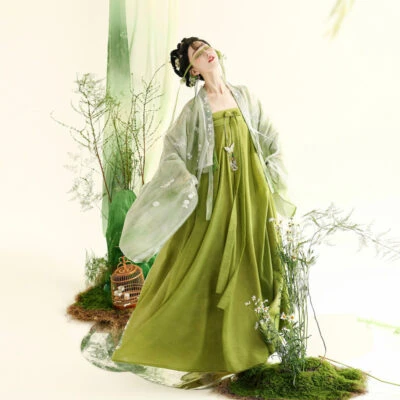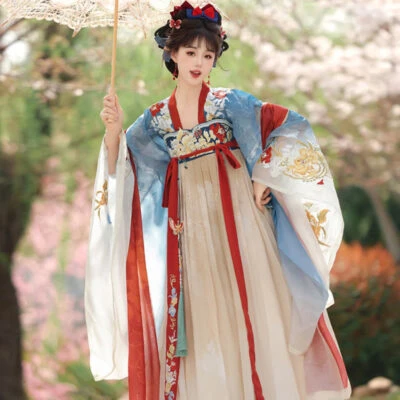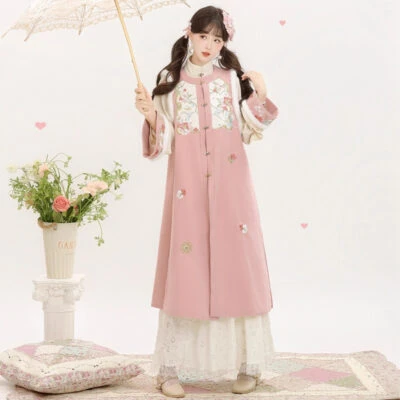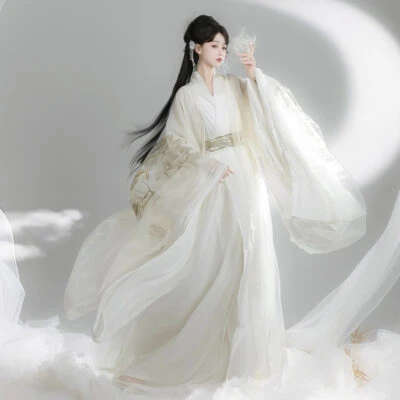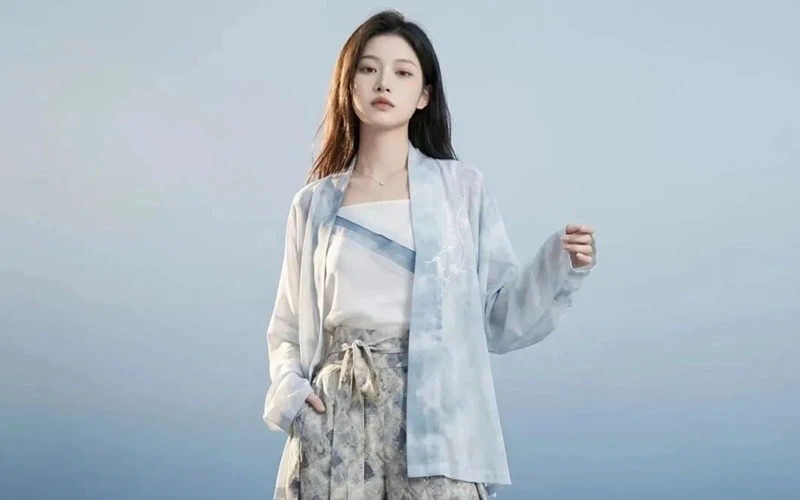
A quick scroll through fashion posts can make Song trousers look familiar: a loose leg, a soft drape, a clean line beside a short jacket. Many viewers call them ancient wide-leg pants and move on. That label is useful for a chat, but it hides the detail that makes the garment interesting. In Hanfu circles, the word often covers restored layered pieces, modern one-piece versions, and commercial pants that borrow only a Song mood. They can share a silhouette without sharing a structure.
The difference shows up when you walk, sit, climb stairs, or check the side seam. This article keeps the history light and focuses on wearing: what the trousers are, why they feel easier than a skirt, and how to choose a first pair without guessing. The goal is not to police names; it is to help you read a product page and a moving body with clearer eyes.
Structure Matters
Modern wide-leg pants are usually one complete garment: waistband, crotch, and two legs joined together. The width shapes the line and adds swing. A restored Song pair works with layers. Historical trousers included closed-crotch and open-crotch forms. A Southern Song tomb, now represented by pieces held by the Huangyan Museum (黄岩博物馆), contained both types. Open-crotch trousers were not worn alone; they sat over an inner pair with a closed crotch. That layering is the point, not a hidden flaw.
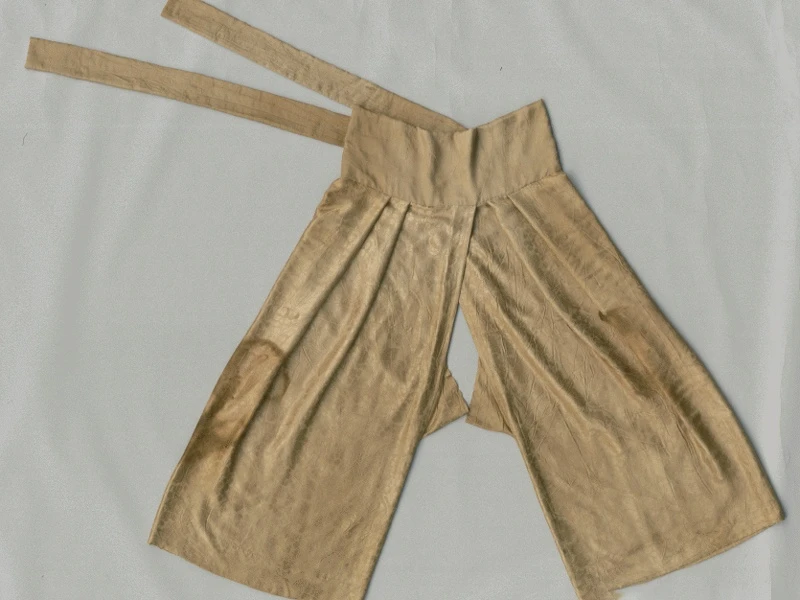
Many modern recreations follow the same idea: an inner trouser and an outer trouser with side openings. As you move, the outer layer lifts a little and shows a second color or texture. The result reads like a skirt in motion, yet each leg remains separate. Some makers combine the two layers into one piece and add elastic, pockets, and a fixed lining. This is closer to wide-leg pants, but the side opening and layered look still do most of the visual work.
So the familiar phrase is fine at a tea table. It is weak as a shopping rule. If you expect a single tube of fabric, you may miss the opening, the inner layer, or the way the hem falls. Look at the side seam before you look at the width. Ask whether the pair is restored, combined, or simply inspired. The answer changes how it fits, how it moves, and how much styling it needs.
Daily Comfort
The first pair is friendly because it does not demand a full costume. A short jacket and a simple inner top already suggest the style. Swap in a white shirt, a light knit cardigan, or a clean cropped top, and the trousers can enter an ordinary wardrobe. They do not need heavy makeup, antique hairpins, or a staged location. That low pressure matters for people who like Hanfu but feel shy about wearing a complete look on a bus or in a café.
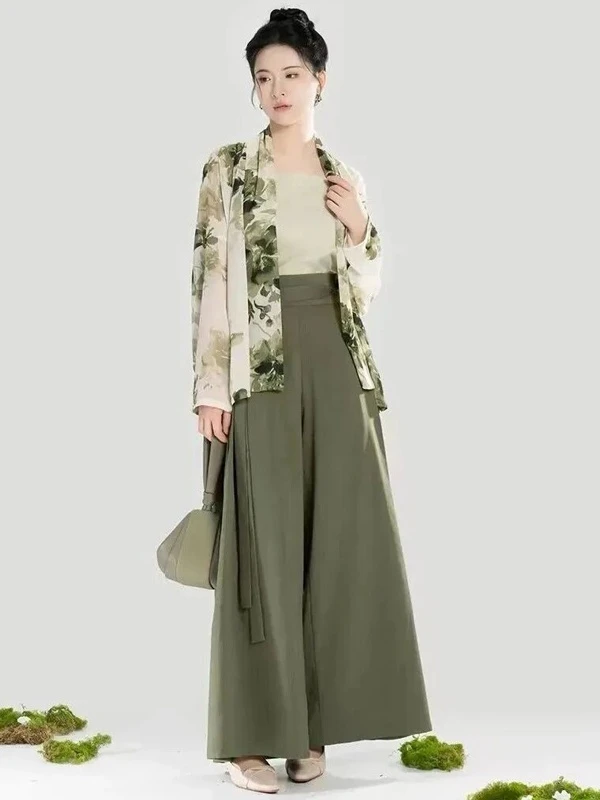
Movement is the real argument. Stairs do not require a lifted skirt. Wind does not turn the hem into a flag. Sitting down is less fussy than with a wide skirt, and the legs still have room. The outer layer may shift, but it usually shifts in a controlled way. For a first outing, this gives the wearer one less thing to manage. Comfort does not make the garment less traditional; it makes the tradition easier to test in real life.
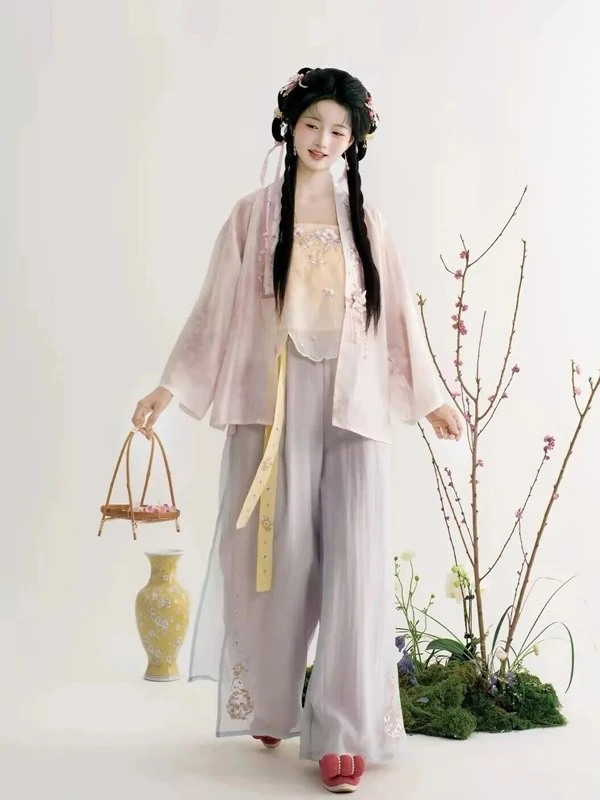
Styling can stay simple. Choose a short top if you want visible waist placement. Choose a longer jacket if you prefer a softer line. Shoes can be cloth flats, low-profile sneakers, or clean leather slip-ons. A small basket, a plain fan, or a light paper umbrella can support the mood in photos without turning the outfit into a performance. Walk slowly, sit by a window, or pause on a step. The trousers look best when the body is allowed to move.
Buying Wisely
Start with the construction label. A restored pair offers fuller layering and a more historical line. A combined pair is easier for daily wear, especially with an elastic waist, pockets, and lining. Neither is automatically better. Match the choice to your routine. If you plan to wear the trousers to work, travel, and shopping, a stable waist and a sensible length will matter more than extra embroidery. If you plan to photograph a full look, the inner layer and side opening deserve more attention.
Fabric needs a hand test, not just a width number. Too much stiff cloth makes the legs look heavy. Too soft a cloth may cling and lose the swing. A good drape has weight at the hem but opens as you step. Watch a short walking video if you buy online. Check the front, the side, and a seated pose. Make sure the opening does not gap too high or show a messy inner edge. For light colors, ask for natural-light photos and lining details; indoor retouching can hide too much.
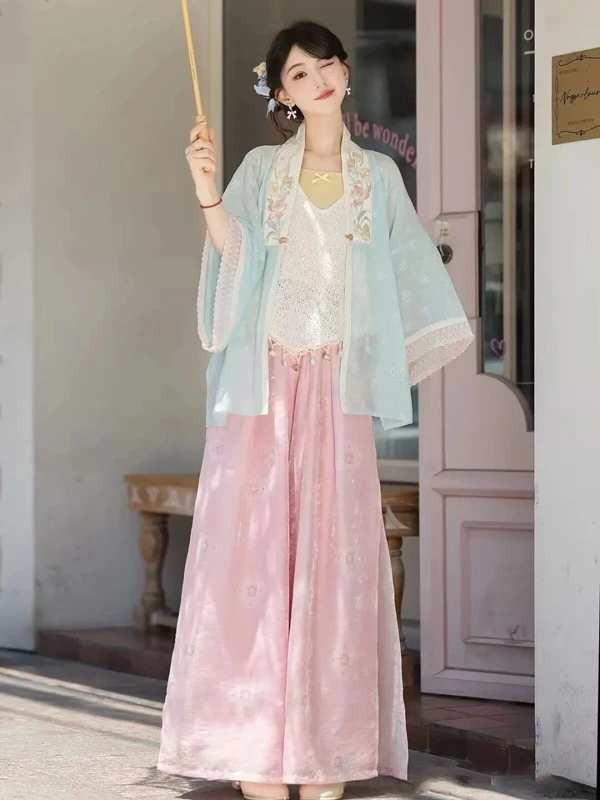
Measure with shoes on. Decide between flats and thicker soles first, then measure the distance between your waistline and the top of the foot. A height chart is a rough guide, not a fit. Also check the waistband: soft elastic is comfortable, but it should not roll. Pockets are useful only if they sit flat. The first pair does not need to be the most ornate. It needs to let you walk, sit, and forget the camera for a while. That is when the old structure starts to feel natural.