-

What Really Happened in the Finale of Swords into Plowshares?
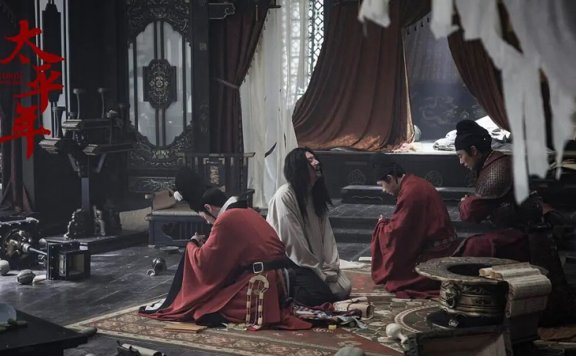
The finale of the historical drama Swords into Plowshares (太平年) has left audiences oscillating between sorrow and astonishment. While the narrative arc concludes with the long-anticipated surrender of Wuyue (吴越) to the Song Dynasty, it masterfully omits certain graphic historical details while weaving in surprisingly creative elements like the origin story of the Hundred Family Surnames (百家姓). This ending is not merely a conclusion but a thoughtful reflection on the costs of unification, the complexity of loyalty, and the quiet heroes who shaped a peaceful era. It moves beyond simple historical reenactment to explore the human motivations behind grand political maneuvers. The Thirty-Year Chess Game: A King's Calculated Surrender The most compelling revelation in the finale is that Qian Hongchu's (钱弘俶) decision to surrender his kingdom was not a last-minute concession but the culmination of a thirty-year master plan. For over three decades ruling Wuyue, he was not just governing; he was meticulously preparing to hand over a prosperous, well-administered region to the Central Plains dynasty. It suggests his foresight extended back to the era of Guo Rong (郭荣), indicating a deep-seated belief that unification was inevitable and that the best way to protect his people was to prepare for…- 117
- 0
-
The Agony of Peace in Swords into Plowshares
For weeks, viewers have been glued to the historical drama Swords into Plowshares (太平年), watching the tense political standoff between the Song Dynasty and the Wuyue Kingdom. As the series barrels toward its finale, all eyes are on Qian Hongchu (钱弘俶), the King of Wuyue (吴越), and his monumental decision to surrender his land and power. But beneath the surface of grand ceremonies and imperial favor, a darker game of ambition and betrayal was being played. The final episodes reveal that the true master of strategy was not the charismatic Emperor Zhao Kuangyin (赵匡胤), but his seemingly loyal brother, Zhao Guangyi (赵光义). His act of holding the reins for Qian Hongchu was not a sign of respect, but a calculated move in a decades-long plan for absolute power. The Impossible Decision: Surrendering a Kingdom Qian Hongchu’s journey toward Natu Guisong (纳土归宋), the act of surrendering his territory to the Song Dynasty, was paved with immense personal and political turmoil. For the King of Wuyue, this was not a simple handover but a heart-wrenching choice between the pride of his ancestors and the safety of his people. He knew that resistance would mean rivers of blood, yet submission felt like a…- 37
- 0
-
Qian Hongchu’s Sacrifice for Wuyue’s Peace
What if peace, not conquest, was the greatest power move in ancient China? The 2026 historical drama Swords into Plowshares (太平年) has captivated audiences by shifting the spotlight from the familiar tales of Song dynasty founder Zhao Kuangyin (赵匡胤) to a seldom-told story of sacrifice. Set in the turbulent final years of the Five Dynasties and Ten Kingdoms period, the series focuses on Qian Hongchu (钱弘俶), the last ruler of the Wuyue (吴越) Kingdom. His agonizing decision to surrender his realm to the burgeoning Song dynasty—a move known as Natu Guisong (纳土归宋)—forms the emotional core of the narrative. This drama does not just reenact battles; it explores a profound question: how does a chaotic world find peace? To truly appreciate the weight of Qian's choice and the turbulent era he inhabited, one must dig into the historical soil. The following books offer a pathway to understanding a period often overshadowed by the dynasties that bookend it, revealing the political savvy, human emotion, and enduring legacy behind the drama's compelling plot. The Man Who Chose to Lose The genius of Swords into Plowshares lies in its perspective. Standard historical narratives of this era glorify the winners, like Zhao Kuangyin, the founder…- 66
- 0
-
Power’s Cruel Price in Swords into Plowshares
What happens when a young king's indecision leads to a coup, and the brother he tried to sacrifice becomes his jailer for 23 years? The Chinese historical drama Swords into Plowshares (太平年) has reached its halfway point, plunging viewers into the turbulent heart of the Ten Kingdoms period. The show masterfully depicts the lethal power struggles within the Wuyue (吴越) kingdom, where family bonds are weapons and thrones are won with blood. At its core is a gripping, real-life tale of two brothers—Qian Hongzong (钱弘倧) and Qian Hongchu (钱弘俶)—whose relationship was shattered by ambition, betrayal, and the cold, hard logic of survival. It’s a story that asks a haunting question: after the main villain dies, why won't the new king free his imprisoned brother? The answer reveals a chilling truth about the nature of power. A King's Fatal Indecision The trouble began not with a villain, but with a young, inexperienced ruler. When King Qian Hongzuo (钱弘佐) died, the throne passed to his brother, Qian Hongzong. The late king had left a clear strategy to manage the kingdom’s most powerful and dangerous figure, the veteran official Hu Jinsi (胡进思). The plan was simple: either kill Hu Jinsi decisively to remove…- 25
- 0
-
Love Hides In Royal Conspiracies in Swords into Plowshares
In the bloodstained chess game of the Wuyue Kingdom (吴越国) court, where power shifts like sand through an hourglass, a young king fights for survival while three women vie for a heart that may belong to none of them. A Throne Forged in Crisis and a Queen's Swift Transformation The crown of Wuyue was never a comfortable seat. First, Qian Hongzuo (钱弘佐) passed away, swiftly followed by Qian Hongzong's (钱弘倧) brief, disastrous reign. Within months, the powerful minister Hu Jinshi (胡进思) deposed him, plunging the court into chaos. It was onto this unstable stage that Qian Hongchu (钱弘俶) stepped, a man seemingly built for the role. Unlike his predecessors, he possessed the sharp intellect and decisive will to bring powerful figures like Hu to heel, quickly stabilizing a kingdom on the brink. This upheaval remade those around him, none more so than his wife, Sun Taizhen (孙太真). The playful, spirited girl who had once roamed the palace vanished. In her place stood a woman of steel and strategy. When Qian Hongchu fell into a mysterious coma, leaving the kingdom vulnerable, Sun Taizhen did not weep. She acted. She sealed the palace gates, severing all communication with the outside world. It…- 28
- 0
-
Distrust Breeds Plots, Wisdom Saves The Realm
In the intricate dance of power, suspicion is often a ruler's most loyal companion, whispering doubts about every friend and every foe. But what happens when this shadow grows so large it blinds a king to the truth, paving the way for a merchant to steal his throne? The historical drama Swords into Plowshares (太平年) plunges into this very dilemma, unraveling a court conspiracy where trust is the rarest currency. It tells the story of Qian Liulang (钱六郎), a newly installed king of the Wuyue (吴越) kingdom, whose deep-seated paranoia becomes the perfect weapon for a scheming businessman. Yet, his near downfall offers a timeless lesson on leadership, contrasting sharply with the historical tragedy of Xiang Yu, a warlord who was not so fortunate. This is a tale of how one clear-headed advisor can dismantle a coup, and how a leader's willingness to listen can mean the difference between survival and collapse. The Lonely Throne and the Merchant's Gamble When Qian Liulang ascended to the throne of Wuyue, he found himself surrounded by ghosts of loyalty rather than living allies. Distrustful of his own brothers and the old nobility who had served his family for generations, he felt utterly isolated.…- 14
- 0
-
6 Women’s Struggles in Swords into Plowshares
What happens to women when empires fall and kings submit? History textbooks rush through the chaos with dates and battle names, rarely pausing to ask: where were the wives, the mothers, the queens? The Chinese television drama Swords into Plowshares (太平年) refuses to look away. It pulls viewers into the turbulent tenth century, when the Five Dynasties and Ten Kingdoms clawed at each other’s throats. At the center stands Wuyue (吴越) King Qian Hongchu (钱弘俶), a man who cooperated with Song Emperor Zhao Kuangyin (赵匡胤) to destroy the Southern Tang. But the show’s real heartbeat belongs to its women. They are not merely ornaments to male ambition. They are pawns, survivors, victims, and, occasionally, victors in a game they never chose to play. Their six very different endings reveal the brutal truth about "peace" won through swords and submission. 1. Madam Yu (俞大娘子) Madam Yu operates on a different level from the desperate noblewomen trapped in palaces. She controls Huanglong Island (黄龙岛), commanding a fleet of warships and trade vessels that would make any warlord envious. Her wealth is not inherited; it is built. She navigates the shifting alliances between Wuyue, the Later Zhou (后周), and the rising Song dynasty…- 56
- 0
-
Swords into Plowshares: Qian Hongchu's Art of Power
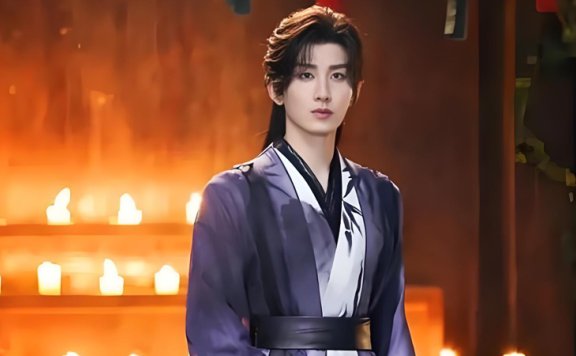
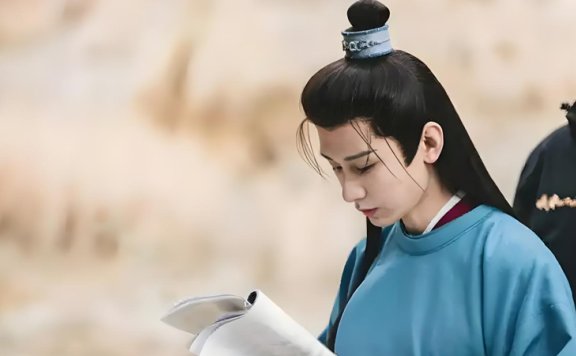
The throne room was silent, the air thick with tension and the metallic scent of blood yet to be spilled. On his very first day as King of Wuyue (吴越), Qian Hongchu (钱弘俶) faced an unthinkable provocation. A minor official, He Chengxun (何承训), paraded into court bearing the severed head of a respected senior statesman, Shuiqiu Zhaoquan (水丘昭券), and his entire family. The audacious claim? He acted on orders from the mighty Regent, Hu Jinsi (胡进思). In that frozen moment, the young king, played with captivating intensity by Bai Yu (白宇) in the historical drama Swords into Plowshares (太平年), made a choice that would redefine his reign and the kingdom's future. He drew a sword and executed the messenger on the spot. This single act of brutal defiance was not mere impulse; it was a masterful political stratagem born of deep conviction, psychological insight, and a startling lack of personal ambition. The Public Execution The strike of the sword was swift and final. Before Hu Jinsi, the militarily powerful regent who had essentially forced the crown upon him, could react, Qian Hongchu ended He Chengxun’s life. The blood sprayed onto the faces of Hu Jinsi and his son, a visceral,…- 68
- 0
-
Swords into Plowshares: Li Sanniang’s Legacy Beyond the Later Han
In the chaotic tapestry of China's Five Dynasties and Ten Kingdoms period, where empires rose and fell with the seasons, one dynasty's story is often overshadowed by its breathtaking brevity. The Later Han dynasty, a mere flash in the pan of history, lasted only four tumultuous years. Yet, within that fleeting moment of power, it housed a love story of such enduring, humble humanity that it would outlast the dynasty itself by centuries. This is not a tale of grand political machinations, but of the people who lived and loved within them. The recent television drama Swords into Plowshares (太平年) has brought this poignant narrative back into the light, focusing not on the emperor's throne, but on the woman who stood beside him: a peasant girl who became an empress, remembered not for her reign, but for her heart. The People's Empress The figure at the center of this story is Empress Li. In historical records and the folk operas that made her famous, she is affectionately called Li Sanniang (李三娘). Her origin story is unlike any other in the annals of Chinese empresses. She was not born into nobility or political alliance. She was a commoner from Jinyang (晋阳),…- 39
- 0
-
Swords into Plowshares: A Brilliant Historical Epic Marred by Flawed Lead Roles
As the flagship historical drama for China Central Television's new year, Swords into Plowshares (太平年) has made a significant impact. Set against the turbulent backdrop of the Five Dynasties and Ten Kingdoms period, it demonstrates a cinematic quality often reserved for film, from its meticulous costume and set design to its sprawling, visceral battle sequences. In an era dominated by short-form content, this series makes a compelling case for the enduring power and depth of long-form television. It ambitiously attempts to weave a complex tapestry of a fractured era, where power shifted like sand and heroes and villains rose and fell with dizzying speed. The narrative successfully creates a palpable, grim atmosphere of instability, using multiple perspectives to explore the brutal mechanics of history and the intricate souls caught within it. The Ensemble's Triumph The drama's greatest strength lies not in its protagonists, but in its richly drawn supporting cast. The chaotic historical period provides fertile ground for vivid portraiture, and the series seizes this opportunity. Even characters with minimal screen time are imbued with startling clarity and memorability. This meticulous casting and performance have led viewers to claim that certain portrayals have "monopolized" the image of these historical figures…- 38
- 0
-
Qian Hongchu’s Masterstroke with Hu Jinsi in Wuyue
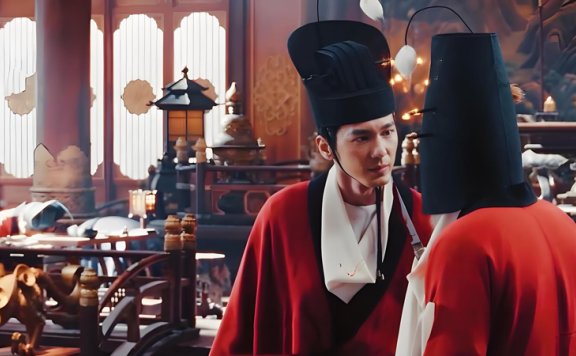
The historical drama Swords into Plowshares (太平年), currently airing to popular acclaim, plunges viewers into the turbulent 10th-century court of the Wuyue (吴越) kingdom. Following a dramatic palace coup, the narrative centers on a gripping paradox: the new King, Qian Hongchu (钱弘俶), chooses to spare the very man who orchestrated his rise to power—the formidable and dangerous Grand Marshal, Hu Jinsi (胡进思). This is not a story of weakness, but one of profound political intelligence. By examining Qian Hongchu's refusal to eliminate Hu Jinsi, we uncover the sophisticated strategies required to rule in a volatile era where brute force was often the simplest, yet most disastrous, option. The Reluctant Monarch Qian Hongchu’s character is defined by a temperament starkly different from his predecessor. Where his brother, the deposed Qian Hongzong (钱弘倧), was impulsive and suspicious, Qian Hongchu is measured and pragmatic. His reign is not built on fear but on a consistent reputation for fairness and a deep aversion to unnecessary bloodshed. This inherent disposition forms the first layer of his decision. He understood that killing Hu Jinsi would be seen as an act of vengeance, potentially destabilizing his legitimacy so soon after a contested succession. His prior executions targeted…- 76
- 0
-
Why Hu Jinsi Served Qian Hongchu but Deposed Qilang in Swords into Plowshares
In the swirling political currents of the tenth-century Wuyue (吴越) Kingdom, depicted in the historical drama Swords into Plowshares (太平年), a minister's loyalty becomes the ultimate test of a ruler's worth. The narrative pivots on a stark contradiction: the powerful minister Hu Jinsi (胡进思) shows utter contempt for one young king, publicly humiliating and ultimately deposing him, yet willingly kneels in submission to another. This is not a simple story of ambition, but a pointed examination of what separates a failed monarch from a successful one. The answer, buried within court intrigues and personal clashes, boils down to a fundamental trait often overlooked in the pursuit of power. Qilang's (七郎) Fatal Flaws From the moment he ascended after his brother's death, the king known as Qilang operated from a place of deep insecurity. He saw Hu Jinsi, a seasoned minister who had served previous rulers, not as a potential ally but as a direct threat to his authority. His first act was to exclude Hu from critical deathbed deliberations, a clear signal of distrust that resonated through the court. Qilang's perception created its own reality; by treating Hu as an enemy, he ensured the minister would act as one. His…- 96
- 0
-
Swords into Plowshares: Humanity in Five Dynasties Chaos
A new drama begins not with a crown, but with the mud on a soldier's boot. Swords into Plowshares (太平年) paints the chaotic transition from the Five Dynasties and Ten Kingdoms era to the Song Dynasty not as a dry chronicle, but as a visceral experience of survival. It focuses on the stark realities faced by people, weaving together the brutal military campaigns of the Central Plains with the tense political machinations in places like Wuyue (吴越). The series has quickly captivated its first viewers. They praise its uncompromising texture and its ambitious narrative scale, which follows the intricate fates of numerous characters and factions. This approach makes the period feel immediate, allowing the audience to sense the precarious turning points of history rather than just observe them from a distance. For a genre often considered difficult, Swords into Plowshares finds its strength in granular detail and human-scale stakes. It sidesteps grandiose pronouncements, instead building its epic stature through the cumulative weight of countless choices made in times of turmoil. The result is a compelling, grounded entry into a seldom-portrayed chapter of the past. When History Breathes Again The screen does not flinch. It presents a world where humanity's thin…- 156
- 0
-
How Swords into Plowshares Breathes Life into a Chaotic Era
In January, the historical drama Swords into Plowshares (太平年) premiered, thrusting viewers into the turbulent and often overlooked period of the Five Dynasties and Ten Kingdoms. Unlike the brief summaries found in history books, this series aims to flesh out the era's complex politics, brutal survival, and fragile hopes. It begins not with grand pronouncements, but with a horrifying act of cannibalism within a starving army, immediately establishing the desperation that defines the age. Over its first episodes, the narrative splits between the violent power struggles of the Later Jin court in the north and the seemingly stable, yet internally fraught, southern kingdom of Wuyue (吴越). This deliberate contrast challenges the very title of the show, asking what "Swords into Plowshares" could possibly look like when the world is unraveling. A Kingdom in the Eye of the Storm While the north burns with overt conflict, Wuyue presents a deceptive calm. Under the rule of King Qian Yuanguan (钱元瓘), it focuses on internal development. However, this stability is paper-thin. The first episodes reveal a court riddled with corruption and secret factions. The royal treasury is empty, siphoned off by officials and shadowy organizations. The death of the king unleashes a silent…- 142
- 0
-
Swords into Plowshares: The Wuyue King’s Sacrifice for a Unified China
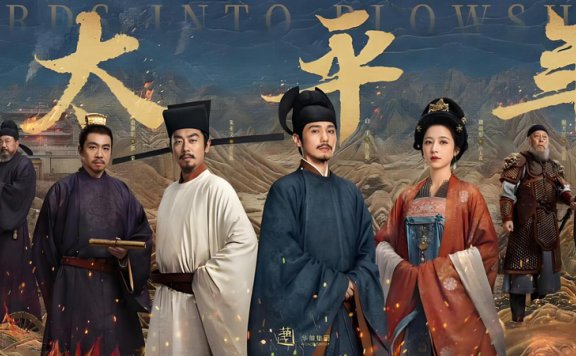
What does true leadership look like when an empire is at stake? This is the central question posed by Swords into Plowshares (太平年), a sweeping 40-episode historical saga premiering on China Central Television. Set against the chaotic backdrop of the Five Dynasties and Ten Kingdoms period, the series promises more than just palace intrigue and battlefield heroics. It delves into the profound moral weight of power, asking what a ruler must ultimately surrender for the sake of his people's welfare. With a powerhouse creative team behind acclaimed works like The Red (红色) and The Three-Body Problem (三体), and a cast filled with revered performers, the drama aims to transform dusty historical records into a gripping, human-centered narrative. It frames a pivotal, often-overlooked moment of Chinese unification not as a simple conquest, but as a deliberate, agonizing choice made by a king. Converging Paths The narrative hinges on the intertwined destinies of three ambitious men. Qian Hongchu (钱弘俶), played by Bai Yu (白宇), ascends to the throne of the Wuyue (吴越) kingdom. His reign is defined not by expansion, but by a dogged pursuit of stability and prosperity for his subjects within a fragmented empire. In the north, Zhao Kuangyin (赵匡胤) employs…- 90
- 0
-
Top 10 Standout Performances in The Vendetta of An
The historical drama The Vendetta of An ( 长安二十四计) offers a distinct flavor. It sidesteps familiar romantic entanglements to focus squarely on intricate political machinations within the ancient capital. Xie Huai'an (谢淮安), once a brilliant scholar, returns after a decade of planning, his hair now white. He navigates a perilous landscape where every alliance is temporary and each glance carries hidden meaning. The narrative cleverly frames these imperial power struggles as a lethal version of corporate office politics, making the stakes both grand and strangely familiar. This series invests deeply in tangible detail. Producers constructed a 400-meter replica of the Zhuque Avenue (朱雀大街). They recreated 136 pieces of ceramic ware based on artifacts from the Famen Temple. Costumes are themselves a language; Xie Huai'an's crimson robe is embroidered with winding lotus patterns, while the emperor's ceremonial headdress meticulously follows historical protocols. Elements like traditional fire-knife crafting and papermaking arts are seamlessly woven into the plot. Beyond its visual craft, the story thrives on constant recalculation. Plots double-cross, and apparent defeats reveal themselves as deeper schemes. A captured ally might be enacting a "bitter hardship ruse". This layered gameplay, echoed by a formidable cast that brings even minor roles to vivid…- 90
- 0
-
Could a King's Choice Truly Bring a Hundred Years of Peace?
In the year 941, the Wuyue (吴越) kingdom was thrust into uncertainty. Its aging king was gone, leaving a young successor and a court simmering with ambition. From this turmoil emerged a prince who seemed more interested in personal freedom than affairs of state. His name was Qian Hongchu (钱弘俶), and his journey would become the heart of the new historical drama Swords into Plowshares (太平年). This is not merely a tale of battles and conquests, but a deep exploration of a leader's evolution and the monumental choice between holding onto power and securing peace for his people. It asks a timeless question: what is a ruler's ultimate duty? Transformation Qian Hongchu's life was upended by a diplomatic mission to Bianliang (汴梁). He anticipated a routine visit, but instead walked into a nightmare. He saw the brutal reality of war firsthand: Khitan armies at the gates, a humbled emperor, and ordinary citizens displaced and suffering. These scenes shattered his sheltered worldview. It was here he also forged crucial bonds with fellow visionaries Guo Rong (郭荣) and Zhao Kuangyin (赵匡胤), men who shared his whispered dream of a lasting peace for all the warring states. Returning to Wuyue, the prince was…- 65
- 0
-
Cheng Yi's Cerebral Revenge Saga Ignites Tang Dynasty Intrigue
Anticipation surges for Chang’an Shi’er Ji (长安十二计), the historical political thriller starring Cheng Yi as Xie Huai’an (谢淮安)—a scholar orchestrating vengeance against 12 corrupt officials. Initially slated for Q4 2025, rumors of a surprise late-summer release intensify after savvy marketing leveraging the 24 solar terms and Cheng Yi’s Mysterious Lotus Casebook (莲花楼). Unlike his iconic martial roles, Cheng Yi embodies a weaponless tactician in this 32-episode drama, promising 50 narrative twists and a powerhouse cast including Zhang Hanyu (张涵予) and Liu Yijun (刘奕君). The Calculated Anti-Hero Xie Huai’an shatters Cheng Yi’s heroic mold. Where Mysterious Lotus Casebook’s Li Lianhua embraced resignation, Xie burns with icy fury. His credo—“No enemy deserves mercy”—fuels a decade-long vendetta against those who slaughtered his clan. Disguised as a lowly county clerk, he infiltrates the Tang court under Emperor Xiao Wuyang’s (萧武阳) secret decree, wielding intellect as his sole blade. A haunting teaser crystallizes his resolve: grey-haired Xie clutches ancestral tablets beneath a tattered umbrella, eyes blazing with deranged purpose. The line “I care not for survival; I demand your demise” strips the character to his ruthless core. This cerebral role trades physical prowess for psychological depth, challenging Cheng Yi to convey menace through stillness. Audiences…- 160
- 0
Ni Dahong

Scan to open current page
-
$CouponsLimitation of use:Expired and UnavailableLimitation of use:
before
Limitation of use:Permanently validCoupon ID:×Available for the following products: Available for the following products categories: Unrestricted use:Available for all products and product types