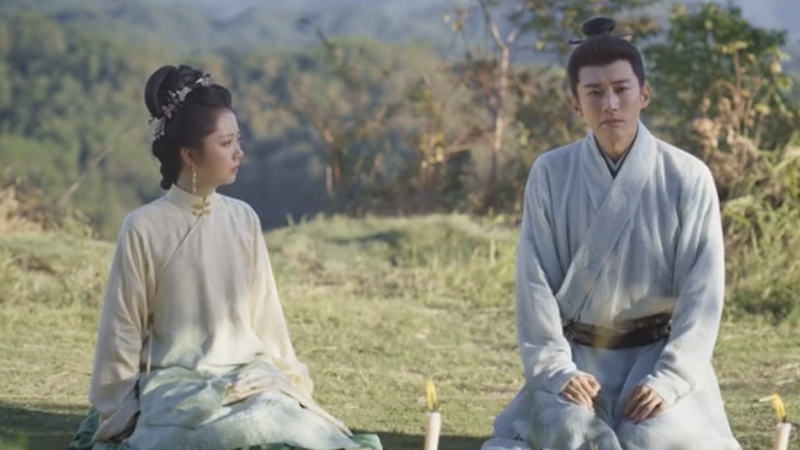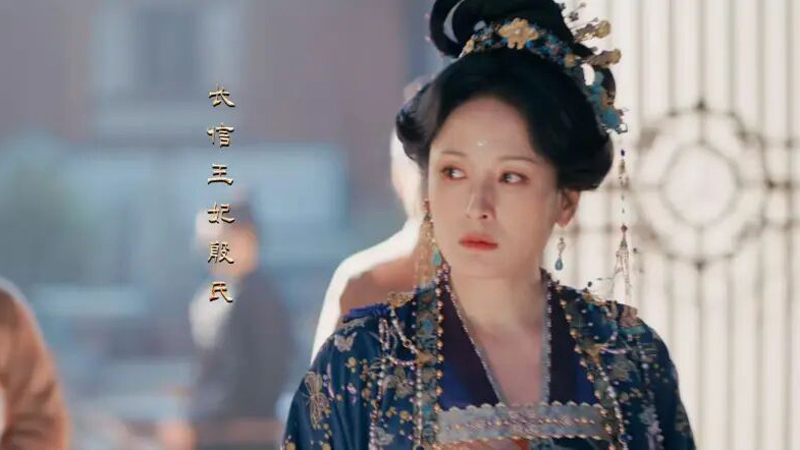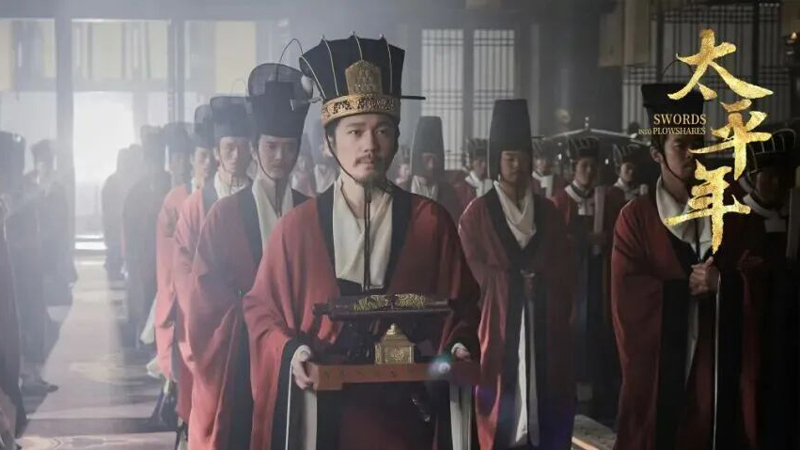
What if peace, not conquest, was the greatest power move in ancient China? The 2026 historical drama Swords into Plowshares (太平年) has captivated audiences by shifting the spotlight from the familiar tales of Song dynasty founder Zhao Kuangyin (赵匡胤) to a seldom-told story of sacrifice. Set in the turbulent final years of the Five Dynasties and Ten Kingdoms period, the series focuses on Qian Hongchu (钱弘俶), the last ruler of the Wuyue (吴越) Kingdom. His agonizing decision to surrender his realm to the burgeoning Song dynasty—a move known as Natu Guisong (纳土归宋)—forms the emotional core of the narrative.
This drama does not just reenact battles; it explores a profound question: how does a chaotic world find peace? To truly appreciate the weight of Qian’s choice and the turbulent era he inhabited, one must dig into the historical soil. The following books offer a pathway to understanding a period often overshadowed by the dynasties that bookend it, revealing the political savvy, human emotion, and enduring legacy behind the drama’s compelling plot.
The Man Who Chose to Lose
The genius of Swords into Plowshares lies in its perspective. Standard historical narratives of this era glorify the winners, like Zhao Kuangyin, the founder of the Song Dynasty. His story is one of ambition, military prowess, and the unification of China. However, the drama makes a daring choice by placing Qian Hongchu, a ruler who ultimately surrendered, at its heart.
Qian inherited a small, prosperous, but vulnerable Wuyue Kingdom in the southeast. Wedged between powerful rivals like the Southern Tang and the ever-shifting dynasties of the north, his position was precarious. He was not a conqueror but a steward, bound by his grandfather Qian Liu’s (钱镠) founding principle: “serve the Central Plains diligently, protect the territory, and bring peace to the people.” This was not cowardice, but a profound form of statecraft focused on the well-being of his subjects over personal glory.
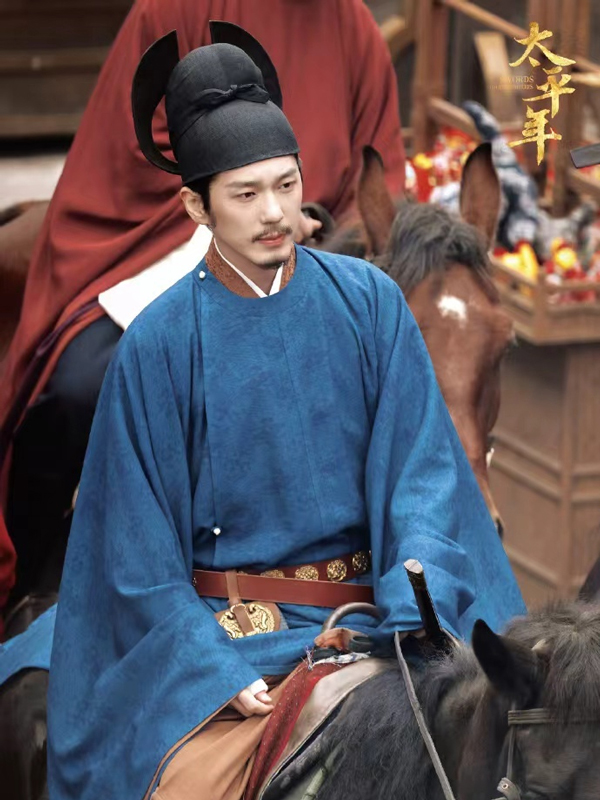
The drama masterfully portrays Qian’s internal conflict, a struggle between personal ambition and his duty to his people. Actor Bai Yu’s (白宇) portrayal highlights a ruler constantly weighing his grandfather’s legacy against the inevitable tide of unification under the Song. He faced court intrigues, external threats, and the crushing responsibility of deciding his kingdom’s fate. Unlike the flamboyant poets or tragic last emperors of the era, such as Li Yu of the Southern Tang, Qian’s story is one of quiet resilience.
The narrative contrasts his path with Zhao Kuangyin’s grand unification campaigns, showing that building an empire requires more than just military might; it requires the difficult choices of those who stand in its path. Qian’s story is a powerful reminder that leadership is sometimes defined not by what you take, but by what you are willing to give up.
The Weight of a Peaceful Surrender
The term “surrender” carries negative connotations, but “Natu Guisong” was an act of profound wisdom and humanity. Qian Hongchu’s decision to peacefully submit his kingdom to the Song Dynasty in 978 AD was unprecedented. In a brutal era where “he who has the strongest soldiers and horses becomes the emperor,” most separatist regimes were crushed by force, leading to massive bloodshed and suffering. By choosing to forfeit his political power, Qian Hongchu averted a catastrophic war that would have ravaged the prosperous Jiangnan (江南) region. He ensured that the cities remained intact, the farms continued to yield harvests, and families stayed united. This decision was not about personal failure; it was about prioritizing the continuation of life and culture over the continuation of a throne.
The impact of this choice resonated for centuries. The great Song Dynasty poet Su Shi (苏轼) later praised the Wuyue rulers, noting that the local people lived their entire lives without experiencing the horrors of war, with the sounds of song and drumming ever-present. This enduring peace was Qian Hongchu’s true legacy. The drama Swords into Plowshares brings this historical footnote to life, illustrating that unification doesn’t always have to be written in blood. It forces viewers to reconsider what constitutes victory.
In giving up his kingdom, Qian Hongchu safeguarded his people and preserved the economic and cultural heart of the south, which would later become the bedrock of Song prosperity. His story offers a powerful counter-narrative to the age-old tale of conquest, suggesting that sometimes, the most heroic act is to step aside for a greater good.
Why This Chaotic Era Matters Today
For many, the Five Dynasties and Ten Kingdoms period is a confusing blur of names and dates, a chaotic interlude between the glory of the Tang and the refinement of the Song. Yet, as Swords into Plowshares demonstrates, this “dark age” is crucial for understanding the entire arc of Chinese civilization. It was a crucible forged by nearly a century of division and warfare, from which a new, unified imperial model emerged. The period tested ideas of governance, loyalty, and survival. It showed the brutal cost of disunity, as countless regimes rose and fell through violence.
But as the story of Wuyue proves, it was also a time of incredible resilience, where the seeds of the Song dynasty’s economic and cultural flourishing were quietly sown in peaceful corners of the realm. Understanding this era is to understand that stability is not a given, but a constant project.
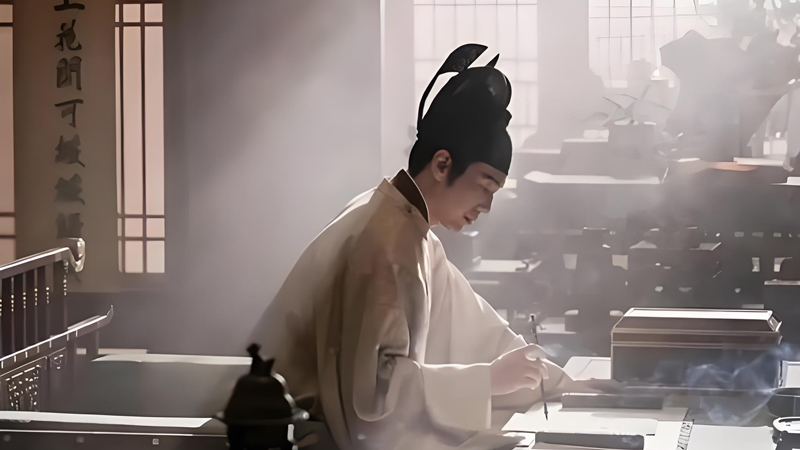
Director Yang Lei’s observation that “peace is not a gift from history, but a responsibility that each generation must actively choose and carry” captures the show’s contemporary relevance. Qian Hongchu’s dilemma is timeless: how do leaders balance the security of their people with the pressures of a changing world? In our own era of global uncertainty, his story resonates deeply.
The books recommended here go beyond the drama’s character-driven plot to provide the rigorous historical context. They explore the political maneuvering, the economic realities, and the social fabric of the time. They help us understand not just what happened, but why people like Qian Hongchu made the choices they did. By reading them, we move from being passive viewers of a drama to active students of history, grasping the real “code of peace” hidden within a turbulent past.