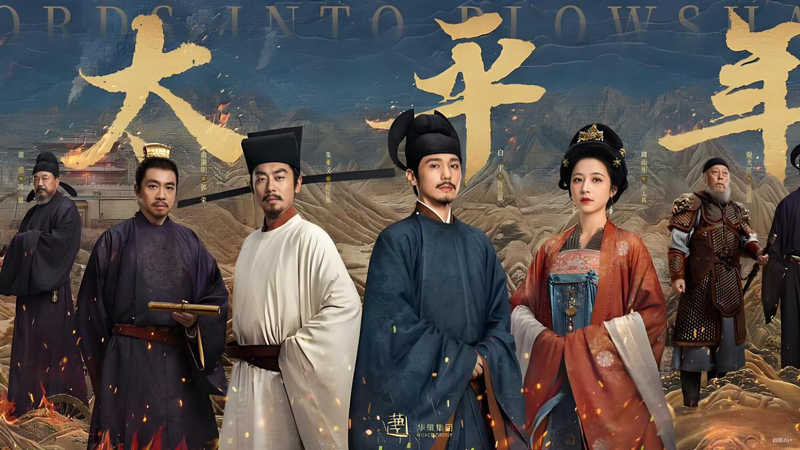
In the year 941, the Wuyue (吴越) kingdom was thrust into uncertainty. Its aging king was gone, leaving a young successor and a court simmering with ambition. From this turmoil emerged a prince who seemed more interested in personal freedom than affairs of state. His name was Qian Hongchu (钱弘俶), and his journey would become the heart of the new historical drama Swords into Plowshares (太平年). This is not merely a tale of battles and conquests, but a deep exploration of a leader's evolution and the monumental choice between holding onto power and securing peace for his people. It asks a timeless question: what is a ruler's ultimate duty?
Transformation
Qian Hongchu's life was upended by a diplomatic mission to Bianliang (汴梁). He anticipated a routine visit, but instead walked into a nightmare. He saw the brutal reality of war firsthand: Khitan armies at the gates, a humbled emperor, and ordinary citizens displaced and suffering. These scenes shattered his sheltered worldview. It was here he also forged crucial bonds with fellow visionaries Guo Rong (郭荣) and Zhao Kuangyin (赵匡胤), men who shared his whispered dream of a lasting peace for all the warring states.
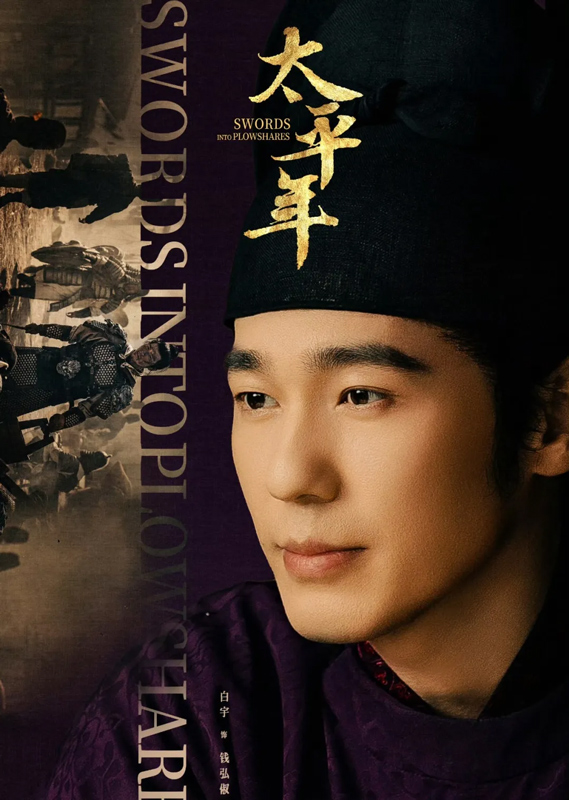
Returning to Wuyue, the prince was a changed man. The carefree noble was gone, replaced by a determined leader shouldering the weight of his kingdom's future. His internal challenges were immense. He had to outmaneuver powerful courtiers like the smiling minister Hu Jinsi (胡进思), a man whose pleasant demeanor masked a ruthless desire for control. Externally, he worked to subdue local bullies and stabilize the economy, striving to create a sliver of order and prosperity for his people in a chaotic time.
This transformation was not his alone. His wife, Sun Taizhen (孙太真), evolved alongside him. She was far more than a consort; she was his chief strategist and his moral compass. Her counsel, often grounded in the simple principle of prioritizing the people's welfare, guided him through moments of doubt. Her journey from a gentle maiden to a pillar of strength mirrors the kingdom's own path toward resilience.
Legacy
As Qian Hongchu consolidated his rule in the south, a seismic shift occurred in the north. Zhao Kuangyin ascended to power, founding the Song dynasty and launching a military campaign to unify the land under one banner. This set the stage for a profound confrontation. The two rulers, each holding a piece of the puzzle for peace, now stood at a crossroads. Their interactions were a complex dance of diplomacy, strategy, and a mutual, grudging respect born from a shared ultimate goal.
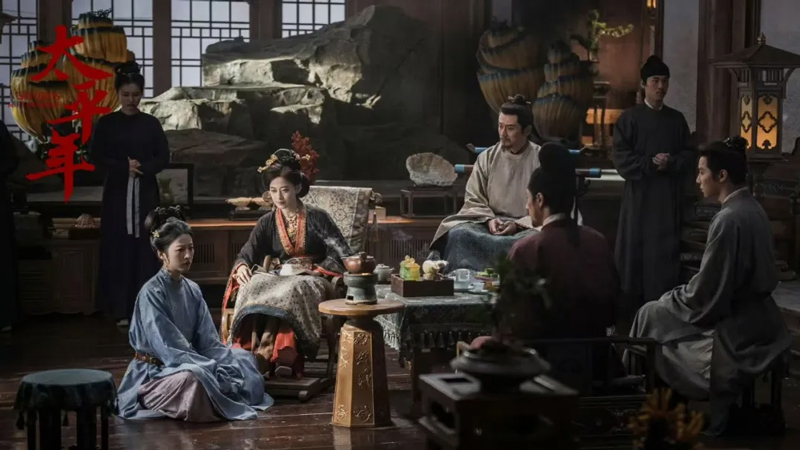
The pivotal moment arrived when the momentum of the Song unification became undeniable. Qian Hongchu faced an agonizing decision. He could rally his forces for a futile, bloody last stand to preserve his own throne, or he could make an unprecedented sacrifice for the well-being of his subjects. In 978, he made his choice. He voluntarily surrendered his kingdom's territory to the Song dynasty, an act known as Natu Guisong (纳土归宋).
This act of "returning the land to Song" was a watershed moment in Chinese history. It averted a devastating war and seamlessly integrated the prosperous Wuyue region into a unified China. Swords into Plowshares meticulously charts this emotional and political journey, showcasing not a defeat, but a different kind of victory. It presents a powerful argument that true leadership is measured not by the land one controls, but by the peace one secures for future generations.