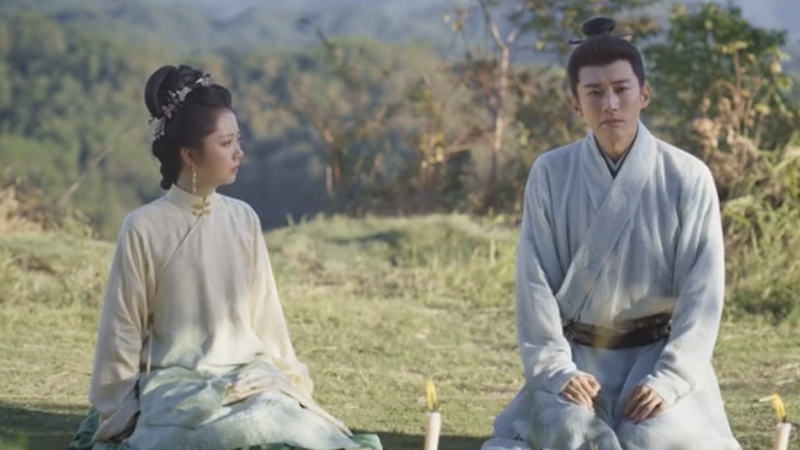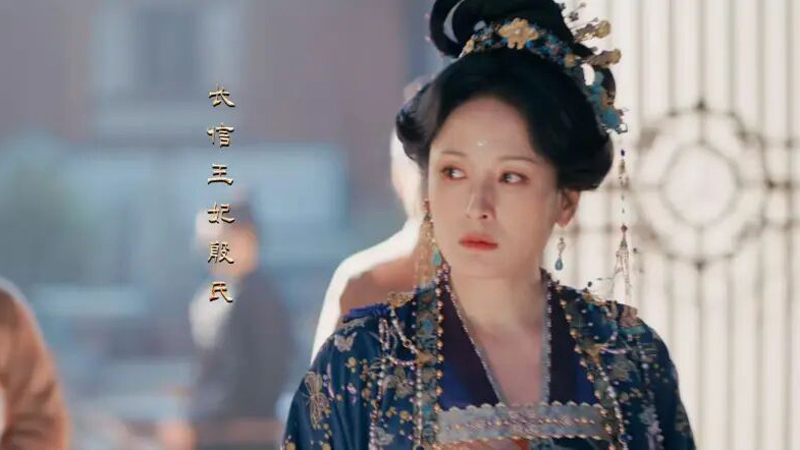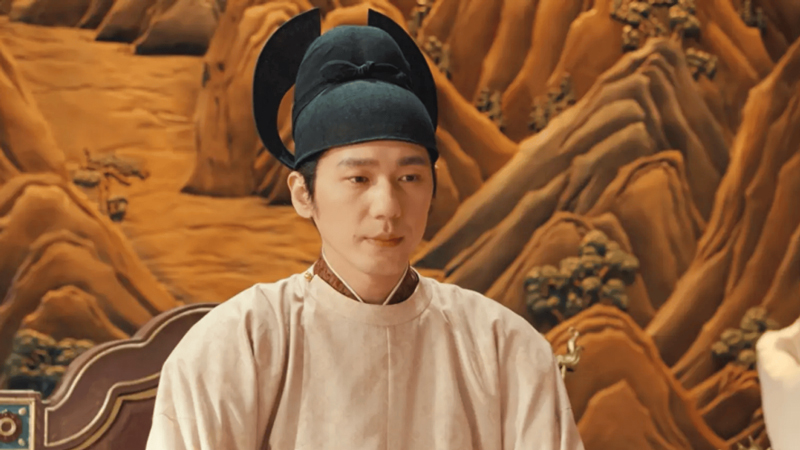
In the bloodstained chess game of the Wuyue Kingdom (吴越国) court, where power shifts like sand through an hourglass, a young king fights for survival while three women vie for a heart that may belong to none of them.
A Throne Forged in Crisis and a Queen’s Swift Transformation
The crown of Wuyue was never a comfortable seat. First, Qian Hongzuo (钱弘佐) passed away, swiftly followed by Qian Hongzong’s (钱弘倧) brief, disastrous reign. Within months, the powerful minister Hu Jinshi (胡进思) deposed him, plunging the court into chaos. It was onto this unstable stage that Qian Hongchu (钱弘俶) stepped, a man seemingly built for the role. Unlike his predecessors, he possessed the sharp intellect and decisive will to bring powerful figures like Hu to heel, quickly stabilizing a kingdom on the brink.
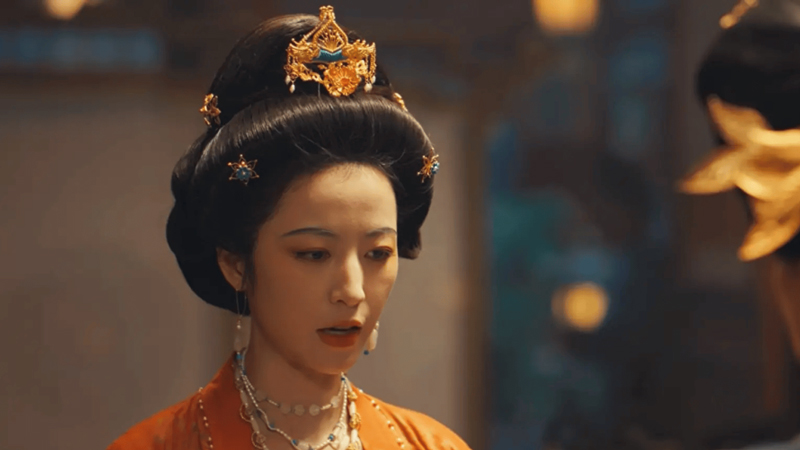
This upheaval remade those around him, none more so than his wife, Sun Taizhen (孙太真). The playful, spirited girl who had once roamed the palace vanished. In her place stood a woman of steel and strategy. When Qian Hongchu fell into a mysterious coma, leaving the kingdom vulnerable, Sun Taizhen did not weep. She acted. She sealed the palace gates, severing all communication with the outside world. It was a perilous gamble, a move born of cold calculation. She knew Hu Jinshi’s ambition; any news of the king’s weakness would trigger another coup. Her lockdown was the only wall standing between her husband and oblivion.
Hu Jinshi’s motivations were purely selfish. He had deposed Hongzong not for the kingdom’s good, but for his own survival. A strong king meant the end of his influence, and likely his life. With Hongchu stricken, he saw the same threat emerging. He needed a puppet, a malleable figurehead to protect his family’s interests. He cared nothing for the chaos such upheaval would unleash on Wuyue.
The King’s Burden: Nostalgia and a Dangerous Mercy
Upon recovering, Qian Hongchu made an unexpected visit to Hu Jinshi’s residence. There, the old minister offered a peculiar compliment: the king reminded him of his grandfather, the Old King. This was not, as one might think, a reference to romantic devotion. It was about nostalgia. Hongchu was a man who remembered loyalty. He valued the old guard who had built Wuyue, refusing to discard them like Hongzong had planned to. This clemency, this unwillingness to kill the fathers of the kingdom, was the Old King’s quality Hu recognized.
This nature was evident in his defense of Shuiqiu Zhaoquan (水丘昭券). Hongchu went personally to Hu Jinshi, reminding him that the Shuiqiu family had shed blood for the kingdom’s very soil. He pleaded for an end to senseless deaths. This was not weakness, but a strategic mercy. Hu Jinshi, a survivor himself, understood this language. He saw that Hongchu, like the Old King, could be dangerous precisely because he was not rashly violent. He was a “lover” of a different sort—a lover of old bonds and past merits, a quality that made him more stable, and more formidable, than his brothers.
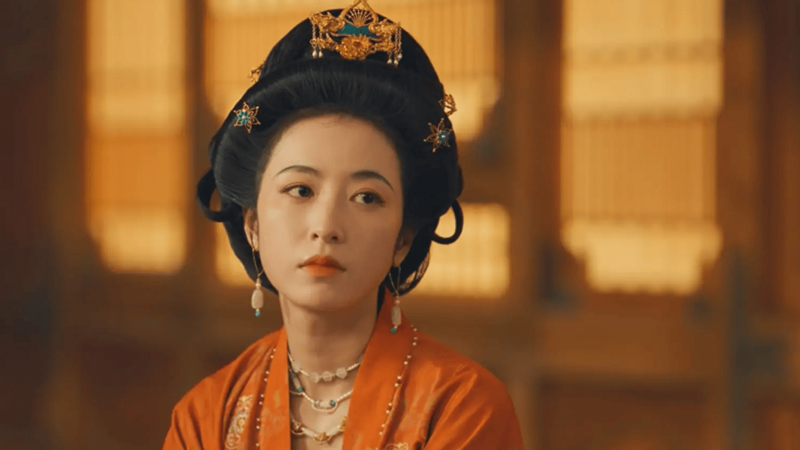
This tactic of patience was a tightrope walk. The Old King had tolerated Hu because of his past service and manageable power. Even on his deathbed, he tested Hu by mentioning his son “Sanlang (三郎)” as heir, ready to strike him down if he showed the slightest sign of approval. Hongzu had the cunning to contain the minister, but Hongzong lacked it entirely. Hongchu finally possessed the skill to not just contain, but truly subjugate Hu, ending the cycle of instability through a blend of respect and unspoken, absolute control.
A House of Many Children and the Woman He Actually Loved
If Qian Hongchu was a “lover” of old ministers, was he the same with women? History suggests a different story. His life was full. He had three official wives, seven sons, seven daughters, and an adopted nephew. Fourteen children in total, a number that immediately clarifies one point: they could not all belong to Sun Taizhen. His line included his legitimate heir or legitimate heir Qian Weijun (钱惟濬), adopted son Qian Weizhi (钱惟治), and a host of other princes like Qian Weiyan, each a thread in a complex familial tapestry.
His three wives were Sun Taizhen, Lady Yu (俞氏), and Lady Huang. Sun held the highest rank as primary consort, even receiving a title from the Song emperor. But she died young in 977 at age 45, just before Hongchu’s pivotal submission to the Song dynasty. They had married young—he at 19, she at 16—and shared the journey to power. In the TV drama Swords into Plowshares, their bond is one of deep affection, strengthened by shared history. But in reality, affection is not the same as singular love.
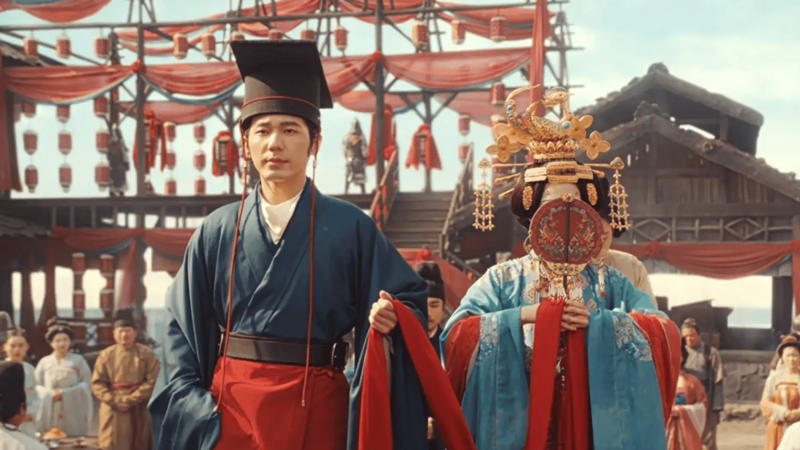
Sun Taizhen brought more than just a childhood connection to the marriage. She brought power. Her family, based on Huanglong (黄龙) Island, was a formidable force. They had once challenged Wuyue directly, cutting off its naval routes with hundreds of ships to force the release of a prisoner. When Hongchu needed to solve a massive tax crisis in Taizhou, Sun’s authority, symbolized by her banners and orders, was the key that unlocked the solution. And her wedding gift? Three warships from her mother. In the brutal calculus of court politics, such a powerful ally commanded respect. If Hongchu could be courteous to his enemy Hu Jinshi, he could certainly be devoted to the woman who anchored his power.
But devotion and love are separate things. The woman who held his heart was Lady Huang. Legend whispers that the magnificent Leifeng (雷峰) Pagoda was built by a grateful king to celebrate the birth of a son by his beloved concubine Huang. While official histories are silent, folklore persists. The timing is suggestive: construction began on the pagoda in the very year Sun Taizhen died. It is a poetic, tragic detail. Sun, the powerful queen who sealed the palace and wielded her family’s navy for his sake, likely went to her grave unaware that her husband’s most enduring monument to love was rising for another woman. In the grand narrative of Wuyue, power secured the throne, but passion, it seems, built a pagoda.