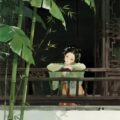
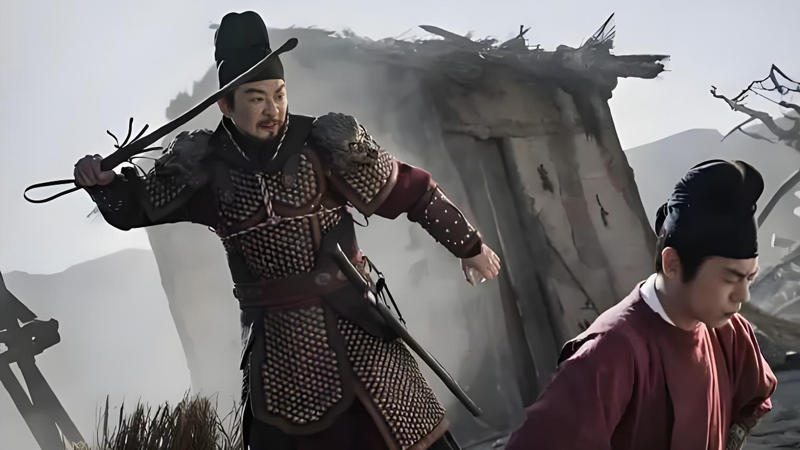
In January, the historical drama Swords into Plowshares (太平年) premiered, thrusting viewers into the turbulent and often overlooked period of the Five Dynasties and Ten Kingdoms. Unlike the brief summaries found in history books, this series aims to flesh out the era's complex politics, brutal survival, and fragile hopes. It begins not with grand pronouncements, but with a horrifying act of cannibalism within a starving army, immediately establishing the desperation that defines the age.
Over its first episodes, the narrative splits between the violent power struggles of the Later Jin court in the north and the seemingly stable, yet internally fraught, southern kingdom of Wuyue (吴越). This deliberate contrast challenges the very title of the show, asking what "Swords into Plowshares" could possibly look like when the world is unraveling.
A Kingdom in the Eye of the Storm
While the north burns with overt conflict, Wuyue presents a deceptive calm. Under the rule of King Qian Yuanguan (钱元瓘), it focuses on internal development. However, this stability is paper-thin. The first episodes reveal a court riddled with corruption and secret factions. The royal treasury is empty, siphoned off by officials and shadowy organizations. The death of the king unleashes a silent storm of political maneuvering. His young successor, Qian Hongzuo (钱弘佐), inherits a throne surrounded by wolves in ministers' robes. The drama smartly uses this southern setting to explore a different kind of tension—not the clash of armies, but the quiet, deadly games played in palace corridors and marketplaces.
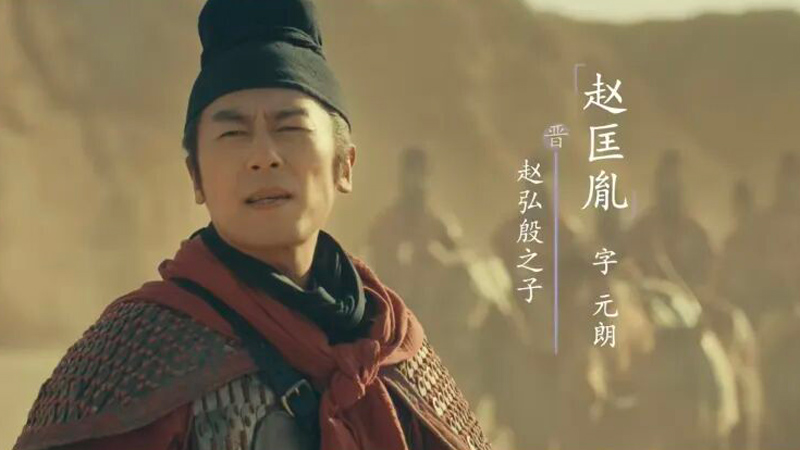
Three fictionalized secret societies are introduced to embody these hidden threats. The Qinhuai Society (秦淮社), a spy network from the rival Southern Tang state, infiltrates to gather intelligence. The Shanyue Society (山越社) is a corrupt mercantile guild that bleeds the state dry through fraud and arms dealing. In opposition, the Huanglong Society (黄龙社) operates as a secret protector of the royal family. These groups turn Wuyue's capital into a chessboard, where economic policies and court appointments are moves in a covert war. The drama suggests that even a "peaceful" region cannot escape the era's pervasive decay.
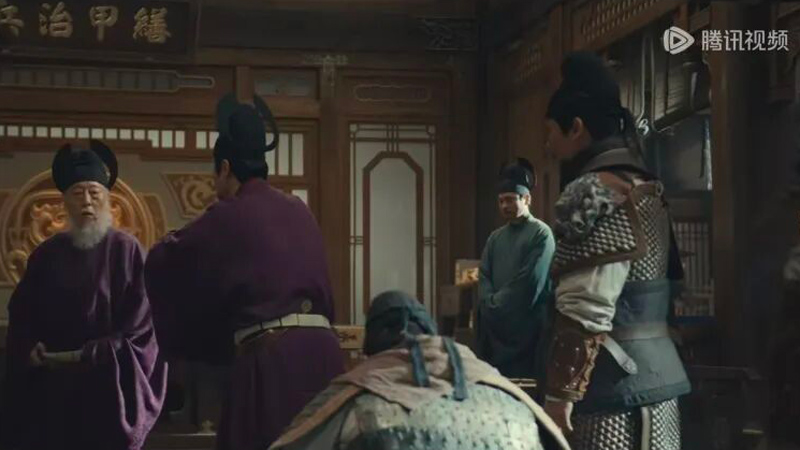
The performance of Ni Dahong (倪大红) as the powerful minister Hu Jinsi (胡进思) anchors this political intrigue. With minimal dialogue and movement, he embodies the calculating, menacing presence of a man who holds real power behind a fragile throne. His calm order to execute a dissenting general in the first episode is a masterclass in quiet threat. He represents the era's true rulers: not always the emperors, but the officials and generals who manipulate power from the shadows, their ambitions hidden behind bowed heads and still hands.
Faces in the Fractured Landscape
Swords into Plowshares avoids simplistic heroes and villains, instead presenting a mosaic of individuals struggling for survival, power, or mere principle. In the Later Jin narrative, the young Zhao Kuangyin (赵匡胤) (later the founding emperor of the Song Dynasty) is introduced witnessing the court's shocking injustice firsthand. A loyal official is callously sacrificed to protect a monstrous general, teaching Zhao a brutal lesson about the failure of authority. This early trauma plants the seeds for his future quest to unify the empire.
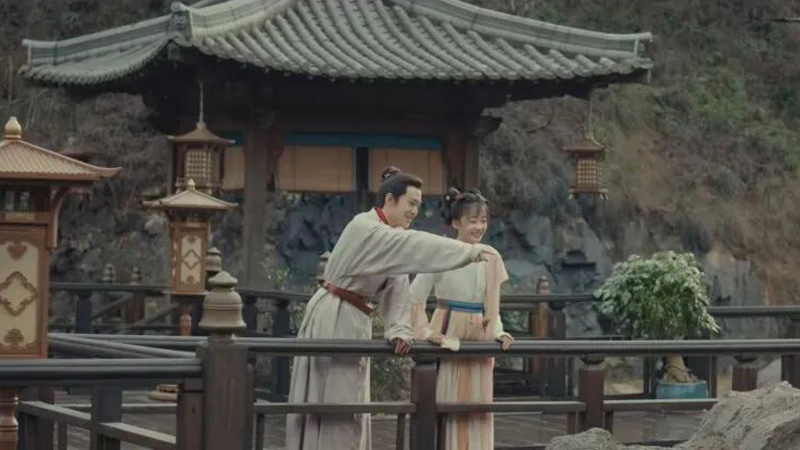
In Wuyue, the focus is on the psychological weight of power. The young king Qian Hongzuo is portrayed as physically trembling under the pressure, his fear palpable. His successor, the even younger Qian Hongchu (钱弘俶), is shown as a keen observer, silently watching the conspiracies that swirl after his father's death. He witnesses the formation of alliances and betrayals, and meets his future lifelong companion, Sun Taizhen (孙太真). These childhood experiences in a den of vipers are framed as the crucible that will forge his adult character and his obsessive longing for genuine stability.
The drama finds its humanity in these personal reactions to systemic collapse. The horror on soldiers' faces as they are forced to partake in a gruesome meal, the resigned despair of an honest official betrayed by his emperor, the silent terror of a boy king—these moments build the emotional core. History records the outcomes, but the series speculates on the psychological cost. It asks what it does to a person to grow up in a world where "peace" is just a fleeting moment between rebellions, and where trust is the quickest path to death.
By the end of the fourth episode, two emperors have died, and two inexperienced successors have taken their thrones under dark clouds of suspicion. The narrative threads multiply, introducing new factions and conflicts without offering easy resolution. This deliberate structural chaos mirrors the historical period itself—a tangled knot that seems impossible to unravel. Swords into Plowshares does not promise a smooth heroic journey, but an immersion into a fractured world where the quest for order is the greatest drama of all.
