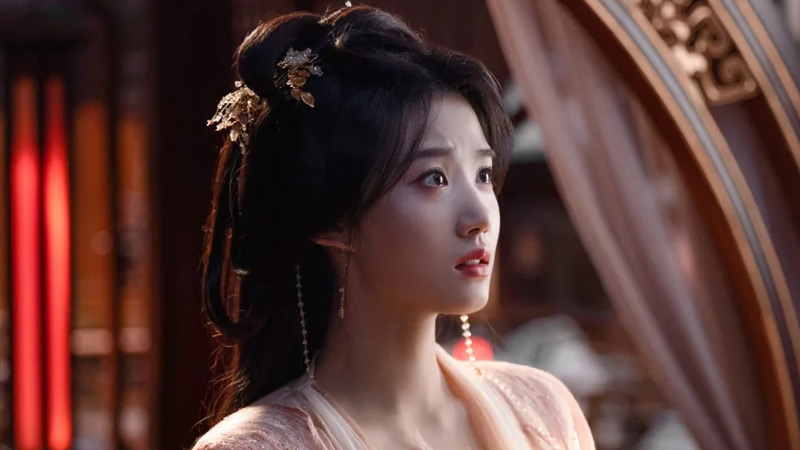
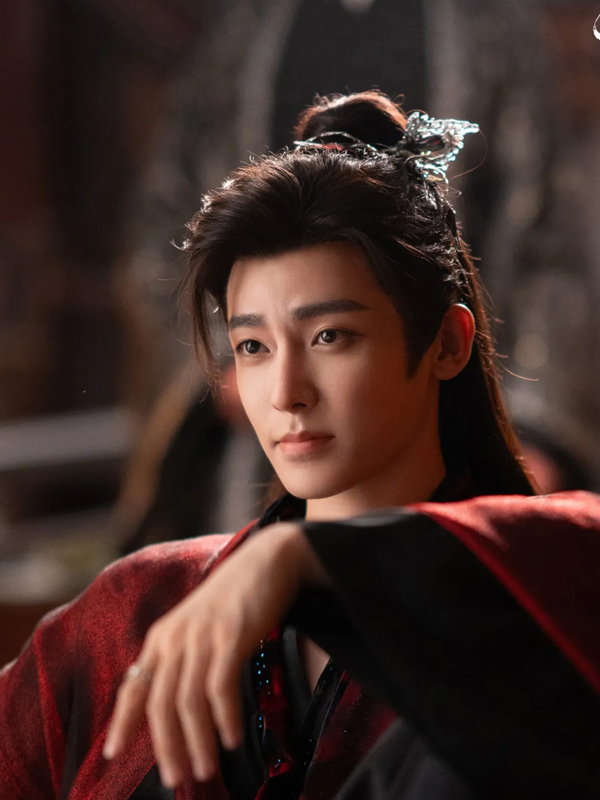
In the ever-expanding universe of historical fantasy dramas, a new narrative dares to ask a painful question: what happens when a relationship built on deceit begins to feel real? Love in the Clouds (入青云), a recent series starring Hou Minghao (侯明昊) and Lu Yuxiao (卢昱晓), delves into this very conflict with a refreshing authenticity that has captivated audiences. Unlike many of its peers that rely on grandiose battles or convoluted mythologies, this drama finds its strength in the quiet, complicated space between two people who are supposed to be enemies.
It presents a world where a single lie, told for survival, unravels into a web of emotional entanglement, setting the stage for a love story that is as tender as it is tragic. The initial sweetness of their connection makes the impending heartbreak all the more profound, creating a viewing experience that is both delightful and devastating.
The Disguise
Ming Yi (明意) is not your typical female lead in a Xianxia drama. For years, she lived as Ming Xian (明献), the undefeated crown prince of Yaoguang Mountain (尧光山), her true identity hidden beneath a male facade commanded by her mother. Her seven-year winning streak wasn't just a record; it was a shield, a performance to maintain a dangerous secret. This carefully constructed life shatters during a duel with the formidable Ji Bozai (纪伯宰). Her defeat is more than a loss of status; it is a physical and psychological blow, leaving her poisoned and her world in ruins. The victory she had always known was replaced by a venom that threatened her very existence.

The aftermath of her defeat is a masterclass in emotional cruelty. Returning to Yaoguang Mountain, she finds no comfort, only cold indifference. Her own mother, the architect of her deception, urges her to leave, a suggestion that initially seems like abandonment. This moment feels intensely brutal to the viewer, a stark betrayal from a parent. However, the narrative slowly peels back the layers, revealing her mother's desperate motive. The disguise was always a protection against societal scorn, and sending her away is a final, painful attempt to save her from further humiliation and grant her the freedom to find a cure away from prying, judgmental eyes.
Stripped of her royal title and her male identity, Ming Yi embraces her true self. Shedding the name Ming Xian, she emerges as Ming Yi, a woman determined to survive. Convinced that Ji Bozai is her poisoner, she fixates on the antidote he possesses, a substance known as Huangliang Meng (黄粱梦). This object becomes her sole purpose, the key to her future. Her transformation is not just one of appearance but of intent. She decides to weaponize her femininity, crafting a new persona designed to infiltrate Ji Bozai's world and steal the cure, setting her on a collision course with the man who shattered her old life.
The Ruse
Ming Yi's plan hinges on Ji Bozai's reputation for enjoying lavish parties and female company. She transforms herself into a captivating beauty, a stark contrast to the warrior prince he defeated. Her approach is calculated, every smile and gesture part of a strategic performance to get close to the antidote. However, Ji Bozai is no easy target. His character is defined by a sharp intellect and a ruthless, guarded nature. Initial attempts at closeness are met with cold skepticism, making her mission far more difficult than anticipated. He is a fortress, and she lacks the key, forced to patiently lay siege to his defenses.
The dynamic shifts out of necessity. Faced with a common external threat, they forge an unlikely public alliance, performing the roles of a deeply in love couple. This charade, born from tactical need, creates a dangerous intimacy. They buy each other gifts—he remembers her offhand comment about loving scallion pancakes—and perform acts of sacrifice, like her taking an arrow meant for him. In these staged moments of care, the lines between performance and reality begin to blur. They are two actors on a shared stage, slowly forgetting their original scripts.
Beneath the surface of their manufactured romance, genuine emotions begin to stir. What starts as mutual suspicion and strategic maneuvering softens into something more complex. They find themselves noticing small details about each other, experiencing flickers of concern and protectiveness that go beyond their initial goals. Yet, both are trapped by their own deception. Ming Yi cannot reveal her true motive, and Ji Bozai remains an enigma. They dance around their growing attachment, too afraid to acknowledge the very real connection forming amidst the lies, each secretly wondering if the other's affections are also part of the act.
The Price
The foundation of their relationship is sand, and the tide is inevitable. The very lie that brought them together ensures their eventual confrontation. The audience is lulled into the comfort of their sweet interactions, making the eventual unraveling a particularly sharp blow. The narrative masterfully builds this tension, where every tender moment is shadowed by the knowledge of the impending truth. The question is not if the deception will be discovered, but when, and how much damage it will cause when it all comes crashing down.

When the revelation finally occurs, it is catastrophic. The trust that was painstakingly built, however fragile, shatters instantly. The "why" behind Ming Yi's actions—her initial hatred, her calculated seduction—paints every cherished memory in a new, painful light. For Ji Bozai, the betrayal cuts deep, transforming past intimacy into a record of his own manipulation. The fallout is not just a simple misunderstanding but a fundamental breach that questions the authenticity of every word and gesture they ever shared.
This is where Love in the Clouds delivers its most powerful message. It explores the painful irony of finding real love through a false premise. The drama suggests that the heart does not always follow the rules of honesty, and that genuine feelings can, paradoxically, grow from a bed of lies. However, it never shies away from the consequence. The sweetness of the beginning directly fuels the bitterness of the end, serving as a poignant reminder that while lies can initiate a connection, only truth can sustain it. The emotional journey leaves a lasting impression, a bittersweet echo of what could have been if their story had started with honesty.