Article
搜索结果:
-
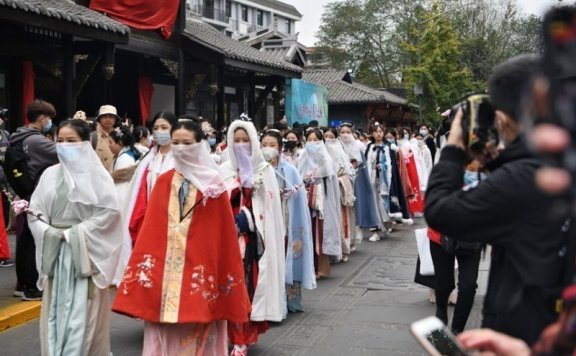
How Popular is Hanfu Now
Source: China Daily According to data from people.cn, Chinese hanfu consumers surpassed 2 million in 2018, tripling the level of 2017. A recent report from Guangzhou-based consultancy iiMedia Research estimated that by 2021, China’s hanfu fans will reach 6.89 million, and the hanfu sales volume will total 10.16 billion yuan ($1.58 billion). Popular Hanfu Currently, there were more than 3,000 registered hanfu-related enterprises in China, among which over 60 percent were registered in the past five years, data from business information provider Tianyancha showed. Guangzhou-based bespoke hanfu manufacturer, Minghuatang, is known as the “Hermes of hanfu.” Data from Minghuatang’s official website on May 17 showed that the customer service is busy handling orders submitted on May 11, and the tailoring period has been scheduled to mid-March 2022. Apart from high-end markets, inexpensive hanfu is also popular. Data from Alibaba’s Taobao platform showed that hanfu that are priced between 100 yuan and 300 yuan took up over 60 percent of sales, while those over 500 yuan accounted for roughly 30 percent of sales. Why Hanfu became popular Zhang Yi, the chief analyst at iiMedia Research, said during an interview with online fashion media Vogue Business, that from a niche hobby… -
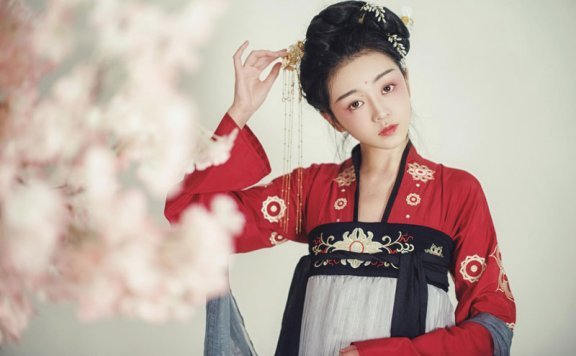
Hanfu: The Han Ethnic Dress That Has Become Fashionable
Do you like to dress up and transport yourself back in time to another era? Well now you're in luck because the "Hanfu" fashion is coming back with a bang. The Hanfu - Han Ethnic Dress The Hanfu (汉服, hànfú) is the name given to the traditional Chinese clothing worn long before the 17th century by the Han (汉族, hànzú). In fact, it literally means "clothing of the Han" who are the majority ethnic group in China. The hanfu, has influenced different traditional dresses in Asia, such as the kimono in Japan, the hanbok in Korea, or the áo tú thân in Vietnam. It appeared in China more than 3,000 years ago and it is said that it was the Yellow Emperor (黄帝, Huáng dì), an important character in Chinese mythology and legends, who began to wear it as his regular garment. During the Western Zhou Dynasty (c.1046 - 771 BC) it began to be used as a social class differentiator. Status and prestige could be seen in the degree of decoration of the dress, the length of the skirt, the width of the sleeves, and the patterns. When the Qing Dynasty (1644-1911) came, which was founded not by Han… -
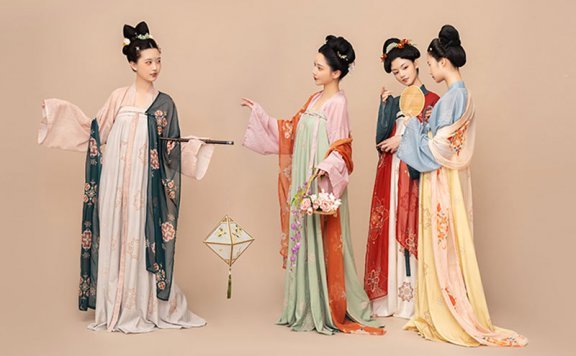
History of Chinese Dress: Kaleidoscope of Tang Costume
In terms of the cultural and economic development of Chinese feudal society, the Tang Dynasty was undoubtedly an apogee in the development of human civilization. The Tang government not only opened its country to the outside world, allowing foreigners to enter for business or study, but even allowed them to participate in the selection examinations for government officials. It was tolerant, and often appreciative of religions, art and culture of the outside world. Chang'an, the Tang capital, became the center of exchanges between different cultures. It deserves special mention that women of the Tang dynasty did not have to obey traditional dress codes, but were allowed to wear clothing that exposed their arms and chest, or dress with exotic elements. They could also wear riding clothes if they wanted to and enjoyed the freedom to choose their marriage and to divorce. The abundance of materials and a relatively relaxed social environment gave the Tang dynasty an unprecedented opportunity to develop culture, reaching new heights in such fields as poetry, painting, music and dance. Based on the development of the textile industry in the Sui Dynasty, and progress achieved in reeling and dyeing, the variety, quality and quantity of textile materials… -
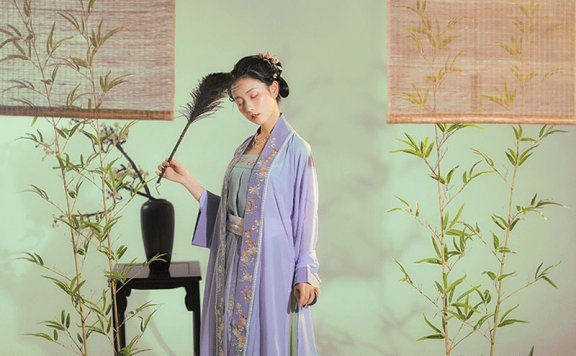
Early Summer Hanfu Dressing Guide for Girls
In summer, there are long days, lazy afternoons, beautiful sunsets, pink peach, sweet watermelon smoothies, and cold mint sodas ...... Although summer has its share of hot weather, beauty lovers always have the best of both worlds. Modern Hanfu sends you refreshing summer hanfu, please check it out. 1. Pick a summer hanfu according to color In the hot summer, we need fresh and beautiful colors to bring a touch of coolness. So we need to try to choose more fresh colors for our summer hanfu as well. A sky blue hanfu is fresh and elegant without being cheesy, reminiscent of a clear spring in the mountains. If a girl wears a sky blue hanfu, she will be the most playful fairy in summer! Sunset yellow with its unique gentle, unique in the summer. If you like warm tones, don't miss it, a sunset yellow tone hanfu, can make you more gentle and intellectual. Mint green is a name that makes people feel cool from the bottom of their hearts. It is like a breeze, quietly ruffling your hair in the summer, taking away the heat. A mint green hanfu not only makes you look energetic, but also brings a… -
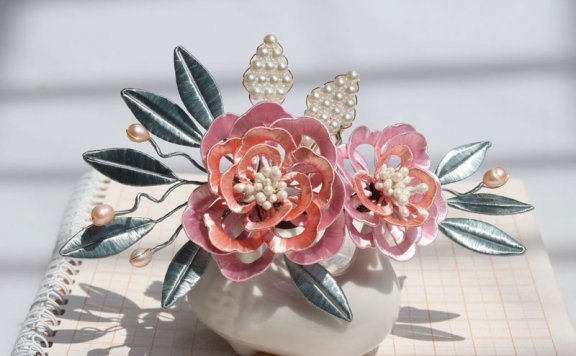
10 Types of Traditional Chinese Hairpins to Match Hanfu
With the popularity of hanfu, more and more people are starting to pay attention to hanfu, but besides hanfu itself, there is one very important thing to match, and that is traditional Chinese hairpins. There are many kinds of Chinese hairpins, and they are as exquisite as the hanfu, so today we will introduce some of the most beautiful kinds of Chinese hairpins for you. 01 Chan Hua The raw material for Chan Hua (缠花) is silk thread, cardboard, and metal wire. It is a traditional Chinese folk craft, which is mainly made by cutting cardboard into different basic shapes, and then wrapping the wire inside the cardboard with silk thread evenly, and finally bending and combination, a beautiful Chan Hua is completed. The silk thread is used to make the flowers, which are delicate, soft, and elegant. In ancient times, it was an ornament often worn by folk girls. 02 Heat-shrink sheets hairpin The main raw material of the heat-shrink sheet hairpin is a kind of sheet (heat-shrink sheet) that shrinks when exposed to heat and colored powder. The flower petals and leaf patterns are traced on the frosted heat-shrink sheet, cut out, colored with colored pencils… -
The Current Situation and Future of Hanfu Industry
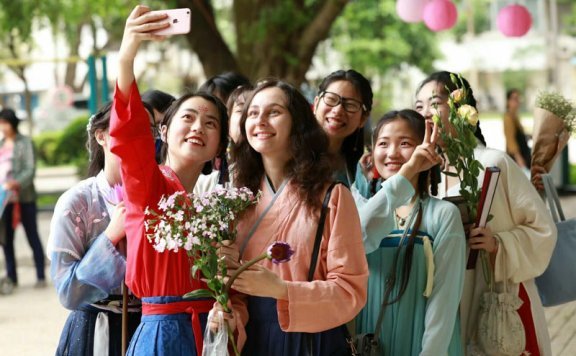
Just in time for the spring flower viewing season, you can always find many videos on social media of girls wearing hanfu on spring tours during this May Day holiday. Nowadays, it's not normal to go to major scenic spots and events in China without encountering young people wearing hanfu instead. Hanfu is no longer a niche hobby, but it has a long way to go to achieve true industrialization. This wave of hanfu popularity is mostly crowded by young people under the age of 24. Some of them will buy more than 30 pieces of hanfu a year and wear them all the time except for sleeping; some are willing to spend half a year to make a treasured hanfu by hand, and some spend all their spare time on hanfu promotion activities. Has Hanfu still considered a niche hobby? From the 2019 Xi'an Datang Everbright City's "Tumblers show", to this year's Spring Festival's “Tang Palace Night Banquet” all received unanimous praise, the rise of traditional culture boom, and so has the attention to Hanfu. And this "hanfu popularity" is the first to attract young people. Hui, a designer by profession, was initially attracted by the "classical beauty" of… -
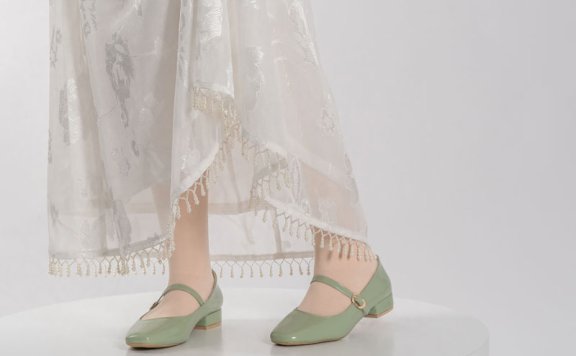
2 Best Matching inside the Hanfu Skirts
Many of the first time Hanfu wearers may be confused about the layers of Hanfu wear, because we usually focus more on the outermost layer of clothing, so how do you choose the inside of the Hanfu skirt? Is it a Zhongku (中裤)? In this article, Han Time will introduce several styles that are suitable for matching inside Hanfu skirts to dispel your worries. Chen Qun (衬裙) The Chen Qun can be understood as the bottom version of the hanfu skirt, and the shape is the same as the outer skirt, but it can also be inconsistent. The Chen Qun that we see nowadays are mainly Ma Mian Qun style, pleated skirt style, and Po Qun style (破裙款). Chen Qun is worn for three purposes. The first role: is to increase the skirt's sense of fluff, play the role of skirt support. Another role: can be used as decoration, generally, now the Hanfu Chen Qun also has a decorative lace edge pattern, can reveal some of the lightness of the skirt under the outer skirt. The last role: the most important avoid being seen inside your skirt, in general, light-colored thinner fabric if there is no lining (i.e., single layer)… -
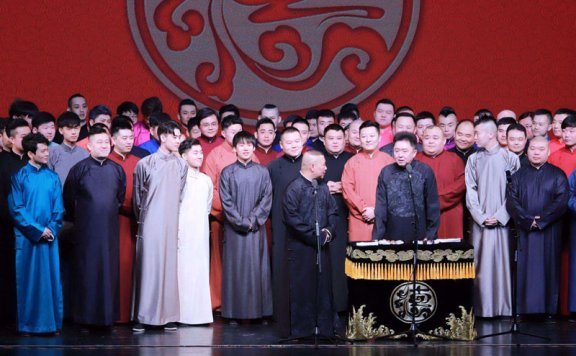
Then and Now of the Chinese Traditional Changshan
During the Republic of China, the three most classic men's clothing, in addition to suits, Zhongshan suit, there is a Chinese traditional Changshan. At that time, gentlemen usually wear a ankle-length Changshan, only the leakage of Western-style leather shoes, so as to look enlightened and progressive, but also not lose the traditional elegance. Characteristics of the Traditional Changshan Changshan (长衫, long shirt, or tunic), also known as Changgua (长褂, long coat), it is a style of clothing that was improved by the Han Chinese during the Qing dynasty based on the traditional robe and following the Qing dynasty clothing system. Changshan can be worn with a Magua (马褂, the prototype of Tang suit), "Magua Changshan (Changpao)", became the most common male wear in the late Qing Dynasty and the early Republic of China. After entering the Republic of China, the number of ordinary people wearing Magua in their daily general life gradually decreased. If someone wears a Magua outside the Changshan, it is already a very grand dress, and a blue Changshan with a black Magua is the formal dress in the Republic of China. Different from the Manchu Qi dress, traditional Changshan is characterized by: no horseshoe sleeves,… -
What is Hezi Qun - Origins and Types
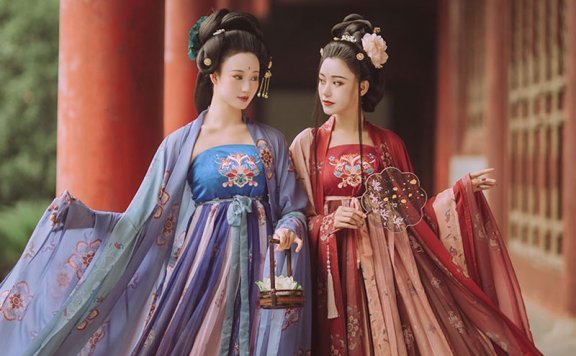
Hezi Qun (诃子裙), a kind of Moxiong long skirt with a big-sleeved shirt, has suddenly become a popular hanfu style for summer. Perhaps your initial impression of it is that it is one of the Tang Dynasty hanfu styles. But it's much more than that, and today we're going to introduce you to the origin and types of the Hezi Qun in more detail. Let's get started. 1. What is Hezi Let's first understand what Hezi is. Hezi(诃子) is one of the ancient Chinese women's undergarments, also known as "Waxiong (袜胸)", "Moxiong (抹胸)", "Lanqun (襕裙)", "Hehuan Lanqun (合欢襕裙)", and so on. It was popular in the Tang, Song, and Ming dynasties. From the back to the front of the bundle, the following line, can also be tied around the waist of the skirt, also known as the Dudou (肚兜) in the Qing Dynasty. Originally, Hezi had little to do with hanfu. In most of the ancient literature, Hezi is a kind of traditional Chinese medicine. The earliest documentary record about Hezi and hanfu is found in the Song Dynasty. Song dynasty Zeng Zao in his book "Lei Shuo (类说)" has recorded: one day, Yang Guifei and An Lushan had a… -
Hanfu Making(1) - Zhongyi Cutting & Sewing Patterns
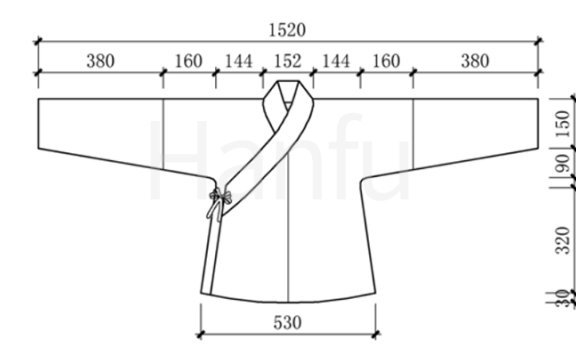
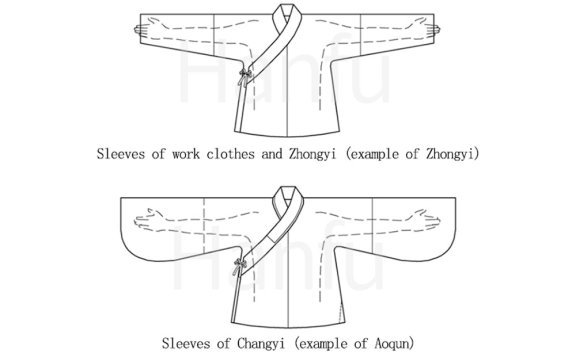
This section includes Zhongyi (中衣) and Zhongku (中裤). Size range: Zhongyi (155/80A to 185/104A), Zhongku (155/64A to 185/88A) Please read the introduction of the topic and how to use this guide in advance. Introduction Zhongyi, also known as Liyi, is worn outside of underwear and within outerwear (the Chinese meaning of 中 is equivalent to the middle), and its role is similar to that of a shirt in modern clothing, which can be used to match and complement the role of Zhongyi. Zhongyi cannot be worn outside, and in addition to playing the role of a shirt, it can also be used as home wear and pajamas. The Zhongyi illustrated in this section is the common cross-collar arrow-sleeved Zhongyi, while the broad Zhongyi also includes Zhongdan (中单), Zhongku (中裤, pants), and Zhognqun (中裙, skirts). Zhongyi common fabric types are cotton, cotton linen, chiffon, monochrome satin, etc. In addition to the most commonly used white fabric, girls can also choose colored fabrics when they match the Ruqun, the colors of which are bright green, soft yellow, peach, purple and gray, etc. Men wearing Pan collar robe with Zhongyi can also choose red. Because Zhongyi's body and collar than the outer clothing… -
Guide of Chinese Traditional Hanfu Sewing Patterns
Original Author: Huafeng Mozhu (华风墨逐) Hanfu Cutting & Sewing Patterns Detail Zhongyi (中衣) Aoqun (袄裙) Ruqun (襦裙) Beizi (褙子) Pan collar Aoqun (盘领袄) Quju (曲裾) Banbi (半臂) Shuhe (裋褐) Zhiduo/Zhishen/Daopao (直裰/直身/道袍) Panling Pao/Lanshan (盘领袍/襕衫) Shenyi (深衣) Yisan (曳撒) Inspired Hanfu (改良汉服) Updating Preface Ethnic costumes are different from ordinary clothes that only play the role of warmth and decoration, but they are one of the elements of the appearance of a nation and an important carrier of its traditional culture. It is also an important carrier of the traditional culture of a nation. The cultural connotation of traditional costumes of different nationalities is different, and it can naturally show the spiritual civilization and aesthetics of the nation. Hanfu is the traditional costume of the Han people, also known as "Han Zhuang" or "Hua Fu".Since the time of the Yellow Emperor, Yao and Shun, hanfu has taken a basic form, and after the inheritance of the rituals of the Zhou Dynasty, it has formed a perfect system of clothing and crown and spread to the people in the Han Dynasty. The hanfu had been developed for thousands of years until the fall of the Ming Dynasty, when it was temporarily stopped.… -
My Story with Hanfu - Shengli
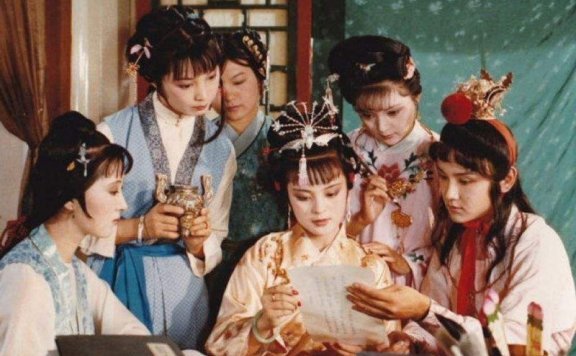
Contributed article from user Shengli for 2021 Hanfu Free Giveaways & Contests PLAN C (My Story with Hanfu). Through your dislike of the gauze hat as mean, You have come to be locked in a cangue; Yesterday, poor fellow, you felt cold in a tattered coat, To-day, you despise the purple embroidered dress as long! Confusion reigns far and wide! you have just sung your part, I come on the boards, Instead of yours, you recognise another as your native land; What utter perversion! In one word, it comes to this we make wedding clothes for others! - The Dream of the Red Chamber by Cao Xueqin, translated by H. Bencroft Joly In my native culture, we have such a saying: While at first you're welcomed according to your clothes, next you'll be treated according to your wisdom. Indeed, how much we can say of a person by his dressing, how many metaphors on his background, status and way of life can be expressed through dress! Like in words of Shih-yin from The Dream of the Red Chamber, where ideas of complexity and instability of human life and intergenerational relationships were put in words about tattered,… -

How Did Men Makeup in Ancient China?
The desire to look attractive is universal. Since ancient times, the pursuit of beauty has never stopped. Throughout traditional Chinese makeup history, not only women, but also men love beauty, and some men even know more about makeup than women, and there are many of them who are the best. The earliest archaeological discovery of makeup tools was used by men. Hubei Zaoyang Jiu Lien Dun No. 1 Chu tomb unearthed "portable" makeup box, the box is divided into bronze mirror, wooden comb, scraper, powder box, and small wooden comb. Men's make-up, although not as elaborate as women's, but their own pursuit. Today, we will introduce how men makeup in different periods in ancient times. Qin and Han Dynasties During the Qin and Han dynasties, men already began to pay attention to the elaboration of hair ornaments and clothing, like the complex and diverse hair-binding rituals of the Qin dynasty, which made it easy to distinguish the status and rank of each person in the way of hair-binding. In the Han Dynasty, many male tombs were also buried with abundant make-up appliances. In the Han Dynasty, it was recorded in the book "Han Shu • Ning Xing Zhuan (汉书•佞幸传)"… -
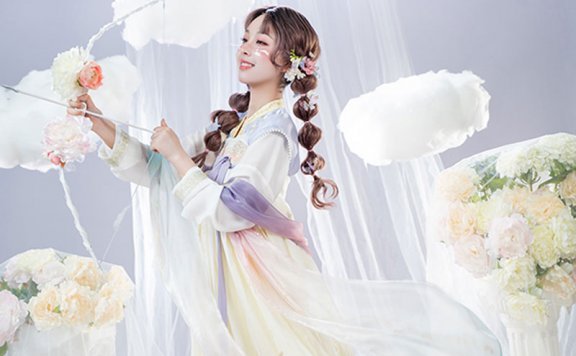
8 Different Styles of Tang Style Hanfu for Girls
This year, Tang Dynasty Hanfu has quietly become popular. In addition to the familiar Qixiong Hanfu, there are more and more styles of Tang Beizi (背子). Playful and lovely, the style is versatile, soft and cute, fresh and flashy ...... all kinds of styles can be found in the Tang style Hanfu. Today for you to select 8 Tang Dynasty women's Hanfu, if you also like Tang style Hanfu, don't miss it. Elegant white and cuffs pink and blue two-color splicing design, elegant between adding the sweetness of girls. The body of the top uses the group flower print and embellished peony embroidery at the chest, a noble atmosphere without losing the spirit. The skirt with lilies and letterhead combined with lace check print design, showing the spring romance. Wearing a lovely Tang Beizi, just like a small princess of the Tang Dynasty. The hem of the Beizi adds pearl design, with a more lovely style, bow style pin buckle, add a spirited novelty to the clothing. The outer layer of tulle silver silk strung with gold beads under the skirt, a sense of girlhood. With a cute little bag, let's go for a spring trip. The… -
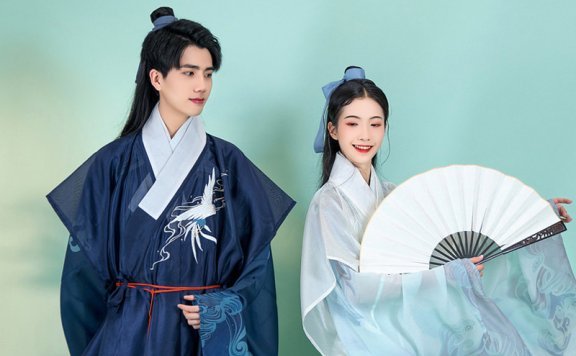
Traditional Ancient Chinese Hairstyles History
Like Chinese Hanfu costumes, ancient Chinese hairstyles also have a long history. The hair is placed at the head of the body, and it is the key to showing the beauty of the human body. The ancient Chinese hairstyles culture is diverse and gorgeous, a special and wonderful part of Chinese culture, and likewise, it shows the unique aesthetics of China that has rich content. This article contains female ancient Chinese hairstyles and male ancient Chinese hairstyles, and introduces the traditional hairstyle characteristics of different historical periods through the order of dynasties. We hope that you can have a new understanding of Chinese hairstyles through the article. Let's get started! Female Ancient Chinese Hairstyles Although there are many styles of historical hair bun, depending on the person, the part of the bun is different and can be divided into two categories: one is the hanging bun located at the back of the neck, mainly in the Warring States and Qin and Han dynasties. The other is the high bun on the top of the head, popular in the Eastern Han Dynasty, Wei, and Jin Dynasty, and reached its peak in the Tang and Song Dynasties, with many variations that… -
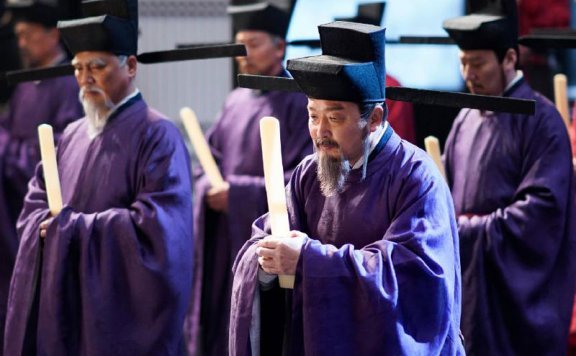
Futou and Wu Sha Mao: The History of Ancient Chinese Official Hats
If you often watch Chinese historical dramas, certainly have an impression of the ancient Chinese official hats, especially the Wu Sha Mao, people are still accustomed to the "Wu Sha Mao" as a symbol of the official, "lost the Wu Sha Mao" means be dismissed from office. Today to introduce the history and characteristics of the Wu Sha Mao and other periods in the history of the Chinese official hats. Wu Sha Mao (乌纱帽, black gauze cap) is an ancient official hat, the original is a common civilian cap, the official wear Wu Sha Mao originated in the East Jin Dynasty, but as a component of the official uniform, began in the Sui dynasty, flourished in the Tang dynasty, to the Song dynasty, plus the "double wing", after the Ming dynasty, Wu Sha Mao only formally become a synonym for officials. The origin and shape of the Wu Sha Mao Wu Sha Mao is evolved from the Futou (幞头) in Sui and Tang Dynasty, and it is also directly called "Zhe Shang Jin (折上巾)" in the official literature of Song Dynasty. The Futou was originally a black square fabric with four corners, and after covering the top of the… -
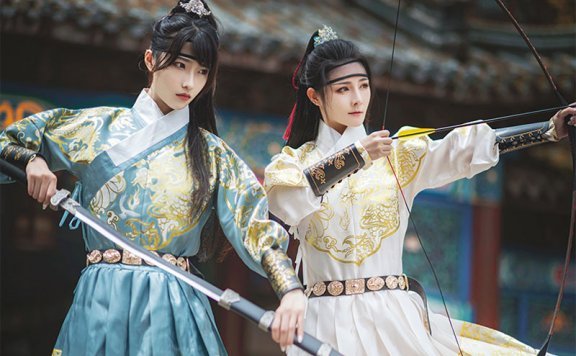
4 Sets of Martial Arts Style Hanfu for Girls
Everyone has a martial arts dream in their heart, especially when watching Chinese historical dramas, many people even want to take the place of the main characters in the dramas to go into the world. If you still love martial arts to this day, you can try these martial arts style Hanfu suits (Wuxia clothing), which are very handsome, let them satisfy your martial arts dreams. The first set consists of a straight collar and lapel jacket with a graduated color pleated skirt, the outermost layer of which can be added to the Hewei (合围). The embroidery is derived from bamboo leaves, garden window frames, and the leather cuffs with buttons emphasize the feminine capable, and easily master the martial arts temperament. The second set belongs to the Hanfu-inspired clothing, which can be called Wei Jin style, is composed of a large-sleeved shirt with a cross-collar lining, the overall presentation is an elegant style, often seen in martial arts film and dramas such dress. Light green color scheme, no complicated embroidery, wearing such an outfit, gently leaning on the bow, away from worldly strife, converge into a quiet painting. The third set is a Ming-style round neck robe,… -
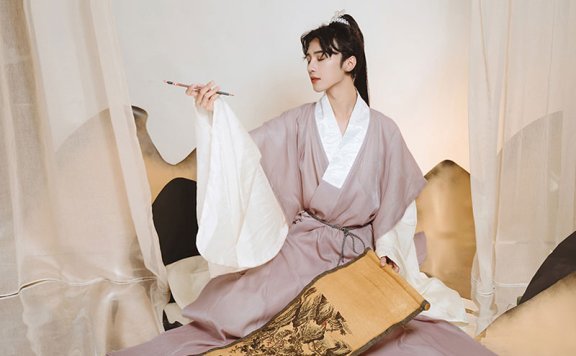
What is Da Hu - Chinese Traditional Male Clothing
What is Da Hu? Da Hu(褡护, dā hù), also known as "搭护", which was a type of Bianfu(便服, casual wear) in the Ming Dynasty. The Tong Ya says: "Da Hu is a shirt with bald sleeves", which means sleeveless, indicating that the Da Hu was a long garment with short sleeves or no sleeves, and had a certain origin with the Banbi of the Tang and Song dynasties. The "Juyi Record" records that: "The name of the Da Hu, or along with the Yuan dynasty, its style is not the Yuan dynasty Da Hu, when it is a slightly longer than the Gua (褂), a short-sleeved clothes." The basic form of Da Hu is cross collar, wrapping the right side before the left (交领右衽), with white collar protector, short sleeves or no sleeves, slit on both sides of the body, and the slit is connected with the outer or inner hem. In the Ming Dynasty, the Da Hu was a kind of half-sleeved dress with a hem outside, which was part of the dres's system of Ming officials. How to wear the Da Hu? What to wear inside the Da Hu? Da Hu early is often used as a jacket,… -
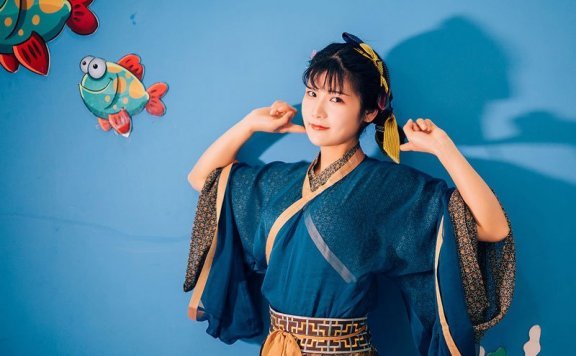
What is a Modern Hanfu? 2021 China’s Fashion Guide
The modern hanfu is an improved version of traditional Chinese clothing, also called as new hanfu. The modern hanfu is on the basis of Western-style clothing, formed by integrating the basic elements of traditional hanfu outfit. The new hanfu is split into several varieties based on its features that can be part of the form characteristics, patterns, or aesthetic. If you take the word "Hanfu" back to its roots, it simply was the Chinese word for “Han People's Clothing.” Later on, it evolved to mean specifically, traditional Chinese clothing. As they came into popularity in the ancient period, manufacturers began producing these pieces of hanfu with many cutting methods, and they’d cut various lines of fabric, sew them together. It's usually a very loose design that meant they wouldn’t have to have multiple sizes and fits. Eventually, hanfu style developed and people began wearing on a large scale, integrated into their everyday style. Hanfu designers improved their craft to such an extent that it became an art form and not simply as apparel. Traditional hanfu became more valuable and more collectible as pieces of art. That’s not to say that an appreciation of the hanfu today has to be all… -
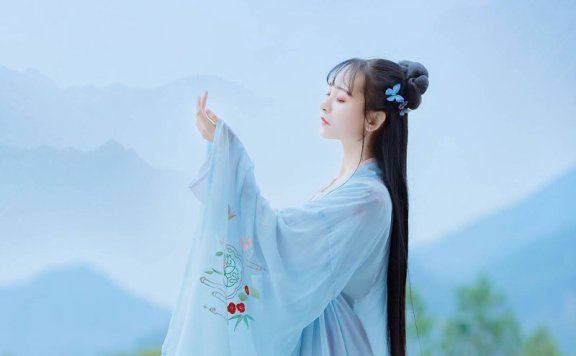
My Story with Hanfu: Hanfu Makes Me Beautiful - Xiayang
Contributed article from user xiayang for 2021 Hanfu Free Giveaways & Contests PLAN C (My Story with Hanfu). Recently, I cleaned up my closet and found that I bought a lot of hanfu, some of which I haven't worn for a long time, as time goes by, I've been in love with hanfu for some years now, so I'd like to take this opportunity to write about my story with hanfu. I. First encounter I can't remember when the word Hanfu entered my field of vision, but at that time I had heard a little bit about the "Hanfu revival", and I couldn't help but look at the pictures of beautiful hanfu girls on the internet, but I wasn't a fan yet. Around 2011, I started to notice some girls wearing hanfu in school, and I knew there was a hanfu association, but I was too busy with my studies to care about anything else. 2012 was the year of graduation, and it was popular to take traditional-style graduation photos, and hanfu graduation photos became popular on a small scale. But I didn't have a hanfu yet. Later, I met a schoolmate, and I found out that she was a Hanfu Tongpao (同袍),…