A child’s bed, tucked in a corner of a war-torn world, holds a universe of desperate fantasy. This is the haunting core of The Great Bird (大鸟), one of the most visually striking and narratively complex episodes from the animated anthology Yao-Chinese Folktales 2 (中国奇谭2). Set against the grim backdrop of the late Song and early Yuan dynasty transition, the short film weaves a tale that is equal parts dark fable and painful historical allegory.
It follows two characters: a young girl named Zhen’er (珍儿), and Bao Shan (保山), the man who cares for her. Their story is not told through clear declarations, but through a stunning, somber palette and a narrative split between a child’s imaginative escape and a man’s grim reality. The film uses the metaphor of a great bird and its feathers to explore loss, complicity, and the fragile hope for redemption in a time when humanity itself is under threat.
A Visual Lament
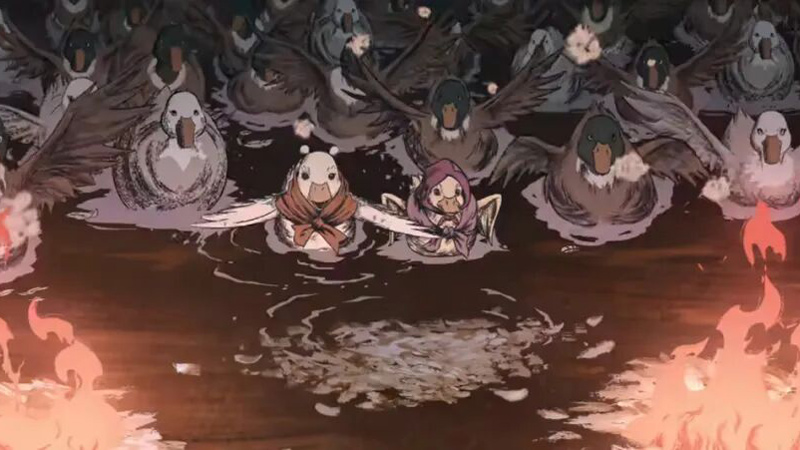
The world of The Great Bird is painted in mournful shades. The dominant palette is one of dense forest greens and murky grays, against which the stark white of feathers and ghostly visions sharply contrast. This is not a vibrant fairytale landscape, but a subdued, often bleak canvas that visually whispers of sorrow and shadow. Flashes of muted purple, orange, and the dull glow of fire appear not as warmth, but as reminders of destruction. This careful use of color immediately signals that we are in a realm where beauty is melancholic and danger is ever-present.
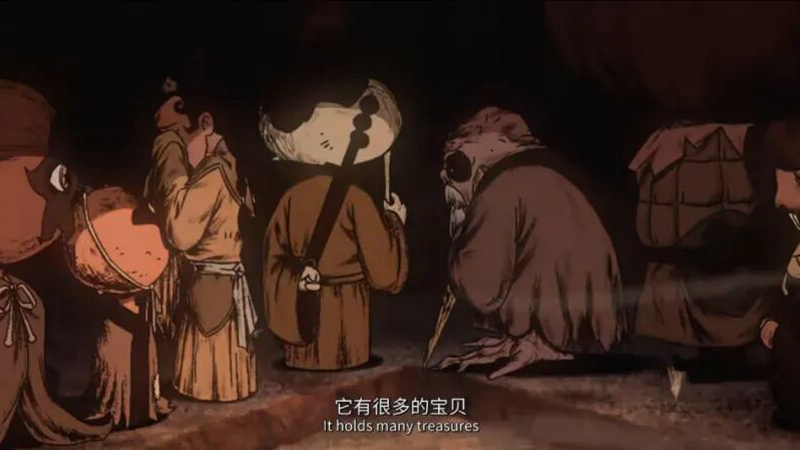
Complementing this visual tone is a distinctive artistic style reminiscent of woodblock prints. The compositions are dense and filled with detail, while the character lines are bold and rough. This technique amplifies the emotional states of the characters, making their fear, longing, and turmoil feel raw and immediate. Their expressions are carved into their faces with impactful clarity. The score deepens this atmosphere, using soaring melodies for moments of doomed hope and sinking into low, mournful tones for Zhen’er’s journey, ensuring the sound and sight are inextricably linked in their melancholy.
This artistic unity creates a powerful, immersive experience. The film’s beauty is austere and unsettling, pulling the viewer into its psychological space. The visual language itself becomes a narrator, telling us that this story lives in the space between a nightmare and a dream, between a child’s crayon drawing and the ash of a burnt village. Every frame feels heavy with unspoken history, making the moments of fantasy that emerge feel fragile and urgent.
Two Worlds, One Truth
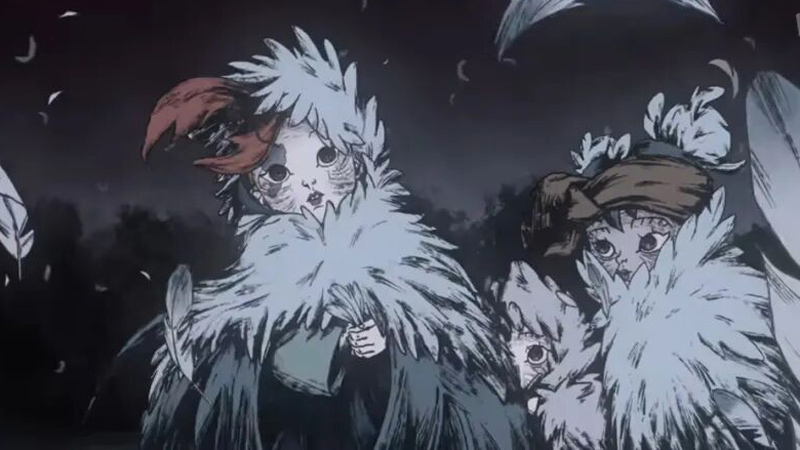
The narrative splits neatly, yet uneasily, into two perspectives. After Bao Shan tells Zhen’er a bedtime story about a magical bird whose feathers bring luck, she falls asleep. Her consciousness launches into a vivid fantasy adventure. In this dreamscape, the two ducks she sleeps with transform into her younger sisters. The small clay figurines Bao Shan made for her, called Mo Hele (磨喝乐), spring to life as guides and guardians. They embark on a quest to find the great bird, navigating a landscape filled with surreal encounters: talking vegetables, crying infant-shaped potatoes in a ruined mansion, and a mystical flight on a flowing sleeve.
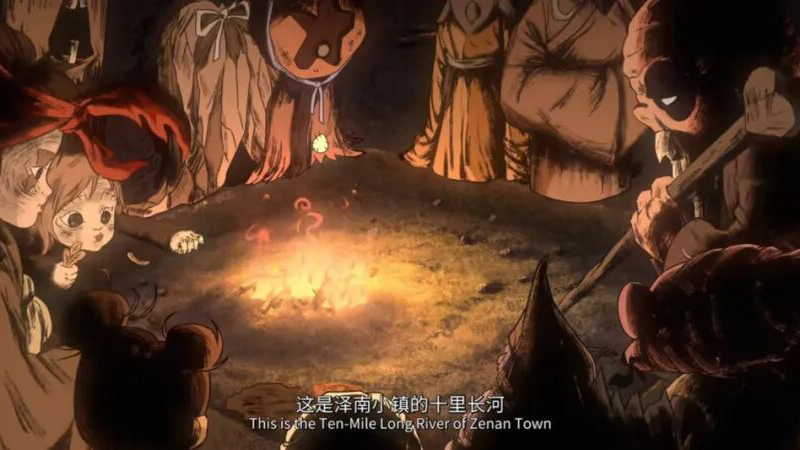
Zhen’er’s adventure is a classic child’s quest, but filtered through a lens of trauma. The landmarks have ominous names like "Big-Mouth Bridge," which she is warned to avoid. The "infants" in the old mansion are likely metaphors for abandoned children. Her journey to a nest filled with feathers, where she is embraced by a spectral mother figure, is a poignant visualization of her deepest need: to find her lost family and feel safe again. Her fantasy is a direct, emotional response to a reality too harsh to bear.
Meanwhile, Bao Shan’s world is one of stark, metaphorical realism. He leaves the sleeping child to work a night shift at a bustling duck slaughterhouse. The scenes here are dark, bloody, and oppressive. His face bears the marks of a criminal brand, and his demeanor is one of resigned sorrow. The "ducks" are processed in piles, and Bao Shan morbidly muses that they are going to heaven. This setting, with its late-night customers dressed as Mongol soldiers, is deeply unsettling. It becomes clear that the slaughterhouse is not merely a workplace but a symbol of the brutal occupation itself, and the "ducks" are a metaphor for the terrorized populace.
Feathers and Scars
The central symbol bridging these two worlds is the feather. In Zhen’er’s fantasy, feathers are treasures left by a benevolent bird, guiding her to her mother. In Bao Shan’s reality, feathers are what litter the river outside the slaughterhouse—the discarded remnants of countless lives. The great bird of the fable is explicitly revealed to be Zhen’er’s mother, hunted and killed. Bao Shan’s bedtime story was a softened allegory for a brutal truth: her mother was victimized by invaders, and he, as the branded man with a haunted past, was once among the hunters.
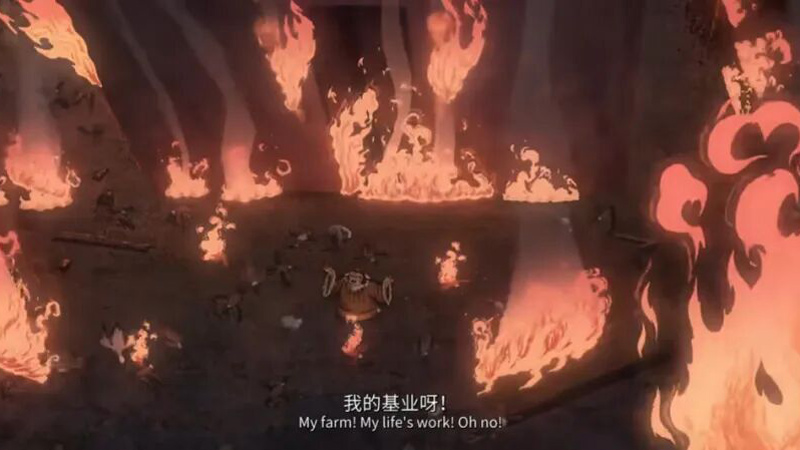
The climax occurs when the two narratives violently collide. Invaders raid the slaughterhouse and discover Zhen’er. As they threaten to turn the child into "roast duck," Bao Shan’s buried guilt erupts. He confronts his former associates to protect the girl, finally choosing the path of redemption he failed to take in the past. In this moment of crisis, Zhen’er’s fantasy shatters—her sisters revert to ducks, and she clings to Bao Shan, crying that she does not want to be alone again. Their fates, and their truths, are now irreversibly merged.
The Great Bird is ultimately a story about the stories we tell to survive. Zhen’er uses fantasy to reconstruct a broken family and process her terror. Bao Shan uses a fable to protect a child from a horrifying history in which he played a dark role. The film suggests that even in the darkest times, the human impulse to narrativize our pain—to transform it into myth, quest, and symbol—is a powerful act of resilience. It does not offer a happy ending, but a fragile, hard-won moment of protection and choice, where a feather is both a child’s comfort and a nation’s scar.