Historical dramas often live or die by the strength of their performances. When the backdrop is a chaotic period like the Five Dynasties and Ten Kingdoms, the task for an actor becomes not just to portray a person, but to embody an entire philosophy of survival. The series Swords into Plowshares (太平年) offers a masterclass in this regard, presenting characters who navigate treacherous political waters with a subtlety that demands equally nuanced acting. The most compelling figures are not those who shout the loudest, but those whose power resides in a glance, a hesitation, or a calculated silence.

Dong Yong (董勇): The Still Center of the Storm
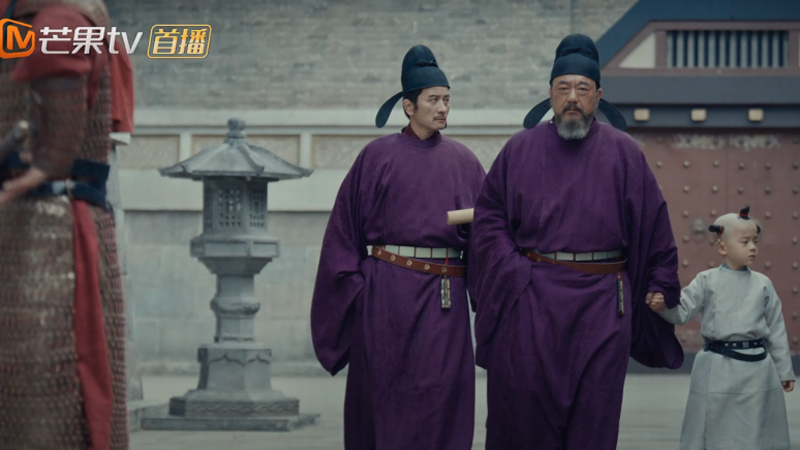
As the legendary minister Feng Dao (冯道), whose service spanned four dynasties, Dong Yong delivers what may be the series' definitive performance. His achievement lies in conveying immense political weight through profound restraint. Feng Dao is a man for whom every word and gesture is a carefully weighed transaction.
In one early scene, as the emperor prepares to reprimand a general, Feng Dao clears his throat. It is a simple, bodily sound, yet in Dong Yong’s execution, it becomes a full statement. The glance that accompanies it holds warning, counsel, and an inscrutable depth of experience. He communicates that he is the true anchor of the court, all without uttering a syllable of dialogue.
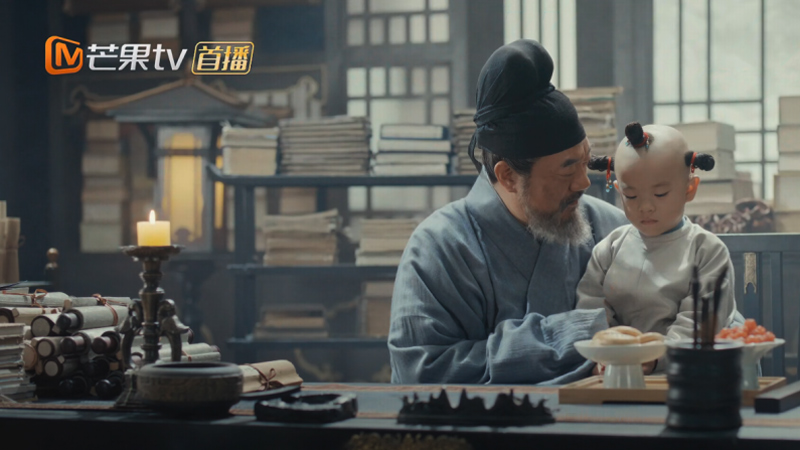
This minimalism reaches its peak during the deathbed entrustment of the emperor’s young son. The pleading emperor grasps Dong Yong’s arm. The actor’s face remains a placid lake, showing neither grief nor obligation. After a long pause, he simply extends his own arm to receive the child. The acceptance of the duty is clear, but his absolute silence is a political manifesto—a declaration of neutral self-preservation in a volatile world.
Later, when the new emperor ascends and the child in his care becomes a liability, Feng Dao’s calm is misinterpreted as folly by his terrified family. Dong Yong plays these moments with an almost mundane regularity. He speaks and plays with the child as if no threat exists. This is not blindness, but a deep calculus: a understanding that a new ruler cannot immediately move against a pillar of the state. Dong Yong lets us see the formidable intelligence operating beneath the serene surface.
You Yongzhi (尤勇智): The Weight of a Crown
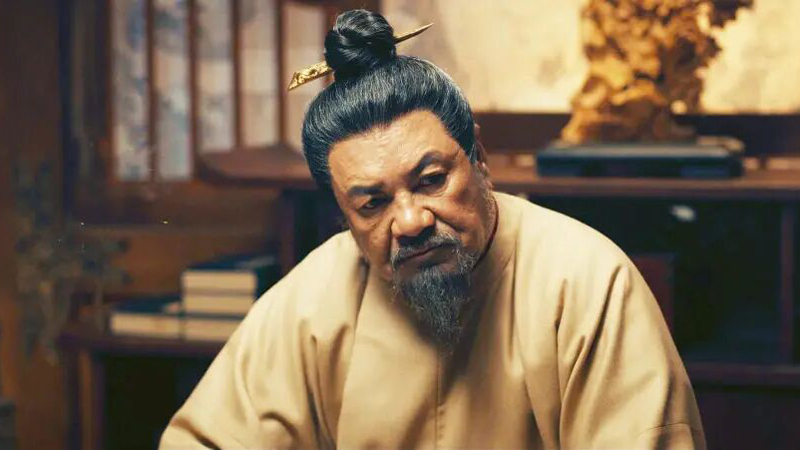
As Qian Yuanguan (钱元瓘), the ailing king of Wuyue (吴越), You Yongzhi crafts a heartbreaking portrait of eroding authority. His is a performance defined by physical decay and emotional longing. Confined mostly to a sickbed, he uses a fading voice and a weary gaze to project the immense burden of kingship.
His body seems to sink into the bedding, his breath labored as he half-listens to court reports. The toll of prolonged illness and political strain is visceral. Upon hearing of a fire in the treasury, a flicker of pure terror crosses his face before he masters it, insisting it is "a small matter." The immediate collapse that follows betrays the truth—the kingdom is crumbling with him.
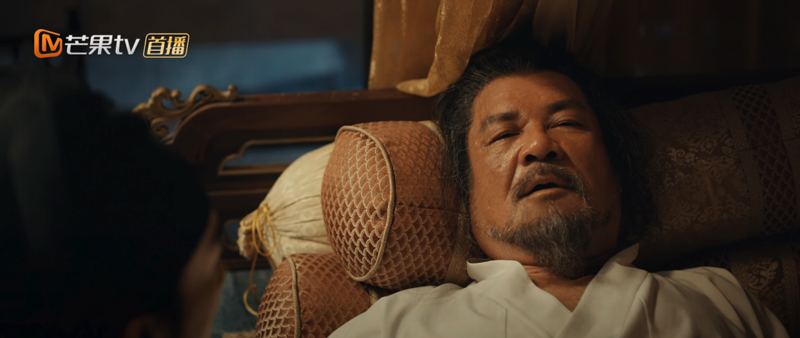
The core of his arc is a fractured relationship with his stern, formal son. In their interactions, You Yongzhi’s eyes are pools of paternal sadness. A quiet plea—"Is it so hard to call me ‘father’?"—reveals a man who craves familial warmth more than feudal obedience. This makes his final moments profoundly tragic.
Revived by a cruel silver needle, a decision by his minister he is too weak to fight, he must name a successor. You Yongzhi renders the king’s final breaths with painful authenticity. His eyes hold a struggle between a father’s promise to an adopted son and a ruler’s duty to biological lineage. When he finally hears the longed-for "father" from his son, a subtle release washes over him. His final instructions are whispered with a clarity of love, not power.
Ni Dahong (倪大红): The Iron Fist in a Velvet Glove
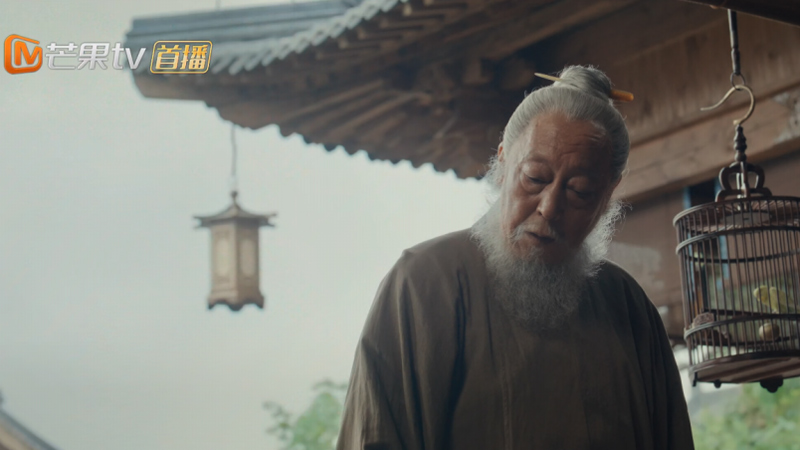
The minister Hu Jinsi (胡进思) is a figure of formidable, ambiguous power, and Ni Dahong embraces this complexity. He is the veteran statesman whose loyalty to the state is absolute, yet whose methods are brutally pragmatic. Ni Dahong avoids mustache-twirling villainy, instead finding a chilling realism in the character’s convictions.
His authority is established instantly. Ordering the flogging of a negligent official, his gaze is cold and his actions are precise, devoid of anger but full of unquestioned command. He is a man of order, and his order is enforced without hesitation. This makes his subsequent actions so compelling.
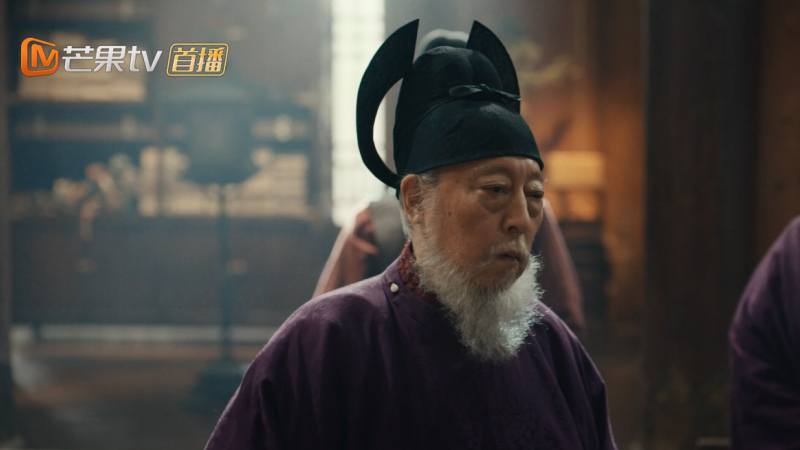
When the king collapses, Hu Jinsi personally carries him to seek aid, his face a mask of urgent concern. This moment of apparent loyalty makes his next decision land with shocking force. Told the king is dying, he orders a needle to revive him, knowing it will kill him. Ni Dahong’s delivery is calm and decisive; this is not murder, but a necessary act of statecraft to ensure an orderly succession.
His political manipulation is equally clinical. Persuading the dying king to change the heir, he argues with flawless, dispassionate logic about the perils of adopting an outsider. He is persuasive because he believes he is right. Later, ordering the extermination of a rival's family, he observes from a balcony. Ni Dahong’s face shows no glee, only the quiet satisfaction of a problem efficiently solved. He plays Hu Jinsi as a true believer in his own harsh code, making him far more than a simple antagonist.
Zhu Yawen (朱亚文): The Physical Hero
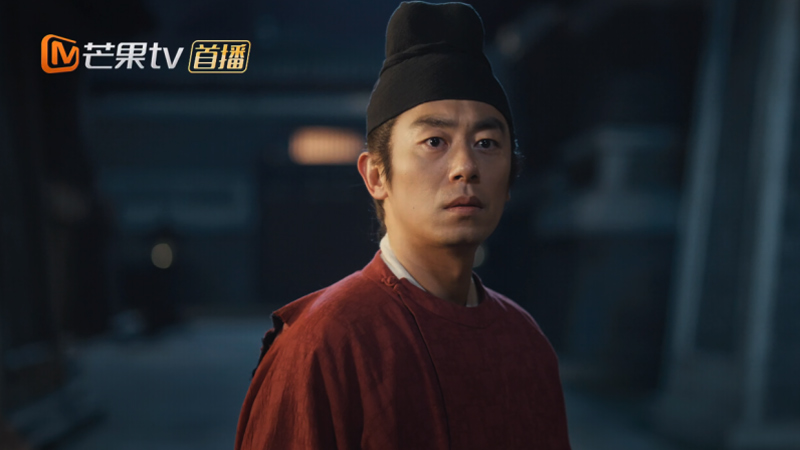
To play Zhao Kuangyin (赵匡胤), the future founding emperor of the Song dynasty, is to embody a legend in its making. Actor Zhu Yawen shoulders this not with pomp, but with raw physicality. His Zhao is all restless energy and unrefined principle. In an early scene where he must arrest an official, persuasion fails. His hand flies to his sword hilt, his eyes burning with the impatience of youth—a mix of fury, disdain, and that fearless courage of a young man yet to be tempered by defeat.
This brashness is swiftly met with the harsh pedagogy of the times. After a reckless action, his father, Zhao Hongyin (赵弘殷), administers a severe whipping. Zhu Yawen’s performance here is a masterclass in silent transition. We see the anger drain from his face, replaced by stung pride, then a dawning, heavy understanding. The hot blood cools, leaving behind a somber realization: brute courage is a liability in this chaotic world.
Zhu’s portrayal finds its depth in these moments of introspection. After successfully completing a tense mission for the new emperor, he is promoted. Instead of joy, he quietly asks, “Does this make me a traitor?” The question, laden with moral unease, hints at the conflicted ruler he will become. Zhu Yawen grounds the mythical figure, letting us see not just the future emperor, but the troubled conscience within the soldier.
Zhao Jian (赵健): The Nuanced Shadow
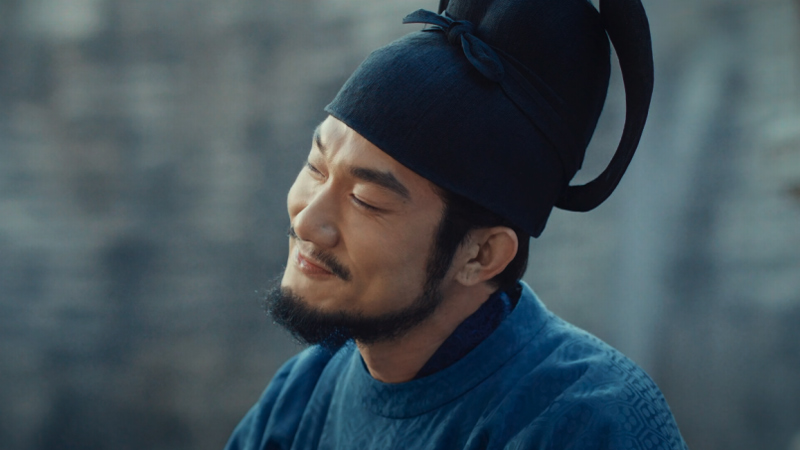
In stark contrast stands Cheng Zhaoyue (程昭悦), a minor historical footnote brought to chilling life by Zhao Jian. This character is no grand villain, but a social climber, a merchant who thrives in the shadows of power. Zhao Jian plays him with the calm precision of a spider weaving its web. In one scene, he instructs a subordinate to cheat an official with inferior silk. His demeanor is not of a criminal, but of a pragmatic businessman stating a simple fact, his eyes gleaming with shrewd calculation.
His true artistry lies in psychological manipulation. When his subordinate is haunted by a murder he committed, Cheng Zhaoyue visits with wine. He begins with a gentle probe, his eyes studying the man’s guilt. Then, he tells an anecdote about a fallen emperor, his voice low and steady. The story is a mirror, a warning, and a threat all at once. Finally, he clasps the man’s shoulder—a gesture of solidarity that feels like a chain being locked.
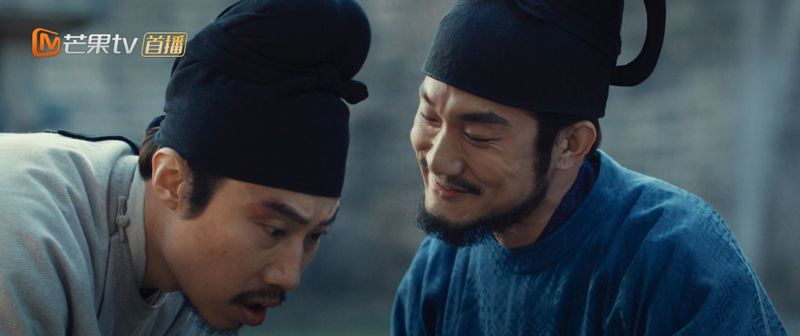
Zhao Jian excels in portraying duplicity. Later, he kneels before the young king, Qian Hongzuo (钱弘佐), his voice dripping with earnest loyalty as he denounces other courtiers. The performance is so convincing that only the faintest flicker in his eyes betrays the ambition and satisfaction beneath. He is a man who understands that in chaos, the most valuable currency is not gold, but the weaknesses of others.
Hao Ping (郝平): The Quiet Foundation
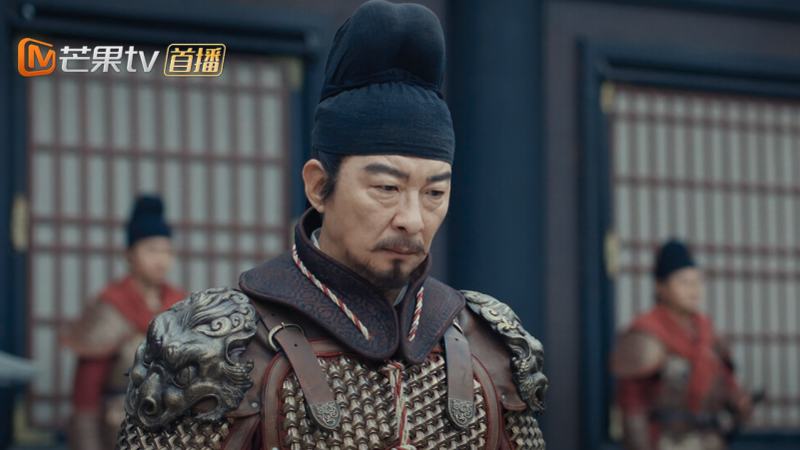
If Zhao Kuangyin is the flame, his father Zhao Hongyin ( 赵弘殷) is the stone hearth that contains and directs it. Played by Hao Ping, Zhao Hongyin is a veteran who has survived countless political storms. His performance is a lesson in economical power. In the same arrest mission where his son draws his sword, Hao Ping’s Zhao Hongyin sits motionless on his horse. His eyes, sharp and watchful, scan the environment, assessing risk. He allows his son to act, understanding that experience must sometimes be earned the hard way.
Yet, when the danger passes and his son swaggers with triumph, the father’s response is swift and brutal: a whipping that breaks his whip. Hao Ping delivers his lines—“You don’t know the height of the sky or the depth of the earth”—with a gravelly intensity that mixes rage, fear, and profound care. It is not mere punishment; it is an urgent transmission of survival instinct from one generation to the next.
Hao Ping reveals the character’s political wisdom in quieter moments. To defuse his son’s lingering anger after a court dispute, he abruptly announces he has arranged his marriage. It is a deft redirect, a parent’s tactical move to steer a volatile youth onto safer ground. Every glance, every measured word from Hao Ping conveys a man reading the subtle currents of power, trying to navigate his family through them. He builds a father who is both anchor and compass.
Hai Yitian (海一天): Stone-Faced Sovereignty
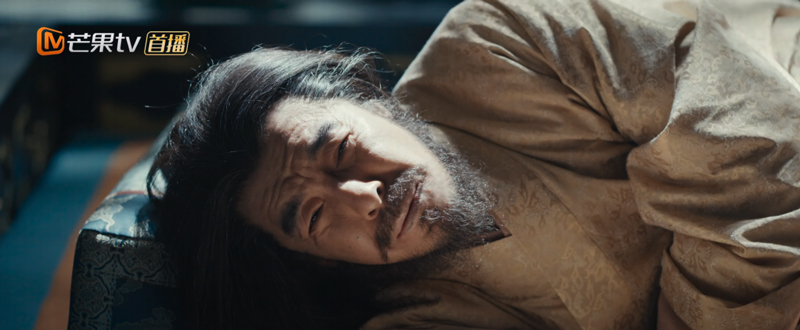
Hai Yitian portrays Shi Jingtang (石敬瑭), a ruler eternally condemned in textbooks. His achievement is making this vilified figure feel disconcertingly human. In an early court scene, a minister pleads for justice regarding a massacre. Hai Yitian sits on the throne, his gaze distant and unfocused. He appears to listen, yet gives no indication of hearing. His delivery of the consequential verdict is flat, devoid of emotion, as if deciding a minor domestic matter. The chilling effect is immediate; his character's utter detachment from human suffering is more terrifying than any outburst of rage.
The performance deepens in a later scene of mortal illness. Here, Hai Yitian strips away all imperial pretense. Prostrate on a sickbed, his voice is a fragile thread, yet his eyes hold a desperate intensity as he entrusts his young son to a minister. This is not a king, but a fearful father. The complexity arises in the unspoken understanding between the two men. Hai Yitian’s gaze towards his chancellor is layered with trust, suspicion, and weary acknowledgment of the man’s political agility. He says little, but his eyes convey a lifetime of calculated compromise.
Through these restrained choices, the actor builds a three-dimensional person. He does not ask for sympathy, but for comprehension. We see the weary machinery of power, the isolation of a throne built on shameful compromise, and the fleeting vulnerability of a dying man. Hai Yitian proves that to understand a historical monster, one must first see the human being operating the levers of terrible decisions.
Bai Yu (白宇): The Princely Shell
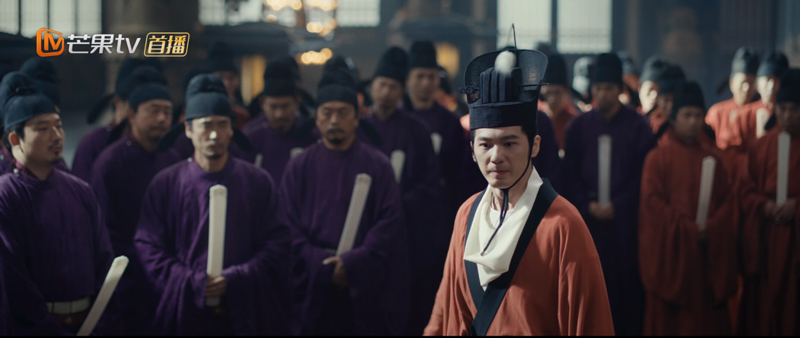
Bai Yu enters the narrative as the adult Qian Hongchu (钱弘俶), the king whose pivotal decision to surrender his kingdom defines the series' later trajectory. His initial appearance perfectly captures a sheltered prince. With a tall frame and elegant robes, he embodies youthful ease. His smiles are genuine, his demeanor light, portraying a young man untouched by the grim realities beyond the palace walls. This early portrayal is effective, establishing a baseline of innocence from which his character must fall.
The challenge, and current limitation, of the performance emerges during his character's crucial awakening. Traveling north, he witnesses the horrifying aftermath of war: displaced refugees and unburied bones. This moment should shatter his worldview. However, Bai Yu’s reaction feels muted, the horror not fully penetrating the princely shell. He remains somewhat detached, even engaging in light banter. The profound shift from carefree noble to burdened ruler, which this trauma should catalyze, is not yet palpable in the performance.
This may be a function of narrative pacing. The role’s true weight lies ahead, in the agonizing political and personal calculus leading to his fateful surrender. Bai Yu has convincingly built the vessel—the charming, untested prince. The impending drama lies in watching him fill that vessel with the bitter wine of duty, loss, and impossible choice. The performance is poised for depth, awaiting its moment of fracture.
Mei Ting (梅婷): A Mother’s Fortress
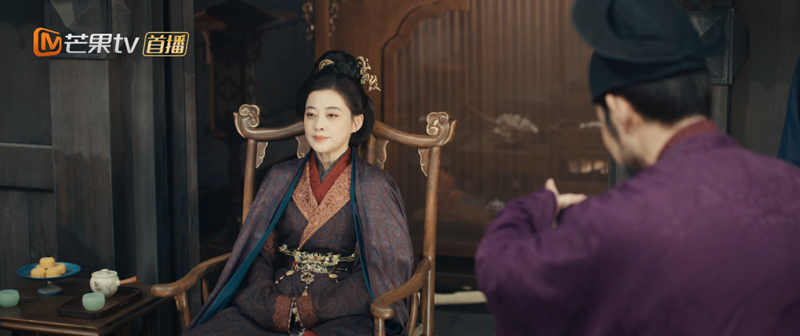
In a world dominated by male political machinations, Mei Ting creates a formidable presence as Island Chieftain Yu (俞). She is a force of nature, a ruler who has carved out her own dominion through will and strength. Her entrance is unforgettable: commanding a fleet of warships, she demands the release of her son. Mei Ting does not shout; her power is in her stillness. Clad in armor, her gaze is sharp enough to cut through steel. She speaks with a low, controlled voice that carries absolute authority, a leader used to being obeyed.
Her most compelling scene is a tense negotiation. Seated calmly, she outlines her terms with the cool precision of a seasoned strategist. Mei Ting shows us a woman whose maternal love is inextricable from her political acumen. She is not a pleading mother, but a sovereign leveraging her power for a familial goal. Her performance brilliantly balances fierce protection with ruthless pragmatism, understanding that sentiment is a currency she cannot afford to overspend.
If there is a slight friction, it is the weight of the actor’s modern roles momentarily glancing through the historical veneer. At times, the narrative uses her character more as a plot catalyst than a fully explored individual. Yet, within those constraints, Mei Ting forges an indelible image of matriarchal authority. She embodies a fortress—both protecting and imprisoned by her own power.
Wu Haochen (吴昊宸): The Boy in the Throne
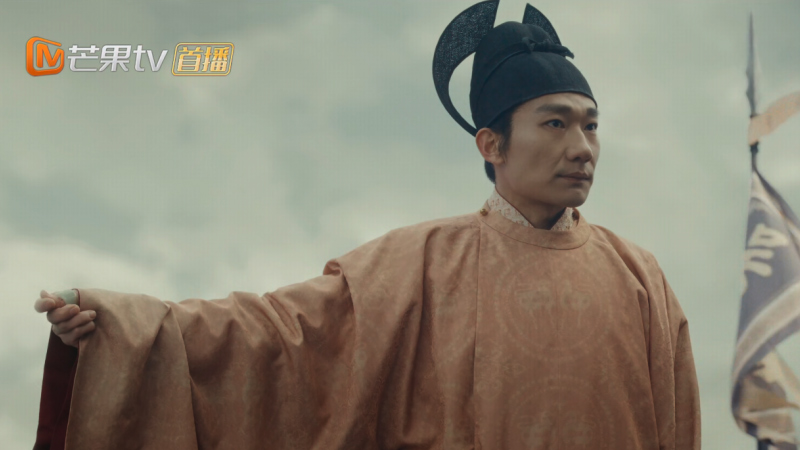
Wu Haochen, a less familiar face, delivers one of the narrative’s most poignant arcs as the teenage king Qian Hongzuo. Thrust onto the throne at fourteen, he is acutely aware of his inadequacy. In a heartbreaking deathbed scene with his father, Wu Haochen’s performance is a raw nerve. His eyes are wide with panic, his voice trembles as he insists he is unfit for the crown. Yet, beneath the protestations, a flicker of yearning is unmistakable. The actor masterfully shows a boy terrified of the responsibility but secretly drawn to its power.
We watch this internal conflict evolve. Once formally elevated, a subtle shift occurs. The pleading uncertainty in his eyes hardens into a fragile resolve. When acknowledging the ministers who placed him there, his gaze is no longer that of a lost child, but of someone beginning to grasp the levers at his disposal. It is a silent, meticulous portrayal of a political awakening, of a child’s persona being shed under the unbearable weight of a crown.
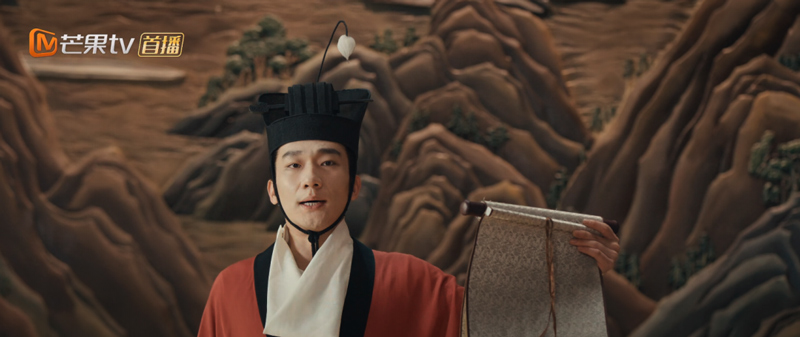
The performance is not without its minor simplifications. In interactions with the powerful regent who controls him, the emotional palette could sometimes broaden beyond fear to include veiled resentment or calculated obedience. Nonetheless, Wu Haochen succeeds in making the king’s journey deeply sympathetic. He allows us to feel the immense loneliness and paralyzing pressure of a child trying to fill robes that are several sizes too large, making his every small step toward agency feel like a monumental victory.

In Conclusion
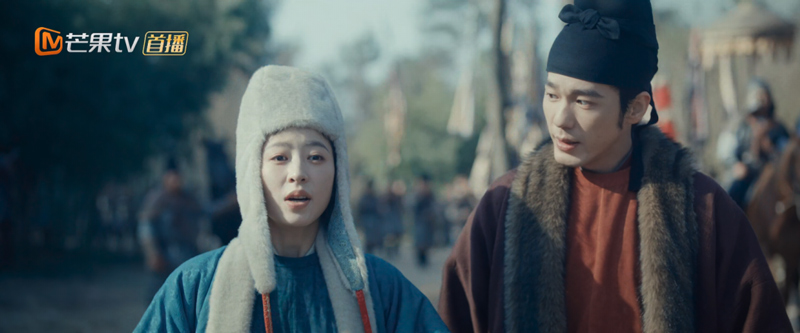
Swords into Plowshares redefines power in historical performance. Its most profound impact lies not in grand speeches, but in the eloquent language of restraint. Through a masterful ensemble, the series demonstrates that true authority often whispers: in Dong Yong’s calculated silence, You Yongzhi’s weary gaze, and Ni Dahong’s chilling pragmatism. These performances collectively argue that in the treacherous currents of history, human complexity is most authentically revealed in a glance, a hesitation, or a suppressed tremor. The series thus becomes a compelling testament to the quiet, formidable power of nuanced acting, where the unspoken carries the weight of dynasties and the stillness of a performance echoes longest.