What makes us hold fast to our beliefs when the world seems to demand we let them go? The historical drama Swords into Plowshares (太平年) offers no easy answers, but instead immerses viewers in the turbulent final days of a fictional dynasty. Through the eyes of its young nobles-turned-soldiers, the series poses difficult questions about sacrifice, duty, and the cost of integrity. It is not the intricate political machinations or grand battle scenes that resonate most deeply, but rather the persistent, flickering flame of idealism within the characters—a quality that feels both achingly familiar and tragically distant to the modern viewer. This intangible spirit, this youthful refusal to accept a compromised world, forms the heart of the narrative.
As the walls of the capital strain under siege and loyalties are tested, the story becomes less about saving an empire and more about what one chooses to preserve within oneself.
The Last Day of Xiaosui (小岁)
The chill of a winter siege grips the capital. Three young men, Jiu Lang (九郎), Da Lang (大郎), and Guo Rong (郭荣), find a moment of respite. Exhausted yet defiant, they warm themselves with wine. The night marks Xiaosui, an ancient tradition where one speaks their hopes for the coming year. Their wishes are simple, profound, and tinged with the impossibility of their circumstances. One dreams of mythical sea creatures from the Classic of Mountains and Seas, a desire born of pure curiosity utterly divorced from the surrounding war. Another wishes for glory on the battlefield, to be a legendary hero. The third struggles to want anything at all in such a broken world, echoing only his father's humble wish: to once again drink a cup of strong wine in a time of peace.
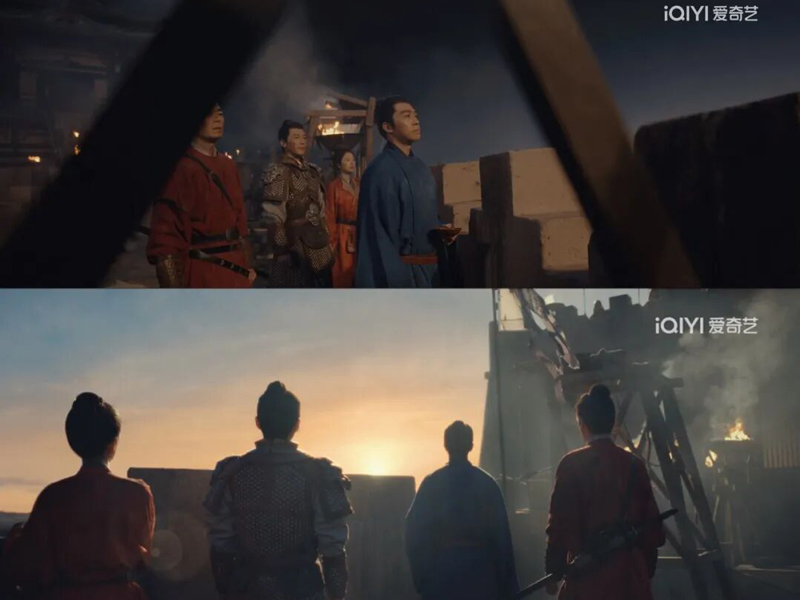
They share the drink as dawn breaks. This quiet scene carries immense weight. It asserts that hope is not the naive belief that everything will be fine, but the conscious act of naming a desire for beauty, purpose, or normalcy even when its fulfillment seems impossible. Their shared toast is not to victory, but to the light itself—a commitment to witness the sunrise, regardless of what it illuminates. The scene suggests that empires, whether glorious or decaying, are temporary. The human need to look toward light, however, is permanent. This moment of vulnerability amidst duty defines their bond and their shared spirit.
This spirit is immediately tested. After a brutal ten-day defense, they are ordered to stand down. The strategic result is the same: surrender. Da Lang is consumed by rage, seeing the lives lost as wasted. This confrontation forces a fundamental question. If you cannot change the outcome, why struggle? Why make a sacrifice that history may deem "useless"? The drama argues that the struggle itself has meaning beyond victory. It is about posture, principle, and preserving a sense of self. To "fight" is to make a statement about who you are, even in defeat. It is the refusal to let circumstance dictate your character completely.
The Weight of "Useless" Tasks
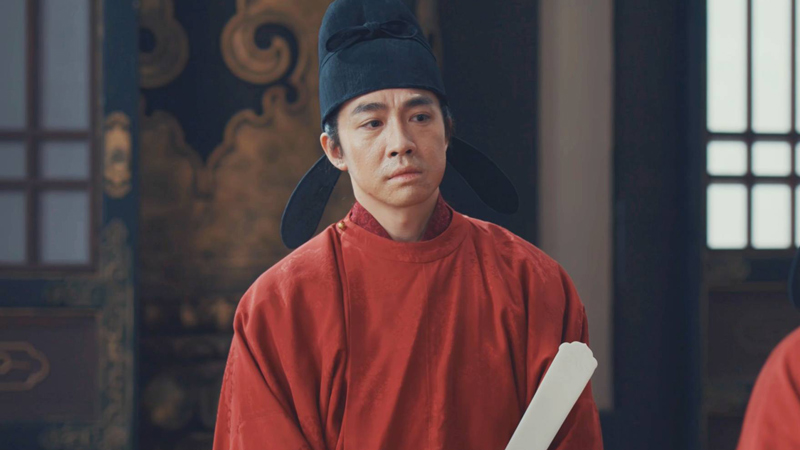
The concept of utility is ruthlessly examined through the elder statesman, Feng Linggong (冯令公). Da Lang, bitter about the pointless defense, also dismisses the meticulous work of honoring the fallen soldiers as another "useless" task in the face of certain defeat. The old man offers a lifetime's wisdom. He has lived through endless war, believing his own contributions—military or civil—have largely failed to bring peace. "Most of what I've done has been useless," he admits. This is not said with despair, but with a hardened realism.
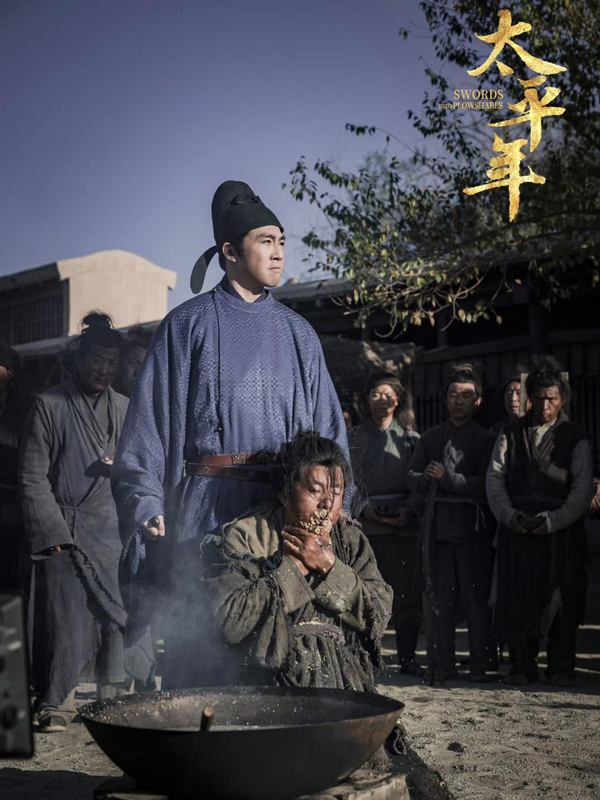
His following words land with quiet force. "Things that are useful, and things that are useless, in the end, someone must do them. Whether you can succeed is one matter. Whether you do them or not is another." He then poses the simple, devastating question to the young warrior: "Do you think such things should be done?" Da Lang's answer, "They should," marks a subtle but crucial shift. It is the move from evaluating action solely by its measurable result to judging it by an internal moral compass. The "useless" act of honoring the dead becomes a necessary affirmation of their value, a ritual that defies the chaos that consumed them.
Feng Linggong's final lesson is stark: "To be alive is to do things." This philosophy separates mere survival from living. It suggests that engagement with the world, whether ultimately effective or not, is what defines our humanity. In our own lives, we constantly categorize actions as productive or wasteful. The drama challenges this binary, proposing that some of the most vital things we do—showing up for someone, creating art, standing on principle—may never show up on a balance sheet, yet they are the very things that maintain the fabric of our souls and our communities.
When Right and Wrong Blur
For Jiu Lang, the greatest crisis is moral. He witnesses senior officials making decisions that feel like betrayal, cloaked in the language of necessity. His black-and-white world cracks. "The right and wrong I believed in seem... indistinct," he confesses. His mentor, Minister Sang, agrees that a definitive right and wrong exist, upheld by history and the common people. Yet, burdened by the survival of the state, Sang knowingly shoulders the label of traitor. He chooses to be perceived as "wrong" to achieve a greater end, a torment Jiu Lang cannot yet comprehend.
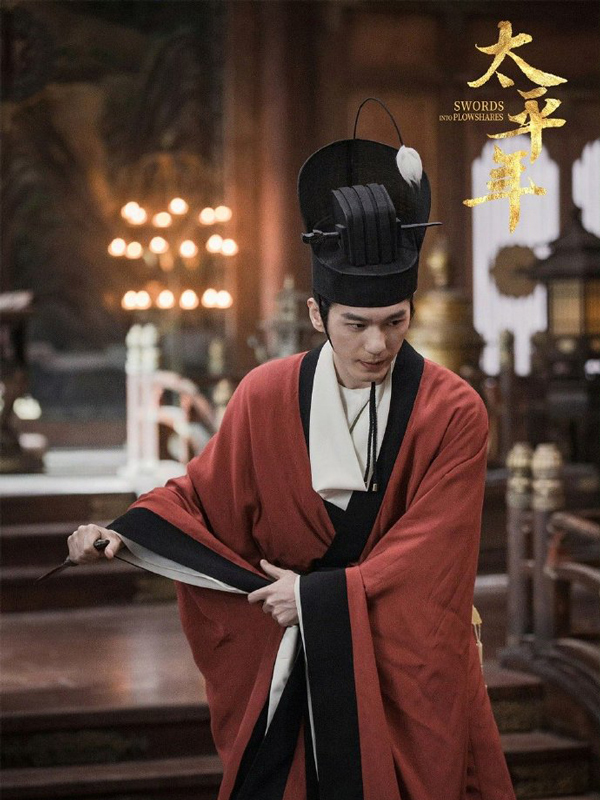
The conflict intensifies when Guo Rong, now tasked with keeping order, makes a harsh decision that sacrifices one to protect many. Jiu Lang confronts him, arguing passionately that one life is not less valuable than many. Guo Rong's response is the weary wisdom of a man crushed by responsibility. He explains that the world often forces you to do things you know are not right. "The wrongs of this world are still wrongs," he insists. "We cannot let the world's wrongs turn every act we do to follow it into a right." This is the central moral struggle: how to hold onto your personal sense of justice while navigating a system steeped in compromise.
Jiu Lang's journey culminates in a dramatic act of defiance in the court. He finally internalizes his mentor's teaching, declaring that right and wrong must be upheld, for the sake of history and the people. His action is pure, fueled by that unyielding youthful spirit. Observing him, both Feng Linggong and Minister Sang sigh with a complex mix of nostalgia and melancholy: "Youth is so wonderful." This line is not merely about age. It is an acknowledgment of that rare, powerful force—the “Shaonian Xinqi” (少年心气), or youthful spirit. It is the courage to act on pure conviction, to demand that the world align with principle, and to feel love and hatred with an undiluted intensity. This spirit, the drama laments, is non-renewable. Life, with its compromises and complexities, tends to erode it. Yet, Swords into Plowshares is, at its core, the story of Jiu Lang's fight to keep that flame alive. It is a reminder to guard the fires of our own desires, convictions, and passions fiercely, for once they are extinguished, reigniting them is the hardest battle of all.
