
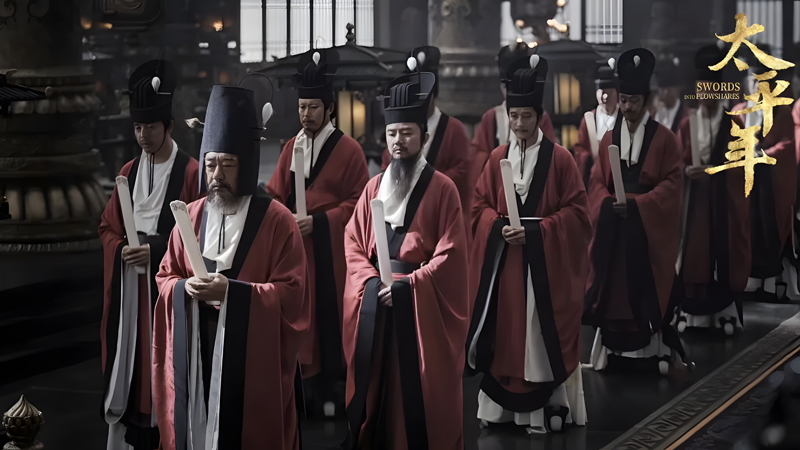
Starting Swords into Plowshares (太平年) feels less like leisure and more like an abrupt dive into a historical labyrinth. It opens with a brutal scene that grabs attention, but soon swaps simplicity for dense, semi-classical dialogue and a whirlwind of political factions. Viewers find themselves in the tumultuous Five Dynasties and Ten Kingdoms, a period so briefly taught that even dedicated students feel lost.
This complexity splits audience opinion. On Douban (豆瓣), criticism centers on confusion, while praise highlights intellectual reward. Meanwhile, Xiaohongshu users fervently exchange explanatory notes, treating each episode as a puzzle. Its top-tier ratings, including from CVB, show a curious trend: many embrace the mental exertion.
The drama questions modern viewing habits. Instead of passive consumption, it insists on engagement, making its difficulty not a barrier but a distinctive, debated feature of its identity.

Patience Rewarded: Chaos Unveils Historical Depth
Many television shows try to make viewing easy. The new series Swords into Plowshares does the opposite. It presents a sprawling, complex narrative set in a tumultuous historical period, demanding focus and patience from its audience. This initially daunting approach has divided viewers, but for those who persist, a rich and rewarding story unfolds.
The Confusing Opening Act
The first episode introduces nearly twenty significant characters with complex official titles. Just as you start to recognize a face, that character is often killed off. Emperors are not safe; several die or go mad within the first few episodes. This narrative choice creates a sense of pervasive instability and danger.
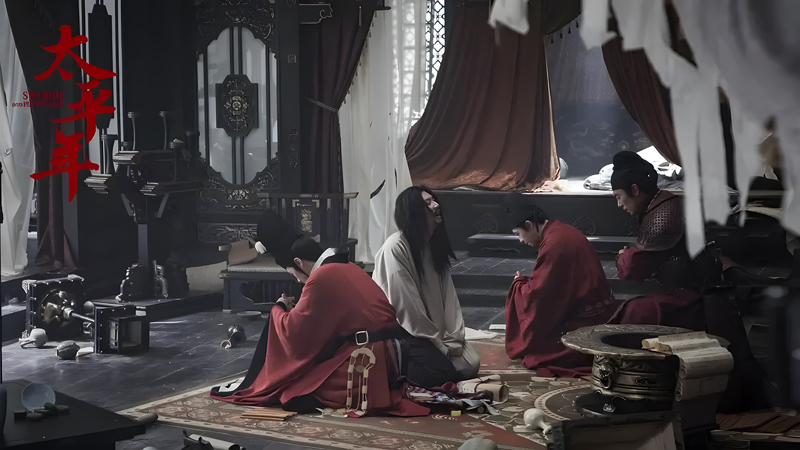
Viewers have adapted by treating the show like a challenging study subject. They create charts to map relationships and factions, noting which characters are essential and which are likely doomed. Watching requires active engagement, with many keeping notes nearby to track the rapid plot developments.
This intentional narrative chaos mirrors the actual historical setting. The story is not built on familiar emotional hooks or a clear protagonist initially. Instead, it immerses the audience directly into a world of political betrayal, brutal violence, and moral ambiguity from the very first minutes.
A Fractured Historical World
The series is set during the Five Dynasties and Ten Kingdoms period, a fragmented era following the Tang dynasty's collapse. For over seven decades, five short-lived dynasties rose and fell in central China, while ten rival kingdoms, such as Wuyue (吴越) and Southern Tang, held power in surrounding regions. This created a geopolitical landscape of constant flux.
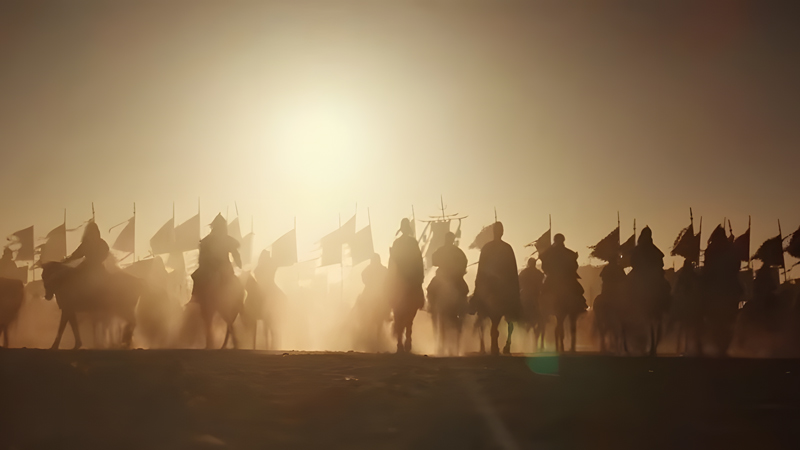
Swords into Plowshares dedicates significant effort to recreating this specific world. It uses a barrage of authentic titles, names, and locations. While this can be a barrier, it reflects a commitment to historical texture. The goal is to build a believable ecosystem of power, not just a simple backdrop.
Chen Zhijian (陈志坚), a history professor who consulted on the series, notes this extensive world-building aims to establish the historical reality that forms the crucial context for the main plot. The early confusion is part of establishing the era's inherent disorder, against which a clearer story eventually emerges.
The Delayed Protagonist
Audience expectations are deliberately subverted. Early figures like Zhao Kuangyin (赵匡胤), founder of the Song dynasty, appear but are not the central focus. The true main character, Qian Hongchu (钱弘俶), the king of Wuyue, is introduced much later, with a modest and unassuming first appearance.
His delayed entrance is a calculated narrative risk. By the time he steps forward, the audience has already witnessed several regime changes. This structure positions him as a stabilizing force within the chaos, a man whose personal journey will give shape to the surrounding tumult.
Qian's story follows a more traditional arc of growth and challenge. As the series progresses, elements of revenge, justice, and political struggle become prominent. He confronts corrupt officials and brutal warlords, providing the narrative satisfaction the early episodes withhold.
Finding the Core
The central theme, the voluntary surrender of territory to the new Song dynasty, or Natu Guisong (纳土归宋), gradually comes into focus. Qian Hongchu's personal path becomes the vehicle for exploring this pivotal historical decision. His moral and political dilemmas form the story's backbone.
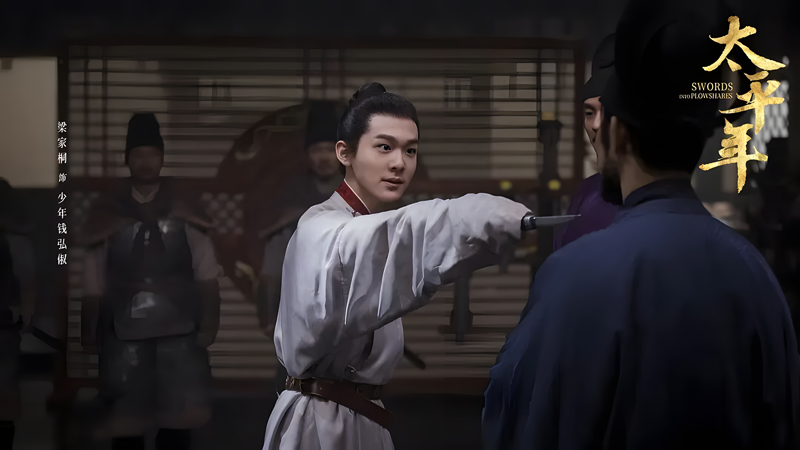
Professor Chen suggests that beneath the dense historical surface, the series functions like a tale of martial heroes or a quest. It uses fictionalized drama to guide viewers, especially younger ones, through a complex historical transition, making the stakes personal through one man's experience.
For the patient viewer, the initial disjointed pieces slowly lock together. The early "tool characters" and political murders establish the brutal rules of the world Qian Hongchu must navigate. The payoff is a deeper understanding of both the character and the difficult peace he seeks to achieve.
Swords into Plowshares asks for effort but offers a substantial return. It proves that a television drama can be both intellectually demanding and dramatically compelling, trusting its audience to find the signal within the intentionally crafted noise.

The Forgotten Dynasty: Bringing a Fractured Age to Screen
History’s spotlight often misses certain eras. While tales of the Three Kingdoms have been told and retold for centuries, another period of profound fracture remains in the shadows: the Five Dynasties and Ten Kingdoms. This was a century of relentless upheaval, where empires rose and fell with dizzying speed, and loyalty was a currency more volatile than the times. Recently, a television series, Swords into Plowshares, has attempted to illuminate this chaotic chapter. Its reception highlights the immense challenge of dramatizing an age defined by moral ambiguity, scarce records, and a stark absence of the timeless heroes that anchor other historical epics.
A Scarcity of Stone
The primary hurdle is the historical record itself. Unlike the meticulously chronicled Three Kingdoms, the Five Dynasties period left behind fragmented and often contradictory accounts. Continuous warfare meant archives were destroyed, and many events went unrecorded. As historian Chen Zhijian notes, even academic research is hindered by this foundational lack. For a screenwriter, this paucity of fact is both a constraint and a peculiar freedom. It demands the construction of a logical, compelling narrative within vast stretches of silence, weaving story threads where history offers only frayed ends.
This absence shapes the stories we see. Most cinematic forays into this era cling to the few well-known figures, like the poetic last ruler of Southern Tang, Li Yu (李煜), and his rival, Zhao Kuangyin, the founder of the Song Dynasty. Their dramatic contrast—the sensitive poet versus the hardened soldier—provides a familiar anchor. Other narratives, like those concerning Qian Liu (钱镠), founder of the Wuyue kingdom, remain deeply obscure, known only to dedicated history enthusiasts.
Swords into Plowshares tries to push beyond these isolated figures. It introduces fictional entities like the Qinhuai Society or the Huanglong Society, merchant consortiums portrayed as shadowy powers influencing war and politics. These creations attempt to flesh out the era’s texture, suggesting the complex, unseen economic and espionage networks that must have operated amidst the chaos. They are narrative solutions to historical emptiness.
Heroes Without Halos
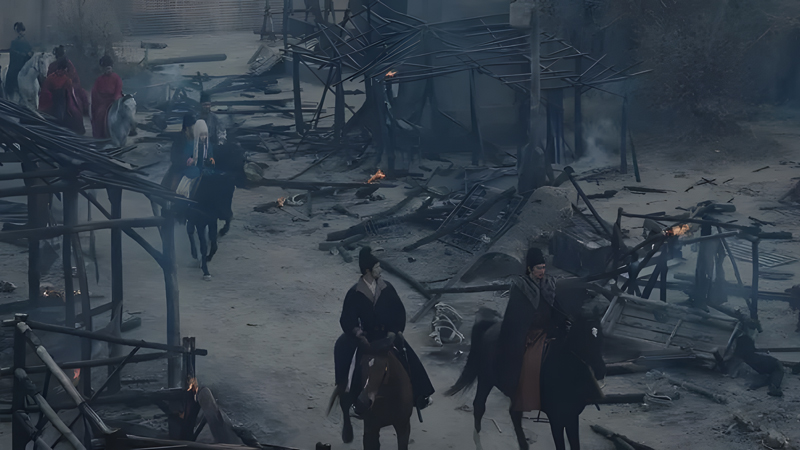
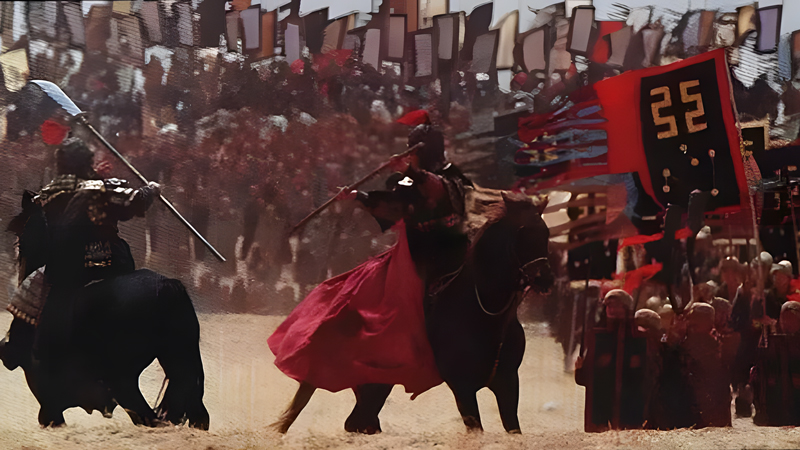
Audiences crave moral clarity, a "right side" to root for. The Three Kingdoms period, filtered through Luo Guanzhong's Romance of the Three Kingdoms (三国演义), provides this with its clear demarcation of loyalty, betrayal, and noble causes. The Five Dynasties offer no such comfort. As Chen Zhijian points out, there is no consistently "positive camp" for viewer allegiance. The so-called legitimate "Five Dynasties" succession in the north was led by rulers often viewed as treacherous or self-serving.
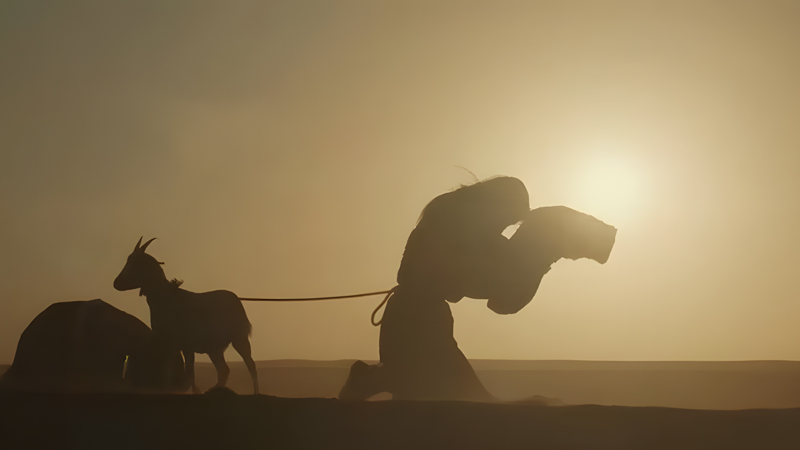
The most infamous example is Shi Jingtang (石敬瑭), who ceded territory and famously addressed a younger Khitan emperor as "father." His successor, Shi Chonggui (石重贵), was later paraded in humiliation, tethered to a goat. In this world, the famous dictum of general An Chongrong (安重荣) resonated: "The Son of Heaven is made by the man with the strongest army and sturdiest horses. Is it a matter of pedigree?" Power was its own justification, and virtue a luxury few could afford.
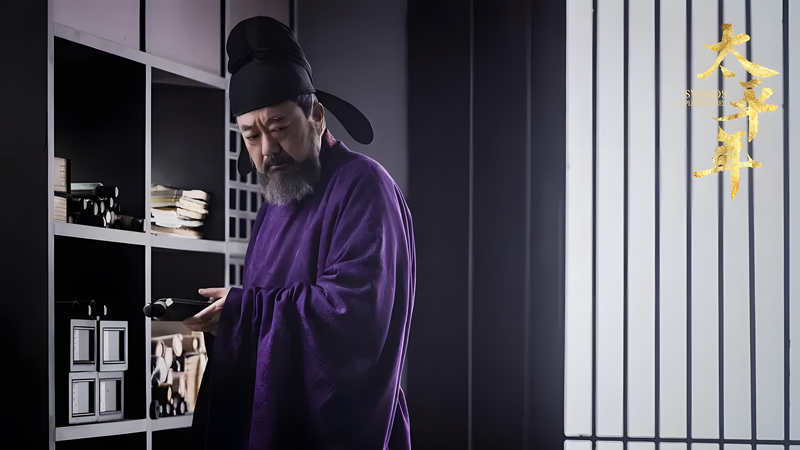
This creates a cast of deeply ambiguous characters. Take Feng Dao (冯道), a statesman who served four dynasties and ten emperors. Traditional Confucian scorn labels him an unprincipled opportunist. Yet, within his historical context, his actions—advising tax relief, stabilizing communities, preserving classics through printing—could be seen as a pragmatic commitment to maintaining civil order amidst the storm. He is a hero not of loyalty to a throne, but to societal continuity itself.
Fiction's Bridge to Truth
How then does a dramatist approach such material? Swords into Plowshares operates on what Chen Zhijian initially termed "thirty percent truth, seventy percent fabrication." Its method is not strict chronicle but narrative reasoning. It takes a known endpoint—such as Qian Hongchu’s decision to peacefully surrender his kingdom to the Song—and imagines a plausible psychological and political journey leading to that moment.
This inevitably leads to artistic license and controversy. The series brings together figures like Qian Hongchu, Guo Rong (郭荣), and Zhao Kuangyin on the same stage, a chronological impossibility. Such choices spark debates about historical distortion. Yet, the show's writers argue their goal is not a documentary recitation. As screenwriter Dong Zhe suggested, each historical footprint is part of civilization's path. The drama's task is to make that path comprehensible and emotionally resonant for a modern audience.
The series, like the era it portrays, begins with chaos but moves toward its stated thematic conclusion: peace. In doing so, it performs a delicate act of translation. It takes an age where the "villain" was the relentless tide of history itself—an age of fractured land, fractured loyalties, and fractured records—and seeks to build a bridge of understanding, using the tools of character, conflict, and consequence. Whether it succeeds or fails, the attempt alone reminds us that every forgotten century is filled with human struggles whose complexity we are only beginning to dare to depict.

When Digital Pages Rewrite Forgotten History
For many, the vast narrative of Chinese history is condensed into a familiar, rhythmic sequence: Tang, Song, Yuan, Ming, Qing. This dynastic mantra, repeated in classrooms, inadvertently erases the complex, turbulent chapters nestled between its beats. One such period, the sprawling, fragmented era known as the Five Dynasties and Ten Kingdoms, often lingers as a mere footnote. Today, however, that skipped page is being vigorously reopened, not by academics alone, but by a global digital audience engaging with compelling new stories.
A Drama's Meticulous Revival
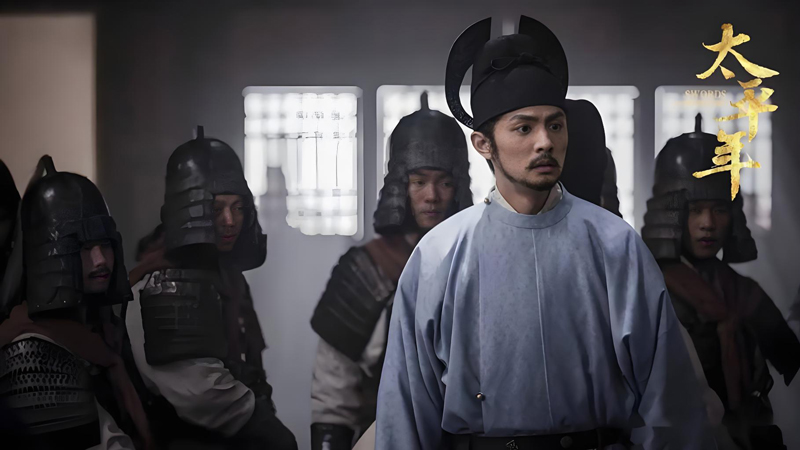
The television series Swords into Plowshares acted as a catalyst. It committed to a painstaking visual authenticity to bridge the historical gap. Costume artisans wigs with a density of 120 knots per square centimeter. Over twenty distinct sets of battle armor, referencing Tang and Song dynasty relics, were forged from real copper, some weighing over twenty kilograms.
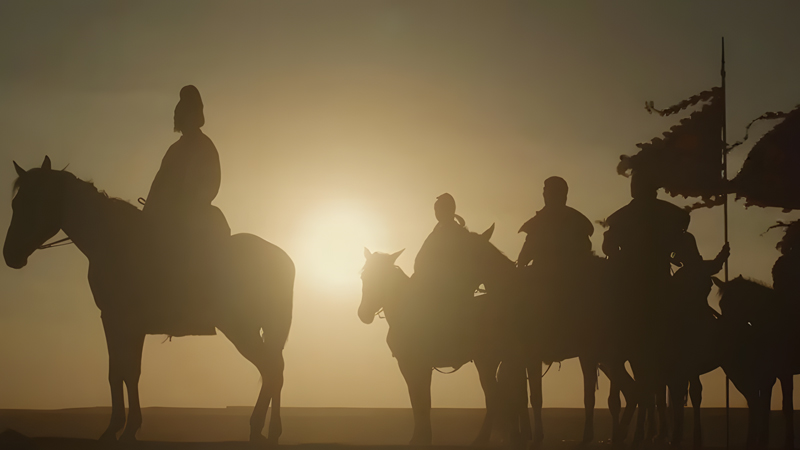
This dedication extended to the environments. Set designers constructed intricate wooden frameworks to evoke the riverine landscapes of Jiangnan, while employing rammed earth and gravel to depict the austere northern frontiers. The production’s physicality aimed to ground viewers in a tangible, believable world, making the distant past feel immediate and accessible.
Such detail provided a credible portal. It moved the period from abstract textbook descriptions into a space of human drama and sensory experience. The show’s commitment offered an invitation: to step across the threshold of unfamiliarity into a vividly reconstructed past.
The Online Ripple Effect
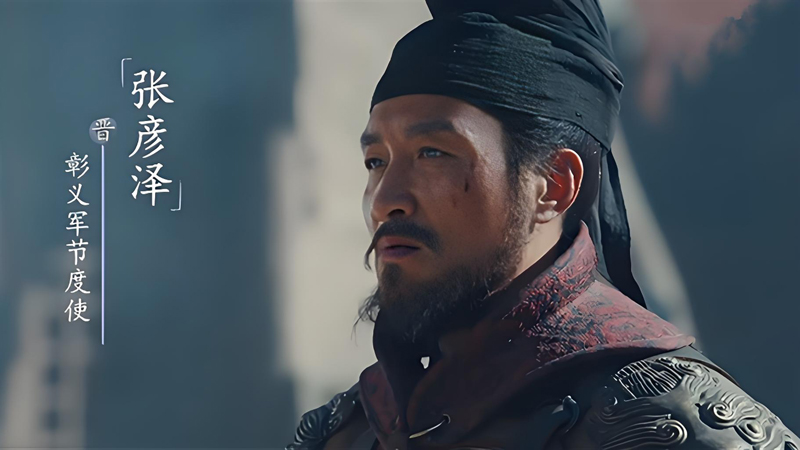
Following the drama's release, the online response was transformative. Social media platforms became dynamic forums for historical discussion. Users created trending topics like "Who Will Rule the Central Plains?" and "Qian Hongchu's Assassination of Zhang Yanze (张彦泽)," debating events once known only to specialists.
Content creators employed diverse tools to explain the complexity. Some used illustrated comics with simple figures to demystify political alliances. Others painstakingly hand-drew maps to visualize the shifting borders of the era. Guides titled "Learning History with Swords into Plowshares" garnered hundreds of thousands of engagements, fostering a communal learning environment.
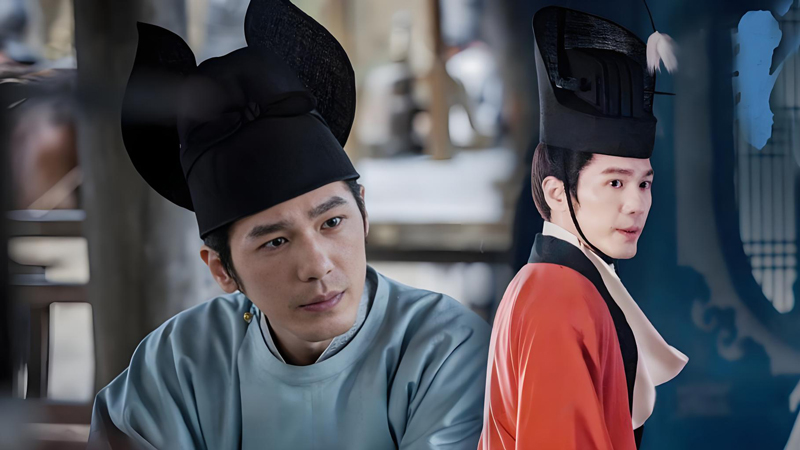
This digital enthusiasm had tangible effects offline. The popularity of historical texts like A Complete History of the Five Dynasties and Ten Kingdoms surged on reading apps, climbing bestseller lists. The audience's curiosity, initially piqued by entertainment, fueled a deeper, self-directed exploration of the historical record.
Interactive Immersion in a Fractured World
Parallel to the drama's impact, the video game Where Winds Meet (燕云十六声) offered a different, immersive path into the same era. It places players directly into its disorder, a world where established rules have collapsed and moral certainties are blurred.
This interactive format provides a personal, experiential understanding of the period's chaos. Players navigate the instability not as passive observers but as active participants, making choices that shape their journey. The game frames this not merely as conflict, but as a search for meaning and the potential to rebuild within a broken system.
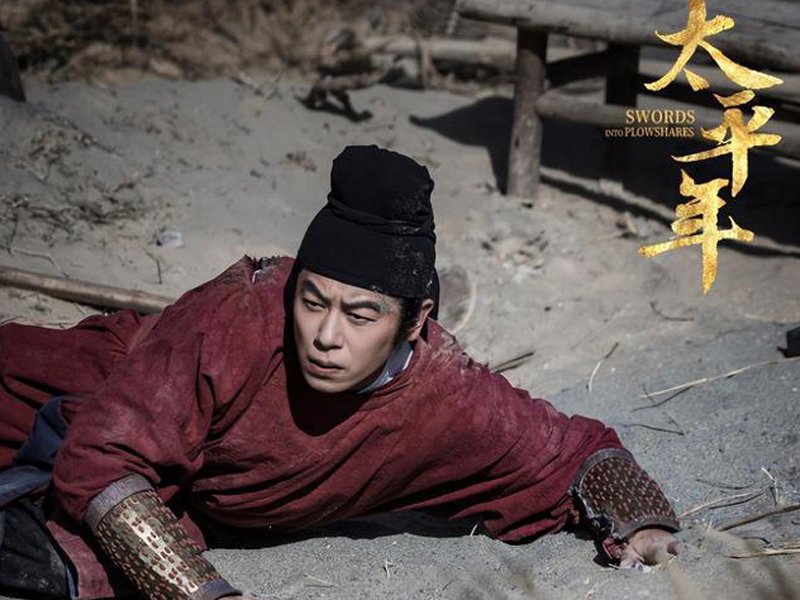
With over 80 million global registrations, the game introduced this obscure historical setting to an international audience. Many players, with no prior knowledge, began independently researching the era's context, characters, and events, turning gameplay into a gateway for historical discovery.
A New Chapter for Old Stories
The collective effect of these media is a significant cultural shift. A historical period once summarized in a few sparse textbook pages is moving into the clear light of modern memory. It is being debated, visualized, and personally experienced by millions.
This process democratizes historical engagement. It suggests that understanding can begin with a captivating scene or an interactive quest, lowering the initial barrier to a rich but complex past. The story invites the audience in first, allowing detailed scholarship to follow.
It remains to be seen whether this particular era will capture the enduring popular imagination like the Three Kingdoms period. Yet, the phenomenon clearly demonstrates that in the digital age, the contours of our shared history are not fixed. They can be redrawn, expanded, and vividly brought to life by the very tools of contemporary storytelling.
