Article
Search results:
-
Ancient Chinese Hanfu Illustrated Book
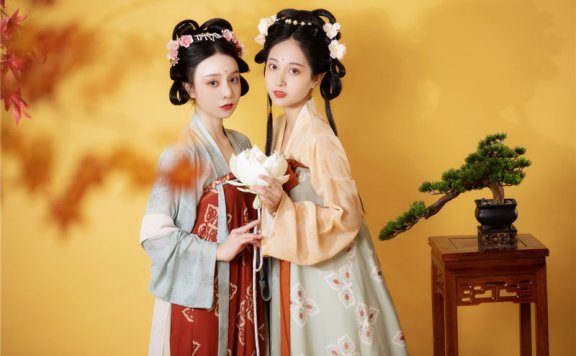
Chinese Hanfu has a long history and has gone through several dynasties over thousands of years of development, during which time it has evolved and many representative Hanfu styles have emerged, learn more about them together through the exquisite illustrations from Jin Li Qing Nian. Pre Qin Period China, one of the oldest civilizations in the world, has created a gorgeous dress culture as early as the Neolithic period. During the Spring, Autumn, and Warring States Periods, Chinese traditional clothing entered a stage of evolution Li (礼, ritual) was the rule, costume consciousness and the same structure as heaven and earth contain a profound Chinese philosophy. The complete He Dang Ku (合裆裤) already existed in the Western Zhou period. At this time, the main styles of clothing were the Mian Fu Zhi (冕服制) with the upper and lower garments, the one-piece Shen Yi Zhi (深衣制), and the Bian Fu Zhi (弁服制). The aristocratic ladies would also cut the back of their long dresses short, to reveal a floor-length skirt, creates a graceful and slender look. San Huang Zhu Yu Pei (三璜组玉佩) Jade pendant group, also known as a iscellaneous jade pendant, that is a combination of multiple different types… -

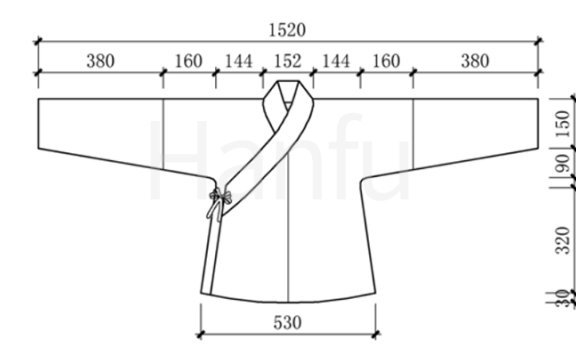
Hanfu Making(6) - Quju Cutting & Sewing Patterns
This section contains Quju (曲裾). Size range: 155/80A to 175/96A. Please read the introduction of the topic and how to use this guide in advance. Introduction The basic style of the Quju is the Jiao Ling You Ren, the back lapel is lengthened to form a triangle, which passes down the back and around to the front lapel, and then a Dadai (大带) is tied around the waist to cover the end of the triangle, with a pleated skirt underneath. The Quju was popular from the pre-Qin to Han dynasties, before the invention of the Ku (袴), and could be worn by both men and women, with the hemline of the men's Quju being wider and the hemline of some women's Quju taking on a unique "trumpet flower" style. Later, men's Quju gradually disappeared, and for a long time, Quju remained in the mainstream of women's clothing. However, in the Wei and Jin Dynasties, the Ruqun, which was easier to wear and more convenient for walking, became widely popular, while the Quju began to disappear, and in the long history that followed, the most popular women's clothing was the Ruqun style. Although the Quju disappeared early in history, it… -
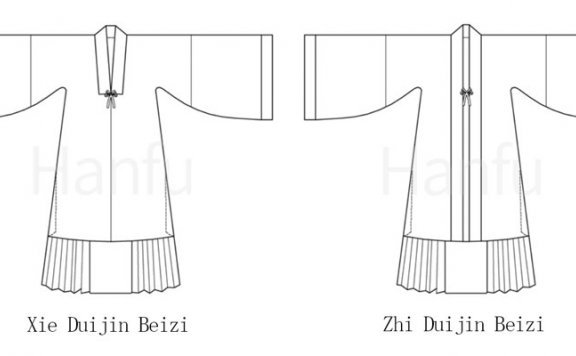
Hanfu Making(4) - Beizi Cutting & Sewing Patterns
This section contains Beizi (褙子), which can be divided into: Xie Duijin Beizi(斜对襟褙子), Zhi Duijin Beizi (直对襟褙子). Size range: 155/80A to 175/96A. Please read the introduction of the topic and how to use this guide in advance. Introduction Beizi is a kind of top with a pair of lapels, which relies on two ties in front of the chest to hold it in place, so it must be worn over other clothes, and is knee-length with slits on both sides. In the Ming Dynasty, it was also called "Pifeng". Beizi can be worn by both men and women, with men mostly using them as Bianfu (便服) and women using them as Lifu (礼服, formal dresses). There are two types of Beizi painted in this section: Xie Duijin (diagonal lapels) Beizi and Zhi Duijin (straight lapels) Beizi, mainly women's wide-sleeved Beizi, with a Ma Mian Qun or pleated skirt underneath. In addition, for the Zhi Duijin Beizi, you can make men's Beizi by enlarging the size and making slight alterations, or you can make women's narrow-sleeved Beizi by reducing the size of the sleeves. Size chart Xie Duijin Beizi(斜对襟褙子) Zhi Duijin Beizi (直对襟褙子) More Hanfu Style… -
![How to Make More People Know Hanfu [Answers from Young People]](https://www.newhanfu.com/wp-content/uploads/thumb/2021/06/fill_w576_h356_g0_mark_How-to-Make-More-People-Know-Hanfu-Answers-from-Young-People-0.jpg)
How to Make More People Know Hanfu [Answers from Young People]
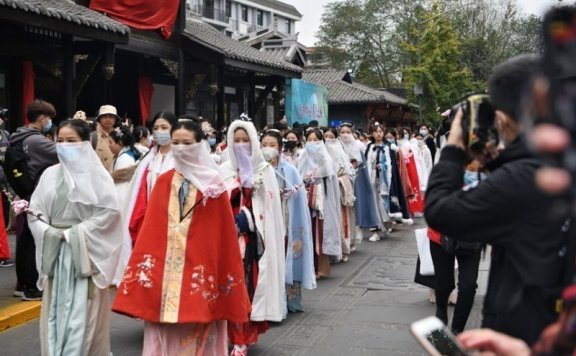
On the evening of 26 May, a unique discussion was taking place in a courtyard in Yibin, Sichuan Province. The participants were all dressed in "Chinese traditional costumes", including a round-necked robe from the Tang dynasty, a Beizi from the Song dynasty, and a short Aoqun from the Ming dynasty, giving a sense of time travel at first glance. They are members of the Yibin Hanfu Association and are working on a plan for a ritual. Li Juan, the owner of the courtyard and president of the Yibin Hanfu Association, listens carefully and gives sound advice from time to time. Li Juan is a lover of traditional culture and has won awards for excellence in calligraphy in Yibin's Cui Ping District, and for excellence in Chinese painting from the Yibin Artists Association, etc. She came across hanfu in 2013 and loved it so much that she has been promoting it with other hanfu enthusiasts ever since. In December 2019, she took the lead in setting up the Yibin Hanfu Association, and has held many events such as the Flower Festival, coming-of-age ceremony, and the Qu Yuan Ritual Ceremony at the Dragon Boat Festival, bringing hanfu and traditional rituals to… -
How Popular is Hanfu Now
Source: China Daily According to data from people.cn, Chinese hanfu consumers surpassed 2 million in 2018, tripling the level of 2017. A recent report from Guangzhou-based consultancy iiMedia Research estimated that by 2021, China’s hanfu fans will reach 6.89 million, and the hanfu sales volume will total 10.16 billion yuan ($1.58 billion). Popular Hanfu Currently, there were more than 3,000 registered hanfu-related enterprises in China, among which over 60 percent were registered in the past five years, data from business information provider Tianyancha showed. Guangzhou-based bespoke hanfu manufacturer, Minghuatang, is known as the “Hermes of hanfu.” Data from Minghuatang’s official website on May 17 showed that the customer service is busy handling orders submitted on May 11, and the tailoring period has been scheduled to mid-March 2022. Apart from high-end markets, inexpensive hanfu is also popular. Data from Alibaba’s Taobao platform showed that hanfu that are priced between 100 yuan and 300 yuan took up over 60 percent of sales, while those over 500 yuan accounted for roughly 30 percent of sales. Why Hanfu became popular Zhang Yi, the chief analyst at iiMedia Research, said during an interview with online fashion media Vogue Business, that from a niche hobby… -
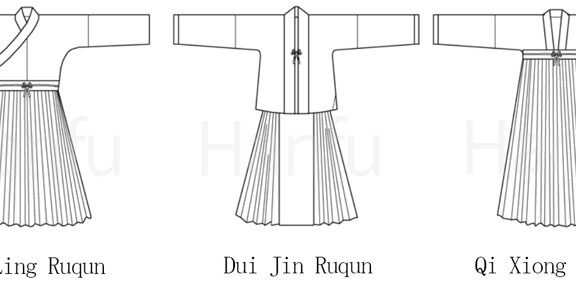
Hanfu Making(3) - Ruqun Cutting & Sewing Patterns
This section contains Ruqun (襦裙), which can be divided into: Jiao Ling Shang Ru (交领上襦), Dui Jin Shang Ru (对襟上襦), Zhe Qun (褶裙) type A, Zhe Qun type B, Qi Xiong Shang Ru (齐胸上襦). Size range: Jiao Ling Shang Ru, Dui Jin Shang Ru, and Qi Xiong Shang Ru (155/80A to 175/96A), Zhe Qun (155/64A to 175/80A). Please read the introduction of the topic and how to use this guide in advance. The Ruqun in this section should actually be called "Shan Qun (衫裙)". Ruqun is supposed to refer to the Hanfu style from the Wei and Jin dynasties, with a Yaolan (腰襕). Introduction Ruqun (襦裙) is one of the earliest and most basic clothing forms in the history of Chinese dress. The Ruqun described here generally has a short upper Ru, reaching only to the waist or flush with the chest, while the Qun (skirt) is long and hangs down to the ground. According to the different styles of the collar, can be divided into: Jiao Ling Ruqun(交领襦裙, cross-collar); Dui Jin Ruqun(对襟襦裙, lapel). According to the height of the skirt waist, can be divided into: Zhong Yao Ruqun(中腰襦裙, mid-waist), the same as the Qi Yao Ruqun(齐腰襦裙); Gao Yao… -
Hanfu Making(1) - Zhongyi Cutting & Sewing Patterns
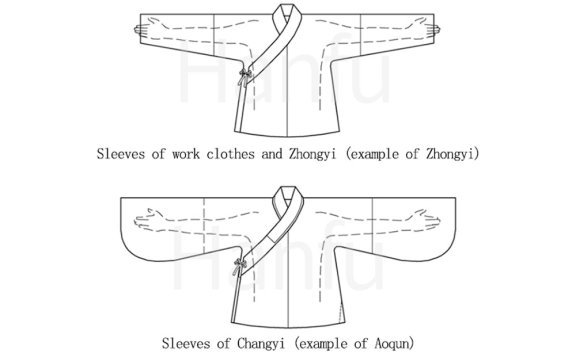
This section includes Zhongyi (中衣) and Zhongku (中裤). Size range: Zhongyi (155/80A to 185/104A), Zhongku (155/64A to 185/88A) Please read the introduction of the topic and how to use this guide in advance. Introduction Zhongyi, also known as Liyi, is worn outside of underwear and within outerwear (the Chinese meaning of 中 is equivalent to the middle), and its role is similar to that of a shirt in modern clothing, which can be used to match and complement the role of Zhongyi. Zhongyi cannot be worn outside, and in addition to playing the role of a shirt, it can also be used as home wear and pajamas. The Zhongyi illustrated in this section is the common cross-collar arrow-sleeved Zhongyi, while the broad Zhongyi also includes Zhongdan (中单), Zhongku (中裤, pants), and Zhognqun (中裙, skirts). Zhongyi common fabric types are cotton, cotton linen, chiffon, monochrome satin, etc. In addition to the most commonly used white fabric, girls can also choose colored fabrics when they match the Ruqun, the colors of which are bright green, soft yellow, peach, purple and gray, etc. Men wearing Pan collar robe with Zhongyi can also choose red. Because Zhongyi's body and collar than the outer clothing… -
Guide of Chinese Traditional Hanfu Sewing Patterns
Original Author: Huafeng Mozhu (华风墨逐) Hanfu Cutting & Sewing Patterns Detail Zhongyi (中衣) Aoqun (袄裙) Ruqun (襦裙) Beizi (褙子) Pan collar Aoqun (盘领袄) Quju (曲裾) Banbi (半臂) Shuhe (裋褐) Zhiduo/Zhishen/Daopao (直裰/直身/道袍) Panling Pao/Lanshan (盘领袍/襕衫) Shenyi (深衣) Yisan (曳撒) Inspired Hanfu (改良汉服) Updating Preface Ethnic costumes are different from ordinary clothes that only play the role of warmth and decoration, but they are one of the elements of the appearance of a nation and an important carrier of its traditional culture. It is also an important carrier of the traditional culture of a nation. The cultural connotation of traditional costumes of different nationalities is different, and it can naturally show the spiritual civilization and aesthetics of the nation. Hanfu is the traditional costume of the Han people, also known as "Han Zhuang" or "Hua Fu".Since the time of the Yellow Emperor, Yao and Shun, hanfu has taken a basic form, and after the inheritance of the rituals of the Zhou Dynasty, it has formed a perfect system of clothing and crown and spread to the people in the Han Dynasty. The hanfu had been developed for thousands of years until the fall of the Ming Dynasty, when it was temporarily stopped.… -
What You Need to Know About Ming Dynasty Clothing
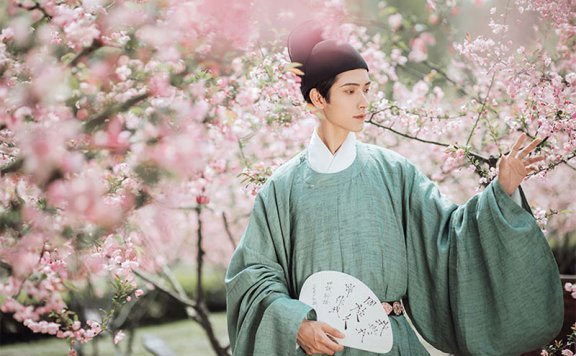
In recent years, Hanfu has received more and more attention. More and more Hanfu cultural festivals are being held in different cities in China, and worldwide, and thousands of Hanfu enthusiasts are participating in them. The Beauty of Hanfu Is in the Heritage So why is Hanfu so popular? In today's society, people have higher and higher requirements for aesthetics, and the special classical beauty of Hanfu attracts countless people to love it, and then to pay attention to it and understand it. So it is no wonder that Hanfu is so popular. And the beauty of Hanfu is not just on the surface, but in the thousands of years of traditional etiquette and civilization of the Chinese nation that it carries. Today we bring you some of the Hanfu collections from "Yi Guan Da Cheng-Ming Dynasty Costume Culture Exhibition", these collections come from the Shandong Museum and Confucius Museum, most of them are Ming Dynasty clothing, which is not only beautifully made and complete sets, but also very significant for costume research. I hope you can also learn something from these collections. Detailed video about "Yi Guan Da Cheng-Ming Dynasty Costume Culture Exhibition": Based on the previous dynasty,… -
Changes in Ancient Chinese Women’s Hanfu Clothing
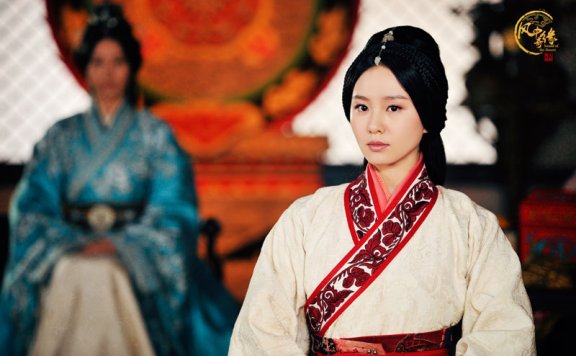
The costume is a vivid presentation of the style of each era. Before the Chinese New Year, the National Museum of China launched the "Ancient Chinese Costume Culture Exhibition". The exhibition attracted many Chinese culture lovers, including those wearing Chinese Hanfu costumes. In addition to the display of traditional costumes, the exhibition also includes many artifacts related to costume production, costume images, and clothing etiquette, providing a complete, systematic, and expansive overview from the Stone Age to the Ming and Qing dynasties. Rich in artifacts and detailed panels, there are lines of costume development stretching back 5,000 years, as well as many aspects of lifestyle, cultural exchange and ritual innovation, and even the finer points of ornamentation, belts, headwear, and makeup, which are also not to be missed. One of the highlights of the exhibition is the use of 15 restored portraits dressed in the costumes of different dynasties and identities to showcase the complete wardrobe of different dynasties. Taking this opportunity, Qianmo Xueshe will select a few of these restored portraits to introduce you to the changes in ancient women's Hanfu clothing. 01 Han Dynasty Shenyi with Long Sleeves Shenyi (深衣) were the most common women's Hanfu clothing in… -
Latest Traditional Chinese Dress for Kids
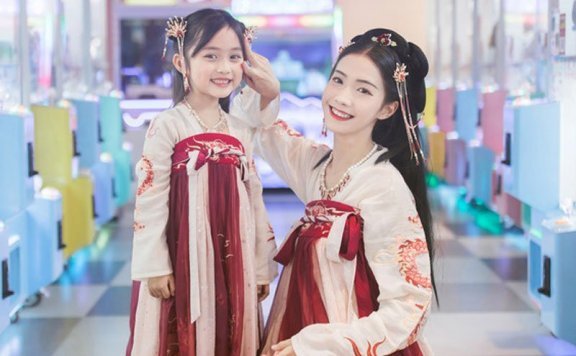
Hanfu & Traditional Chinese Dress for Kids Hanfu is becoming more and more popular among young people, and traditional clothing has also attracted more attention. And children have always been cute pronouns, but what kind of surprises will there be for children to wear traditional Chinese clothes. This issue brings traditional Chinese dress for kids, so that they can also wear Chinese clothes and feel the power of traditional culture together. What kind of clothes did children wear in ancient China? It is generally believed that children in the history of China do not have their own clothes, and children have been wearing a reduced version of adult clothes, but in fact, but it's not all that. Ancient Chinese Dress for Kids Qiangbao (襁褓, swaddling) The clothing of newborn babies is more common: Qiangbao. Qiangbao was widely used in ancient China from the court down to the people. According to the literature, Qiangbao as an ancient child care product has been widely used as early as the Shang and Zhou dynasties. The term "Qiangbao" was later used to refer to babies under the age of one year. Doudu (兜肚) Doudu, with naked back when wearing, has the function of heat… -
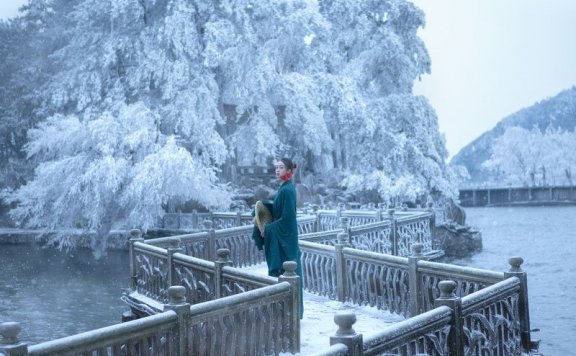
Why Ming Dynasty Hanfu Appropriate for Winter Wear?
Today there is an almost universally accepted saying among Hanfu enthusiasts that the Ming dynasty Hanfu is suitable for autumn and winter and the Tang dynasty Hanfu for summer. The Song style is best for modern times and can be worn in every season. But why is this? Could it be, simply because historically the Tang dynasty was hotter, the Ming dynasty colder, and the Song dynasty closer to the present? Follow along with Dongfang Zhuangdao to find out more! In fact, in the light of current phenological studies, this statement does correspond to historical climate trends. Mr. Zhu Kezhen (竺可桢先生), the founder of modern Chinese geography and meteorology, and a leading figure in the field of phenology, has studied the main trends of climate change in China over the last 5,000 years, using the 20th-century climate as a benchmark for comparison, and concludes: in ancient China, there were four warm periods, the Yangshao periods (仰韶时期, 5000 BC to 3000 BC), Yinxu periods (殷墟时期), the Spring and Autumn & Warring State periods, the Sui and Tang periods, and four cold periods, the late Shang and early Western Zhou periods, the late Northern Song and early Southern Song periods, and the… -
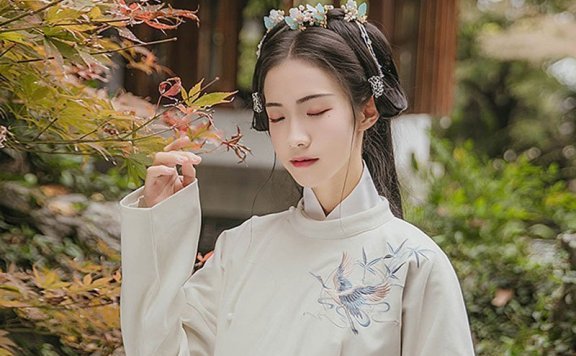
The Most Classic Hanfu of All Time
In the process of evolution, there are dozens or even hundreds of styles of Chinese clothes. This article mainly introduces the most classical styles of Chinese Hanfu clothes. Women's clothing Suit Ruqun(襦裙) Ruqun is a kind of hanfu, also call: Shanqun (衫裙), short clothes worn on the upper body, call "Ru", and the dress of the lower body, call "Qun", together call "Ruqun". It is a typical "Shangyi Xiachang(top clothes and underdress) " form. Ruqun has an obvious feature: short top and long dress. The Ruqun appeared in the Warring States Period, Ruqun was worn by ordinary people(female) until the end of the Ming and Qing Dynasties. Jiaoling Ruqun/ Shanqun(交领襦裙/衫裙) Jiaoling Ruqun is a kind of Ruqun, the main feature is: the top collar is cross. It is quite common in the Song Dynasty. Wearing method: First: Wear top clothes, Align the collar of the top clothes; Tie a knot in right Jin(襟, the chest part of the top); Tie a knot in left Jin. Second: tie up the dress, Put the dress in front of you, wrap the skirt behind you; Two sides of the dress overlap behind; Folding outwards the pressing on the inner layer of dress;… -

12 Latest Fashion Chinese Clothing Hanfu Styles in Runway
The last month has seen a very large number of Hanfu events, as well as the release of very many new Hanfu styles, especially those featured in the fashion runway shows. Hanfu styles that make it to the show are of high quality in terms of fabric, fit, and design. We've selected some of the most stunning styles from the recent shows, let's take a look at the latest Chinese clothing Hanfu style! Tang-style Hezi Qun & Daxiu Shan The hottest item on the show recently has to be the Tang style Hezi Qun (诃子裙, skirt ) in the picture of the beauty in tears. It not only looks full of senior, with gorgeous accessories as if back to the Tang Dynasty. The classic color matching, wear a full texture. Ginkgo Cat Winter Jiayi & Bijia Winter is getting closer and closer, and a nice winter Jiayi (夹衣) is sure to capture your heart in no time. A cute cat rolling around under a ginkgo tree on an autumnal day is a beautiful sight to behold in this autumnal orange Jiayi. The sleeves are adorned with a lovely lace border and the cuffs are decorated with little round pompoms. Whoever… -
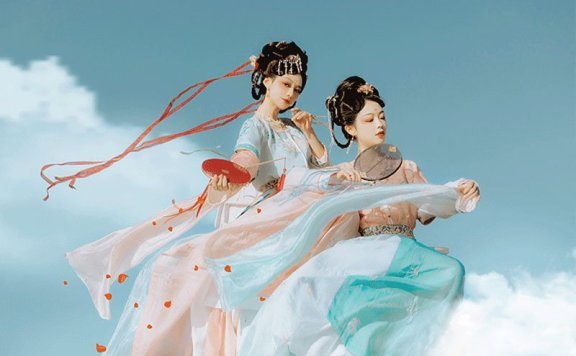
Ancient Chinese Fashion: Historical Prototype of Hanfu Style
With the movement and innovation of Hanfu, more and more new styles of Hanfu have appeared in our eyes, but those who are new to Hanfu may not know much about its style, so they don't know where to start to understand Hanfu style. Today, we have collected some basic styles of Hanfu and their corresponding historical prototypes, so let's experience the ancient Chinese fashion together. The Hanfu costume "began in Huangdi (黄帝) and was perfected in Yao (尧) and Shun (舜) ", and was styled in the Zhou Dynasty, and through the Han Dynasty, a complete system of headwear and costume was formed based on the Four Books and Five Classics. Duijin Ruqun (对襟襦裙, parallel collar) Ruqun is a top garment and skirt in Chinese, it is one of the earliest and most basic forms of Hanfu. "Ru", is a short garment, with collar style with parallel collar, crossed collar, or shawl collar (U-shaped collar). "Qun", is a skirt, is usually a one-piece or two-piece. The term "Duijin" refers to the symmetry of the left and right lapels of the Ruqun, and need wearing of an inner Moxiong(camisole). Duijin Ruqun was mainly popular in the Song Dynasty. Compared to other… -
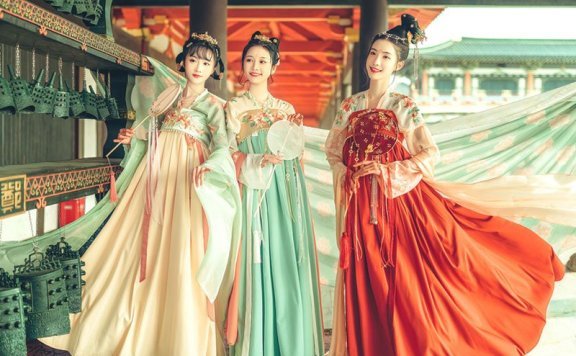
How to Wear Hanfu: Covers Most Hanfu Styles - Updating
An integrated article on how to wear Hanfu, and will use step-by-step pictures and videos to explain most Hanfu style and matching. It will give you an easier way to get to know the traditional Chinese costume. How to wear Hanfu - Shenyi Quju Shenyi (曲裾深衣) How to wear Hanfu - Ruqun (Shanqun) Qixiong Ruqun (齐胸襦裙) Qiyao Ruqun (齐腰襦裙) Hezi (诃子) How to wear Hanfu - Song style Songku (宋裤) How to wear Hanfu - Ming style Jiaoling Aoqun (交领袄裙) Hanfu Vests-Bijia (比甲) Standing Collar Jacket (立领衫) Sheer fabric Hanfu shirt (竖领对襟纱衫) Ma Mian Skirt (马面裙) Related Contents Hanfu Pibo Tie Hanfu Skirts There are also plenty of topics in the Hanfu group about how to wear Hanfu: How to wear Wei and Jin hanfu How to wear Duijin Ruqun How to wear Tang dynasty Da Xiu Shan (big sleeve shirt) How to wear Tang dynasty Hezi Qun How to wear Tang dynasty robe How to wear Song dynasty robe How to wear Song dynasty Hanfu How to wear modern Song style Hanfu How to wear Ming dynasty stand collar Hanfu How to wear Ming Dynasty Ao and Mamian Qun How to wear Ming dynasty Hua… -
5 Adorable Pink Hanfu You'll Want to Wear
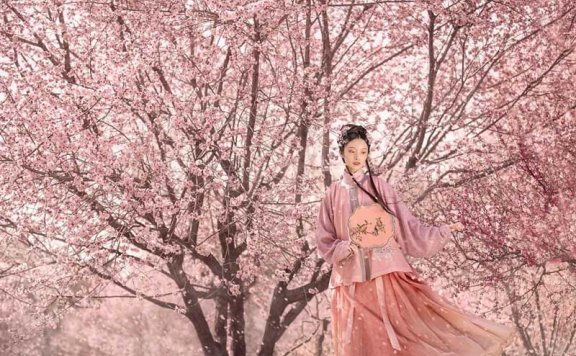
Girls are always very fond of some pink things because this color of clothes or toys looks cute and fits the psychological preferences of girls. And some pink Hanfu as well, Hanfu girls with this pink Hanfu look but also can show a special smaller and more adorable feeling. So today, let's go into the world of the traditional Chinese color, pink and feel the cultural blend and heritage behind it. The Origin of Chinese Pink Pink, or light red, is also known as "Tuihong" (退红 tuì hóng) in history. "Pink" Chinese Dictionary: Light red, the color of red mixed with white. "Tuihong" Chinese Dictionary: Refers to pink. As a traditional Chinese color, it also has several nice nicknames: Fei color (妃色 fēi sè), Yangfei color (杨妃色 yáng fēi sè), Xiangfei color (湘妃色 xiāng fēi sè), and Feihong color (妃红色 fēi hóng sè). It is a color made of a mixture of red and white, often also described as pale red, but more accurately would be unsaturated, translucent, bright red, lighter than peach, and less red than Feihong, representing lovely, young, romantic, bright, soft, sexy, fond memories, and fanciful. Pink, the Traditional Color of China During the Han… -
How to Wear Hanfu (6): Ming Style Standing Collar Jacket
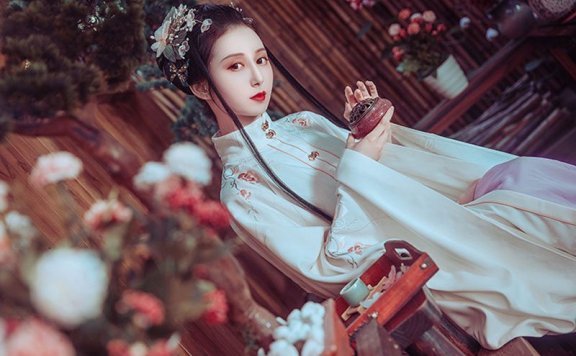
As winter approaches, more and more Hanfu enthusiasts are focusing their attention on the Ming style Hanfu. Whereas in the Ming style Hanfu costume, the combination of an Ao (袄, jacket) on top and a Qun (裙, skirt) on the bottom is especially popular. Ao has several types of collars, and today we are focusing on the standing collar today, briefly introduce the history and how to wear it. History of the standing collar Some of you might recognize the standing collar as the mandarin collar, most people think the standing collar is derived from Qing Dynasty Manchurian dress, also known as the cheongsam or qipao, but it is actually originally invented and passed down from the Ming Dynasty, the dynasty before the Qing Dynasty, it is a part of the hanfu system and was later on adapted into Manchurian dresses, and today it’s widely known in the world as the mandarin collar, and recognized as one of the most distinctive features of Chinese clothing. Do you remember this Ming Dynasty painting? Almost every woman and child are wearing the cross collared Aoqun, showing how popular this style was at that time. However, when we look more closely at… -
How to Choose One Genuine Chinese Costumes for Children?
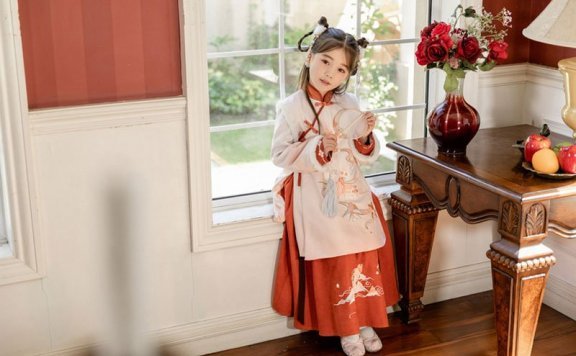
In recent years, it is common to see Chinese costumes for children walking on the street, and many children's clothing stores also have several sets of Chinese clothes hanging, which are very eye-catching. Little did I know that hansom had become a popular fashion for kids. Whether in the arts of culture, poetry and song, martial arts and fencing, music and dance, or tea ceremony, Chinese clothes are the most integrated with traditional Chinese culture. If you have a girl, give her a pretty bun, help her wear pretty Chinese costumes for Children, accompany her with poetry and chanting, and listen to the beautiful music of silk and bamboo. "The moon is in her hands, and the flowers are all over her clothes," letting her know that tradition and beauty never die. If you have a boy, you can give him a thousand years of inheritance, know the pen and ink, wear handsome Chinese costumes for Children, show the magnificent Chinese etiquette of the state of verve. In addition, Chinese costumes with Chinese elements are more suitable for children's daily wear. Compared with other Chinese traditional clothes, Chinese costumes are more simple and comfortable, and kids can wear them with… -

6 Hanfu Styles for Lovers on Valentine's Day
Valentine's Day is a festival about love, romance, flowers, chocolate, and greeting cards. On this day, men and women send gifts to each other to express their love or friendship. In China, Qixi Festival (on the seventh of July in the lunar calendar), one of the traditional festivals, has the same meaning as Valentine's day. Qixi Festival is a traditional Chinese folk festival. Qixi Festival started in the Han Dynasty and flourished in the Song Dynasty. With the development of history, the Qixi Festival is endowed with the beautiful love legend of "Cowherd and Weaver Girl", which makes it become a festival symbolizing love, thus it is considered to be the most romantic traditional festival in China, and it also has the cultural meaning of "Chinese Valentine's Day" in modern times. Legend of "Cowherd and Weaver Girl" It is said that every seventh day of July, magpies on earth will fly to the sky to build a magpie bridge for Cowherd and Weaver Girl in the galaxy so that they can meet each other. Weaver is a beautiful, intelligent, and handy fairy. On that night, ordinary women begged her for wisdom and dexterous hands, and at the same time praying…