Article
Search results:
-
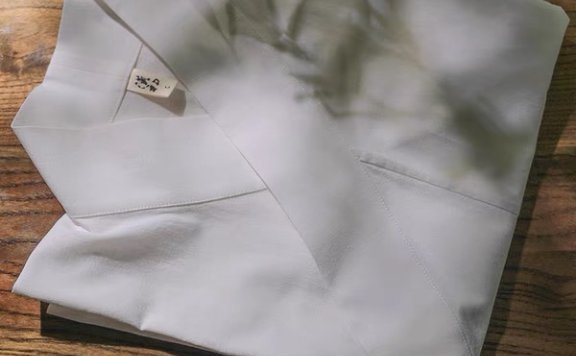
The Basics of Hanfu Underlayers
Ready to start deepening your hanfu wardrobe? Start looking into some of your closet staples here: hanfu underlayers! -
How to Wear Hanfu When It’s Hot
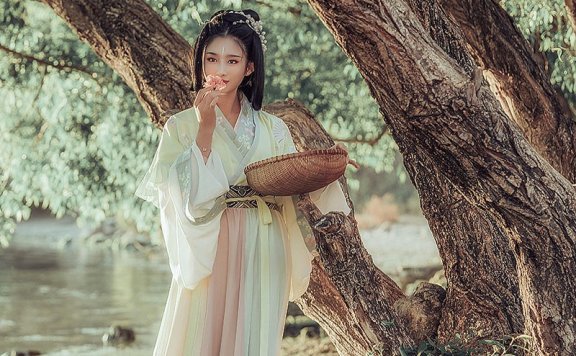
Summer is coming soon! Here's how to pick out your hanfu for summer vacation! -
Ma Mian Qun Making - How to Calculate the Width of Pleats
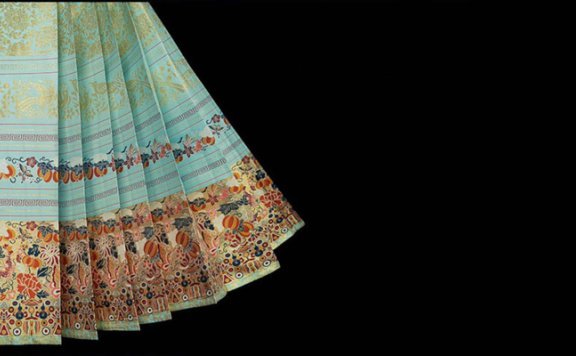
This article is a supplemental part of Hanfu Making(2) - Aoqun Cutting & Sewing Patterns. Together with a series of pictures on making a Ma Mian Qun (马面裙, horse face skirt), it will analyze the structure of Ma Mian Qun and mainly explain how to calculate the pleat width of a Ma Mian Qun. All dimensions are in centimeters (cm). "The data in this article does not take into account the seam allowance, you need to leave 1cm+ space in the seam allowance when you are actually making the dress." 1. About fabric prepare 6 identical pieces of fabric with a width of 60cm and a length that combines your actual needs. Sew 3 pieces together into one piece of fabric with a width of 180cm. Since the most fabric used for making Hanfu is about 150cm wide. So it needs to be pieced together to achieve a longer width. Please note the distinction between the horizontal and vertical directions of the fabric. You can choose a fabric with a nice print for your skirt and it is easier to confirm if it is in the right direction. 2. Structure of the Ma Mian Qun Ma Mian (马面,… -
7 Hanfu Styles for Prom
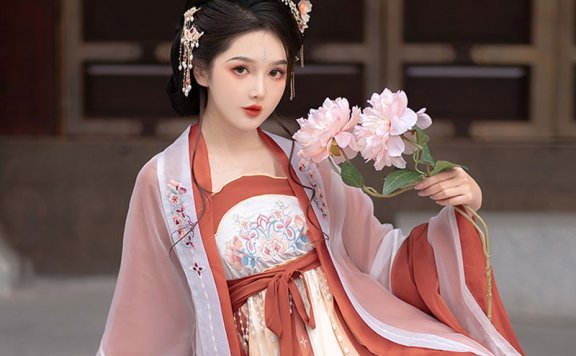
It’s prom season! Now, I know that the age group for prom is pretty small, but I’m going to prom in an outfit of my own this year (I’ll be uploading an outfit analysis of it once I’m done arranging everything in a separate article) and I thought I’d compile a few ideas for anyone else to follow in my steps. This doesn’t only include prom, of course—homecoming, other formal or semiformal occasions (if it’s black tie or has a really strict dress code play it safe and don’t do something too extravagant), etc. are also great places to show off your hanfu. Matching Ming Dynasty Sets One popular tradition for prom is to match your prom date’s outfit when you go to prom. There’s lots of ways to do this—for western clothing, many people match ties to their date’s dress or vice versa, and a couple wearing both feminine and masculine coded clothing also looks very charming—but, luckily, this tradition matches with a common hanfu trend: couple’s outfits, or CP outfits, as they’re often called. This isn’t just for official couples, of course—plenty of friends, siblings, and the like also wear CP outfits for fun. Some of the most… -
Ming Dynasty Aesthetics in Drama The Imperial Age: Costumes and Props
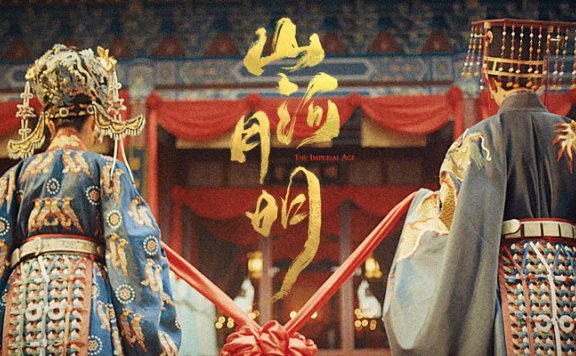
Drama The Imperial Age (山河月明), which begins with the "Hongwu Northern Expedition" in the early Ming Dynasty, tells the story of Zhu Di, the fourth son of Hongwu Emperor Zhu Yuanzhang, who have experienced the battlefield at a young age, grows into a qualified military commander and mature politician with the company of Xu Da, and achieves greatness. The Imperial Age has gained a lot of fans since it started, and viewers have fallen in love with the daily life of the imperial family, which is different from the serious royal atmosphere of previous historical dramas, describing it as "the happy life of the first family of the Ming Dynasty", and the elaborate hanfu costumes in the drama have also unfolded a realistic and detailed aesthetic painting of the Ming Dynasty. Court Dress in the Ming Dynasty During the Ming Dynasty, costumes also became more hierarchical, with strict rules on the types of clothing, accessories, and even colors that different classes could wear. In The Imperial Age, civil officials' uniforms were embroidered with birds, while military officials' uniforms were embroidered with fierce animals. The official uniform system at that time stipulated that the court uniforms and ceremonial uniforms of… -
8 Taobao Shops For Hanfu Beginners
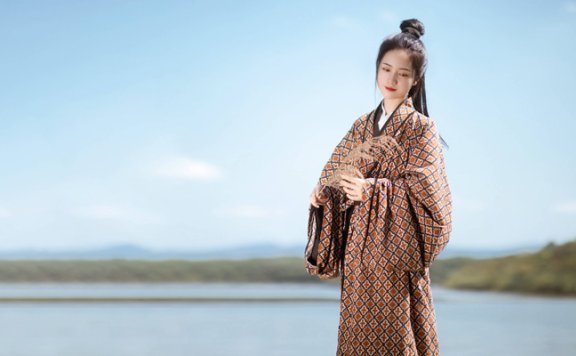
Looking to get into the Taobao shops? These are some good jumping-off points! -
Recognizing Iconic Hanfu Styles From 6 Key Dynasties
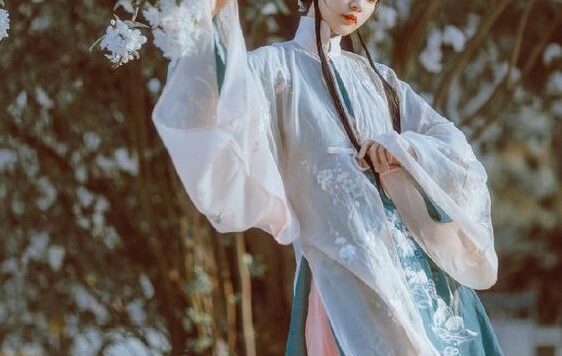
What hanfu styles are from which dynasties? Can you tell what dynasty the cover photo for this article depicts? -
Royal Feast - Latest Cuisine & Palace Cdramas that Worth Watching
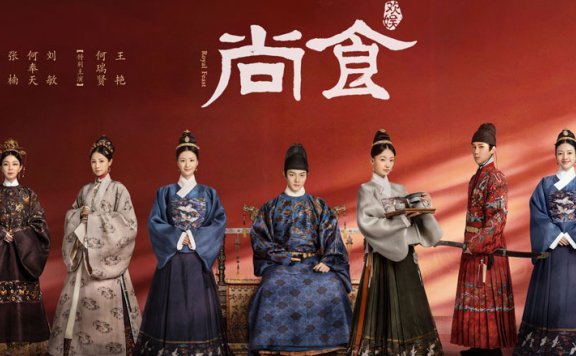
A new cdrama, Royal Feast, recently aired! This culinary and palace drama set in the Ming Dynasty stars the original cast of the hit drama Story of Yanxi Palace. As the name implies, Royal Feast (尚食, Shang Shi) is a historical drama that focuses on the palace cuisine of the Ming Dynasty. The story takes place during the Yongle period of the Ming Dynasty, where the young cook Yao Zijin, played by Wu Jinyan, enters the palace and shows her "culinary talent" step by step, and eventually becomes a female official of the Food Bureau of the Imperial Palace. Royal Feast not only presents many court food, but also the sweet palace love between Yao Zijin and Zhu Zhanji, the imperial grandson. In this article, we will share the highlights of Royal Feast from food, costumes, and props. Palace cuisine in Royal Feast The cuisine is the most important part of the drama! For the important Food Bureau of the Imperial Palace scene design, the team carefully drew a detailed structural model drawing, and made a detailed restoration of each place. In order to restore the menu of the Forbidden City in the Ming Dynasty, the non-heritage team… -
The Origin of Cheongsam and Chinese Women Is the Memory of Stunning Times
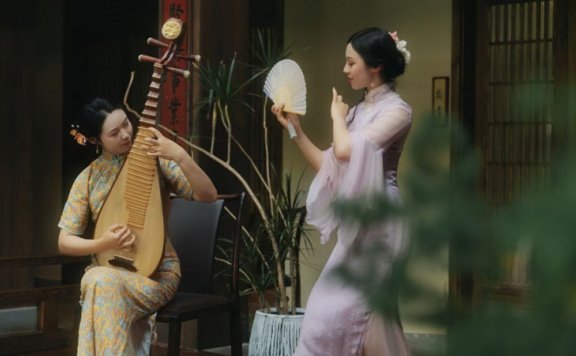
01 The cheongsam loved by women Eileen Chang once said, "Clothes are a language", and every heroine in her novels would use the style of cheongsam to interpret the sorrow and happiness of love, and the prosperity of silk to lament the impermanence of fate. And Eileen Chang's love for cheongsam can be described as close to crazy. Cheongsam is not only an important prop in her novels, but also an indispensable costume in her life, and it is an expression of her views on life, aesthetics and women. The cheongsam maker who made her cheongsam recalled that he couldn't remember how many pieces of cheongsam he made for Eileen Chang, but he remembered that each piece of cheongsam was made "according to the drawing", and the design came from Eileen Chang herself. Not only Eileen Chang, but also Chinese women in the 1930s and 1940s seemed to be very fond of cheongsams. Soong Mei-ling was no less fond of cheongsams than Eileen Chang, and she had hundreds of cheongsams in her closet. Film and television stars such as Hu Die, Ruan Lingyu, and Zhou Xuan are also fans of cheongsam, they not only wear cheongsam out of their own… -
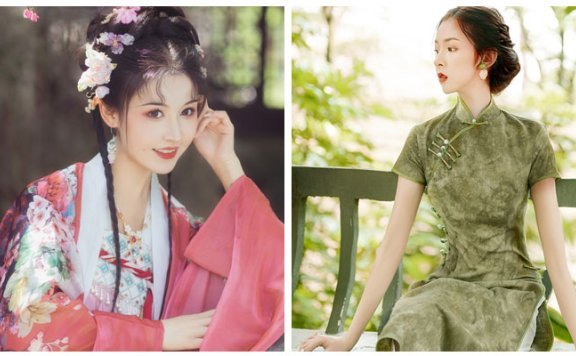
Hanfu vs Qipao, Cheongsam: What’s the Difference?
Hanfu vs Qipao, both are excellent representatives of traditional Chinese costumes. Hanfu (汉服), Han national traditional costume. Qipao (旗袍, cheongsam), the women's clothing of the Republican era. Whenever traditional Chinese clothing is mentioned, the cheongsam is usually the first thing that comes to mind. But with the expanding influence of Hanfu, a costume that better represents Chinese history is being preferred by more and more people. What exactly are the differences between the two costumes? 1. Hanfu vs Qipao in Different Origins Origin of Hanfu Ancient hanfu was the traditional clothing and accessory system of the Han Chinese from the time of the Yellow Emperor to the middle of the 17th century AD (late Ming and early Qing dynasties). Origin of cheongsam Cheongsam was formed in the 1920s and later became the most common women's clothing at that time, being one of the most splendid phenomena and forms in China's long-standing dress culture. The controversy of the origin of cheongsam There are still many controversies about the definition of cheongsam and the time of its production, focusing on the following. 1. It is believed that cheongsam is developed directly from the robe of Qing Dynasty. 2. It is believed… -
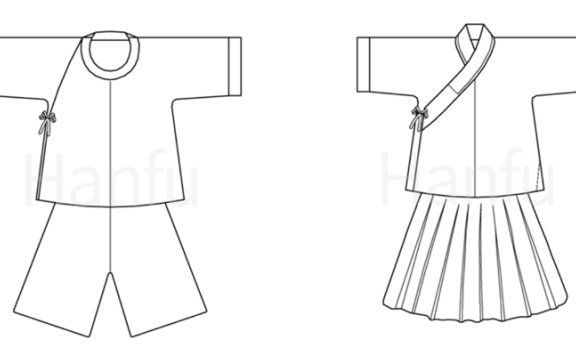
Hanfu Making(13) - Improved Hanfu Cutting & Sewing Patterns
This section contains improved Hanfu (改良汉服). Please read the introduction of the topic and how to use this guide in advance. Introduction Wearing hanfu is not just for the sake of retro and vintage, but also to show classical beauty and promote the traditional culture of the nation. However, many people have misconceptions about hanfu, believing that the process of wearing hanfu is tedious and that it is not convenient to move around after wearing it. In fact, hanfu is not necessarily a wide robe with big sleeves. The hanfu system itself contains short and slim tops, as well as short-sleeved and narrow-sleeved types of clothing. The hanfu tops can be matched with modern skirts and pants with a little improvement of the form, as long as the shape and color match. The "improvement" referred to here is not to develop to Western-style three-dimensional cutting, but to make certain modifications to the hanfu pattern, such as reducing the sleeve length and cuff width, and making slight modifications to the shape to make it more suitable for matching with modern clothing, combining tradition with fashion, while maintaining the basic shape and flat cutting method of hanfu. It is hoped that this improved… -
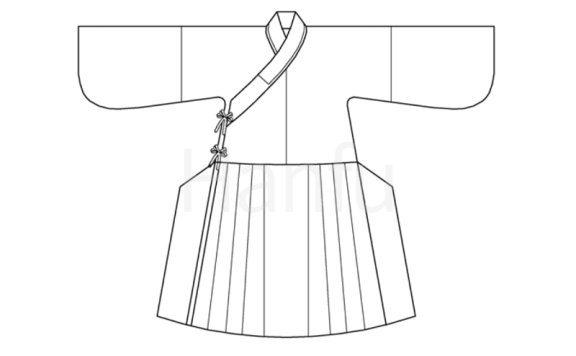
Hanfu Making(12) - Yisan Cutting & Sewing Patterns
This section contains Yisan (曳撒, yì sǎn). Size range: 165/88A to 185/104A. Please read the introduction of the topic and how to use this guide in advance. Introduction Yisan is one of the costumes of the Ming Dynasty, evolving from the Yuan Dynasty Bian Xian Ao (辫线袄), but it is still part of the hanfu system because it has a cross collar and has long been incorporated with Han Chinese elements. The shape of Yisan is very special. The front part is cut and sewn separately, the upper garment is short from the front, and the lower garment with pleats is connected at the waist. The back part is cut as a whole, the length is equal to the front garment length plus the lower garment length, and there are no pleats like other long garments. There is hem on both sides of Yisan, also called "Er (耳)" Yisan was mostly worn by military officials or members of the imperial family in the Ming Dynasty, and could be used as riding clothes, and one of the main uniforms of the Jingyiwei officers was Yisan. The fabric color of Yisan was usually red, blue, dark green, etc., and could be embroidered… -
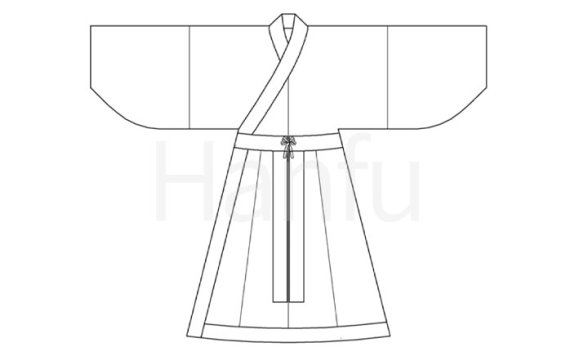
Hanfu Making(11) - Shenyi Cutting & Sewing Patterns
This section contains Shenyi (深衣). Size range: 165/88A to 185/104A. Please read the introduction of the topic and how to use this guide in advance. Introduction Shenyi is a long, straight Changshan with a separate upper Yi (衣) and lower Chang (裳), and joined together to cover the body. There are many different ways to cutting and sewing a Shenyi, but this section is only one of the simpler ones. To make a Shenyi, 12 pieces of equal-sized trapezoidal fabric are prepared and sewn together as a lower Chang, then the upper Yi garment and lower Chang are sewn together. It is also necessary to use another color of fabric as the edge, which eventually the completed Shenyi. The fabric of Shenyi is mostly white cloth, and the edge needs to be made of darker color fabric. In ancient times, if both parents and grandparents are alive, the edge is made of patterned fabric; if the parents are alive, the edge are made of cyan fabric; if orphans, edges are made of plain fabric. Shenyi gives people a graceful and elegant feeling. The basic features are cross collar, wide sleeve roots, slightly closed cuffs, and a Dadai (大带) as a… -
What is the Ming Dynasty Hanfu Clothing?
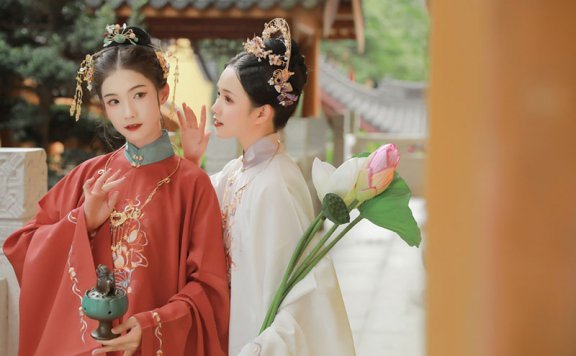
Ming Dynasty Hanfu clothing refers to the clothing system in the Ming Dynasty (1368-1644). At the beginning of the Ming Dynasty, Zhu Yuanzhang, the founder of the Ming Dynasty, inherited the costume style of Zhou, Han, Tang, and Song Dynasties and re-established the costume system in order to rebuild the national pride and etiquette and remove the influence of ethnic minorities. In the middle and later period of the Ming Dynasty, there were some new styles, such as stand collar, and a large number of buttons were used in the conspicuous part of a garment. It was gradually banned during the Qing Dynasty, but there are still a few styles and features that have been handed down to this day. The characteristics of Hanfu in the Ming dynasty In the Ming Dynasty, a series of measures were taken to develop production, which made the industry and commerce develop continuously, and the production technology of each industry has improved. After the rise of the citizen class, the aesthetic interest has become the aesthetic orientation of the general dress in the Ming Dynasty. "Secularization" of the aesthetic and cultural sources and a relatively general, casual, and loose historical and cultural environment.… -
10 Best Historical Chinese Dramas Worth Watching in 2021
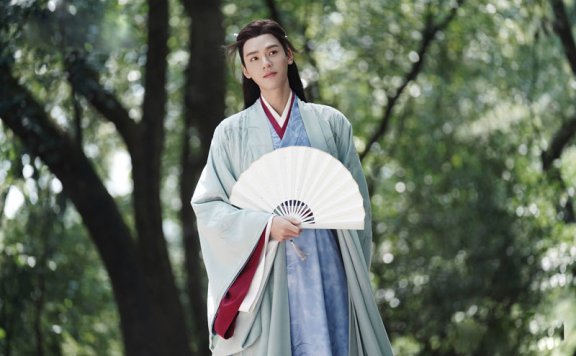
01 Word of Honor · 山河令 Details of Word of Honor Also known as: Tian Ya Ke Aired: 2021-02-22 Episodes/Duration: 36/45min Period Background: Alternative reality Genres: Historical, Mystery, Wuxia Director: Cheng Zhi Chao, Ma Hua Gan, Li Hong Yu Main Role: Gong Jun as Wen Ke Xing, Zhou Ye as Gu Xiang, Ma Wenyuan as Cao Weining. Plot Summary of Word of Honor Adapted from the novel "Tian Ya Ke(天涯客)" by Priest. Zhou Zi Shu, the leader of the assassin organization "The Window of Heaven", resigns from his position in a fierce quest for freedom, which leaves him with only three years to live. He disguises his face and tries to spend his remaining days wandering the martial arts world as an alcoholic. In his travels, he meets Wen Ke Xing, the mysterious leader of Ghost Valley, bent on revenge for his parents. The two meet under the tangle of various intrigues in the martial arts world, and become closer when they are drawn into a conspiracy about Glazed Armor, eventually becoming soul mates for each other's salvation. One conspiracy, two confidants, five treasures, twenty years of grievances, and thousand years of dreams of Jianghu linked their destinies together. Stills of… -

Hanfu Making(10) - Panling Pao and Lanshan Cutting & Sewing Patterns
This section contains Panling Robe (盘领袍), Lanshan (襕衫). Size range: 165/88A to 185/104A. Please read the introduction of the topic and how to use this guide in advance. Introduction In the Sui and Tang dynasties, the basic features of the Yuanling Shan (圆领衫, round neck shirt) were narrow sleeves, a slightly shorter length, and a straight strip of cloth standing on top of the collar. Later, the collar of the round neck shirt began to gradually become wider and lower, to the Song dynasty, has completely become the collar edge of the pan collar spreading, while the cuffs become larger, the body of the garment becomes longer. Ming-style Panling Pao (pan collar robe) added hem on the basis of Song style, its collar production process is generally straight cloth strip folded, and then ironed into shape, along the inner circle with line sewing tight, so that the collar edge curved to fit the round neckline, collar edge end nailed with buttons for fixed. The Panling Robe was widely used as imperial costumes and official uniforms in the Ming Dynasty, with the basic features of a pan collar, Pipa sleeves or wide sleeves, and hem on both sides of the garment.… -
Hanfu Making(9) - Zhiduo Zhishen Daopao Cutting & Sewing Patterns
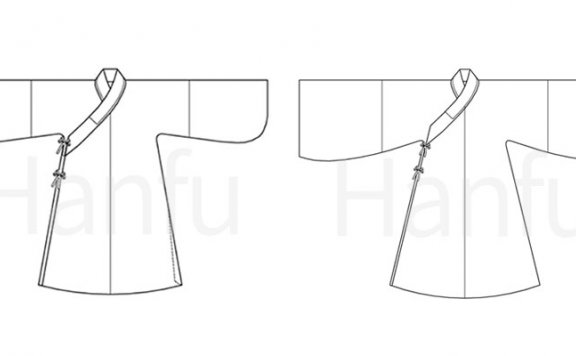
This section contains Zhiduo (直裰), Zhishen (直身), Daopao (道袍). Size range: 165/88A to 185/104A. Please read the introduction of the topic and how to use this guide in advance. Introduction Zhiduo is a kind of costume from the Song Dynasty, the initial is mostly worn by monks, a few literati also wear, Song Zhiduo is generally not slit. By the Ming Dynasty, Zhiduo had become widely popular among literati and scholars, and the basic features of Ming Zhiduo were the cross collar, knee-length garment, slit on both sides without Bai (摆), generally with a collar guard on the collar, and mostly with pipa sleeves. The cutting and sewing patterns in this chapter are based on Ming Zhiduo. Zhishen was also an important costume of the Ming Dynasty, as well as Zhiduo and Daopao, the basic features of Zhishen are the same as Zhiduo, with a cross collar, more collar protection, pipa sleeves, and knee-length, but the difference is that there is outside Bai on both sides in Zhishen. Daopao is one of the traditional costumes of Taoism, but it was also the main style of casual wear and dress for scholars in the Ming Dynasty, so Daopao was not… -
The History and Origin of the Feiyufu & Jinyiwei
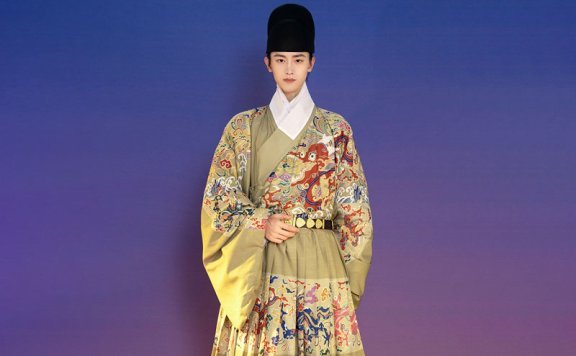
Feiyufu (飞鱼服) first became known to the public because of the "New Dragon Gate Inn (新龙门客栈)", "Flying Swords of Dragon Gate (龙门飞甲)", "Brotherhood of Blades (绣春刀)" and other martial arts film works about the Jin Yi Wei (锦衣卫, Embroidered Uniform Guard) appeared one after another. The look of a handsome black leather Feiyufu of the Jin Yi Wei undoubtedly attracted the attention of many people. As Feiyufu became more and more famous, it almost became the representative of the Ming Dynasty official uniform in the general public's mind. So what exactly is Feiyufu and did every Jin Yi Wei in history get to wear it? In this article, we will introduce the history of Feiyufu and the origin of Jin Yi Wei, hope it will be helpful to you. What is a Feiyufu? The name Feiyufu does not refer to a specific style of hanfu, but all hanfu decorated with Feiyu embroidery or Feiyu Buzi (补子, Mandarin square) are called Feiyufu, which only limits the style of the pattern, not the style of the clothing. In the Ming Dynasty, the Buzi on the Changfu (常服, work formal wear) of the officials were patterned with birds and animals. In the… -
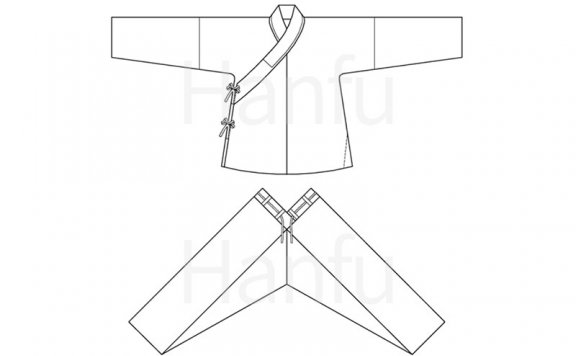
Hanfu Making(8) - Shuhe Cutting & Sewing Patterns
This section contains Shuhe (裋褐). Size range: 165/88A to 185/104A). Please read the introduction of the topic and how to use this guide in advance. Introduction Shuhe (裋褐), also known as "Duan Da (短打)", originally meant a coarse cloth upper garment woven with coarse hemp or animal hair, was a simple cross-collar upper garment worn by commoners in ancient China, usually with looser pants underneath, mostly used for casual wear or work clothes. The basic features of the Shuhe are Jiao Ling You Ren (交领右衽, cross collar and wrapping the right side before the left), the shortest sleeve length over the wrist, the longest slightly beyond the fingertips, mostly straight sleeves or arrow sleeves, narrower cuffs, the length of the garment to below the waist, the longest above the knee, and the two sides need to be divided into slits. Shuhe can not simply be equated with the cloth worn by the poor, although this garment can not do the formal occasions worn by the dress, but its use is very wide, and the use of Shuhe is determined by its characteristics, because wearing Shuhe more convenient for action, so it has become a daily work, farming, long-distance travel necessary… -
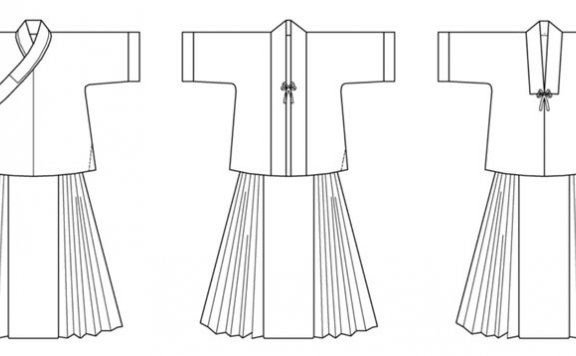
Hanfu Making(7) - Banbi Cutting & Sewing Patterns
This section contains Banbi (半臂). Size range: Jiao Ling Banbi (155/80A to 185/104A), Zhi Dui Jin Banbi and Xie Dui Jin Banbi (155/64A to 175/96A). Please read the introduction of the topic and how to use this guide in advance. Introduction Banbi (半臂), also known as "half-sleeve", is a short tunic developed from the upper Ru (襦) since the Wei and Jin Dynasties, and can be roughly divided into two collar types: Jiao Ling (交领, cross-collar) and Dui Jin (对襟, lapel). Compared with long-sleeved tops, the difference is that the sleeve length can reach the elbow. In the Tang Dynasty, the Banbi was already a popular garment worn by both men and women. In the long years, its wearing method is also basically limited to the set of other long-sleeved clothes, because in formal occasions, the ancient people will never wear Banbi alone and show the arm. But with modern aesthetics, today's Jiao Ling Banbi (交领半臂) can be worn alone in summer, which is somewhat similar to the short-sleeved T-shirts worn by modern people, and because of its shorter sleeve length, it does not hurt to pair it with a modern skirt, and men can also wear a Banbi with…