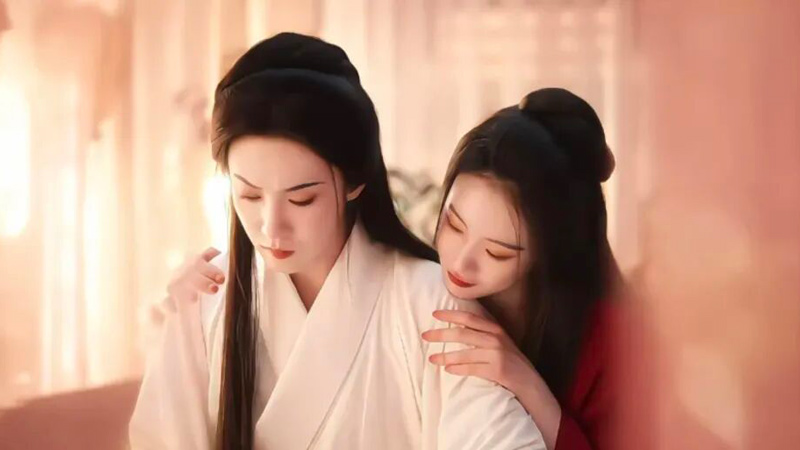
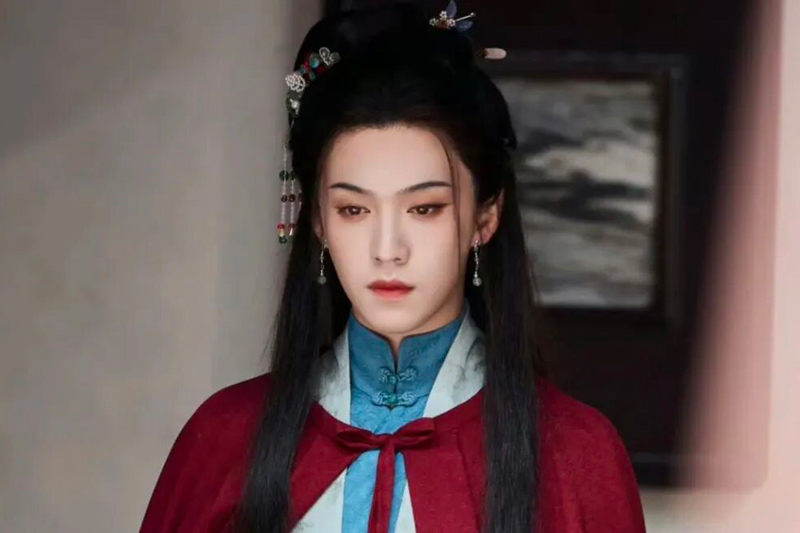
Recent period drama Against the Current (兰香如故) has stirred amused debate. Two male actors appear in women’s clothing, with two separate looks, and viewers keep comparing them. In costume dramas, women disguised as men are familiar. Men disguised as women? Much rarer. Why does one direction feel natural on screen while the other still shocks? The answer lies less in fabric than in law, status, and the stories people needed to tell. History calls mixed clothing a “clothing anomaly,” a warning sign rather than a fashion statement. A sleeve, a collar, a hairpin could carry more weight than a sword.
Clothing as Law
In Book of Han (汉书) and Book of Rites (礼记), writers insisted that men and women wear different garments. After the Eastern Han, cut and style separated more sharply. A robe was not just cloth. It announced rank, gender, and obedience to ritual. If a man wore a woman’s dress, or a woman wore a man’s boots, officials saw disorder. They used the term “clothing anomaly”. Such a sight could be read as a bad omen: maybe the court was weak, maybe rebellion was near. The panic was about hierarchy, not buttons. Clothing helped keep the social map readable, and a blur on that map frightened people.
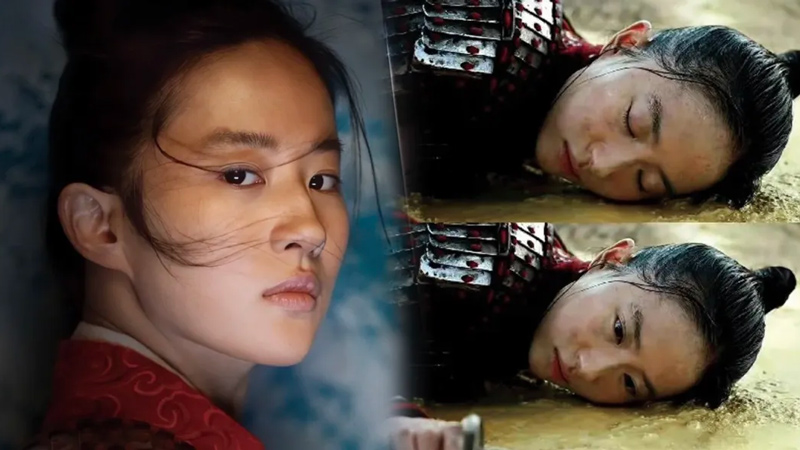
Yet women dressing as men has a long record. During the Qin and Han eras, female soldiers sometimes wore armor as a trick. Records of the Grand Historian (史记) says Liu Bang (刘邦) sent two thousand armored women out of Xingyang’s (荥阳) east gate at night. Xiang Yu’s (项羽) troops attacked from all sides, and Liu escaped. The ruse worked because women in armor were unusual; if it were common, nobody would have been fooled. Later, Hua Mulan (花木兰) became the enduring figure, her story sung in Ballad of Mulan (木兰诗). She buys a horse, rides for her father, and joins the army. Her disguise lasts because the poem needs a hero, not a lecture on tailoring.
The Tang court was unusually open. During Wu Zetian’s (武则天) time in power and the Kaiyuan (开元) era, women rode in men’s jackets and boots, influenced by northern customs. Princess Taiping (太平公主) once appeared before Emperor Gaozong (唐高宗) and Wu Zetian in a military robe, purple sash, and jade belt. She danced. They laughed and asked why she dressed as a general. Palace maids wore round-collar robes too. Still, most women kept hairpins and buns rather than male caps. They borrowed men’s clothes; they did not fully pretend to be men. Literature kept the motif alive, in ballads, tales, and novels. The fantasy offered freedom, adventure, and a temporary exit from the inner chamber.
Survival and Stage
Male cross-dressing usually served a harder purpose: escape. During the chaotic Northern and Southern Dynasties, young men feared conscription and bandit gangs. Some put on skirts, copied female makeup, and hid in villages. Li Zhong (李忠), son of Emperor Gaozong, allegedly wore women’s clothes in private because he feared Wu Zetian would send assassins. Wang Bodang (王伯当) disguised brave men as wives and concubines, hid blades under skirts, and entered Taolin (桃林) county. Yang Liang’s (杨谅) soldiers wore female dress and rushed Puzhou (蒲州). The Old Book of Tang (旧唐书) records such tricks. Clothing became camouflage, not comedy. In these stories, a skirt could save a neck.
On stage, male cross-dressing turned professional. Earlier periods had “fake women” performers, but the Song era developed a formal trade of male female-role performers. Strict rules often kept women off certain stages, so men played female parts. Audiences also enjoyed the skill and wit of a man transforming his voice, walk, and face. This tradition explains why male cross-dressing can feel theatrical rather than scandalous. The stage gave it a license that daily life denied. A performer was not claiming a new identity; he was doing a job, and doing it well. That distance made the practice safer for audiences to admire.
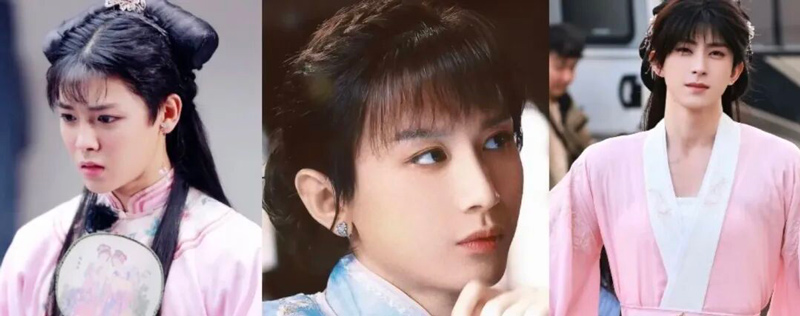
Smaller trends existed too. Ming scholars sometimes wore delicate female clothes and flowers at gatherings, treating it as private play. Qing street youths copied women’s makeup for amusement. These habits stayed outside mainstream approval. In Against the Current, however, men pass as women in broad daylight, and almost no one doubts them. That stretches belief. Shoulders, hands, throat, and voice usually give people away. If only the heroine notices, the plot is flattering her, not testing her. A clever disguise should create tension, not just applause for the lead.
The old unease was never really about dresses. It was about order. A society that tied clothing to rank feared any blur. A man in silk hairpins or a woman in armor could look like a crack in the system. Today, viewers may enjoy the surprise, the beauty, or the joke. But when a drama asks us to believe the disguise too easily, we should ask what the story needs more: realism or a spotlight on its lead? What do you think of male cross-dressing on screen?