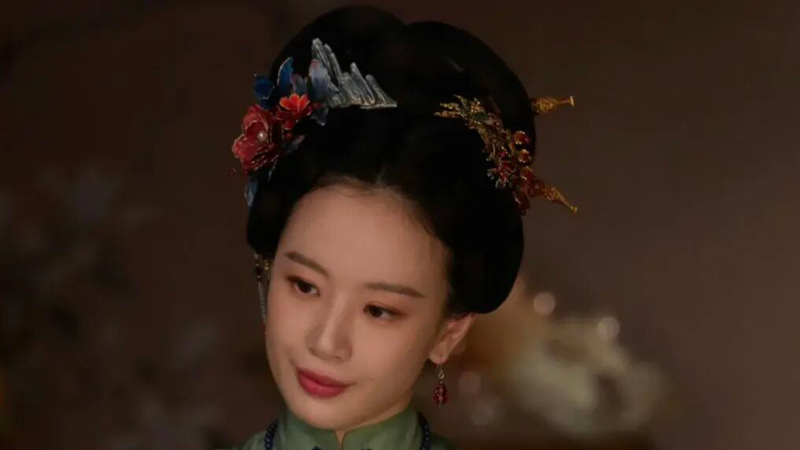
In Against the Current (兰香如故), Li Meng (李梦) plays a woman whose hair is rarely without one small object: an earpick hairpin. At first glance, the accessory looks odd, a pin topped with a tiny spoon. Some viewers joke that ancient people simply stuck a cleaning tool into their buns and pulled it out when needed.
The truth is stranger and smarter. This object joined grooming and hairstyling in one elegant piece. Its story runs through Shang graves, Tang mirrors, Song and Yuan workshops, Ming and Qing wardrobes, and now television. The drama may be new, but the prop is old. Once you notice it, you cannot unsee it.
Ancient Tool
The basic design is almost too practical. One end is a small spoon for cleaning ears; the other end is a normal pin that holds a bun. In the Shang dynasty, early versions appeared. By the Song, Yuan, Ming, and Qing dynasties, the form was everywhere. A gold flower-and-ruyi earpick hairpin unearthed in Hunan (湖南) matches her screen piece so closely that costume designers clearly did homework. Hunan may be far from the drama’s palace halls, but the metal tells the same story. One object, two jobs: hygiene and hairdressing. Today, that would be a clever gadget. Then, it was daily life.
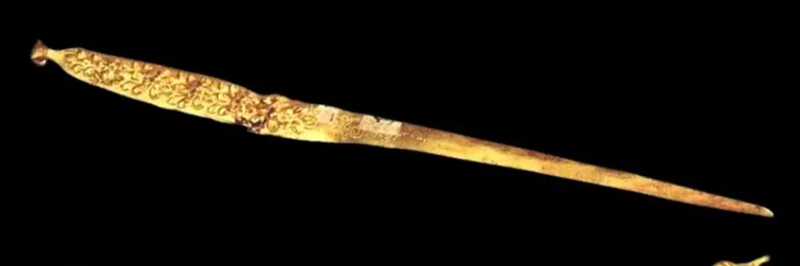
Makers sorted these pins into two moods. The plain type was a bare earpick with little decoration, meant for ordinary use. The fancy type kept the earpick head but added serious craft. Gold, silver, and bronze were common; jadeite or nephrite was rarer. Pearls, kingfisher feathers, openwork, and filigree turned a small tool into a display of skill. Some pins had several earpick heads. Shafts carried cut patterns, gems, or inscriptions. Feet could be single, double, or triple. As decoration grew, usefulness faded. The pin became jewelry that remembered its original task.
The Tang dynasty pushed the idea further. One end remained an earpick; the other became eyebrow tweezers. Both ends worked. By the Song and Yuan periods, earpick pins grew more ornamental, with carved shafts and richer silhouettes. Recent costume dramas have revived the look. In The Rise of Ning (锦绣安宁), Luo Yining (罗宜宁) and other women in the household wear pins very close to hers. The camera may focus on romance or rivalry, but the accessory quietly links fictional families to real workshops.
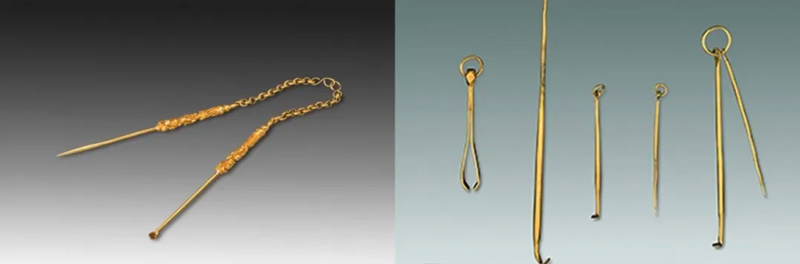
Not every earpick pin belonged in hair. Some were strung and hung from lapels. In the Ming dynasty, the “seven affairs” set gathered scissors, small tools, and ornaments into one wearable cluster. Men and women could wear it. Simpler versions followed: the “three affairs” paired an earpick, tweezers, and toothpick; the “two affairs” trimmed the list again. These sets usually hung at the waist or chest, not in a bun. Confusing them with hairpins misses how ancient people organized tools by body, task, and fashion.
Hidden Meanings
Length changed purpose. A standard earpick pin matched an ordinary hairpin. An extended one could defend its wearer. In Dream of the Red Chamber (红楼梦), the “Yi Zhang Qing (一丈青)” is a long earpick pin, roughly 20 to 25 centimeters. In one famous scene, a character takes it from beside a pillow and jabs another’s hand. The moment is violent, not stylish. Please do not copy it. The pin shows how a grooming tool could become a weapon when social rules failed.
It could also carry love. At the Jiangkou (江口) Battle Site in Pengshan (彭山), Sichuan (四川), dated to the late Ming, archaeologists found an inscribed earpick pin. Its shaft reads: “Together until white hair, always beside black hair.” Ten characters turn metal into a vow. Jiangkou and Pengshan are not romantic names, but the message is. Whoever owned it may have worn it in a bun, hung it on clothing, or kept it hidden. The object survived; the couple’s story did not. That silence makes the line sharper.
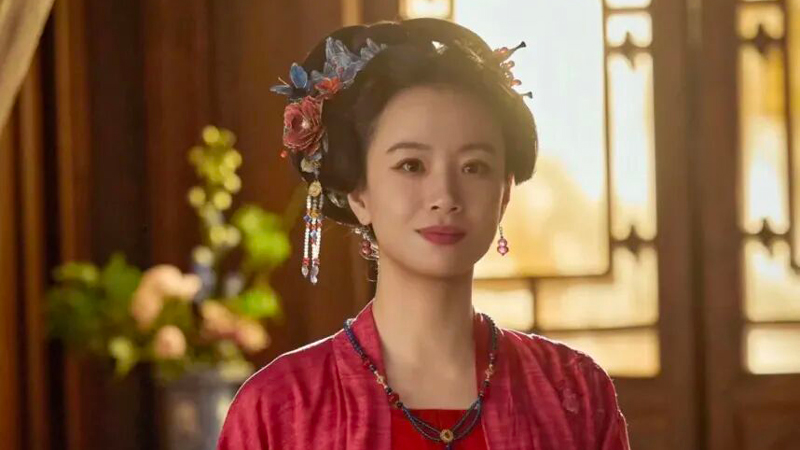
Television keeps returning to this tiny tool. Beyond Against the Current, it appears in Empresses in the Palace (甄嬛传), The Sword and the Brocade (锦心似玉), and The Glory (雁回时). Sometimes it marks rank; sometimes it adds texture to a quiet scene. Costume departments like it because it reads clearly on camera: spoon, shaft, sparkle. Historians like it because it is not invented. The same shape crossed dynasties, regions, and social classes. On screen, it becomes a small anchor between fantasy and evidence.
Why does her pin stay with us? It refuses to be only pretty. It cleans, holds, decorates, defends, promises, and remembers. Ancient designers did not separate beauty from use; they braided them together. A modern viewer might ask where to buy one. A better question is what we lost when tools stopped living in our clothes. The earpick hairpin is not a grand monument. It is a tiny argument for cleverness, intimacy, and daily care. Do you like its design?