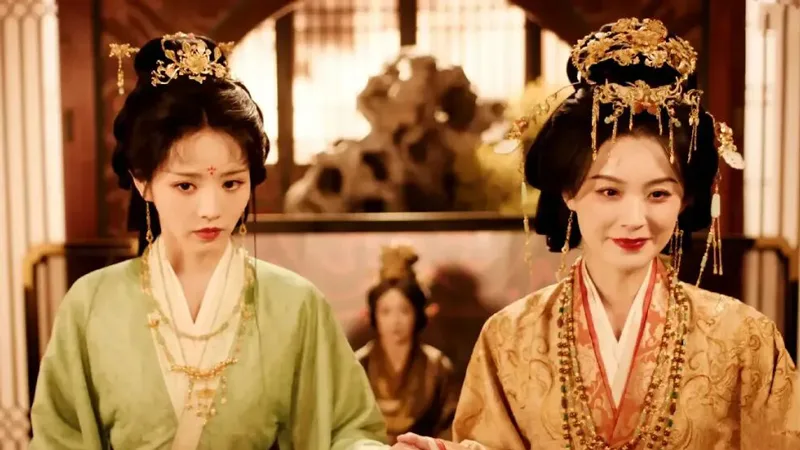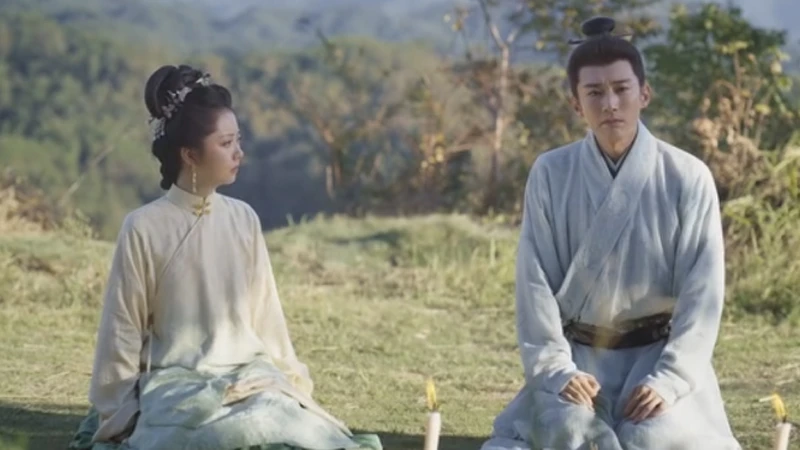
Four episodes into Where the Mask Ends (嫁金钗), the bridal sedan has barely stopped rocking before the story delivers its cruelest joke. A Chou (阿丑), a night-soil girl who scrubs away other people’s filth, is bought for five thousand coins and pushed into a wedding meant for Jun Dai (君黛), the spoiled “daughter” of Cheng’an Bo Manor (承安伯府). The groom, Lu Zhuo (陆濯), is a wounded young lord who should be too close to death to notice. Yet one clumsy turn in bed wakes him, and the fake bride’s real battle begins.
Every servant, every cough, every silence can expose her. The premiere works because it does not simply ask whether A Chou can survive a dangerous marriage; it asks who arranged the swap, who profited from it, and why the truth feels colder than the lie.
A Shocking Reveal
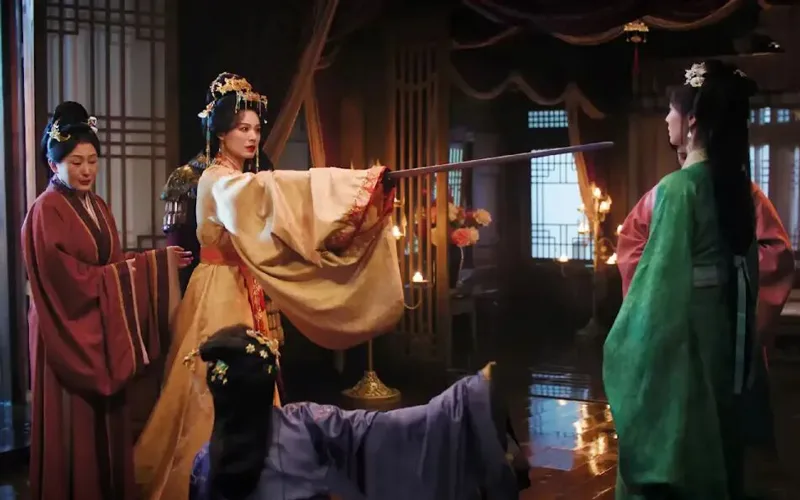
At first, Guo Yufeng (郭虞凤) looks like the obvious villain. The senior madam of the manor sees A Chou’s face and does not frown in confusion; her legs give way. She nearly collapses, slaps Chang Fumu (常傅母), then hurries to inspect a jar holding a child’s remains. The message seems plain: she once killed a baby and believed that baby was A Chou. The reasoning fits her power over the inner courtyard, her fear that two identical legitimate daughters would ruin future marriages, and her cold line about cutting weeds by the root. The episode uses that confidence against viewers. We are invited to solve the case too quickly, to accept the shaking hands and the hidden jar as a full confession. That is the trap, and it snaps shut with cruel timing.
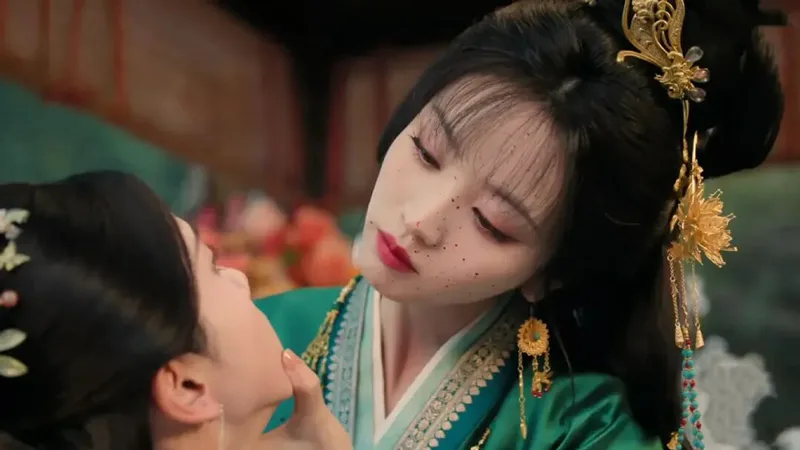
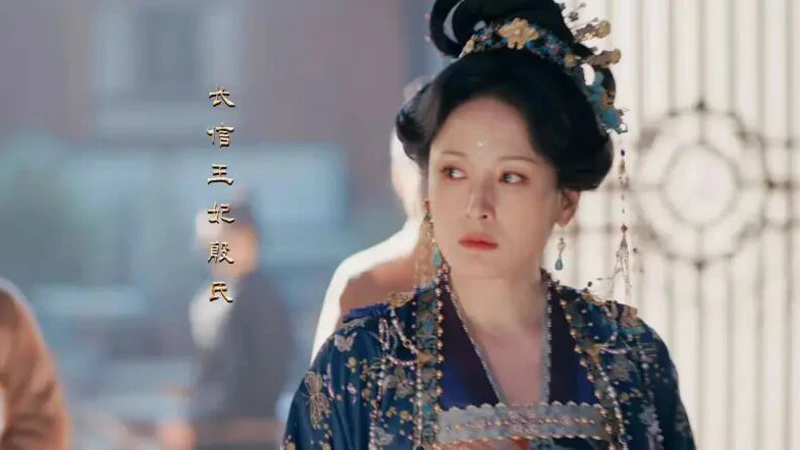
Then the board flips. The person who removed the infant was Zhou Fu (周芙), A Chou’s birth mother and the second-branch widow of the manor. Zhou Fu had reasons no ordinary schemer could match. Her mother, Shou’an Jun (寿安君), had been Yuanjia Emperor’s (元嘉帝) wet nurse and was treated almost like a mother by him. Zhou Fu grew up beside the emperor; after her husband died, she entered the palace as a noble consort and bore a son. A girl sharing Jun Dai’s face would become a pawn for every faction and living proof of a hidden line between manor and throne. So Zhou Fu moved first. She did not dump the baby by the road. She gave her to a poor family, where A Chou survived as a foundling and night-soil girl: alive, but stripped of name, training, and allies.
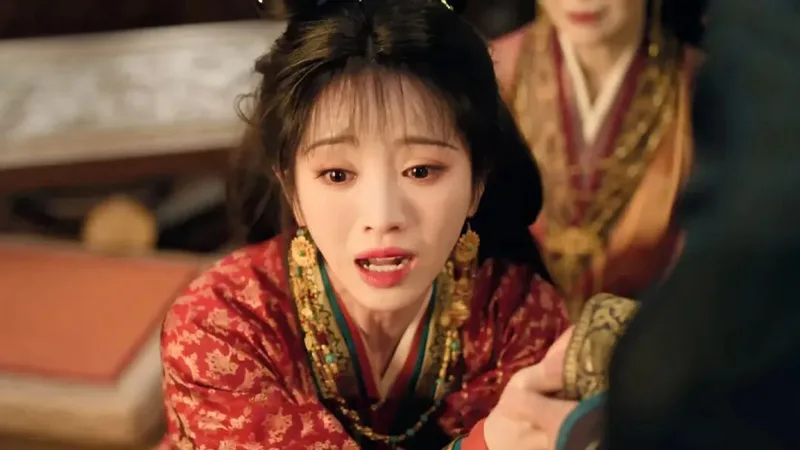
That explains Guo Yufeng’s terror more sharply. The remains in the jar were probably a substitute, a dead child used to “prove” that the swapped daughter no longer existed. Guo believed she had cleaned up the scandal; in truth, she had disposed of a discarded piece in Zhou Fu’s larger game. The real A Chou kept breathing, kept hauling night soil, and kept a face identical to Jun Dai’s. When fate drags her back into the family’s sight, the older woman’s panic is not proof of her guilt but proof of how little she understood. The drama lets one villain wear the mask while a quieter, more intimate hand controls the strings. That choice makes the reveal sting, because it turns a household crime into a mother’s preemptive strike.
A Mother’s Shield
Zhou Fu later learns that A Chou is her daughter. She still refuses to recognize her. In public, she slaps A Chou and calls her a filthy night-soil girl daring to impersonate a lady. The words are brutal, and they are meant to be. Recognition would crack open the old swap, expose Zhou Fu’s bond with the emperor, and pull A Chou into a fight far more lethal than any household quarrel. So the mother chooses the only shield she can hold: distance. She stands above A Chou as “Madam Zhou,” cold and superior, pushing her farther away because farther away is safer. The performance is ugly. It is also love under unbearable pressure, the kind that cannot afford a tender word in front of watching eyes.
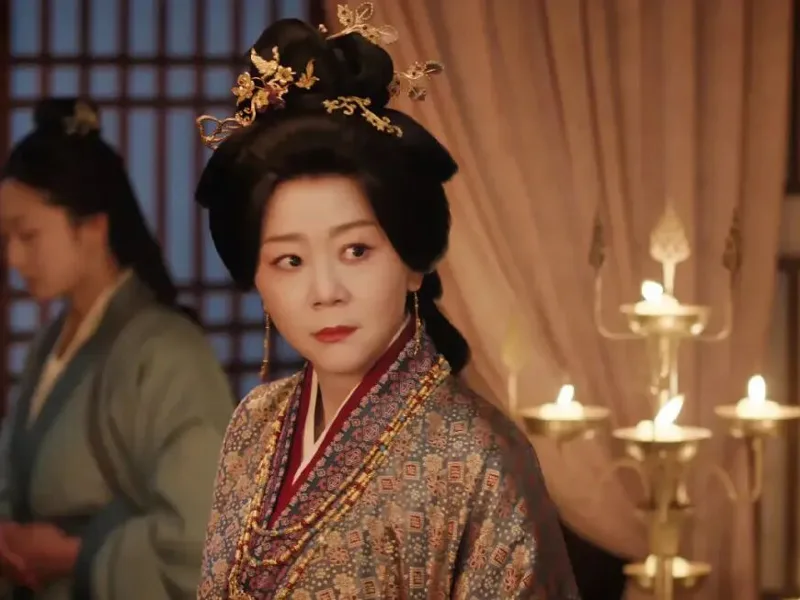
There is another secret Zhou Fu must swallow. She knows that Wei Rao (魏娆) became Jun Dai. She cannot expose that either. The false daughter is a shell placed before A Chou, a bright target for gossip, suspicion, and marriage politics. As long as everyone argues over whether Jun Dai is truly Wei Rao, nobody asks who the night-soil girl really is. Zhou Fu’s silence keeps a fragile balance upright. It is not passive. Every insult, every public rejection, every cold glance is a calculation designed to keep A Chou alive. The series makes the audience feel the cost of that calculation: a mother who must wound her child in order to hide her, and a daughter who cannot prove the wound is a disguise.
The turning point arrives when A Chou learns Zhou Fu’s real identity. She does not lash out over abandonment, and she does not retreat after public humiliation. Instead, she steps forward to defend Zhou Fu. That single act says what neither woman can speak aloud: I know what you did, and I know why you treated me that way. For a girl raised in filth and mocked by powerful houses, the first choice after truth is loyalty to the mother who pushed her away. Where the Mask Ends turns its twist into a question about protection. A Chou never dreamed who swapped her, but when she finally understands, she may see the harshest truth of all: the person who shoved her into the dark was the one who kept blocking the knife.