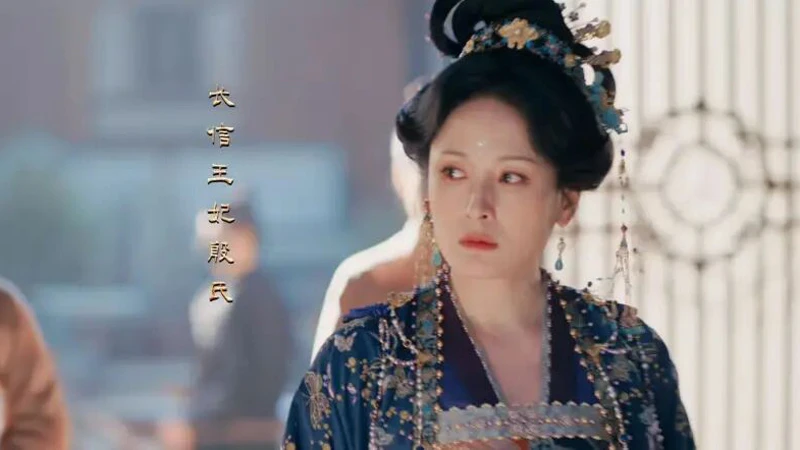
At first, Where the Mask Ends (嫁金钗) invites a simple guess: Jun Dai (君黛) must be the worst person in the story. She is reckless, loud, and casually cruel. Then Guo Yufeng (郭虞凤) enters the memory of the Wei house, and the room feels colder. Yet the real chill arrives later, when Hongxian (红线) loses her voice. Only then does Wei Rao (魏娆) understand that the most dangerous person may be the one who speaks about patience, balance, and family duty with a gentle face. This is not a tale about a sudden monster. It is about a mask that never slips until it is too late.
Soft Smile, Sharp Knife
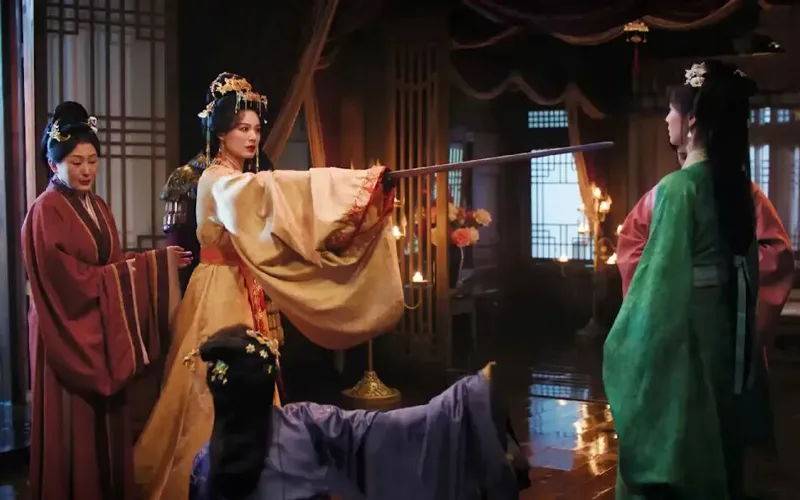
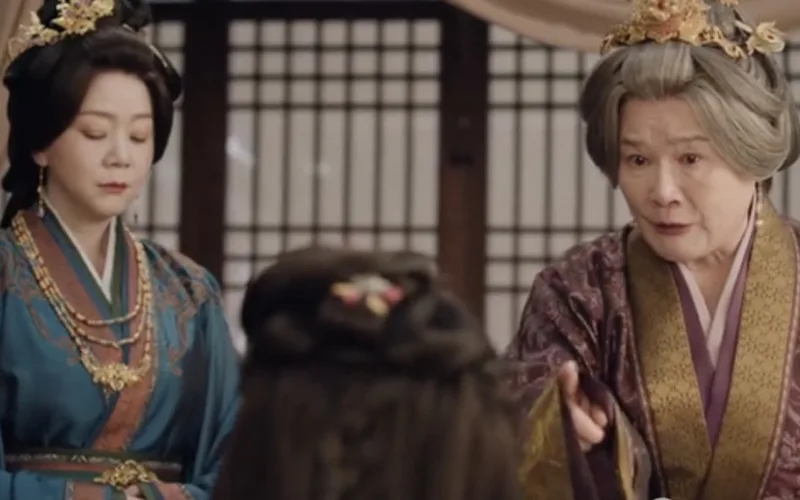
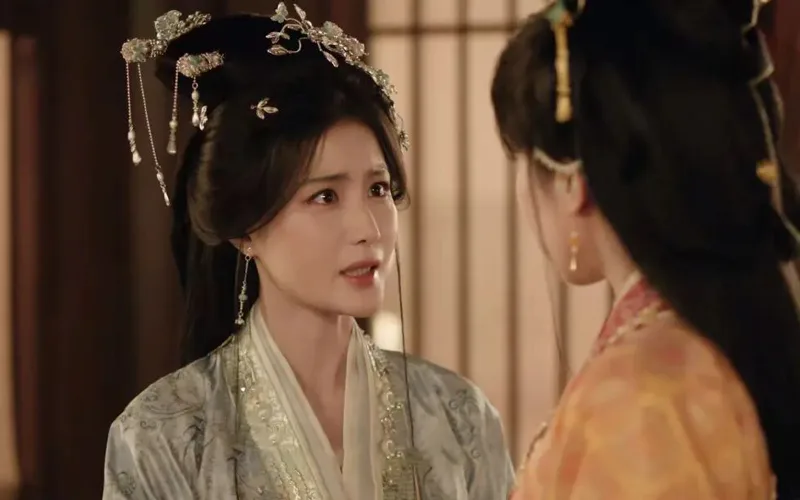
Wei Shu (魏姝) first appears after Guo Yufeng’s death. The grandmother is ill, and Wei Shu tends her inside the Cheng’an Bo Manor (承安伯府). Wei Rao returns from a mountain manor. Wei Chan (魏婵) rushes in, demanding revenge for her mother. Wei Shu stops her with a calm question: if your own mother did wrong, how can you demand punishment from the victim? She sends Wei Chan away, then promises Wei Rao that she will repair the damage her mother caused. The scene works. Servants see a fair-minded young woman; viewers see a possible ally.
The private conversation is sharper. Wei Shu tells Wei Chan that her place as Duan Wang (端王) wife exists because Wei Rao’s father died for the country and the emperor took his widow into the palace. She explains the debt in plain terms. Then she tells Wei Chan to swallow every bit of hatred and look at the larger picture. Her final line—people must give something up to gain something—lands like a knife under silk. A person who can bury her mother’s murder is not fragile. She is saving her appetite for a larger meal.
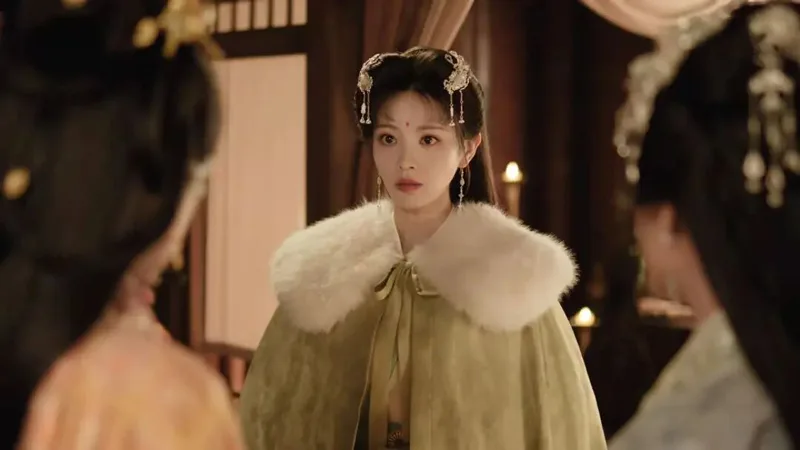
That is why her kindness feels unsettling. It is not warmth; it is arithmetic. Wei Rao is useful, so Wei Shu smiles at her. The Wei family name is useful, so she plays the reasonable sister. If cruelty ever pays better, she will not hesitate. Her goodness has a price tag, and the price is power. The audience may not see the bill yet, but the calculation is already written in her eyes.
What makes her harder to catch is the way she uses other people’s anger. Wei Chan’s rage gives her a stage for mercy. Wei Rao’s grief gives her a bridge to trust. Every emotional storm becomes a chance to display restraint. She does not raise her voice; she lets others do that, then steps in with a cool answer. By the time the room calms, she has gained something: a reputation, a favor, a stronger grip on the family. Her virtue is never wasted. It is always working.
The Lead-Poisoned Throat
Wei Shu wants more than a safe marriage. She wants to stand beside the throne. To get there, she must remove the queen and Jing Wang (景王). She needs Wei Rao’s connections, so the two women form a practical alliance. Wei Shu moves among nobles, collecting gossip and favors. Wei Rao sorts clues and builds traps. When Duan Wang becomes crown prince, the alliance has served its purpose. Success does not soften Wei Shu; it gives her room to show her true method.
To help the crown prince bind officials to his side, Wei Shu has young women seized and hidden in a cellar. Hongxian is one of them. The crown prince nearly assaults her, and she saves herself by naming her link to Wu’an Wengzhu (武安翁主). The name does not rescue her. It marks her as Wei Rao’s person. Wei Shu orders servants to force Hongxian’s mouth open and pour molten lead down her throat. Hongxian lives, but her voice is destroyed. For a woman who survives by singing or speaking, the punishment is worse than death. Wei Shu does not simply want blood; she wants to leave a person broken and breathing.
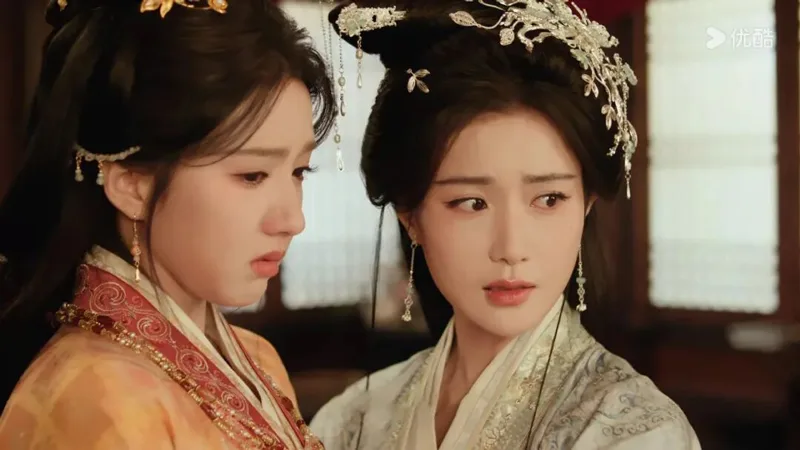
The cellar is not a sudden mistake. It is policy wrapped in silk. Wei Shu speaks of order, loyalty, and the future crown, while her servants drag frightened girls underground. She never touches the rope or the lead herself. Her hands stay clean; her orders do the damage. That distance is her weapon. It lets her keep the language of a wise lady while running a market in human fear. The throne she wants is not a seat of honor in her mind; it is a license to decide who may speak, who may disappear, and who must live without a voice.
Wei Rao later learns she was a pawn. She strikes back by exposing the cellar, which brings down the crown prince and pushes him toward rebellion. Wei Shu’s ending comes when she marches on Wei Rao’s mountain manor and is captured. Jun Dai is frightening because she respects no rule. Guo Yufeng is frightening because she hides behind years of schemes. Wei Shu is frightening because she can endure what others cannot and still wear a saint’s expression. She learned her mother’s craft but not her mother’s fate. So who is truly the most terrifying: the loud monster, the hidden schemer, or the patient saint?