Article
Search results:
-
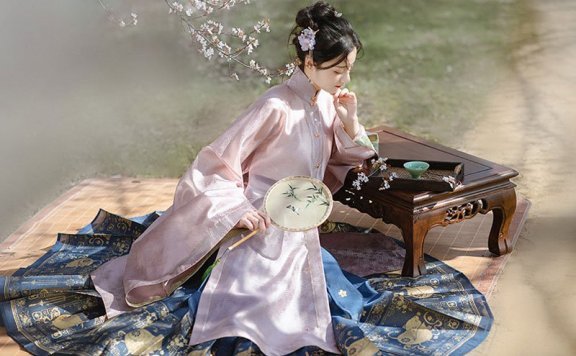
Nice Ming-style Chinese Dress for Girls (Summer)
Every hot summer, many girls will feel that Song-style Hanfu is the first choice for this season, indeed, with the cool and soothing touch of skin, many people will be willing to choose Song-style Hanfu to spend the summer. In fact, in addition to the Song-style Hanfu, the Ming-style Hanfu is also a kind of "Summer Hanfu"! Even in the summer heat, Ming-style Hanfu can still "make a splash"! The difference between Ming-style Hanfu and Song-style Hanfu Song-style Hanfu: Song Hanfu is the most suitable Hanfu for summer because it is the most simple Hanfu. Due to the background of the Song Dynasty, Song Hanfu are mainly slim and long, with narrow sleeves and cross collars. The "Beizi" and "Song trousers" are the main styles of Hanfu in the Song system. Ming-style Hanfu: In the beginning, the Ming Hanfu has always been regarded as a noblewoman's Hanfu, and because the Ming Hanfu is mostly based on horse-faced skirts, its craft is complicated plus the fabric and silk are expensive, so the price of Ming Hanfu has always been high. The "long jacket" and "short jacket" plus the "horse-faced skirt" also became the main style of Hanfu in the Ming… -

Best 5 Streaming Platforms to Watch Movie & Cdrama
These are some of the alternative streaming platforms for viewing different content, kungfu movies, Chinese dramas, a very specific genre, anime or more series. Netflix, Amazon Prime Video and Disney Plus dominate the world of streaming with their endless lists of box office hits, classic series and original stellar content. But although they are a great choice if you are looking for a wide range of genres to watch, you may want to consider looking at another platform if you have more specific tastes or simply want to watch something different. From anime to horror, and hits to golden age classics, there are streaming subscriptions for almost every niche. We've put together a selection of some of the best alternative platforms for watching different series and movies. If you are trying to decide on one of the most popular streaming services, then take a look at the guide to the best TV streaming services. 1. Mubi There are a couple of things that make Mubi unique. Firstly, it offers a collection of high-quality films. Then, he emphasizes old films, all of which are critically acclaimed and accompanied by a brief explanation of why those films are important. However, Mubi forces… -
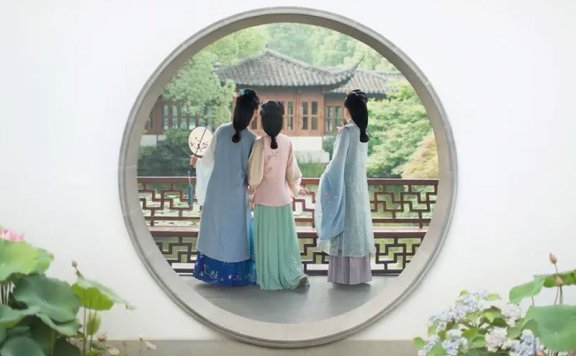
3 Exquisite Ming Dynasty Hanfu Girl
The Ming Dynasty, one of the most civic-minded dynasties in China. From the literary works and historical records of the Ming Dynasty in circulation today, it can be seen that the dress culture of the Ming Dynasty also reached a relatively developed level. In traditional Chinese culture, the Chinese Ming Dynasty women's makeup, with a strong emphasis on subtlety and inner cultivation. Come along and enjoy this set of photos about Hanfu girls wear the Ming Dynasty costume. -
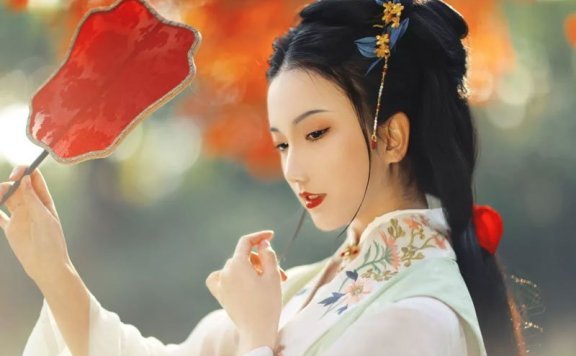
Photo | Girl & Ming Dynasty Hanfu
The style of the Ming Dynasty Hanfu is slender and very suitable for photography. -
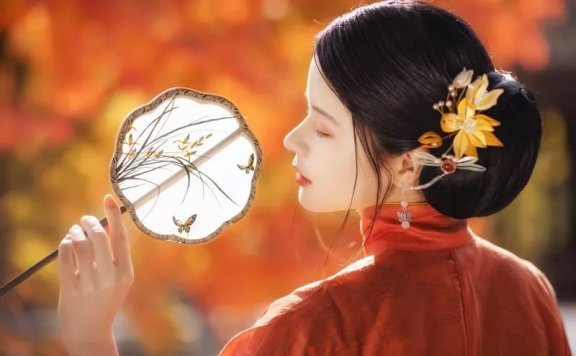
-
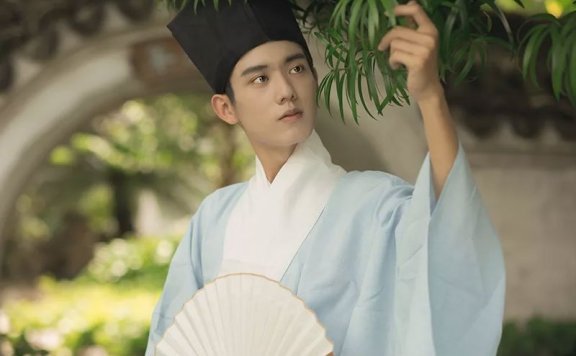
Photo Sharing | Ming Dynasty Youth in Robe
Today, I want to share the photos taken by Liang Xiaosuan, about the Ming Dynasty men's robe. -
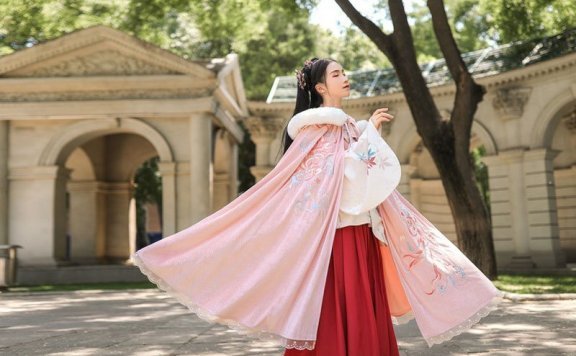
Autumn is Coming? Hanfu for Early Autumn is Ready!
August 23 is the "Chu Shu (处暑)" in China's 24 solar terms, "处" is mean: "leave", "暑" is mean that "summer". It means that the heat of summer has passed and the prelude of autumn has slowly opened. Today, I bring you some suggestions on the style of Hanfu. They are suitable for wearing when the weather is slightly cooler. Stand collar ao dress (立领袄裙) The weather starts to cool down, so we need to keep warm in early autumn. Stand collar Ao dress fabric selection is generally moderate thickness, if cold can also be appropriate in the clothes wearing clothes to keep warm. Duijin ruqun (对襟襦裙) In autumn, mountain flowers are romantic and suitable for wearing a pair of Duijin ruqun to go out. And the Duijin ruqun is more convenient to handle, if you go out, the action is also more convenient. Crossed collar ruqun (交领襦裙) The crossed collar ruqun is warmer than the skirt, and you can wear thermal underwear under the jacket. In the cool weather. Vertical collar Cape ( 竖领披风) The vertical collar cape is lighter than the stand collar Ao dress. It can also wear a sling, or warm clothes, if the weather is… -
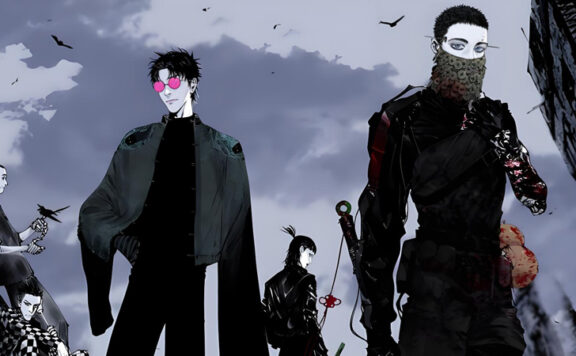
The Crow: Weaving Chinese Folklore into Modern Horror
What happens when a routine food delivery becomes a one-way ticket to a world of Chinese horror? For 18-year-old courier Zhang Zha (张炸), a simple mistake—mixing up floor numbers—leads to a brutal murder and a terrifying rebirth in The Crow (楚乌). This new animated series, adapted from Mo Fei's (墨飞) award-winning Manhua (漫画), arrives on Youku to redefine the genre. It blends the mundane with the macabre, pulling viewers into a modern Jianghu (江湖) where restless spirits threaten the living and a secret organization fights in the shadows. Forget cultivation clichés; this story grounds its supernatural terror in the grit of everyday life, asking what happens when death isn't the end, but the beginning of a much darker obligation. The Lore of "Shang" The genius of The Crow lies in its core concept: "Ren Si Hua Shang" (人死化殇). When individuals pass away with intense, unresolved obsessions, they do not simply fade away. Instead, they transform into Shang (殇)—malevolent entities fueled by lingering regret. These spirits can re-enter the human world through a mysterious, forbidden gateway, bringing chaos and danger to the realm of the living. This isn't a random haunting; it's a cosmic rule with dire consequences. Those who become… -
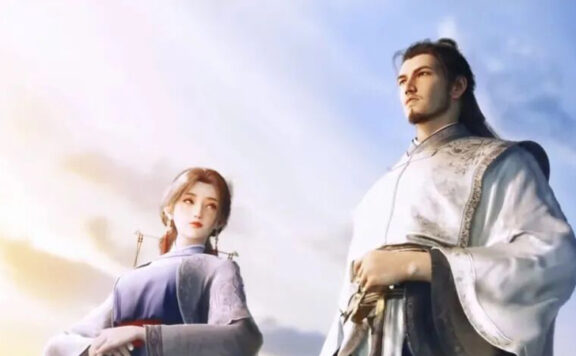
Tale of Herding God: Qin Mu's Three Strategies Save Yankang
How Three Bold Strategies Saved a Nation and a General Found Peace in Snowy Crisis? The latest episode of the animated series Tale of Herding God (牧神记) drops viewers straight into a frozen hellscape. The once-prosperous land of Yankang (延康) is buried under an unnatural blizzard that has not ceased for over ten days. Fields are destroyed, food supplies are cut off, and the people face starvation. As the kingdom teeters on the edge of collapse, a young man named Qin Mu (秦牧) steps into the imperial court. He does not carry a sword or command an army, but he brings something the panicked ministers lack: a clear mind and three concrete plans to save their world. Meanwhile, far from the political storm, the Grand Preceptor finds a moment of peace with his wife, Jin Niang (锦娘), as they journey to a sacred haven. The episode masterfully weaves together a tense political thriller, a tender personal story, and the looming arrival of a mysterious Daoist sect, setting the stage for an epic conflict. Blizzard Politics The snow crushing Yankang is no act of nature. It is a calculated weapon, a conspiracy crafted by old Buddhist and Daoist powers who fear… -
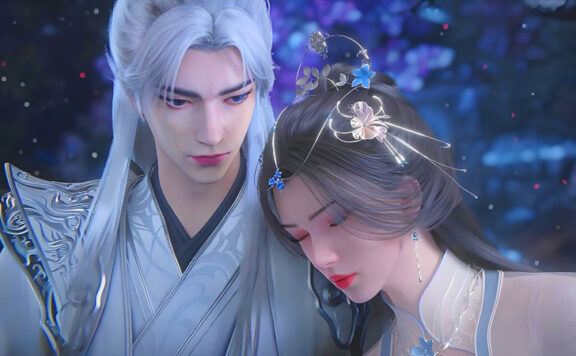
Renegade Immortal: Thunder Dragon Soul Arrives on March 8th
What if the only way to survive a god-like beast was to consume its soul and make its power your own? On March 8th, the Chinese animated series Renegade Immortal (仙逆) unleashes a brand-new special episode titled "Thunder Dragon Soul, One Slash to Vanquish." This isn't just another weekly episode; it is the grand finale of the Demon Spirit Land arc. The episode plunges viewers into the abyssal depths of the Tidal Abyss, where the protagonist, Wang Lin, faces his most lethal adversary yet. To survive, he must perform the impossible: devour an ancient dragon born from the dawn of creation itself. This special promises a seismic shift in power dynamics, blending high-stakes drama with visually explosive animation. It marks the moment Wang Lin (王林) transitions from a desperate survivor to a force capable of challenging the heavens, setting the stage for his journey into the vast Luo (罗) Star Domain. The Dragon's Gambit The chaos begins when Wang Lin ventures into the Tidal Abyss to rescue a sword spirit. While he gains a legendary immortal sword and a powerful technique, his success comes at a cost. It attracts the relentless pursuit of his nemesis, Greedy Wolf. This antagonist is… -
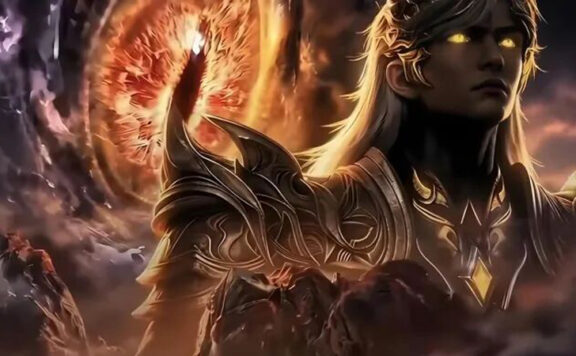
Perfect World: Anlan & Yutuo Hunt for the Key to Emperorship
The episode of the animated series Perfect World (完美世界) has ignited the fandom, not just with a fight scene, but with the arrival of two beings who redefine the meaning of "overwhelming power." Anlan (安澜) and Yutuo (俞陀), the immortal kings from the alien realm, have crossed the celestial chasm, and their goal is terrifyingly simple: find a single treasure, or destroy everything in their path. This isn't just another battle; it's a desperate, cross-generational hunt for the key to godhood. The episode opens with a scene of sheer dominance. The border fortress, a bastion of defense for the Nine Heavens, is bathed in a menacing golden light. The powerful experts stationed there, including the resolute Meng Tianzheng (孟天正) and the young prodigy Shi Hao (石昊), can only watch as the projections of Anlan and Yutuo manifest. These aren't mere illusions; they are the condensed will of two Immortal Kings, a pressure so intense it feels like the very laws of the world are bending to their whim. The message is clear: the era of skirmishes is over. The alien realm is making its ultimate move, and they are here for one thing only—the "Key to Emperorship." Why Two Immortal… -
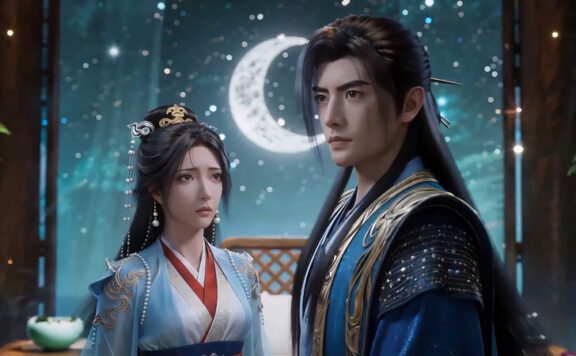
Defending the IP: A Mortal's Journey Fights AI Miscreation
When does fan art cross the line? The popular animated series A Mortal's Journey (凡人修仙传) is facing this question head-on. The production team recently declared war on what they call "AI small workshops," announcing a strict crackdown on unauthorized and inappropriate AI-generated fan content. This move has ignited a fierce debate among fans about the boundaries of creativity in the age of artificial intelligence. The core conflict is simple: how does a creator protect its intellectual property (IP) while still fostering the passionate fan community that celebrates it? The Line Between Tribute and Theft For a long time, the official team behind A Mortal's Journey enjoyed a warm relationship with its audience. They encouraged fan creativity, from clever video edits to humorous takes on the story. This mutual appreciation built a strong, loyal community. However, the rise of accessible AI tools has disturbed this balance. The term "AI small workshop" now describes individuals or very small teams who use these tools not for tribute, but for quick profit and attention. They flood the internet with content that looks like the show but feels fundamentally wrong. The official statement specifically targets four main offenses. First, there is the distortion of the… -
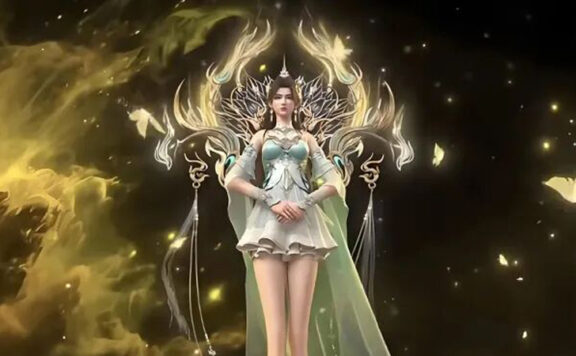
Battle Through the Heavens: Xun'er's Calculated Model Delay
Fans of the hit anime Battle Through the Heavens (斗破苍穹) have been embroiled in a heated debate. The recent reunion between the protagonist Xiao Yan (萧炎) and the beloved female lead Xun'er sparked immediate backlash, not for their emotional dialogue, but for Xun'er's (薰儿) appearance. Viewers noticed her character model looked identical to her previous "Sage" form, a stark contrast to Xiao Yan's updated look. Accusations of laziness and disrespect toward a key character flooded social media. However, the production team has now broken its silence, revealing a strategy that has completely flipped the narrative: the delay was intentional, designed to maximize dramatic impact at a pivotal moment in the story. The Outcry Over a Reunion The recent episodes, part of the "Fallen Heart Flame" arc, delivered a moment fans had waited seasons to see: Xun'er and Xiao Yan fighting side-by-side again. Having ascended to the strength of a Dou Sheng (斗圣), her arrival should have been triumphant. Instead, audiences focused on her familiar high ponytail and cyan dress. Where was the visual upgrade befitting a young goddess from the ancient Gu (古) clan? The lack of change felt like a betrayal of her character's growth, especially when compared to… -
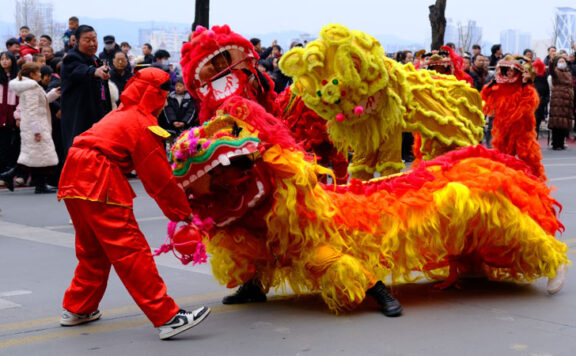
Why the Lion Reigns in She Huo Festival
When the thunder of drums rolls across the frozen soil of northern China and the sharp clang of gongs pierces the winter air, you know the She Huo (社火) has begun. This ancient festival, a boisterous carnival of gods and men, transforms villages into living stages. Masks leer, stilt-walkers tower above the crowd, and painted processions snake through the streets. But amidst all this color and chaos, there is always one performer that draws the crowd into a tight, breathless circle: the lion. It is not merely an act; it is the heartbeat of the celebration. Its presence transforms a simple parade into a sacred ritual, a tangible link between the people, their land, and the heavens. Why, in this pageant of folk art, does the lion always take center stage? The answer lies in a story that spans centuries, blending faith, art, and the very soul of a community. Exotic Beast to Holy Guardian The lion is not a native creature of the Chinese plains, yet it has roared in the country's imagination for over two thousand years. Its journey into the heart of She Huo begins with the Han Dynasty, when these magnificent animals were first presented as… -
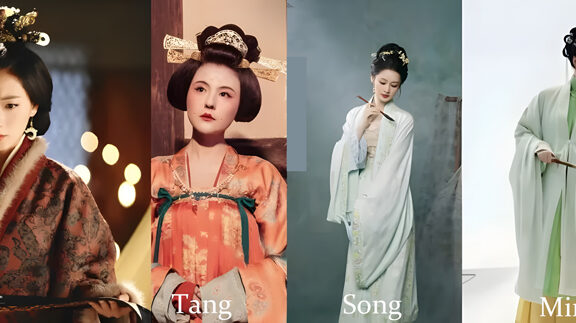
Why Many Period Dramas Mistake Japanese for Chinese Style
Why do so many period dramas look Japanese instead of Chinese? This question has sparked heated debate among viewers who sense something off about the aesthetics in recent productions. The distinction between authentic Chinese style and borrowed Japanese elements isn't merely academic—it's visually immediate once you know what to look for. While Japanese culture historically drew inspiration from China, centuries of separate evolution created fundamentally different aesthetic systems. Today's controversy stems not from overly critical audiences but from production teams who, whether through laziness or ignorance, substitute Japanese elements for Chinese ones. This isn't cultural appreciation; it's cultural erasure dressed in period costumes. The Clothing Code: One Fold Changes Everything The most commonly confused elements appear in costume design, particularly between Hanfu and Japanese kimono. Yet their fundamental structures diverge completely. Traditional Chinese clothing spreads horizontally across the body, with overlapping right-side closures, wide sleeves, and hidden ties instead of exposed buttons. Whether from Han, Tang, or Ming dynasties, these garments create flowing lines that move with the wearer—dignified, expansive, and structurally elegant. Even commoner's clothing maintains this generous proportion, never constricting the body unnaturally. Japanese kimono structure operates on opposite principles. Straight lines dominate—narrow sleeves that barely reach the… -
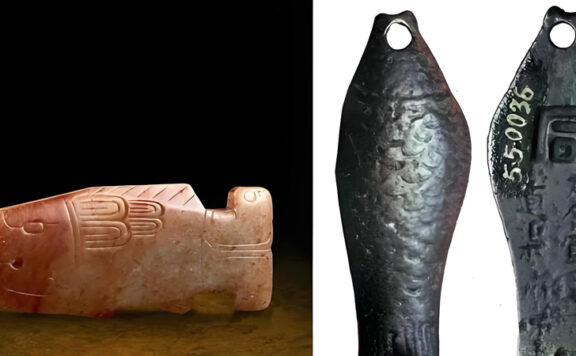
What Did an Ancient Chinese ID Look Like?
Imagine an object that everyone possesses, made from the same material, and engraved with the details that make you, you. In our modern world, the answer springs to mind instantly: it's an ID card. This little piece of plastic holds our birth date, our birthplace, and essentially summarizes all our social connections. In a way, it declares that we are who our society requires us to be. Within our familiar circles, we rarely need to prove our identity. But the moment we step into a completely new environment, our first task is to convince strangers that we are indeed ourselves, and not someone else. The ID card is the physical key to that proof. Today, it's a thin, simple card, yet it acts as a passport, safeguarding our journey wherever we go. But in the distant past, long before plastic and photographs, what object did a person use to answer the fundamental question: "Who are you?" 1. Sui and Tang Dynasties - Fish Tally China’s earliest known official ID emerged during the Sui and Tang Dynasties. It was Emperor Taizong (太宗) of the Tang who, during his Zhenguan (贞观) era, distributed a unique item to his officials called a "fish… -
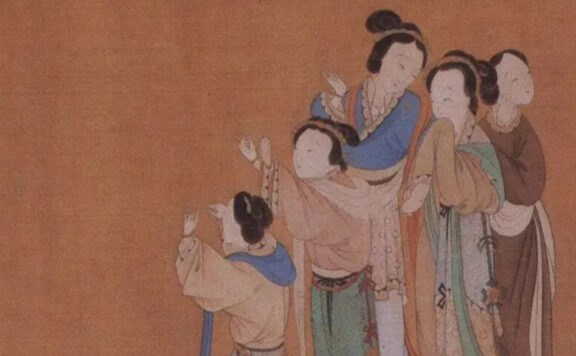
Uncovering Qixi’s Feminine Roots Beyond Romance
On summer nights, two bright stars stare at each other across the milky way. One is called Altair, the other Vega. For centuries, the Chinese have looked up and seen not just stars, but a love story—a cowherd and a weaving maiden separated by a celestial river, allowed to meet just once a year. This is the story behind Qixi (七夕), the seventh day of the seventh lunar month. But is this ancient festival really just China’s answer to Valentine’s Day? Look closer, and you will find it is far more complex, and in many ways, far more fascinating. A Meeting Written in the Stars The core of Qixi is the romantic legend of The Cowherd and the Weaver Girl (牛郎织女). The story goes that Niulang (牛郎), a humble cowherd, fell in love with Zhinü (织女), a weaving fairy. They married, had children, and were so happy that Zhinü neglected her heavenly duties. This angered the Goddess, who drew a vast river in the sky—the Milky Way—to separate them forever. Moved by their sorrow, magpies formed a bridge across the galaxy once a year, allowing the lovers to reunite. It is a tale of enduring love and the pain of… -
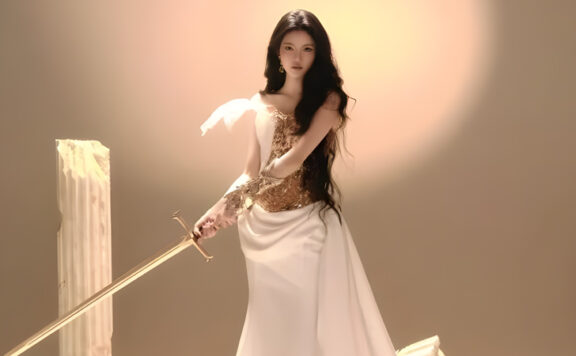
The Rise of Sun Zhenni’s Majestic New Image
Is Sun Zhenni (孙珍妮) Hollywood's Next Big Fantasy Heroine? Her new look, a striking combination of gilded bodice and flowing white satin, has ignited the internet. It feels less like a photoshoot and more like a teaser trailer for an epic saga. We are witnessing the arrival of a "Dark Queen," a persona that is both icy and majestic, powerful and elegant. This isn't just a fashion moment; it's a statement that completely redefines her public image, leaving fans and onlookers utterly captivated by every single frame. Gilded Armor and Silken Strength The centerpiece of this transformation is a meticulously designed strapless gown. The upper half features a metallic gold fabric that catches the light, creating a shine that is bold yet never gaudy. Its sharp cut perfectly highlights the lines of her shoulders and neck. A single, large white satin bow drapes down one side, softening the golden intensity and adding a touch of dramatic flair. It is a masterful blend of strength and grace. Below, the dress flows into a high-quality white satin skirt. The fabric drapes perfectly, with smooth folds extending to the floor. This creates a rich, layered look that is both grand and understated. The… -
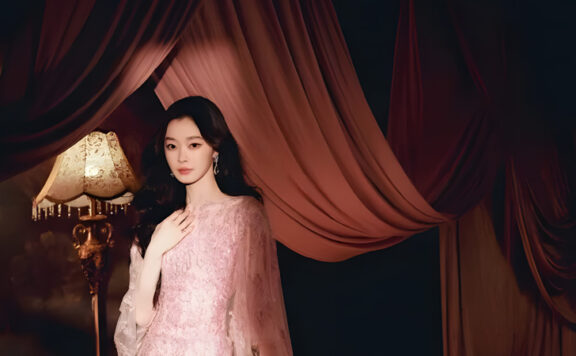
The Quiet Glamour of Song Yi’s Red Carpet Look
At a recent awards ceremony, actress Song Yi (宋轶) captivated audiences and ignited social media in a custom dusty pink gown. The look was an immediate sensation, hailed as a perfect fusion of classical Eastern aesthetics and modern high fashion. It wasn't just a dress; it was a statement that redefined red carpet elegance, proving that true glamour lies in subtlety and grace. As she moved through the venue, her silhouette evoked the charm of a classic film star, leaving onlookers mesmerized and sparking a viral debate on the power of understated beauty in a world of fleeting trends. The Canvas of Quiet Elegance This was far more than simply putting on a beautiful dress. The fitted silhouette of the gown was meticulously crafted to highlight her slender waist and graceful figure without being overt. The entire surface was a constellation of fine details, featuring three-dimensional embroidery and a sprinkle of diamond-like crystals that caught the light, creating a delicate, shimmering effect. It was as if fragments of a starry sky had been gently brushed onto the fabric—brilliant, yet never loud or ostentatious. The most breathtaking feature was the integrated cape sleeves made of diaphanous silk. This design moved with… -
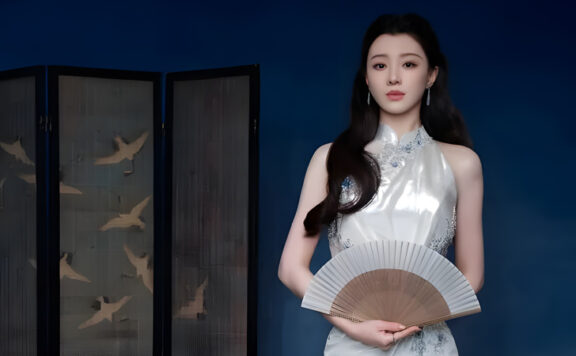
The Charm of Qipao in Wang Herun’s Guofeng Look
On a drizzly afternoon that seems plucked from a classical ink painting, actress Wang Herun (王鹤润) emerges not just in a new set of photographs, but as a living canvas of refined Oriental aesthetics. Her recent look—a silver-white modified Qipao with a halter neck and a plain fan—has ignited conversations across social media, not merely for its beauty but for how it seamlessly weaves centuries-old artistry with contemporary chic. This is more than a fashion moment; it is a statement about identity, heritage, and the evolving language of Chinese elegance in the modern world. A Stitch in Time: The Dress as Narrative The centerpiece of this visual symphony is undoubtedly the dress itself. Crafted from a fabric with a luminous, pearl-like sheen, the Qipao moves away from the rigid formality of vintage designs. Its true genius lies in the hand-embroidered motifs that cascade from the collar to the hem. These aren't just floral patterns; they are a gradient story of blue and green threads, each petal and leaf rendered with a lifelike quality that suggests the breeze of a Jiangnan (江南) water town is just about to stir them. This is where tradition speaks—through the painstaking art of Suzhou embroidery—but…