Article
搜索结果:
-
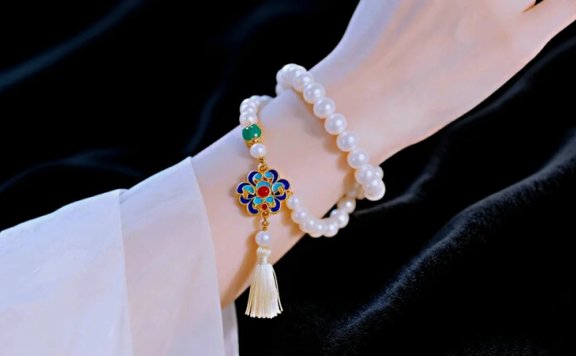
Pearl & Cloisonne: Your Secret to Ethereal Hanfu Style!
Witnessing a revived tradition, Hanfu gracefully reclaims its place in modern wardrobes. This resurgence speaks volumes about our renewed appreciation for heritage aesthetics. The flowing silhouettes and delicate details of Hanfu naturally evoke an aura of timeless elegance. To truly amplify this ethereal charm, the right accessories are essential. Forget fleeting trends; discover how the classic pairing of lustrous pearls and vibrant Jingtai Lan (Cloisonne) beads can elevate your Hanfu look into something truly transcendent. Choosing complementary jewelry transforms an outfit. Soft-hued gemstones create the perfect foundation for Hanfu's delicate beauty. Think luminous white or blush pearls, serene moonstone, gentle rose quartz, aquamarine, honeyed amber, or the soft greens of jade or malachite. These subtle shades offer versatility. For those seeking a touch more intensity, garnet, lapis lazuli, or carnelian provide options. Today, we focus on mastering the exquisite harmony between pearls and Jingtai Lan, empowering you to craft a signature style. Color Harmony Rules The magic lies in balance. Pearls, especially classic white, offer unmatched softness and versatility. Their gentle sheen provides a calming base. Jingtai Lan, conversely, bursts with intricate, vivid colors achieved through its unique enamel artistry. This contrast demands careful pairing. Choose pearls as the dominant… -
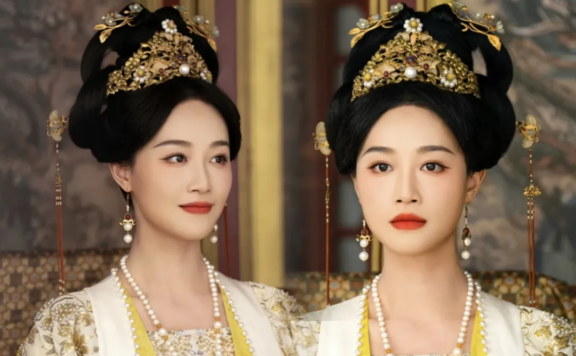
Lan Yingying Wears Song Style Hanfu
In the cdrama Perfect Match, Lan Yingying (蓝盈莹) played the role of an imperial concubine, a legitimate daughter favored by the emperor. She also planned for her family, and we witnessed her growth and transformation. Let's start with the conclusion. The outfit Lan Yingying wore was a style of the large-sleeved shirt and skirt in Song Dynasty clothing. This kind of large-sleeved shirt was usually worn by women. It had a straight collar and a front-opening design and was mainly used as an outer garment. From Tang Dynasty paintings and unearthed clothing from the Song and Ming dynasties, we can see that the large-sleeved shirt was popular in the Tang, Song, and Ming dynasties. In the Song Dynasty, it developed into an important formal dress for noble women, especially as the daily wear for concubines. By the Ming Dynasty, the way of wearing the large-sleeved shirt was similar to that in the Song Dynasty. It was also listed as the regular clothing for queens and noble women. Typical styles included the bright red large-sleeved shirt and the bright yellow large-sleeved shirt. This evolution of the style reflects the historical continuity of traditional formal dress culture. The exquisite materials and elaborate… -
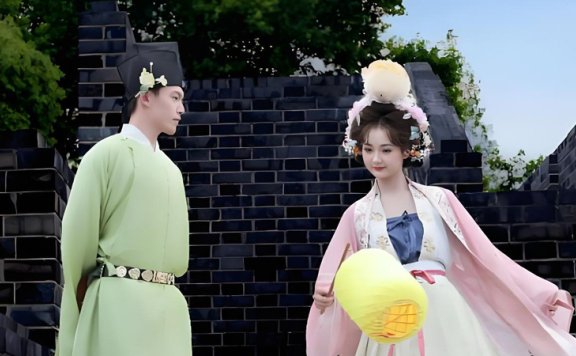
Song Dynasty Hanfu's Gentle Spirit in Today's World
When we speak of traditional Chinese attire, the grandeur of the Tang Dynasty often steals the spotlight, but the subtle grace of Song Dynasty Hanfu reveals a deeper, more refined essence of Chinese culture. Shedding the bold extravagance of its predecessor, Song Dynasty Hanfu embraces minimalist lines and muted hues, embodying an aesthetic of "unadorned beauty" that feels both ancient and strikingly modern. This exquisite style captures a quiet dignity, reflecting the inner cultivation prized in Song-era philosophy, and today, it invites us into a world where history meets contemporary life. Minimalist Philosophy The Song Dynasty marked a pinnacle in Chinese arts and thought, with Neo-Confucianism emphasizing inner harmony over outward display. This ethos shaped Song Dynasty Hanfu into designs centered on restraint and practicality. Instead of elaborate adornments, it relies on clean silhouettes and natural fabrics like cotton, linen, and silk. Colors favor soft greens, pale yellows, and gentle pinks, creating a visual poetry that whispers elegance without shouting. Every garment flows with purpose, tailored to flatter the body without excess. Men wore simple robes like the round-collared Yuanlingpao (圆领袍), while women chose pieces that balanced modesty with grace. The art of "leaving space" in these designs invites contemplation,… -
How The Legend of Hei 2 Normalizes Hanfu as Living Culture
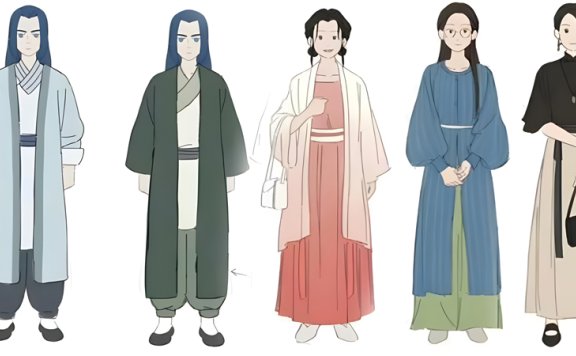
Move over, stylized robes and fantastical costumes. The animated film The Legend of Hei 2 (罗小黑战记2) is making waves for an unexpected reason: its background characters. Forget generic filler; these background figures are dressed in meticulously designed Hanfu elements, sparking online applause for the creators' dedication to authenticity. This isn't just costume design; it's a subtle, powerful statement about integrating traditional Chinese clothing into the fabric of modern life. By focusing on ordinary people wearing Hanfu in everyday contexts, the film offers a refreshingly practical vision of cultural heritage existing naturally alongside contemporary fashion, prompting viewers to reconsider what "traditional" attire means in the 21st century. Designing the Everyday The film's creators recently released design sketches showcasing three distinct outfits worn by background characters. One ensemble pairs a Beizi (a traditional long outer garment) with a tube top-like undergarment and a Baidie skirt (pleated skirt). Another features a round-collar long shirt with practical, tapered sleeves worn over full-length trousers. The third combines a half-sleeved, upright-collar short jacket with a Mamian skirt (horse-face skirt). While seemingly simple, these outfits are carefully crafted. The first and third sets lean towards traditional cuts, while the second incorporates a more modern silhouette with its… -
How 3 Actresses Revive Classical Hanfu Beauty
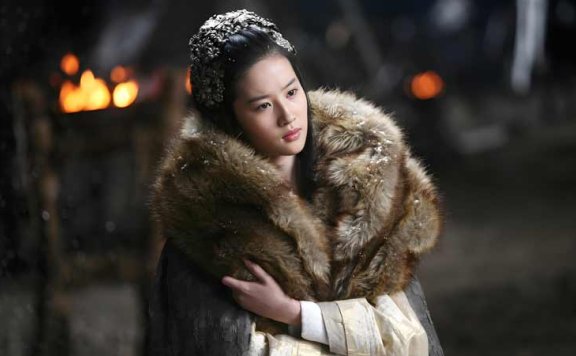
Amidst the ever-shifting sands of cinematic fashion, a quiet revolution unfolds: the return of authentic Hanfu aesthetics. Gone are the days of excessive ornamentation and anachronistic "violation structures"; audiences now crave the distilled elegance that defined historical dramas of the past. This resurgence isn't mere nostalgia; it's a celebration of how meticulously crafted simplicity – the drape of ancient fabrics, the gleam of silver adornments, the subtlety of period-accurate hairstyles – can amplify storytelling and etch characters into memory. Three actresses, through distinct roles, embody this powerful return to form, proving that true visual poetry lies in honoring the past. 1. Liu Yifei (刘亦菲) Few images linger as powerfully in Chinese cinematic history as Liu Yifei's portrayal of Yu Ji (虞姬) in White Vengeance (鸿门宴传奇). Stripped of elaborate modern hairdos or distracting embellishments, her performance relied on raw grace and impeccable authenticity. The costume spoke volumes: flowing robes reflecting the dignified austerity of the Han dynasty, paired with broad, intricately worked silver headpieces that shimmered with every movement, capturing the character's ethereal spirit. This near-minimalist approach created a visual purity, making the tragic farewell between Yu Ji and her lord, Xiang Yu (项羽), profoundly resonant. Liu Yifei's innate elegance merged… -
Why Doesn't Yue Yunpeng Wear His Hanfu Clothes Properly?
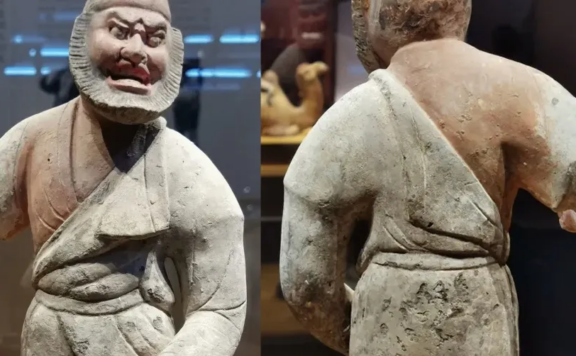
Yue Yunpeng, why don't you wear your clothes properly! In the ancient costume drama The The Lychee Road, when Yue Yunpeng's character Zheng Ping'an makes his first appearance, he is sloppily dressed and wears what seems like a "mini skirt". The CP combination with Lei Jiayin's Li Shande makes people can't help laughing. Is this "mini skirt" deliberately done for the drama effect or did such a garment really exist in history? First, let's state the conclusion. This is a common Tang-style inner garment in the round - necked robe, which can be simply called "Banbi" (半臂) according to its appearance features. Generally speaking, this kind of Banbi inner garment has two functions. In the Tang Dynasty, both civil and military skills were highly valued. This inner garment can support the shoulder contour of the outer round - necked robe, making the figure look more upright. Also, it can be conveniently worn with the chest exposed in hot summer or during sports. Since it is used as an inner garment, natural and breathable materials such as linen are usually used. "Banbi" also has another name, "Banxiu" (半袖). It is a very special short - sleeved top in ancient China. Its… -
Capturing History: The Art of Authentic Hanfu Photography
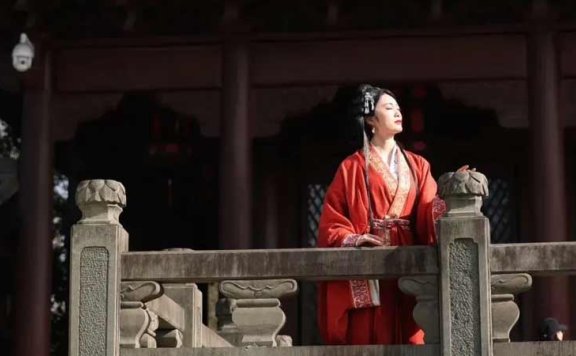
Photographing historical-style Hanfu requires more than costumes; it demands immersion. Selecting environments like ancient gardens, weathered city walls, or stone-paved alleys breathes life into the past. Jiangnan courtyards with white walls and black tiles whisper centuries of stories through their eaves, while cracked flagstones underfoot echo forgotten footsteps. These settings don’t just frame the garment—they become co-stars, layering authenticity into every shot. Light and Texture Light sculpts history. The low-angle glow of dawn or dusk transforms fabric into living heirlooms. Sunlight skims silk robes, casting delicate shadows that emphasize pleats and embroidery. This interplay doesn’t merely illuminate; it etches the passage of time onto the image. Avoid harsh noon rays—gentle, directional light reveals texture in weathered wood and stone, making the scene feel touched by generations. Props are silent narrators. A worn bamboo lantern, a rustic folding fan, or an antique Guqin (古琴) zither placed thoughtfully anchors the subject in tradition. Details matter: fallen leaves scattered near feet, half-burnt candles on a desk, or ink-stained parchment suggest interrupted moments from history. Each object should serve the story, never distracting from the wearer’s connection to the environment. Human posture echoes heritage. Movements inspired by classical paintings—a slight tilt of the head… -
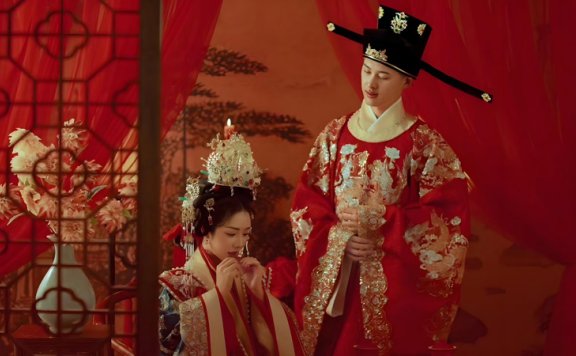
Hanfu Wedding Secrets: Red Attire Across Ages
Hanfu wedding attire, rooted in ancient Chinese traditions, embodies a "secret code" woven through millennia of cultural evolution. From the Zhou Dynasty's solemn rituals to the Ming-Qing era's vibrant celebrations, each garment—be it an embroidered robe or a phoenix crown—serves as a living archive. This attire not only marks marital unions but also reflects shifting societal norms, dynastic decrees, and philosophical ideals like yin-yang harmony. Today, as couples revive these practices, they unlock a visual language that spans dynasties, transforming weddings into historical reenactments. The red hues and intricate details narrate stories of class, cosmology, and continuity, making every stitch a testament to China's enduring heritage. This sartorial code, which governs every hue, stitch, and accessory, transforms weddings into living archives of cultural memory. Colors Through Centuries Early dynasties favored "Xuan-xun" (玄𫄸) tones—deep black symbolizing heaven and reddish-purple representing earth—as seen in Zhou-era ceremonies. These colors, prescribed in texts like Zhou Li (周礼), mirrored cosmic balance and were reserved for nobility. By the Tang Dynasty, imperial edicts allowed commoners to wear bright red and green, creating vivid contrasts in art, such as Dunhuang (敦煌) murals depicting joyful processions. The shift to all-red dominance began under Ming Emperor Hongwu's (明洪武) decree… -
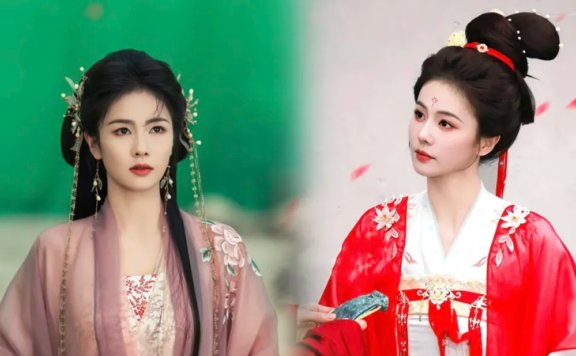
Why Authentic Hanfu Remains Rare in Chinese Historical Dramas
Despite growing appreciation for traditional aesthetics, authentic Hanfu is seldom featured in mainstream Chinese historical dramas. This article explores the cultural, economic, and practical barriers to its adoption, examining why stylized costumes dominate screens while historically accurate garments remain a niche choice. Cultural Disconnect and Historical Suppression Hanfu’s disappearance traces back to the Qing Dynasty’s enforcement of Manchu attire, severing Han clothing traditions for centuries. Post-1912 modernization efforts further marginalized Hanfu, associating it with backwardness while promoting Western dress as progressive. Though recent revival movements celebrate Hanfu’s cultural significance, its ties to pre-Qing history remain obscured in popular media. Many viewers still mistake Hanfu for Japanese or Korean dress, reflecting a persistent identity gap. Contemporary creators face dilemmas in balancing historical accuracy with audience familiarity. Qing-era court dramas dominate screens, normalizing Manchu-inspired designs like Qipao and mandarin collars. This visual legacy overshadows Hanfu’s distinct features: cross-collar ties, flowing sleeves, and layered silhouettes seen in The Tang or Song dynasties. When productions reference Hanfu, they often blend it with fantasy elements, diluting its authenticity. Theatrical adaptations further diluted authenticity. During the Qing era, performers wore modified Hanfu-inspired costumes exempt from clothing bans, preserving fragments of tradition through stylized interpretations. Modern productions… -
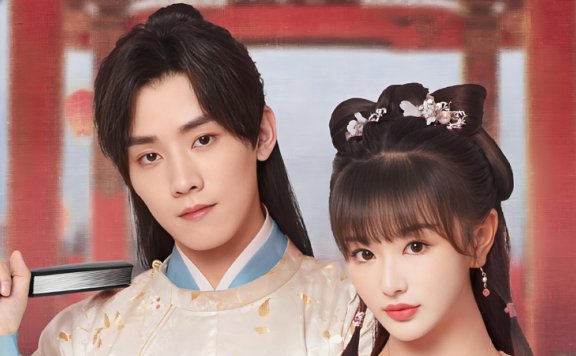
Ming Mei Shan Qu: A Matchmaking Agency with Political Intrigue
As July's finale period drama, Ming Mei Shan Qu (明媒善娶) stormed streaming charts, seizing the #1 trending spot with a soaring 7,500+ heat index on iQIYI. This costume drama revitalizes the genre by weaving political intrigue into a matchmaking agency's operations, breaking free from tired tropes while showcasing standout performances from its ensemble cast. A Matchmaking Agency with Political Stakes Ming Mei Shan Qu centers on Shi Fake (Kong Xue’er), an exiled daughter of a prestigious imperial matchmaking family. After her parents’ wrongful imprisonment, she partners with the enigmatic mountain lord Lu Chi (Ren Hao) to restore her family’s reputation. The twist? Their matchmaking agency becomes a battleground for thwarting the rebel Marquis Wu’an’s conspiracy to control noble marriages and usurp the throne. Unlike conventional palace dramas, power struggles here unfold through marital alliances. The premiere jolts viewers with Shi Fake’s (施伐柯) coming-of-age ceremony, shattered by her mother’s arrest—orchestrated by the Marquis to replace the “First Matchmaker” with his puppet. This marriage-manipulation tactic injects freshness into political scheming, where every arranged union is a calculated move in a deadly game. Emperor secretly tasks Lu Chi (陆池) to sabotage the Marquis’ plans, turning Shi Fake’s matchmaking missions into covert operations. Their… -
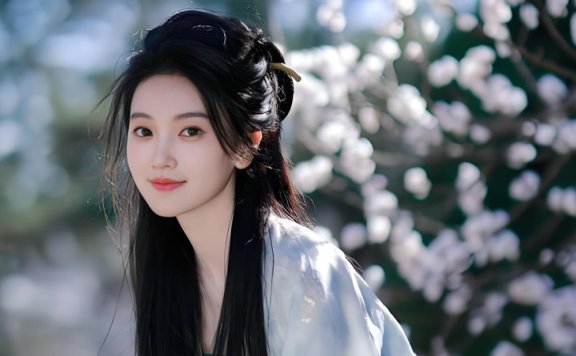
Hanfu: A Stunning Fusion with Modern Life
Gone are the days when Hanfu resided solely within museum displays or historical reenactments. Today, these flowing robes, rooted in millennia of Chinese tradition, are experiencing a vibrant resurgence, gracefully navigating the bustling streets and digital landscapes of contemporary life. This isn't merely a nostalgic revival; it’s a dynamic reinvention. Young people across China and the globe are embracing Hanfu not as a costume, but as a personal style statement, a tangible connection to heritage seamlessly interwoven with the fabric of the 21st century. The intricate silhouettes and symbolic details speak of ancient philosophies, yet they are now paired with modern confidence, proving that tradition can not only survive but thrive amidst skyscrapers and smartphones. This movement transcends fashion; it's a cultural dialogue, a quiet assertion of identity where history walks confidently into the present. Weaving Through Dynasties Hanfu's journey is a tapestry woven through the very fabric of Chinese civilization. Its origins, traced symbolically to the legendary Yellow Emperor, evolved significantly across successive dynasties, each imprinting its distinct aesthetic and societal values. Shang and Zhou periods established the foundational "upper garment, lower skirt" structure, a visual representation of heaven and earth. The Qin and Han dynasties introduced the majestic… -
The Making of The Feud: Chatting with Director Guo Hao
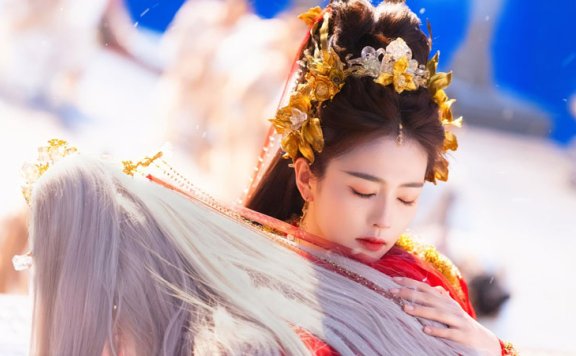
Finally! The moment we've all been waiting for—the grand finale of The Feud aired! All the suspense and anticipation exploded in Episode 32. When Hua Ruyue travels back through parallel timelines, showing her mortal self everything Bai Jiusi has done... even though the past can't be undone, isn't making amends its own kind of perfect ending? That moment when they declared, "Never to be parted again, in heaven or on earth," melted away all those lingering "what ifs" for the audience! This xianxia series, built on "cross-temporal storytelling," shattered the usual BE (Bad Ending) vs. HE (Happy Ending) mold. The Feud pioneered its own PE (Perfect Ending) path. It's like finding a key to unlock emotional knots—not obsessing over philosophical questions of karma, or wrestling with clear-cut notions of right and wrong. It finds wholeness within regret, showing viewers that the courage to reconcile with yourself is the real power that transcends time and space. The finale's explosive buzz? That energy built up for weeks. Before launch, it smashed past 4 million advance viewers on just one platform. Once it aired, it broke records: "Highest premiere day heat ever on iQiyi (2025)," "Fastest to hit 100 million bullet comments," and… -
Unveiling the Truth of Hanfu in Ancient Cdramas
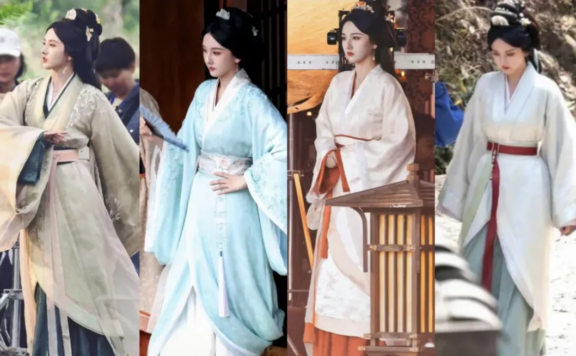
No ancient costume drama has truly done justice to Hanfu! In the TV drama The Prisoner Of Beauty (折腰), we can see a kind of "dress" with a curved hem. When worn, it makes one look dignified and slender. Its prototype is the one - piece Shenyi (深衣) popular in the Qin and Han dynasties. However, few ancient costume dramas have managed to get it right. When it comes to Shenyi, we have to mention Quju (曲裾). And when talking about Quju, we can't ignore the Mawangdui Han Tomb. The reports and unearthed cultural relics from this Western Han tomb have further confirmed the structure of Quju, refreshed the understanding of most Hanfu enthusiasts, and reorganized the early systems of "small Quju", "single - wrapped Quju", and "X - wrapped/multiple - wrapped Quju". The Quju robes unearthed from the Western Han tomb are regarded as the orthodox physical standard representing the clothing of the Qin and Han dynasties. The upper - body effect of this type of Quju robe shows a triangular overlapping of the continuous front panel. By the width of the skirt edge, we can distinguish the forms of inner and outer clothes. This form of cutting the… -
Caoxian: A Small Town Weaving a Billion Yuan Hanfu Industry
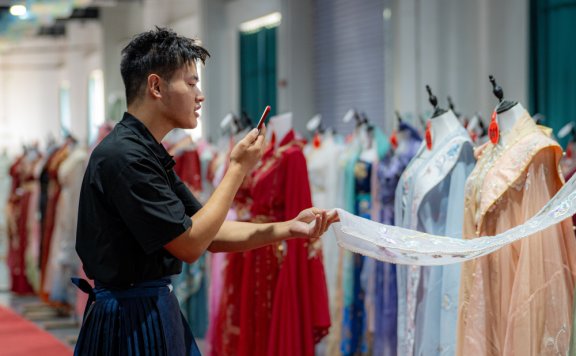
Caoxian is located in the southwestern part of Shandong Province, at the junction of Shandong and Henan provinces. It has a registered population of about 1.69 million and is a major county for human resources in Shandong. Four years ago, a local internet celebrity humorously rapped in a short video, using the catchphrase '666' to turn this small town into the so - called 'center of the universe' comparable to Beijing, Shanghai, and Guangzhou. In the past two years, with the popularity of 'horse - face skirts' and 'New Year greeting costumes' across the country, Caoxian has been closely linked with the Hanfu industry, achieving long - lasting popularity and attracting much attention. It has successfully transformed from an 'internet meme' to an 'industry success story'. Horse Face Fkirt Now, in this largest Hanfu production base in the country, there are more than 2,750 Hanfu enterprises, about 15,000 online stores, and nearly 100,000 people engaged in the Hanfu industry. On June 18th, Yao Chixing, the person - in - charge of the Youai Cloud Warehouse Hanfu Base in Caoxian, was organizing Hanfu in the exhibition hall. Entering the Youai Cloud Warehouse Hanfu Base in Caoxian, the slogan 'Everyone should have… -
Director Cao Yiwen Reveals the Making of The Legend of Zang Hai
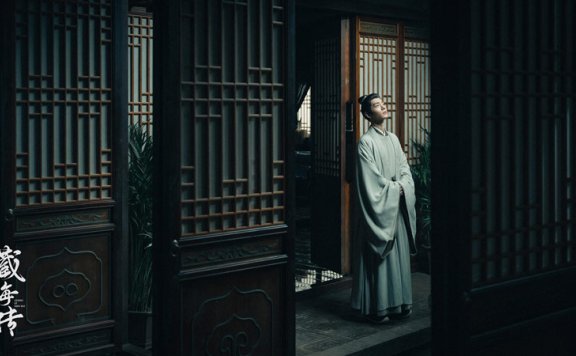
If you're still haunted by the twists and emotional gut-punches of The Legend of Zang Hai (藏海传), you're not alone. Whether it's the tangled web of loyalty between Zang Hai and his mentor Zhao Bingwen, or the eerie suspense surrounding the elusive "third man," social media remains ablaze with fan theories and character dissections. And here's the kicker—unlike your typical revenge fantasy where the protagonist rises through sheer plot armor, The Legend of Zang Hai gives us a tragic, deeply psychological hero. Zang Hai's arc has become a spiritual sinkhole fans can't stop falling into. Viewers don't just watch him—they breathe with him. What made this slow-burn success possible? According to the show's general director Zheng Xiaolong, much of the credit goes to a fresh face behind the camera: young director Cao Yiwen, whose approach breathed new life into the genre. His unique directorial style has fostered a whole ecosystem of fan-made scripts and alternative readings—what Chinese netizens call "wild screenwriters" (meaning audiences passionately creating their own interpretations and continuations of the plot). Tracing Cao's Creative Footprint Rewind to 2020, and you'll find Cao's name on another unconventional title: To Love (最初的相遇,最后的别离). It wasn't just another noir-tinged romance—it brought a… -
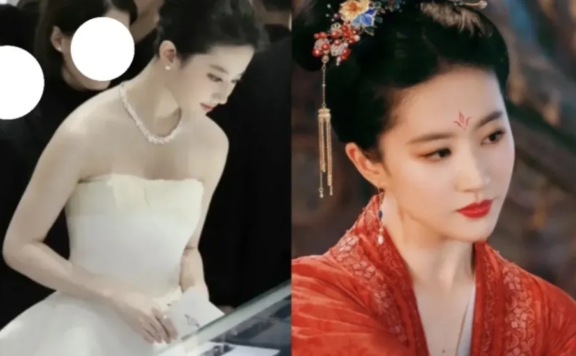
Hanfu: Sloping or Square Shoulders?
Whether watching period dramas or wearing traditional Hanfu, the topic of posture often brings up sloping shoulders, with Liu Yifei being a classic example. So, does classical aesthetics truly equate to sloping shoulders? A recent article on Ming Dynasty undergarments sparked a lengthy debate about the classical aesthetics of sloping versus square shoulders. Today, let’s dive into this discussion. First, the conclusion: Are square shoulders unsuitable for classical attire? Not necessarily. Traditional clothing’s flat - cut structure naturally accommodates the shoulders, creating a softened, secondary shape. The discomfort or visual awkwardness some perceive often stems from posture—some people unconsciously stiffen their shoulders when puffing their chests, while extreme thinness can disrupt visual balance, making the clothes appear oversized. Another factor is tailoring. Many period dramas incorporate structured cuts at the shoulder seams, leading to a constrained look. Style Comparison Hanfu’s flat - cut design allows extra fabric at the shoulder area, creating a graceful curve that enhances the upper body’s fullness and grandeur. While flat - cutting dominates, traditional Hanfu also includes localized structured adjustments like inset panels or darts. However, many period dramas, despite appearing flat - cut, use structured shoulder seams for a modern, fitted look. This results… -

The Hanfu Boom: A Guide to Leading Brands
Hanfu (汉服, traditional Chinese clothing) isn’t just a nostalgic trend—it’s a global movement. What began as a niche subculture in China has evolved into a thriving industry, with brands blending historical accuracy with modern wearability. Forget stiff costumes; today’s Hanfu ranges from silk-adorned ceremonial robes to minimalist office-friendly pieces. Here’s a breakdown of the brands driving this revival, their signature styles, and why they resonate with Gen Z shoppers from Los Angeles to Jakarta. 1. Minghuatang (明华堂) Founded in 2007, this Guangzhou-based label has become synonymous with meticulous craftsmanship and eye-watering price tags—think ¥10,000 ($1,400) for a single set, with wait times stretching up to a year. https://www.youtube.com/watch?v=guu1ad17AH8 The Founder’s Obsession Hong Kong-born Zhong Yi (钟毅), a fashion design graduate from Guangzhou Academy of Fine Arts, noticed something odd in the early 2000s: At formal events, Koreans wore hanbok, Japanese wore kimono, but Chinese attendees rarely wore Hanfu. He started designing his own pieces, wearing them daily to normalize the tradition. In 2007, he co-founded Minghuatang with a clear mission: to recreate historically accurate Ming Dynasty (1368–1644) attire with museum-level precision. What Justifies the Price? Minghuatang’s garments aren’t just costumes—they’re wearable history. Every stitch follows 15th-century texts and artifacts, from… -

Why Did Ming Dynasty Hanfu Collars Have White Detachable Pieces?
In period dramas set in the Ming Dynasty, you'll often notice large white collars, sometimes even layered over patterned ones. Was this just a peculiar fashion choice? The answer lies in practicality. Back then, people wanted to avoid frequent laundry, especially since sweat easily soiled collars in summer. The solution? A detachable white collar called "Huling" (护领). This removable piece could be washed separately, maintaining cleanliness without worrying about color bleeding. Its neutral white hue also made it versatile, matching any outfit color effortlessly. For those who wanted to skip washing altogether, disposable paper collars existed as early as the Wei - Jin period. The "Book of Wei" records an official using paper collars for frugality. By the Ming Dynasty, widespread papermaking made these affordable for commoners, while nobles used specialty papers—essentially creating the first "daily disposable" collars. Huling came in varying widths, though none exceeded the main collar's size. While main collars could be colorful, Huling remained plain white. Some debate exists about colored or embroidered versions, but these likely prioritized aesthetics over functionality. Typically used on cross - collar or front - opening outer garments, they weren't mandatory—underlayers still required regular washing. Compared to modern garments where cleaning… -

How to Wear High-Waisted Hanfu Skirts, Prevent Falling Down?
Why didn't the high-waisted hanfu skirts (齐胸裙) worn by people in the Tang Dynasty fall down? This kind of skirt didn't have elastic bands or other similar measures. Did it rely on large breasts to stay up? Could it really stay in place without falling? The Principle of Skirt Fixation As we all know, in the Sui and Tang Dynasties of China's clothing history, the waistline of skirts became popular to move up. The current popular way of wearing it is called "high-waisted". As the name suggests, since it is worn on the chest and the high-waisted skirts we often see don't have shoulder straps, the force can only go downward. Then the chest must bear the necessary pressure. Let's think in a more straightforward way. We know that a skirt won't fall when tied around the waist because the waist is like a mortise and tenon structure. As long as it is tied tightly enough to prevent the waistline from slipping, you rarely see a wrapped skirt falling off unless it isn't tied properly. Similarly, for high-waisted skirts, as long as the tying part is tightened, you can jump around without the skirt falling. Fabric and Design Considerations Of… -

The Trendy Hanfu Styles: Fragmentation & Fatalism
In the past year, various concepts of 'fragmentation' and 'fatalism' have suddenly become popular online. Paired with trendy Hanfu styles such as the straight-fronted robe of the 'Warring States' period, the silk shirt of the Northern Song Dynasty, Tang-style shirts and skirts, and armor, there are all sorts of scenarios: running away in the rainy back - view, collapsing in the ice and snow, being tied up, drawing a sword, dying in battle, and even imitating Emperor Chongzhen's 'hanging himself'. It's really a wide variety, giving us a fresh feeling of fatalism. Understanding 'Fragmentation' and 'Fatalism' What exactly are 'fragmentation' and 'fatalism'? Do we really need this kind of emotional appeal? In short, this kind of aesthetic doesn't necessarily have to be called 'fragmentation' or 'fatalism'. It's a kind of incomplete, heart - wrenching but irresistible sadness. Originally more common in the fields of painting and sculpture, with the lower threshold of shooting short dramas and taking photos and the improvement of costumes and props, ordinary people have more opportunities to touch those emotional corners that are usually hard to notice and seek deep 'resonance'. Creating the Atmosphere To create this sense of fatalism, besides creating extreme environments, for example,…