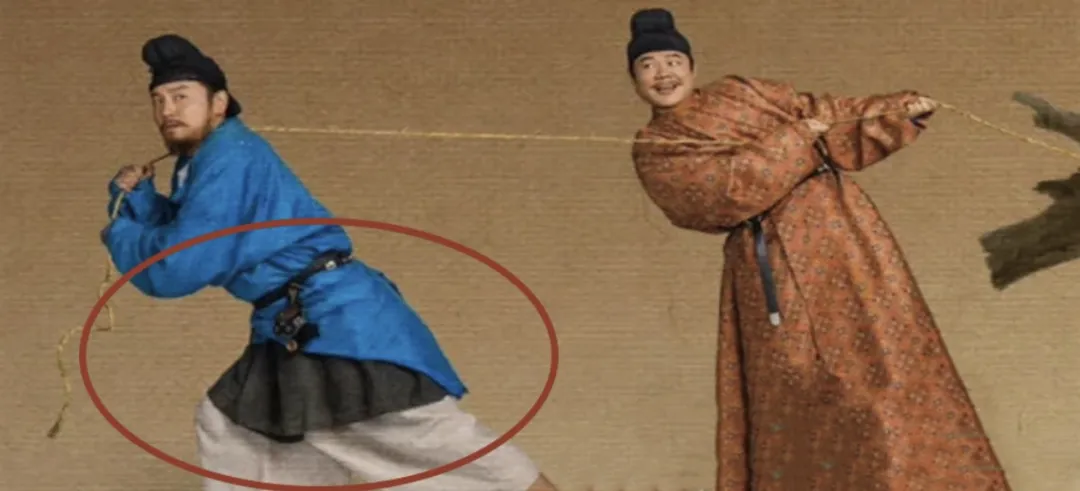
Yue Yunpeng, why don't you wear your clothes properly! In the ancient costume drama The The Lychee Road, when Yue Yunpeng's character Zheng Ping'an makes his first appearance, he is sloppily dressed and wears what seems like a "mini skirt". The CP combination with Lei Jiayin's Li Shande makes people can't help laughing. Is this "mini skirt" deliberately done for the drama effect or did such a garment really exist in history?
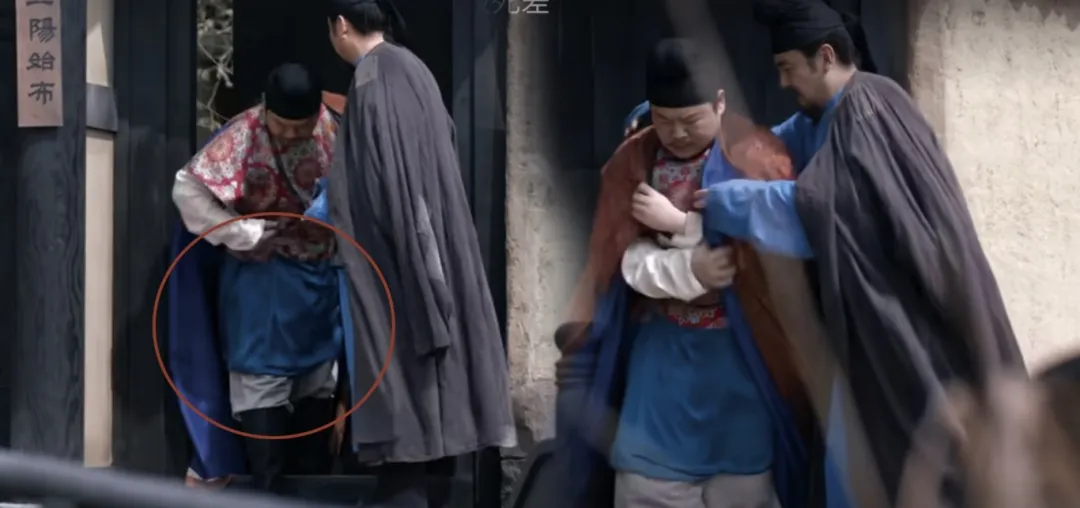
First, let's state the conclusion. This is a common Tang-style inner garment in the round - necked robe, which can be simply called "Banbi" (半臂) according to its appearance features. Generally speaking, this kind of Banbi inner garment has two functions. In the Tang Dynasty, both civil and military skills were highly valued. This inner garment can support the shoulder contour of the outer round - necked robe, making the figure look more upright. Also, it can be conveniently worn with the chest exposed in hot summer or during sports. Since it is used as an inner garment, natural and breathable materials such as linen are usually used.
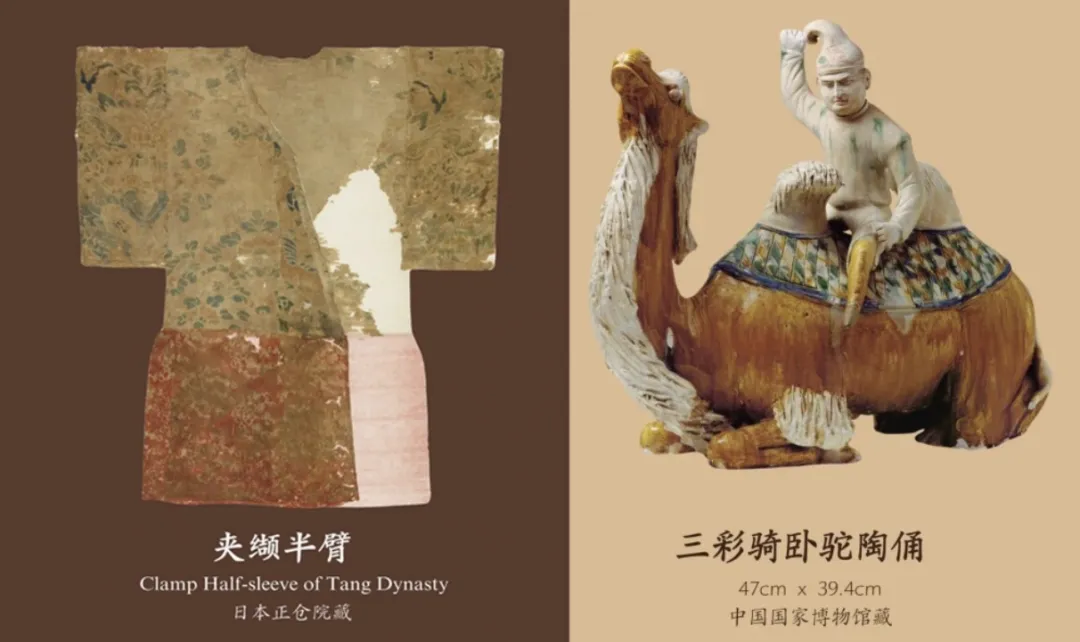
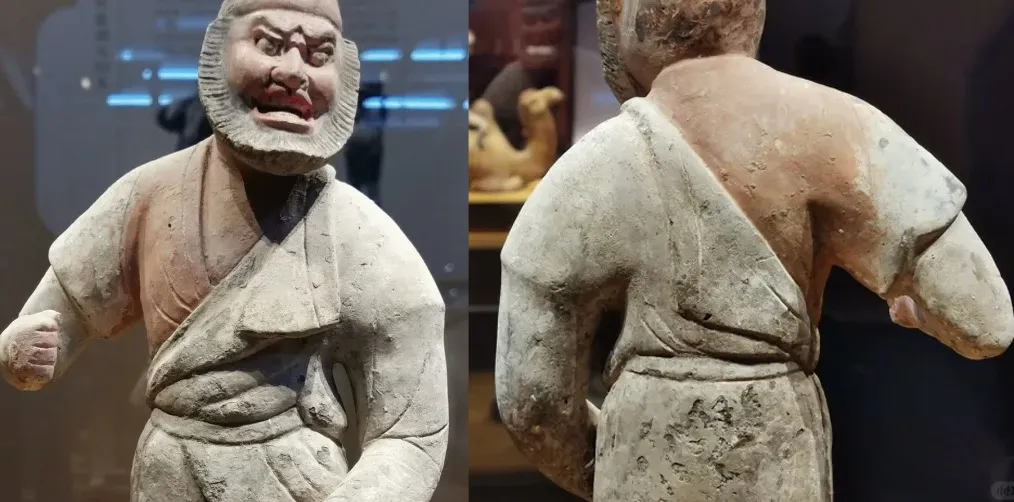
"Banbi" also has another name, "Banxiu" (半袖). It is a very special short - sleeved top in ancient China. Its "predecessor" was the half - sleeved clothes popular in the Han and Wei dynasties, and later it gradually developed and had its own unique style in the Tang Dynasty. It is mentioned in Old Book of Tang that "Banxiu Ruqun" (半袖裙襦), which shows how common it was in people's outfits at that time. The "Banbi shape" with bulging sleeves can be seen in some Tang Dynasty figurines.
The popularity of Banbi in the Tang Dynasty is inseparable from the influence of "Hu style". During the Sui and Tang dynasties, there were a lot of exchanges among different ethnic groups, and cultures were also integrated. When the Hu people's style collided with the Han people's style, new fashion sparks were generated. Because Banbi is both fashionable and practical, it became a trendy item that everyone loved to wear at that time.
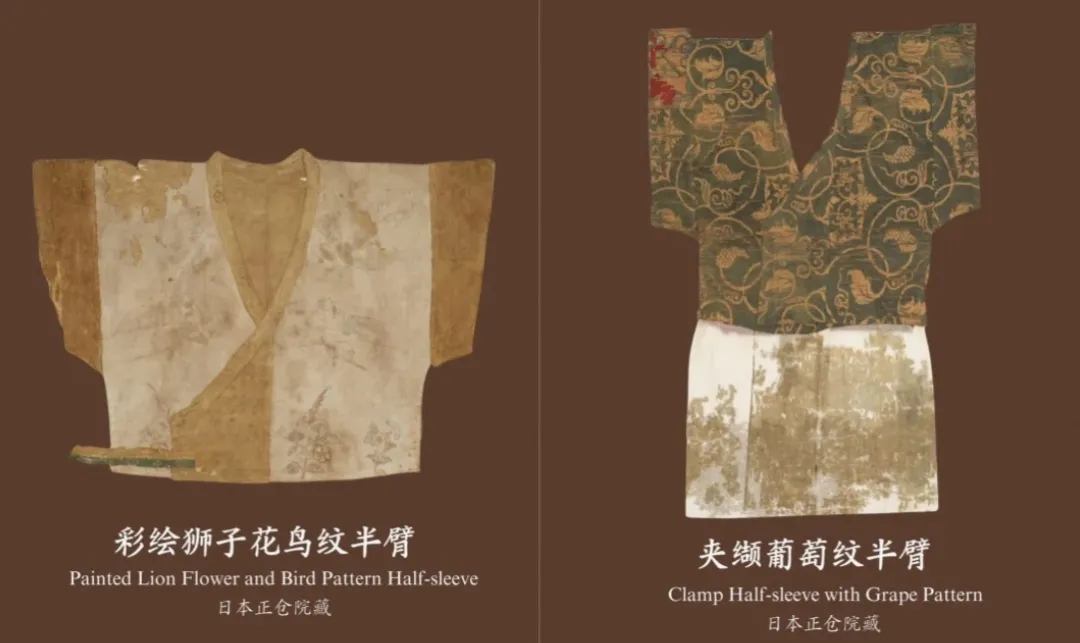
The design of Banbi is very characteristic. The length of the garment usually reaches the waist, and in some cases, the waist hem extends to the hips. The sleeves are also short and usually do not cover the elbows. This design not only retains the beauty and elegance of traditional clothes but also makes it very convenient for people to move around. No matter what they do, they look very energetic.
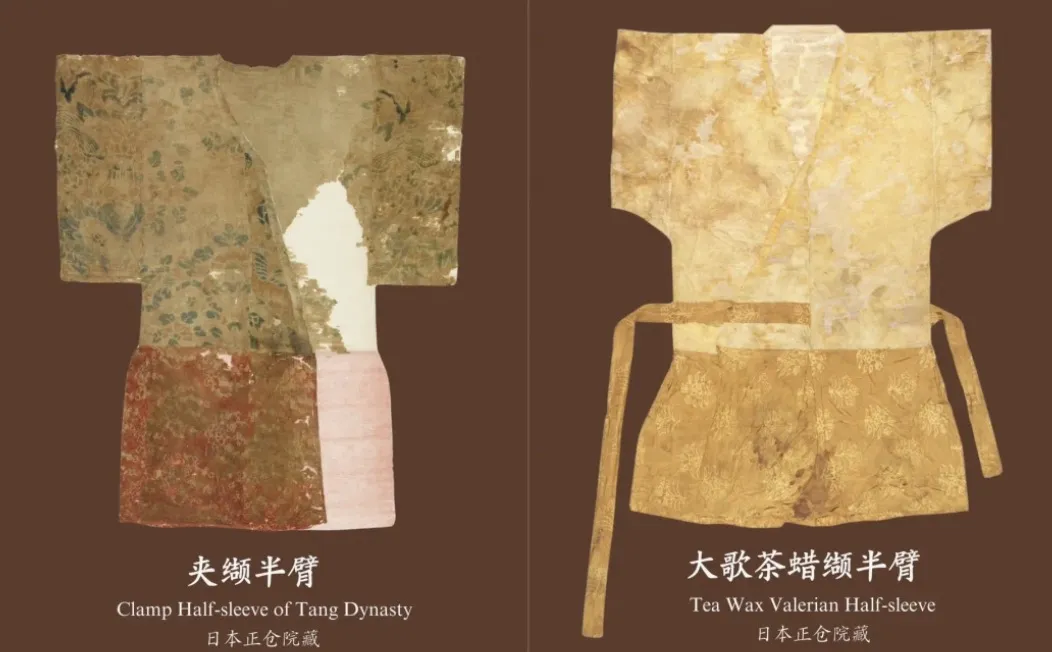
There are prototypes of such Banbi in the current Tang Dynasty cultural relics. Generally, the collar structure is a cross - collared one (there are also a few with a round collar structure), and it is made of relatively stiff fabric. A piece of "lan" (襕) of a different color is sewn to the lower hem, that is, another piece of fabric is spliced, usually a soft cloth. This is to prevent the fabric from piling up around the waist when worn as an inner garment. If worn alone, because of the different color, it looks a bit like wearing a "mini skirt". Yue Yunpeng's inner garment is spliced with red floral fabric and sparrow - blue lower hem, forming a strong visual contrast. The light and fluttering lower hem fabric makes it no wonder that some netizens said, "Is Yue Yunpeng wearing a Tang Dynasty mini skirt?"
The way of wearing Banbi with the chest exposed was also popular in the Tang Dynasty. For example, in The Splendor of the Tang Dynasty, Li Xian's character Jiang Changyang wears Banbi with the chest exposed. Inside the round - necked robe, a round - necked shirt and Banbi are worn as inner garments. Generally, in ancient times, when people were practicing martial arts, archery, or doing labor and other occasions where convenience was needed, they would adopt this way of "exposing the arms". And an inner Banbi was often added inside the clothes. The material of the Banbi worn inside the round - necked robe is usually a stiff fabric, which can support the sleeves of the outer round - necked robe, making the wearer look more imposing and heroic. Its function is equivalent to what we call shoulder pads or muscle shirts nowadays.
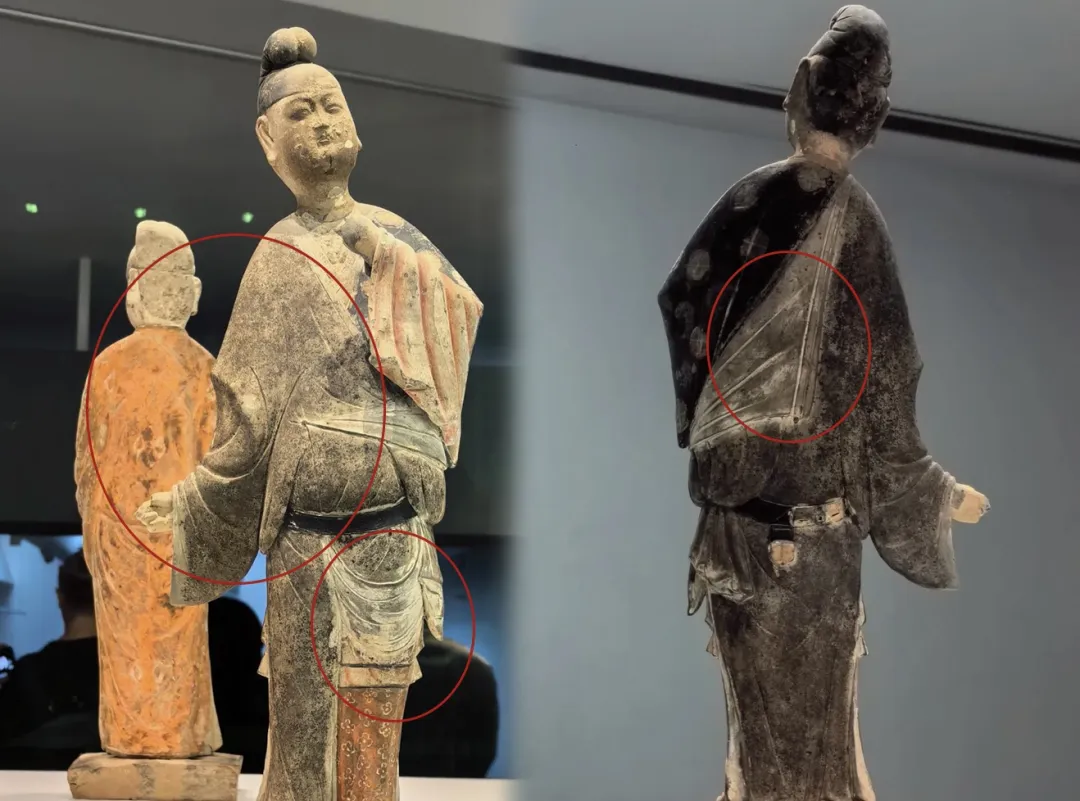
Besides wearing it with the chest exposed, when the lower hem is too long and hinders running and other sports, the ancients could also tuck up the lower hem and expose the thighs. It can be said that even today, it is still a kind of "eye - catching" way of dressing. But basically, there is an inner garment, so there is no need to worry about indecent exposure.
Looking at the "mini skirts" of Yue Yunpeng and others in the Tang Dynasty, you may have a clearer picture in mind. These unique ancient costumes reflect the fashion and cultural features of that era. The charm of traditional Chinese clothing is waiting for us to explore more.