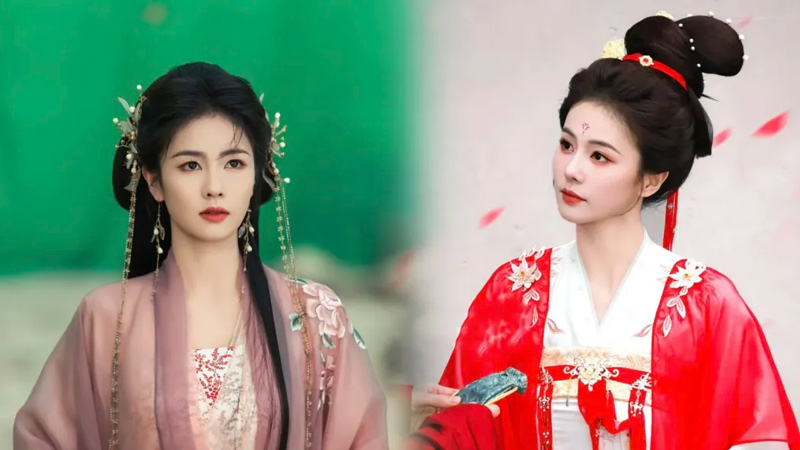
Despite growing appreciation for traditional aesthetics, authentic Hanfu is seldom featured in mainstream Chinese historical dramas. This article explores the cultural, economic, and practical barriers to its adoption, examining why stylized costumes dominate screens while historically accurate garments remain a niche choice.
Cultural Disconnect and Historical Suppression
Hanfu’s disappearance traces back to the Qing Dynasty’s enforcement of Manchu attire, severing Han clothing traditions for centuries. Post-1912 modernization efforts further marginalized Hanfu, associating it with backwardness while promoting Western dress as progressive. Though recent revival movements celebrate Hanfu’s cultural significance, its ties to pre-Qing history remain obscured in popular media. Many viewers still mistake Hanfu for Japanese or Korean dress, reflecting a persistent identity gap.
Contemporary creators face dilemmas in balancing historical accuracy with audience familiarity. Qing-era court dramas dominate screens, normalizing Manchu-inspired designs like Qipao and mandarin collars. This visual legacy overshadows Hanfu’s distinct features: cross-collar ties, flowing sleeves, and layered silhouettes seen in The Tang or Song dynasties. When productions reference Hanfu, they often blend it with fantasy elements, diluting its authenticity.
Theatrical adaptations further diluted authenticity. During the Qing era, performers wore modified Hanfu-inspired costumes exempt from clothing bans, preserving fragments of tradition through stylized interpretations. Modern productions inherit this legacy, treating costumes as canvases for creative expression rather than historical replication.
Production Challenges and Economic Constraints
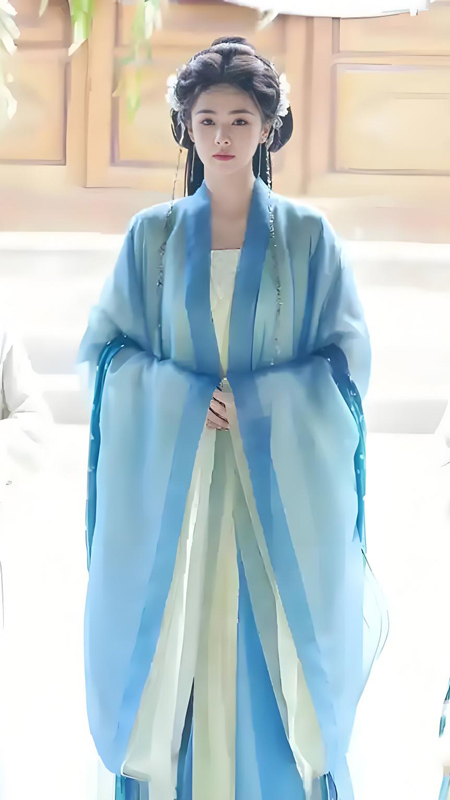
Recreating Hanfu demands meticulous research and craftsmanship. Unlike mass-produced costumes, authentic pieces require hand-embroidered patterns, specific fabrics like silk, and tailoring techniques lost during its decline. For example, the Ming Dynasty’s Mamianqun involves complex pleating, while the Song Dynasty’s Beizi (褙子) needs precise drapery. Such efforts increase costs exponentially—a barrier for studios operating on tight schedules.
Time constraints exacerbate these issues. Historical advisors must verify designs against artifacts like the Han Dynasty’s curved-hem robe, delaying production. Meanwhile, fantasy costumes can be improvised rapidly using generic materials. As one source notes: “Customization requires academic evaluation, material sourcing, and artisanal labor—luxuries most productions can’t afford”. Profit-driven studios thus prioritize speed over authenticity.
Audience Expectations
Modern viewers gravitate toward romanticized visuals. Wuxia and Xianxia genres popularize flowing, ethereal designs that prioritize “movement poetry” over historical fidelity. These styles accommodate contemporary beauty standards: slim actors appear more dynamic in lightweight fabrics than structured Hanfu, which emphasizes dignity over drama.
Cultural perceptions also play a role. Hanfu’s revival is often misconstrued as nationalism, making producers wary of backlash. Conversely, fantastical costumes feel politically neutral. As audiences globally consume C-dramas for escapism—not history lessons—studios favor universal appeal. “People seek wonder, not textbooks,” argues a source.
This trend reflects deeper cultural dynamics. Hanfu’s revival remains niche, with many Chinese viewers still associating traditional wear exclusively with ceremonial occasions or cosplay. As cultural scholar Dr. Li Wei observes: "Audiences seek escapism, not history lessons. When a Qing robe signifies ‘imperial drama’ and wide sleeves imply ‘immortal fantasy,’ authenticity becomes commercially irrelevant".
Conclusion
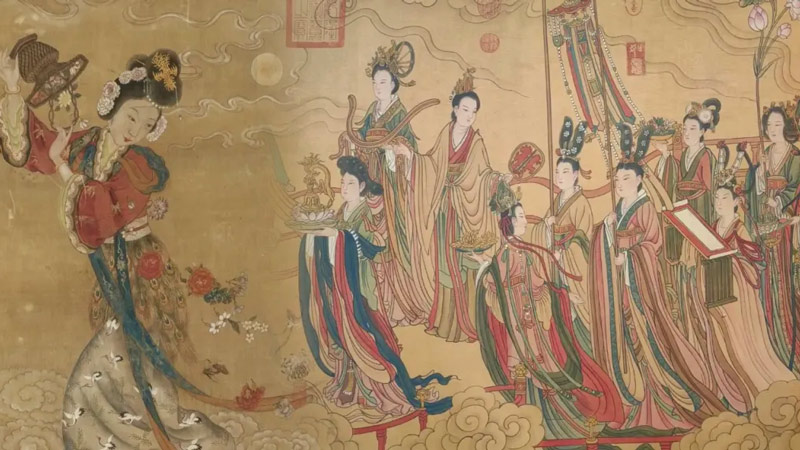
The scarcity of authentic Hanfu reflects deeper tensions between cultural preservation and commercial pragmatism. While enthusiasts champion its revival as reconnecting with Han heritage, the industry’s reliance on speed, cost-efficiency, and broad appeal sidelines historical rigor. Bridging this gap requires viewer education, investment in traditional craftsmanship, and creative reinterpretations that make Hanfu’s elegance accessible to modern sensibilities—without sacrificing its soul.
As China’s cultural confidence grows, the industry may gradually embrace Hanfu not as a relic, but as a living aesthetic language—one capable of evolving without erasing its origins.