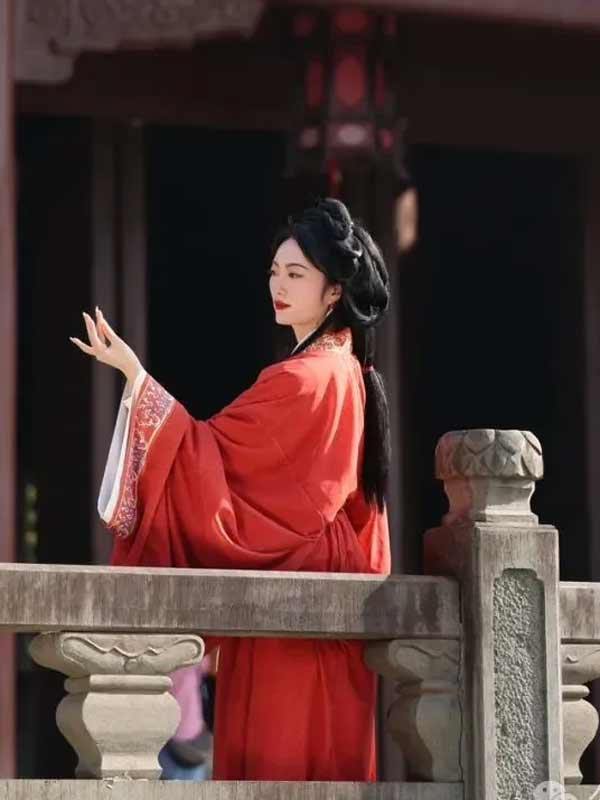
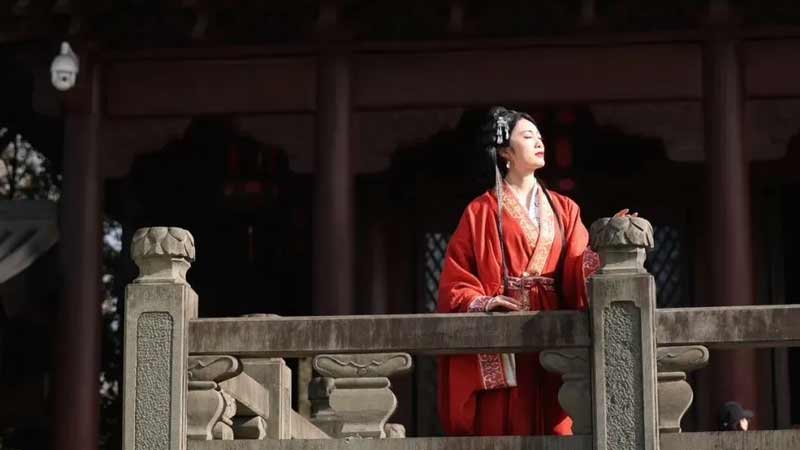
Photographing historical-style Hanfu requires more than costumes; it demands immersion. Selecting environments like ancient gardens, weathered city walls, or stone-paved alleys breathes life into the past. Jiangnan courtyards with white walls and black tiles whisper centuries of stories through their eaves, while cracked flagstones underfoot echo forgotten footsteps. These settings don’t just frame the garment—they become co-stars, layering authenticity into every shot.
Light and Texture
Light sculpts history. The low-angle glow of dawn or dusk transforms fabric into living heirlooms. Sunlight skims silk robes, casting delicate shadows that emphasize pleats and embroidery. This interplay doesn’t merely illuminate; it etches the passage of time onto the image. Avoid harsh noon rays—gentle, directional light reveals texture in weathered wood and stone, making the scene feel touched by generations.
Props are silent narrators. A worn bamboo lantern, a rustic folding fan, or an antique Guqin (古琴) zither placed thoughtfully anchors the subject in tradition. Details matter: fallen leaves scattered near feet, half-burnt candles on a desk, or ink-stained parchment suggest interrupted moments from history. Each object should serve the story, never distracting from the wearer’s connection to the environment.
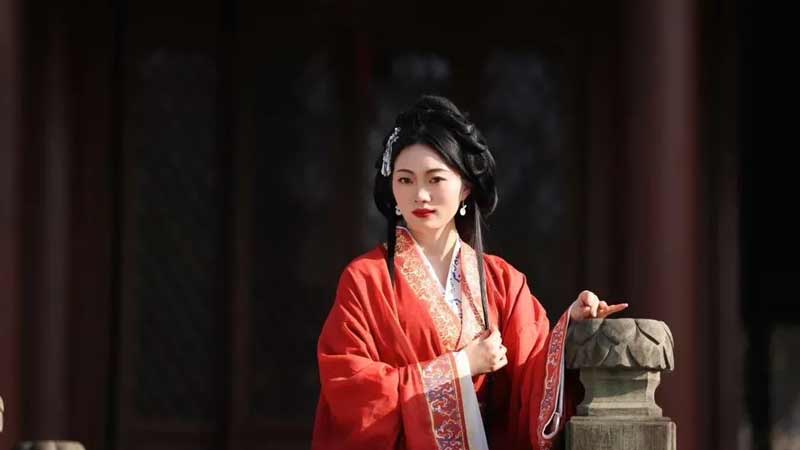
Human posture echoes heritage. Movements inspired by classical paintings—a slight tilt of the head while reading, sleeves draped over a railing, or a paused step on a bridge—blur the line between past and present. The goal isn’t rigid reenactment but evoking the grace and restraint of historical eras through natural, fluid gestures.
Embodying the Era
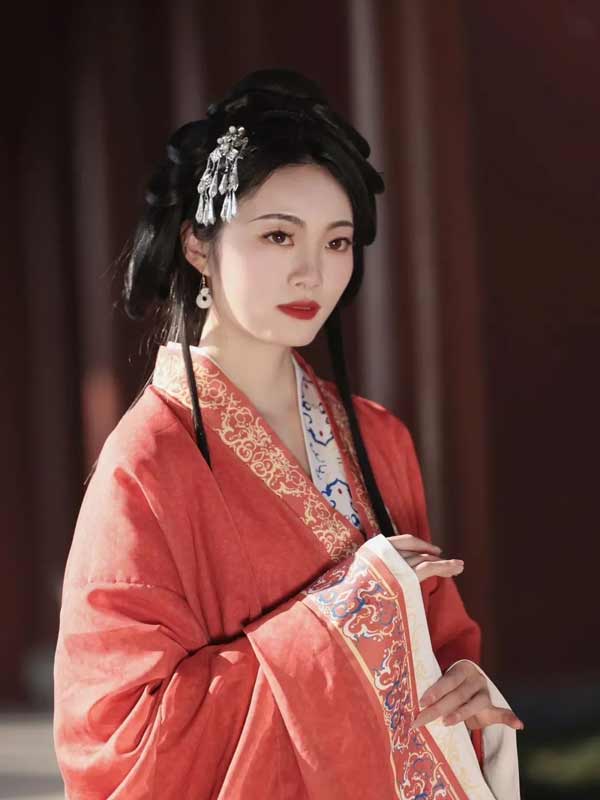
A model’s presence transforms clothing into character. Consider the striking portrait of a woman in Warring States period robes—her strong jawline, often mislabeled a flaw, became regal poise. Her eyes, intense and focused, mirrored the determination of ancient nobility, while subtle lip color harmonized with the robe’s deep hues. Such synergy between features and attire is rare, turning photographs into portals.
Directing requires sensitivity. Historical garments can feel restrictive, but forcing "period accuracy" stifles emotion. Instead, guide models toward inner stillness. Simple prompts like "Imagine hearing distant temple bells" or "Trace the carving on this pillar" replace rigid posing with mindful presence. Conversation about the location’s history—not photography techniques—eases tension, allowing genuine moments to surface organically.
Balance intimacy and scale. Close-ups capture intricate hairpieces and textile details, but wide shots unveil the narrative. Position figures dwarfed by grand architecture—a lone robe against palace gates or a silhouette crossing a moon gate—to emphasize humanity within history’s vastness. These compositions invite viewers not just to see, but to step into the frame.
When Past and Present Collide
Deep immersion blurs reality. Some models describe losing themselves mid-shoot: fingertips brushing 1,000-year-old stone balustrades spark visceral connections, as if touching hands across dynasties. One subject later confessed, "I didn’t just wear Hanfu—I mourned with women who once walked these corridors." This psychological shift isn’t accidental; it’s cultivated through sensory details—the scent of aged timber, the chill of morning mist, the rustle of layered silk.
Ethical photography respects this vulnerability. Avoid exploiting emotional fragility; instead, create psychological safety. Allow pauses for reflection, and never rush transitions back to modernity. The camera’s magic lies in its ability to freeze these ephemeral bridges between eras—where a sigh might belong to either 2025 or 202 BC.
Ultimately, authentic Hanfu photography transcends aesthetics. It’s an act of time travel through empathy and environment. When a model’s distant gaze mirrors the weight of history in a courtyard, or wind lifts her sleeves like a long-faded dynasty’s breath, the image ceases to be a picture. It becomes a dialogue—whispering to ancestors, questioning our roots, and asking: if these walls could speak, would we dare listen?